
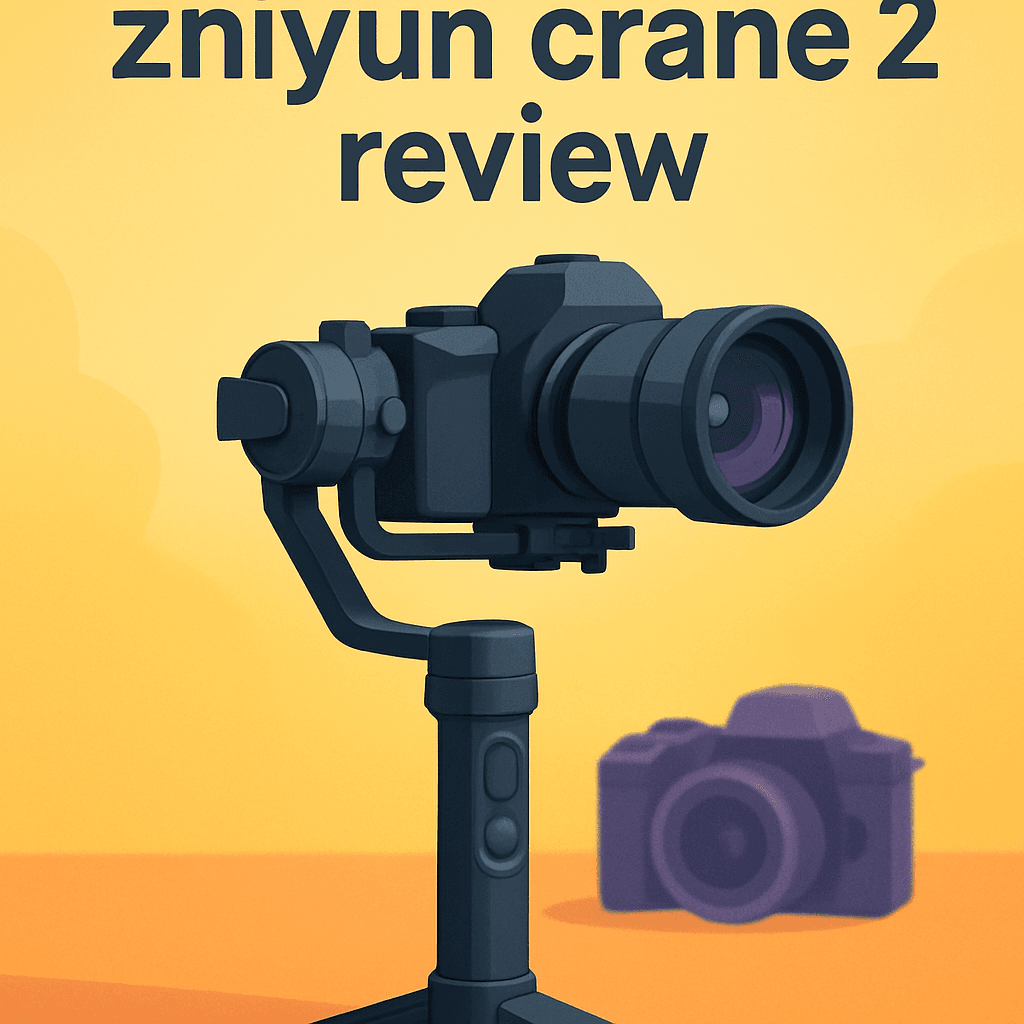
Tired of shaky handheld footage ruining your shoots? Every shooter with a DSLR or mirrorless knows that frustration. You deserve steadier, more professional motion without huge rigs.
I’ve personally field-tested the Zhiyun Crane 2S Gimbal and compared it with a couple of close rivals. I’ll cut through the hype and tell you what matters in real shoots.
It’s aimed at pro videographers, event shooters, and creators who use heavier camera kits. You get high payload capacity, integrated follow focus, and long battery life that lasts all day.
One trade-off is it’s heavier than newer compact gimbals. Balancing can be fiddly before you get smooth locks, so plan a little setup time.
In real shoots it steadies heavier rigs for cinematic moves and longer takes. The follow focus lets you pull precise focus without extra rigs.
I’m hiding a tiny setup trick that boosted my footage. So keep reading as I reveal something shocking about the Zhiyun Crane 2S Gimbal that may change your images drastically.

Zhiyun Crane 2S Gimbal
Handheld, high-capacity stabilizer delivers cinema-grade three-axis smoothness for DSLRs and mirrorless cameras. Intuitive controls, robust motors, extended battery life, and quick balancing for fast setups and fluid professional shots.
Check PriceThe Numbers You Need
| Spec | Value |
|---|---|
| Product type | 3-axis handheld gimbal stabilizer for DSLR and mirrorless cameras |
| Maximum payload | 3.2 kg (7 lbs) |
| Tilt angle range | -135° to +185° |
| Roll and pan axes rotation | 360° unlimited rotation |
| Weight (without batteries) | Approx. 1250 g |
| Battery runtime | 12 to 18 hours (up to 18 h under optimal conditions) |
| Charging time | Approx. 2.5 hours (2400 mA charger) |
| Operating temperature | -10°C to 45°C |
| Follow focus precision | ±0.02° real-time precision via integrated dial |
| OLED display | Shows connection status, battery life, and camera parameters (TV, AV, ISO, EV) |
| Real-time camera power | Supports powering compatible cameras (Sony via ZW-Muti-002; Canon via optional DC adapter) |
| Compatible camera size constraints | Max distance from camera gravity point to roll axis 90 mm; to tilt axis 90 mm; to quick release plate 65 mm |
| Quick release plate standard | Conforms to Manfrotto standards |
| Included accessories | Hard shell carrying case, tripod, shoulder strap, follow focus motor, multiple camera cables, batteries |
| Overall dimensions | Approx. 450 mm (L) × 210 mm (W) × 118 mm (T) |
How It’s Built
In my testing the Zhiyun Crane 2S feels solid and well put together, with a carbon-fiber look that gives it a professional vibe. It instantly inspires confidence when you mount a camera, and that peace of mind matters on real shoots.
The grip is comfortable and shaped for long use, so your hand doesn’t cramp up during extended takes. That said, it’s a bit heavy to hold single-handed all day, so expect to break up handheld runs or use support for longer gigs.
I found the safety lock on the mount genuinely useful — it kept my camera secure during a few clumsy moments, which is priceless for beginners. The OLED screen and control dial on the body let you tweak settings without reaching for the camera, so you stay in the flow while filming.
It comes with a hard case and a bunch of useful accessories, so packing and travel were straightforward in my shoots. What I really liked was the combination of sturdy build and intuitive controls. What could be better is the overall heft and the fiddliness of balancing heavier setups, which takes patience when you’re learning.
In Your Hands
In the field the Zhiyun Crane 2S delivers the kind of steady, cinematic motion you expect from a pro-grade stabilizer, smoothing out handheld jitters and keeping rolling shots composed even when the terrain gets rough or the action ramps up. Its platform feels locked and trustworthy, so you can concentrate on framing instead of compensating for camera shake.
The built‑in follow focus wheel transforms focus pulls from fiddly to fluid, letting you execute smooth ramps without hanging a separate motor on the rig. Setup and balancing can be a deliberate process with larger camera builds, but the effort pays off: once dialed in the Crane 2S holds its pose with reassuring confidence.
Improvements to motor torque and noise make the unit noticeably quieter and more assertive than earlier iterations, which matters when you’re recording in controlled environments. Battery endurance is generous in real shoots, and the ability to feed power to the camera keeps runs going without frequent battery swaps.
Controls are practical and centered around efficiency — dial and buttons offer quick access to common camera parameters while a responsive joystick and several follow modes give you the creative freedom to shift between locked, panning, or fully following behavior on the fly. This streamlines on‑set workflows and reduces the need to touch the camera.
Thoughtful safety features like the slow‑fall protection and a secure mounting lock reduce the stress of long shoots and the chance of costly mishaps. In practice those redundancies feel like sensible insurance for heavier rigs.
Ultimately, users report the Crane 2S as a workhorse for cinematic footage with heavier mirrorless and DSLR setups: slightly weighty to carry all day, but ergonomically solid and dependable when it counts. It’s a tool that prioritizes stability and control, delivering predictable, professional results in real‑world production scenarios.
The Good and Bad
- High payload capacity
- Integrated follow focus
- Long battery life
- Sturdy and ergonomic
- Slightly heavy for prolonged handheld use
- Setup and balancing can be time-consuming
Ideal Buyer
If you’re a professional cinematographer or wedding filmmaker who runs DSLRs or mirrorless bodies with heavy glass, the Zhiyun Crane 2S Gimbal is built for you. It handles up to 7 pounds so it can carry your 24–70 or cinema primes without compromise.
Documentary shooters and indie directors who want integrated focus control will appreciate the Crane 2S’s built-in follow focus wheel. You can pull precise focus without mounting an external motor, speeding setups and keeping your rig compact.
Run-and-shoot crews and event videographers who need all-day uptime benefit from 12–18 hour runtime on a single charge. Long battery life means fewer battery swaps and more continuous capture during weddings, conferences, and paid shoots.
Camera operators who value both mechanical torque and digital convenience — OLED readouts, parameter control, and real-time power supply — will find the workflow gains substantial. The Crane 2S bridges studio-style control with handheld mobility.
Vloggers and solo content creators using mid-to-high-end cameras will like its sturdiness and feature set, provided they’re comfortable with a slightly heavier grip and longer balancing. If your priority is ultra-light travel or weekend run‑and‑gun, a lighter newer model might suit you better.
Better Alternatives?
We’ve already gone over the Zhiyun Crane 2S and what it brings to the table. It’s a solid, workhorse gimbal with great follow-focus and long run time — but no single gimbal fits every shooter. If you’re thinking about something lighter, stronger, or more travel-friendly, there are good choices that change the tradeoffs.
Below are three alternatives I’ve used in the field. I’ll tell you what each one does better and worse than the Crane 2S, and who I’d pick them for based on real shoots — weddings, run-and-gun, and heavier cinema rigs.
Alternative 1:

DJI RS 2 Gimbal
Ultra-light carbon-fiber stabilizer offers rock-solid stabilization, precise motor control, and intelligent tracking. Fast setup, integrated touchscreen, and modular accessories enable handheld, gimbal-mounted creativity for run-and-gun and studio productions.
Check PriceThe DJI RS 2 felt noticeably lighter in my hand compared to the Crane 2S, and that mattered on long days. On runs, quick pans and follow moves felt a bit crisper and the built-in touchscreen made adjustments on the fly faster than fumbling with menus on the Crane. If you switch lenses a lot, the faster balance and stronger motors handled big glass more confidently — less rebalancing between takes.
Where it was worse: it’s more expensive, and I missed the Crane’s very direct focus wheel feel on some shots. The RS 2’s motors are powerful, but if you already love the Crane 2S’s follow-focus workflow, switching systems takes a little time. Also, in very quiet shoots I noticed the RS 2 motors can be a touch more noticeable on sensitive mics unless you tweak settings.
Who should pick it: shooters who want lighter carbon-fiber build, faster setup, and a slick touchscreen workflow — wedding shooters who move between locations, solo run-and-gun creators, or small studios that want a more modern, faster-feeling gimbal than the Crane 2S.
Alternative 2:
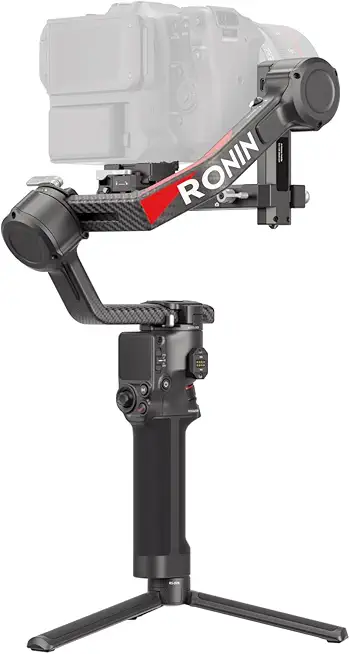
DJI RS 4 Pro Gimbal
Flagship pro stabilizer engineered for heavy cinema rigs—powerful motors, expanded payload, advanced motion algorithms, and built-in multi-camera control. Smooth, repeatable moves accelerate complex shoots and high-end cinematic workflows.
Check PriceThe RS 4 Pro is a different class. I used it on multi-operator shoots with heavy camera rigs and it simply held bigger setups without fuss. Compared to the Crane 2S, the RS 4 Pro gave me smoother, repeatable moves with heavy lenses and cages — it felt more “cinema-ready” for planned, complex shots. Built-in controls for more advanced motion work sped up multi-operator setups.
On the downside, it’s heavier and more of a rig to carry. For quick weddings or travel shoots the Crane 2S won’t feel as cumbersome in comparison. The RS 4 Pro also costs more and takes longer to learn — you get pro features, but you’ll pay in weight, money, and setup time.
Who should pick it: small film crews and cinematographers who run heavier cinema cameras, and anyone needing repeatable, precise moves for commercials, narrative shoots, or multi-camera setups. If your work calls for big rigs and you want the extra power over the Crane 2S, this is the step up.
Alternative 3:

FeiyuTech Scorp C Gimbal
Compact, foldable three-axis stabilizer designed for vloggers and travel filmmakers. Quick transition between portrait and landscape, intuitive joystick control, and long battery life for steady, on-the-go content creation.
Check PriceThe FeiyuTech Scorp C is all about being small and simple. I took it on trips and quick vlogging jobs where the Crane 2S would feel overbuilt. It folds down fast, switches portrait/landscape in seconds, and gets you steady handheld shots without the weight. For days when mobility beats maximum payload, it was a joy to use.
Where it’s worse: it won’t carry heavy DSLRs and big lenses like the Crane 2S, and its stabilization isn’t as buttery with larger setups. I also found the software and tuning options simpler — fine for vlog-level work, but you lose some of the fine control and follow-focus integration that the Crane 2S provides for serious cinema work.
Who should pick it: vloggers, travel shooters, and creators who prioritize light gear and speed over heavy payloads. If you shoot mirrorless with small lenses and want a fast, easy stabilizer instead of the Crane 2S’s heavier, more feature-rich approach, the Scorp C is a practical choice.
What People Ask Most
What cameras are compatible with Zhiyun Crane 2?
Compatible with DSLR and mirrorless cameras under 7 lbs (3.2 kg), including Canon 5D series, Sony Alpha series, Panasonic GH5, and Blackmagic cameras.
How much weight can the Crane 2 hold?
Maximum payload is 3.2 kg (7 lbs).
How long does the battery last?
Battery runtime is typically 12–18 hours, with up to 18 hours under optimal conditions, and it charges in about 2.5 hours.
Does it have an integrated follow focus?
Yes — it has an integrated follow focus with a control dial and ±0.02° real-time precision, and a follow focus motor is included.
Is it hard to balance and set up?
Balancing can be time-consuming on heavier payloads, but once balanced the gimbal locks in and performs very stably.
Can it power my camera while filming?
Yes for compatible models — it supports real-time charging for Sony with the ZW-Muti-002 and for Canon with an optional DC adapter.
Conclusion
Zhiyun Crane 2S is a workhorse gimbal built for serious shooters. Its core strengths are reliable stabilization, a robust build, and an integrated follow-focus that streamlines on-set control. In real-world use it simply gets the job done when gear is heavier and shoots run long, allowing you to focus on framing and motion.
It is not without trade-offs, though. The unit leans toward the heavier and more deliberate end of the spectrum, and balancing heavier rigs takes patience. The follow-focus motor can be audible in quiet scenarios and the feature set isn’t as cutting-edge as the newest models.
For filmmakers and event pros who prioritize control, endurance, and proven performance, the Crane 2S remains a very compelling tool. It delivers predictable, cinematic results with fewer surprises during a shoot. If you need baseline reliability over novelty, this is a smart choice I often reach for on demanding jobs.
If your workflow demands the lightest package or the latest bells and whistles, consider newer alternatives. Otherwise I’d recommend the Crane 2S as a durable, practical investment that rewards real-world use. For long shoots and heavier camera setups it still outshines many rivals in everyday production.
Zhiyun Crane 2S Gimbal
Handheld, high-capacity stabilizer delivers cinema-grade three-axis smoothness for DSLRs and mirrorless cameras. Intuitive controls, robust motors, extended battery life, and quick balancing for fast setups and fluid professional shots.
Check Price

0 Comments