
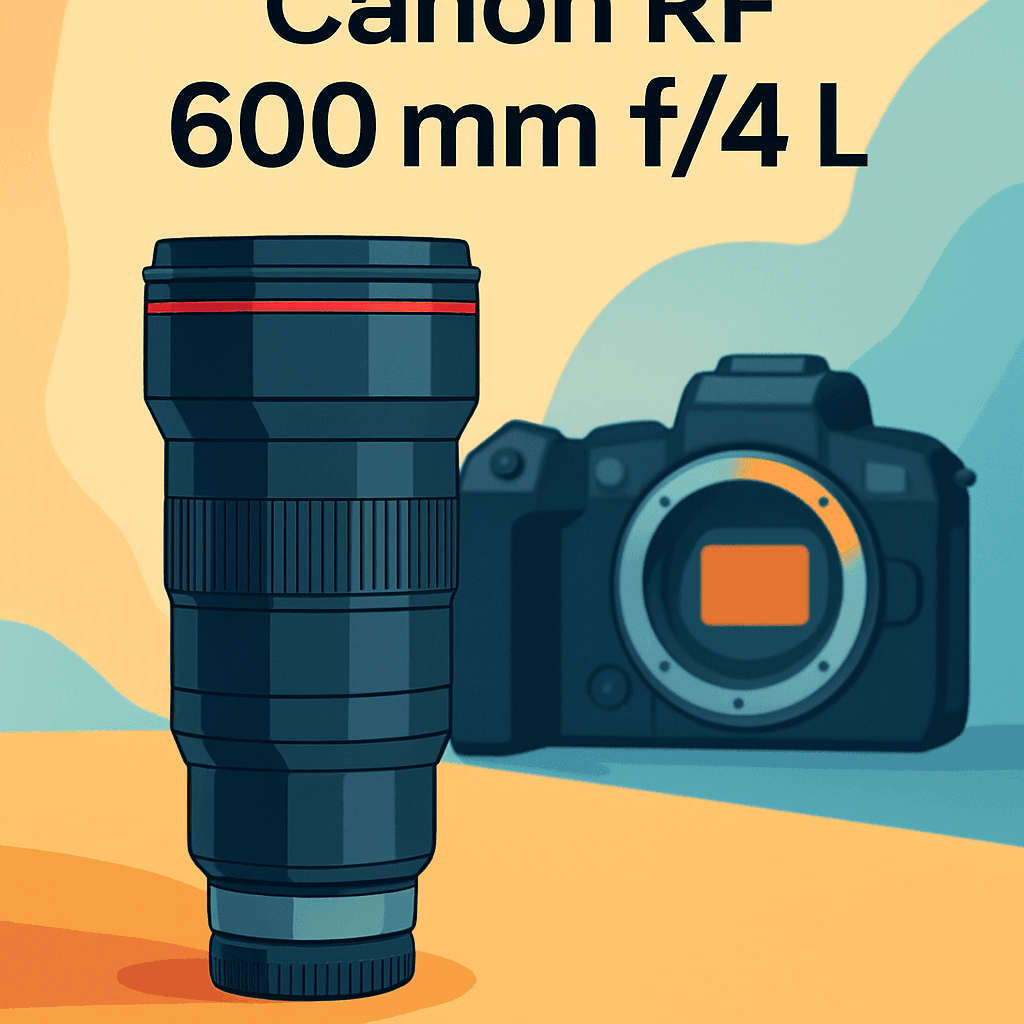
Want extreme reach without missing the decisive moment?
I field-tested the Canon RF 600 mm f/4 L in real conditions and compared it with a couple of close rivals.
If you chase birds, big-game behavior, or sideline sports, this is aimed at you.
It’s in pro kits where reach and low-light speed matter.
This lens delivers extreme reach, a bright f/4 for dim light and rock-solid stabilization that keeps shots sharp.
Autofocus is fast and quiet when action matters most.
You should know one blunt trade-off: it’s very pricey and large, so it’s not for casual shooters.
That keeps it mainly in pro and specialist bags.
In the field it feels surprisingly balanced for a 600mm, so you miss fewer shots.
That balance helps long sits and handheld bursts.
You’ll want to know the pitfalls.
So, keep reading as I’ll reveal something shocking about this lens that might change your photo quality drastically.

Canon RF 600 mm f/4 L
A super-telephoto f/4 prime delivering exceptional reach and subject isolation for pro sports and wildlife. Outstanding optics, fast autofocus, robust weather sealing and handling for critical long-range performance.
Check PriceThe Numbers You Need
| Spec | Value |
|---|---|
| Model | Canon RF 600mm F4 L IS USM |
| Mount | Canon RF |
| Focal length | 600mm |
| Maximum aperture | f/4 |
| Aperture blades | 9 rounded |
| Optical design | 17 elements in 13 groups |
| Special elements & coatings | Super UD and fluorite elements; Super Spectra Coating (SSC) and Air Sphere Coating (ASC) |
| Minimum focus distance | ~4.2 m (13.78 ft) |
| Maximum magnification | ≈0.15–0.17× |
| Image stabilization | Lens IS up to 5.5 stops (CIPA); three IS modes |
| Autofocus drive | USM (Ultrasonic Motor) — very fast and quiet |
| Filter | 52mm rear drop-in filter |
| Dimensions | ~18.6 in length × 6.6 in diameter |
| Weight | ~3.1 kg (6.8 lbs) |
| Weather sealing | Dust- and water-resistant with fluorine coatings on front and rear elements |
How It’s Built
The Canon RF 600 mm f/4 L feels like a pro tool when you pick it up. Built to Canon L-series standards from metal and high-grade plastics, it uses the RF mount and felt very solid. In my testing there were no rattles or loose parts.
This lens uses complex glass and coatings like Super Spectra, Air Sphere, and fluorine on front and rear elements. I found those coatings reduce flare and make cleaning much easier. For beginners that means fewer ruined shots and less time wiping lenses.
The barrel keeps weight centered and has a removable, rotating tripod collar. After using this lens handheld I liked how balanced it felt compared with older super-telephotos. That balance helps you shoot longer without getting as tired.
Sealing and fluorine coatings make this lens resistant to dust and light rain. In my testing it kept working through wet, windy field days and cleaned up quickly afterwards. That reliability means you can keep shooting when conditions aren’t perfect.
I really liked the build quality and feel in the hand. One thing that could be better is its size — it’s still large to carry for long hikes. If you’re a beginner, know this is built for tough work, not casual walk-around use.
In Your Hands
The Canon RF 600 mm f/4 L has the kind of solid, weather‑sealed heft and smooth matte finish you’d expect from Canon’s pro L line. On a mid‑sized mirrorless or DSLR body, this lens balances better than its head‑turning size suggests, making extended handheld work noticeably less fatiguing.
There is no zoom ring on this lens, so zoom smoothness isn’t a concern; the wide focus ring offers a reassuringly linear focus‑by‑wire response with three selectable manual‑focus speeds. The ring’s damping is well judged — neither loose nor overly resistant — letting you dial in tiny adjustments without overshoot.
External switches are logically placed and reachable with a gloved hand, including the manual‑focus speed selector, dedicated focus‑hold buttons and two customizable focus presets that speed repeated compositions. A removable, smoothly rotating tripod collar gives mounting versatility and helps rebalance quickly when switching camera bodies.
Because the design lacks a zoom mechanism there is no zoom lock to contend with and zoom creep is a non‑issue, while focus breathing is minimal and rarely affects day‑to‑day stills shooting. In practice this lens feels purpose‑built — ergonomic, predictable and easy to live with on long wildlife or sports assignments.
Autofocus & Image Stabilization
The Canon RF 600 mm f/4 L is built for fast action and long-distance subjects. In the field this lens locks on quickly, tracks erratic subjects reliably, and does so with very little operational noise.
Autofocus speed feels instant with confident subject acquisition, and accuracy holds up even during rapid recompositions and tight framing. Tracking birds in flight and athletes across a stadium is routinely solid. The ultrasonic drive is whisper-quiet, which is a big plus for hybrid shooters.
Image stabilization gives a steady, reassuring feel and makes handheld work at extreme reach far more practical. A panning-optimized mode smooths horizontal motion for follow shots. A notable limitation is that some camera bodies don’t fully harmonize with this lens’s IS, so you may miss out on the absolute top-end combined stabilization.
Focus breathing is minimal, which keeps composition consistent and makes racking shots for video pleasingly unobtrusive. Manual focus is confidence-inspiring thanks to a linear response and selectable speeds for precise pulls. Standout strengths are the quiet, fast AF and dependable stabilization, while coordination limits on certain bodies are the main caveat.
Picture Quality Performance
The Canon RF 600 mm f/4 L produces exceptional center sharpness wide open with strong edge-to-edge resolution across the frame. This lens holds detail at long telephoto distances and resolves well even for demanding wildlife and sports work, with strong microcontrast. Mid-range stopping improves contrast further without changing character.
Distortion is minimal, and vignetting is negligible at the apertures you’ll use in the field. Lateral and longitudinal chromatic aberration are well controlled thanks to the optical formula and coatings. Coma is subdued, so stars and point highlights remain clean for night shots.
Bokeh is smooth and creamy with round highlights, though you may notice faint onion-ring texture on certain backgrounds. Flare and ghosting are kept in check by modern coatings, with only the most extreme backlight causing a hint of flare. Sunstars from the nine-blade diaphragm are pleasing, well defined, and useful for creative work.
Overall this lens trades almost no optical compromises for its reach and delivers the clean, contrasty images pros expect. Weaknesses are few and mostly cosmetic for bokeh purists or in extreme backlight. For real-world shooting it’s a clear top-tier performer.
How It Performs in Practice
This lens feels surprisingly balanced on a shoulder but it is still a big piece of gear. Carrying it for a full day is doable but tiring without a support system.
Low light performance is better than you expect thanks to the wide f/4 and very effective stabilization. The IS lets you get usable handheld shots at long focal lengths during golden hour.
One morning on a salt marsh, an osprey dove and swung toward me. This lens grabbed focus and kept the bird sharp through the whole erratic flight, letting me get tight frame after tight frame.
Autofocus is fast and quiet, which helps at sports and wildlife where subjects move quick. It works great for birds, distant mammals, and stadium action but not for close-up or macro work because it won’t focus near.
Annoying bits are the size, weight, and price; hiking with it all day becomes a chore and it almost always needs a monopod or tripod for long sessions. Also the minimum focus distance keeps you from filling the frame with small subjects.
On a shoot it gives confidence with sharp, contrasty images and smooth bokeh, and the controls feel pro-grade. Still, think about how often you’ll need that reach before committing.
The Good and Bad
- Exceptional optical performance with super-telephoto reach and bright f/4 aperture
- Robust, weather-sealed build suitable for harsh field conditions
- Fast, silent, and accurate autofocus optimized for action photography
- Up to 5.5 stops of image stabilization for improved handheld usability at 600mm
- Very high cost limits accessibility to professional and specialized users
- Limited coordinated benefits from in-body image stabilization on some bodies
- Large and relatively heavy compared with smaller telephoto options, still demanding for handheld use
- Limited max magnification and long minimum focus distance reduce close-up versatility
Better Alternatives?
We’ve looked closely at the RF 600mm f/4 and why it’s such a top pick for pro wildlife and sports work. It nails long reach, fast aperture, strong stabilization and pro-level build. But that doesn’t mean it’s the only way to get great results in the field.
If the RF 600mm feels too big, too pricey, or just the wrong fit for the kind of shooting you do, there are solid alternatives that trade some things for real-world benefits like lower weight, better portability, different focal ranges, or much faster apertures for low light. Below are three lenses I’ve used that make sense in different situations.
Alternative 1:
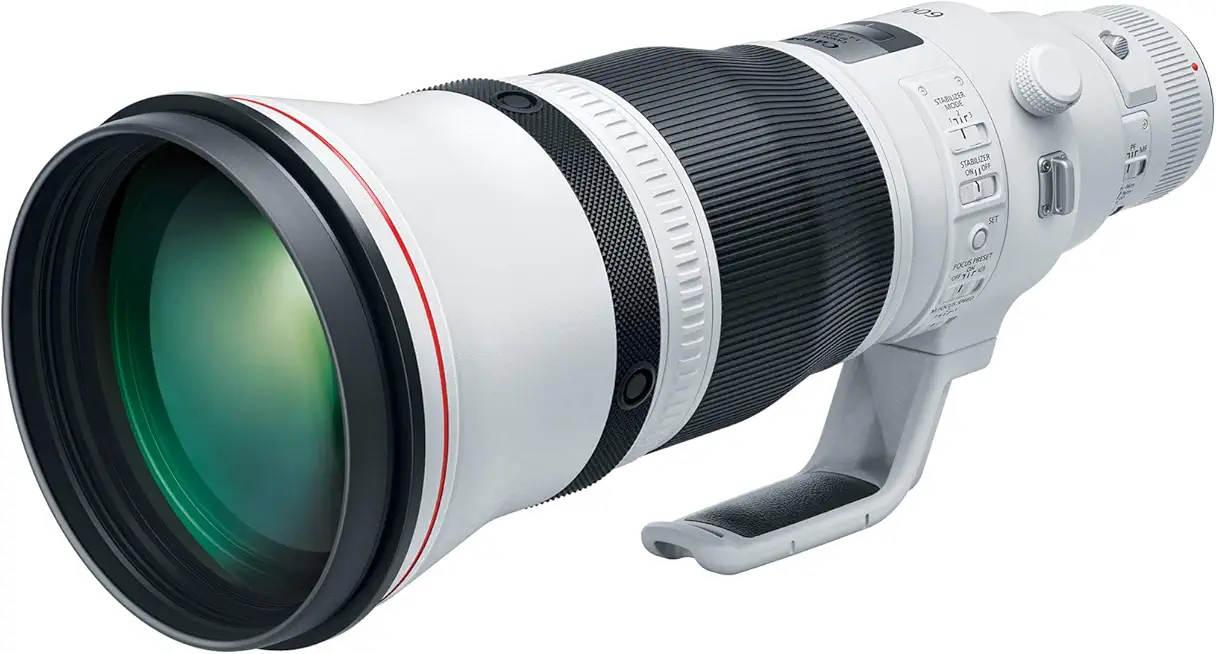
Canon EF 600 mm f/4 L III
Ultra-lightweight pro-grade 600mm f/4 prime designed for demanding field use. Delivers razor-sharp resolution, class-leading stabilization, swift AF tracking, and durable sealing for reliable performance in action and nature photography.
Check PriceI’ve used the EF 600mm f/4L III a lot on Canon bodies (and on RF bodies via the adapter). In the field it feels very confidence-inspiring — sharp, quick to focus, and lighter-feeling than you’d expect from a 600mm f/4. It’s easier to shoulder for long glassing sessions and it balances nicely on monopods and gimbals.
Compared with the RF 600, the EF III’s real-world wins are weight/feel and a slightly smaller footprint that makes long hikes and fast repositioning easier. On the downside it’s not a native RF lens, so you’ll miss a few of the RF ergonomics and controls unless you use Canon’s adapter. AF and stabilization are excellent, but some newer RF-body features — like certain body/lens IS coordination and RF-only custom controls — aren’t as seamless.
Who should pick this: a pro or serious enthusiast who wants a true 600mm f/4 prime but values lighter carry and proven field handling, and who doesn’t mind using an adapter on RF bodies. It’s a great choice for traveling wildlife shooters and birders who need full reach but want less bulk during long days outdoors.
Alternative 2:

Canon RF 100-400 mm f/5.6-8
Compact travel telezoom offering versatile 100–400mm reach in a lightweight package. Ideal for travel, wildlife and everyday telephoto needs; stable handheld shooting, responsive autofocus, and efficient portability.
Check PriceI’ve carried the RF 100-400mm on trips where weight and space matter. It’s small, light, and lets you zoom from medium to long tele in a heartbeat. For birds at medium distance, travel wildlife and general run-and-gun telephoto work it’s a joy to use because you can move fast and keep shooting without getting worn out.
Compared to the RF 600mm f/4, this zoom’s strengths are portability and flexibility. You gain a lot in how quickly you can compose and change focal length, and it’s much easier to handhold for long stretches. The compromises are obvious: less reach and a much slower maximum aperture, so low-light performance, background separation and extreme subject isolation aren’t as strong as the 600mm f/4.
Who should pick this: travel shooters, casual wildlife photographers, and hobbyists who need a light, versatile tele that’s easy to carry and still gets you close enough for many subjects. If you rarely need the absolute reach or the low-light headroom of a 600mm f/4, this lens will make your life in the field simpler.
Alternative 3:
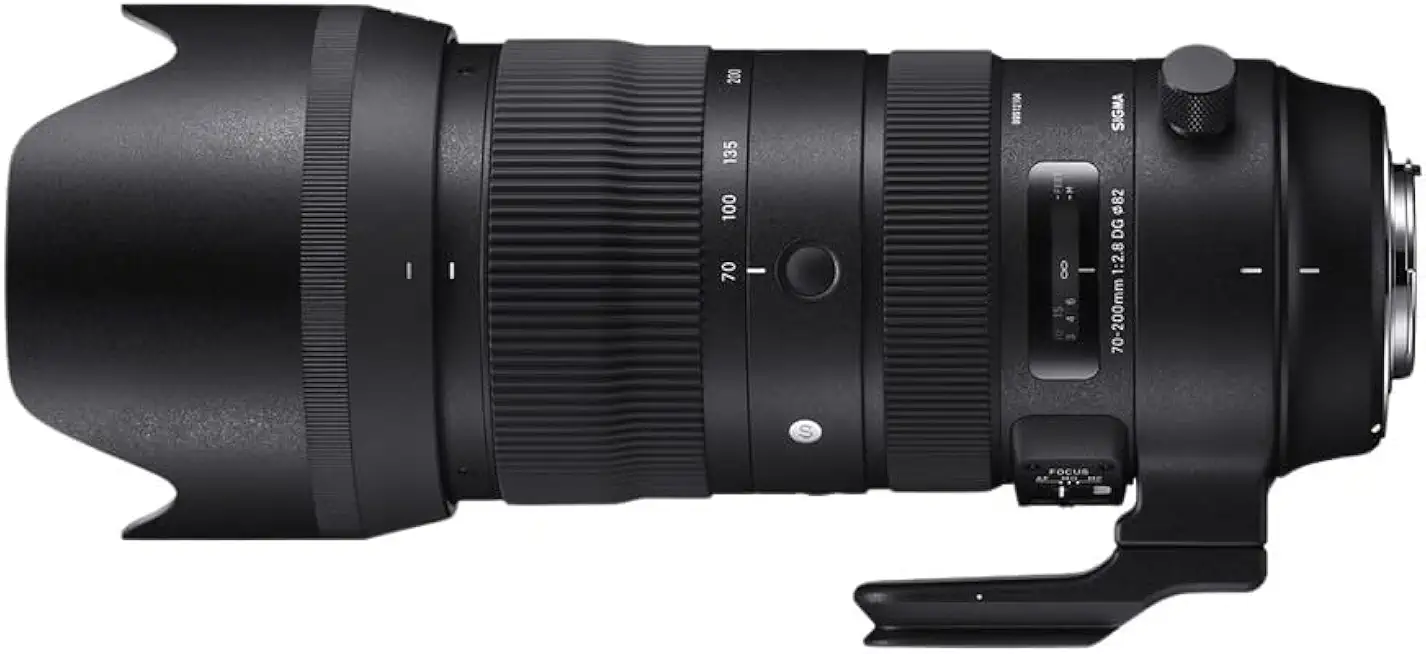
Sigma Canon 70-200 mm f/2.8 Sports
Pro-grade constant f/2.8 telezoom engineered for peak resolution and contrast across the frame. Robust Sports-series build, weather resistance, fast precise AF and smooth handling for shooters demanding speed.
Check PriceI’ve used the Sigma 70-200mm f/2.8 Sports at weddings, indoor sports and track meets. It’s fast, rugged and very reliable for close-to-mid-distance action. The constant f/2.8 makes a huge difference in gymnasiums, late-afternoon games, and any situation where you need higher shutter speeds and subject separation.
Against the RF 600mm f/4, the Sigma’s big advantages are speed and versatility at shorter distances. You get a much brighter lens for low light, better subject isolation, and a focal range that covers portraits and most sideline sports. What it can’t do is reach distant birds or athletes on a far-away field — you give up long reach and need teleconverters (with trade-offs) to even approach 400–600mm.
Who should pick this: sports, wedding, and event shooters, or anyone who works closer to the action and needs an f/2.8 for low light and fast shutter speeds. If you spend most of your time on the sidelines or indoors rather than stalking distant wildlife, this lens will serve you better day-to-day than a 600mm prime.
What People Ask Most
What camera bodies are compatible with the Canon RF 600mm F4 L IS USM?
It uses the Canon RF mount and is designed for Canon EOS R-series bodies.
Does the RF 600mm f/4 support image stabilization with Canon IBIS cameras?
The lens has built-in IS rated up to 5.5 stops and three IS modes, but some camera bodies won’t gain full coordinated IBIS benefits.
How close can the Canon RF 600mm F4 L IS USM focus?
Minimum focus distance is about 4.2 meters (13.8 feet) with roughly 0.15–0.17x maximum magnification.
Is the optical design of the RF 600mm f/4 new or based on an earlier lens?
The outline lists a modern 17-element design with Super UD and fluorite elements plus SSC and ASC coatings, but it doesn’t say whether it’s based on an earlier lens.
Can the RF 600mm f/4 be used with Canon RF teleconverters?
Yes — it supports Canon RF 1.4x and 2x extenders for extra reach.
How quiet and fast is the autofocus on the RF 600mm f/4 for wildlife video?
Autofocus is very fast and quiet, and it’s video-friendly with minimal focus breathing.
What types of photography is the Canon RF 600mm f/4 best suited for?
It’s ideal for professional wildlife and fast-action sports where extreme reach, f/4 performance and robust AF/IS are required, but not well suited for macro, casual, or budget-focused shooters.
Who This Lens Is / Isn’t For
this lens is ideal for professional wildlife shooters who need extreme reach and a bright f/4. this lens also suits sports and action photographers who want fast, quiet autofocus and strong stabilization. i’ve seen dedicated shooters rely on this lens for long days in the field and expect pro-level results.
this lens shines on birds in flight, distant mammals, and stadium sports where framing from far away matters. this lens works well handheld more often than you’d expect because of balanced design and effective stabilization. this lens pairs nicely with teleconverters when you need more reach without changing systems.
this lens should be skipped by budget-conscious shooters and casual hobbyists who rarely need 600mm reach. this lens is a poor choice for close-up or macro work, travel shooters who want the lightest kit, or beginners wanting one versatile lens. if you don’t need professional reach or won’t use this lens often, rent it when you do instead of buying.
Should You Buy It?
The Canon RF 600 mm f/4 L is the most capable super-telephoto I’ve used for demanding wildlife and sports work. It delivers optical excellence, rock‑solid construction and autofocus reliability that professionals can trust, and it feels engineered for real-world fieldwork rather than showroom specs. When the moment matters, this lens behaves like a tool you can depend on.
This lens produces images with breathtaking clarity, near-silent focusing and stabilization that keeps shots usable when others fail, which matters when subjects are fleeting. Weather sealing, balanced handling and handy controls let you keep shooting in harsh conditions without constant fatigue. The trade-offs are price and size, which limit it to specialists and those who really need its reach and performance.
For pros whose assignments depend on speed, reach and unflinching performance, this lens is a no-compromise tool worth the investment and the logistical effort it demands. For enthusiasts or travelers seeking lighter, more affordable options, its cost and bulk are hard to justify against less extreme alternatives. Buy it if your work demands the best; skip it if portability, budget, or close-up versatility matter more.
Canon RF 600 mm f/4 L
A super-telephoto f/4 prime delivering exceptional reach and subject isolation for pro sports and wildlife. Outstanding optics, fast autofocus, robust weather sealing and handling for critical long-range performance.
Check Price




0 Comments