
You want sharper, larger-than-life landscape prints, but you’re wondering what camera does peter lik use to make them. This piece will show how gear choices translate to sharper shots, cleaner stitching, and a faster workflow for big prints. You’ll learn which choices actually change print quality and which are just gear noise for photographers chasing large, fine-art reproductions.
Most stories act like he’s loyal to a single brand—that’s misleading and oversimplifies his approach. You’ll get practical pointers if you’re an intermediate or pro landscape or night-sky shooter planning huge gallery or retail prints, especially when time on location is limited. The advice is aimed at field work, long exposures, and print-focused post-processing.
You’ll also hear one surprising myth and one common mistake this article will unpack later. We’ll cut through rumors with confirmed interviews and forum analysis, not long spec lists or jargon. So keep reading because the fix is simpler than you think.
Camera Brands Peter Lik Has Used Historically
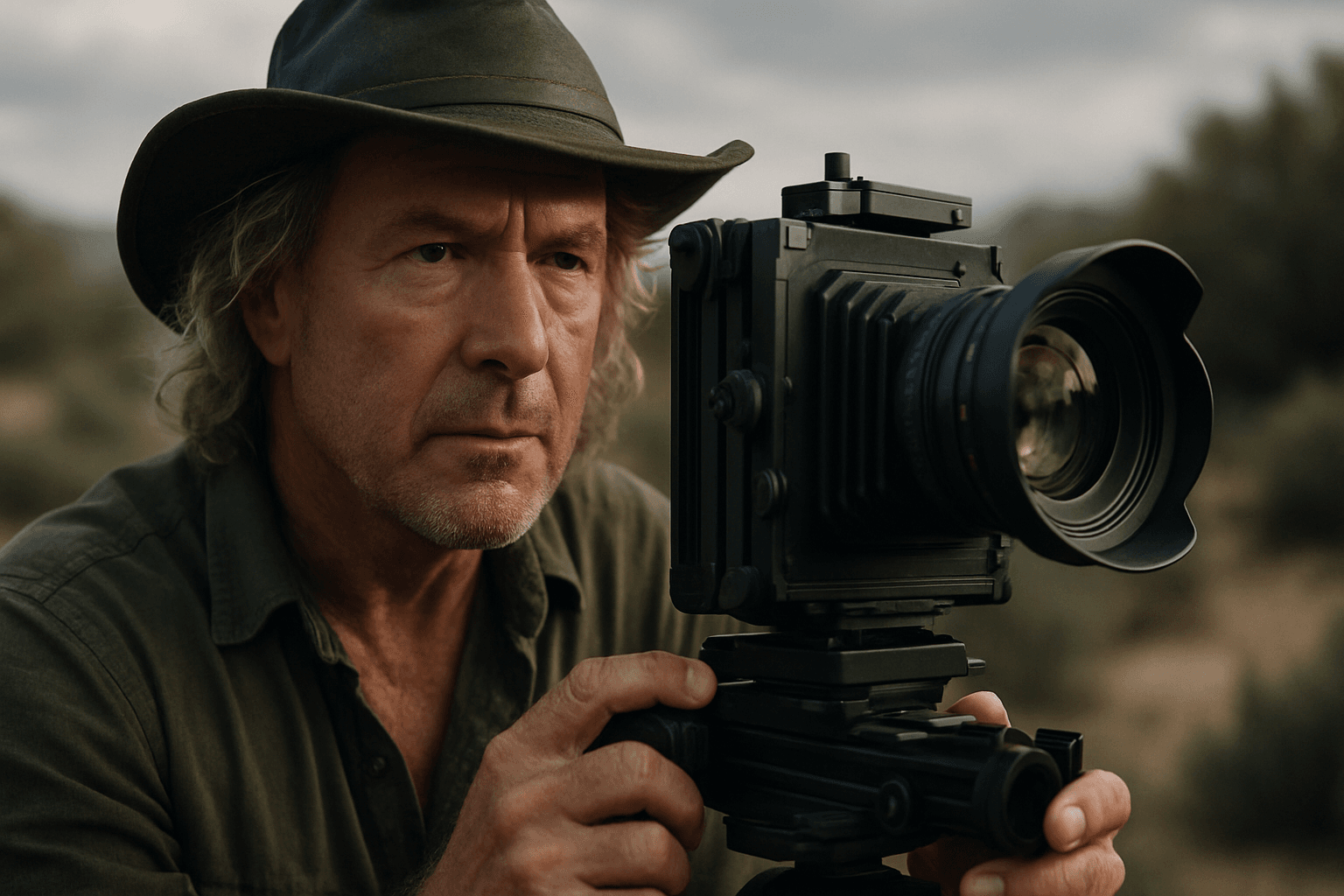
People often ask what camera does Peter Lik use, and the real answer is breadth. He has shot with Linhof, Phase One, Hasselblad, Polaroid, Canon, Nikon, Leica, Fuji, Pentax, and Samsung smartphones.
That range tells me he chases results, not logos. When a landscape demands medium format discipline, he leans that way. When speed or portability matter, he grabs lighter, faster tools.
I’ve watched artists evolve by picking the right hammer for the nail. Lik embodies that approach, moving between film and digital bodies without hesitation to serve the final print.
So no, he doesn’t limit himself to a single brand. He builds a toolkit that spans formats and eras, letting the subject dictate the gear rather than the other way around.
Specific Camera Systems and Models (Publicly Confirmed)
Exact model names are surprisingly scarce in public records. Interviews reference brands and formats, but not serial-number level details you might expect from fan lists.
That gap is normal for artists focused on output, not spec sheets. Treat brand-level confirmations and format choices from interviews as the reliable baseline.
For example, he has discussed smartphones and broader gear choices in a recent interview. Use these touchpoints to understand his systems without inventing unverified model lists.
When beginners ask what camera does Peter Lik use, I steer them to format decisions. Knowing medium versus large format, or stitched versus single capture, reveals more than model names.
High-Resolution Capture: Megapixels, Stitching & Medium/Large Format Use
Lik’s large prints suggest frame-equivalent resolutions around 140–160 megapixels. That scale usually comes from medium or large-format sensors combined with multi-frame stitching.
Medium format means physically larger sensors than typical DSLRs, gathering more detail per shot. Large format goes bigger still, historically on sheets of film, with exceptional tonal richness.
Analyses by photographers and enthusiasts peg those 140–160 MP figures, and the stitching approach, in forum analysis. The numbers align with what I’ve seen in gallery-sized outputs.
Multi-frame Stitching: How and Why Lik Uses It
Stitching is simply merging overlapping frames into one huge image. It increases effective resolution, reduces noise through averaging, and preserves fine textures for ultra-large prints.
Picture a sweeping canyon at sunrise. One medium-format exposure might be plenty for a 40-inch print, but a stitched panorama of six frames can stay razor-sharp even past ten feet wide.
Astrophotography and Specialty Astro Cameras
For night-sky work, Lik pairs his landscape rigs with dedicated astro cameras. These often have cooled sensors, which reduce heat-induced noise during very long exposures.
Tracking mounts are crucial. They rotate the camera to match Earth’s movement, keeping stars pin-sharp while the shutter stays open for minutes rather than seconds.
In practice, he might capture a tracked sky for detail and an untracked foreground for sharp terrain. The files then combine cleanly, preserving stars and land without motion blur.
This astro kit integrates into his broader workflow. RAW files flow into the same color-managed pipeline, and stitched skies or mosaics slot into large-format print layouts seamlessly.
Lenses, Tripods and Support Gear
Landscape lenses tend to cluster around ultra-wide, standard, and short telephoto ranges. Ultra-wides carve big drama; standard primes are versatile; short teles compress layers in distant peaks.
Tilt-shift lenses help correct perspective and improve plane-of-focus control. When stitching, they also reduce distortion, making merges cleaner and faster in post.
Stability is everything at big print sizes. I favor Really Right Stuff carbon-fiber tripods and heavy-duty ball heads, and Lik’s work reflects that level of rock-solid support.
Add a leveling base and nodal rail for precise panoramas. With those tools, overlaps stay perfect, and merging software has fewer decisions to guess, preserving micro-contrast.
Digital vs Film and Smartphone Use
Lik straddles both digital and film, choosing the medium that serves the subject. Film brings creamy highlight roll-off; digital brings dynamic range and precise color control.
He has occasionally used Samsung smartphones for opportunistic captures and scouting. A phone shot can be a sketch, pointing to where the larger system should go tomorrow.
When someone asks what camera does Peter Lik use, I highlight his flexibility. The project dictates the medium, whether that’s a 100+ MP back or a pocketable phone.
Polaroids and instant film also play a role as proofing tools. They provide quick feedback in the field when light is changing and time is tight.
Shooting RAW and Post-Processing Workflow
RAW files preserve all sensor data, unlike JPEGs that bake in decisions. Lik’s focus on big prints makes RAW essential for maximum detail and flexible color grading.
In my workflow, that means 16-bit editing, wide-gamut profiles, and careful noise reduction. It also means calibrated monitors and a consistent viewing environment for accurate decisions.
Stitched files can balloon to gigabytes, so I stage edits: lens corrections, merge, then global grading. Only after that do I sharpen selectively for the final print size.
This discipline keeps the file chain clean. It ensures the captured detail remains intact all the way to the paper or acrylic face mount.
Printing Techniques and How Camera Output Relates to Print Size/Quality
Lik’s prints often use FujiFlex silver halide paper with acrylic face mounting. The result is deep blacks, saturated color, and a luminous, almost backlit look on the wall.
He also employs Epson SureColor printers and premium Hahnemühle papers when the image benefits from a fine-art matte or textured finish. Each paper amplifies different visual qualities.
Source resolution dictates maximum size. If a stitched file reaches 150 MP, I can push ten feet wide with confidence, or even create multi-panel assemblies up to roughly 27 feet.
For a thorough overview, see his printing process details. You’ll notice how camera choices upstream directly shape material choices downstream.
Practical Case Studies & Gear Rationale (Differentiation)
Sunrise landscape: I’d pick a medium-format body with a 32–64mm zoom, on a leveling base and heavy ball head. I’d bracket exposures in RAW and consider a three-frame stitch for width.
Astro vista: I’d use a cooled astro camera on a tracking mount with a fast 24mm lens. One tracked sky exposure pairs with a high-ISO, untracked foreground for natural detail.
Gallery wall panorama: I’d plan a six-frame medium-format stitch, overlapping 30% with a nodal rail to avoid parallax. Files merge to a 150 MP master sized for acrylic face mounting.
Technological Challenges and Innovations in Lik’s Workflow
Huge files strain hardware, and stitching can introduce seams or warped horizons. Careful overlap, consistent exposure, and calibrated lenses are the antidotes to those artifacts.
Heat, wind, and vibration threaten long exposures. I weigh down the tripod, shield from gusts, and use electronic shutter modes to minimize internal vibrations.
Astro sessions add noise and tracking errors. Stacking multiple frames and fine-tuning polar alignment help, while cooled sensors suppress thermal noise for cleaner star fields.
All this circles back to that common question: what camera does Peter Lik use? It’s really about systems working together—sensors, stabilization, stitching, and printing—engineered for monumental scale.
What People Ask Most
Which camera brand does Peter Lik prefer for landscape photography?
From what I know, Peter Lik doesn’t limit himself to a single brand—he’s used Linhof, Phase One, Hasselblad, Polaroid, Canon, Nikon, Leica, Fuji, Pentax and even Samsung smartphones, choosing the gear that fits the project. His selections are driven by the capture requirements rather than brand loyalty.
Has Peter Lik ever used medium format cameras in his work?
Yes—public reporting and his very high-resolution output indicate he has used medium- and large-format systems to reach frame-equivalent resolutions in the ~140–160 megapixel range. Specific model names are scarce in reporting, so brand-level confirmations are usually the factual baseline I rely on.
Does Peter Lik shoot digital or film cameras primarily?
He uses a mix of digital and film and adapts the format to the needs of each project, so neither medium is exclusive in his work. The choice is practical—digital for high-resolution control and film when the project calls for its look or workflow.
What role do smartphones play in Peter Lik’s photography?
Smartphones, notably Samsung in interviews, are used occasionally for scouting or quick captures, but they complement rather than replace his high-resolution landscape and large-print workflows. He reserves his primary capture tools for final-production images.
How does Peter Lik capture starry night or astrophotography images?
He employs specialized astro cameras and tracking gear alongside his landscape rigs, using long exposures, tracking (which moves the mount to follow the stars) and sometimes stacking to keep stars sharp and noise low. Those astro systems are integrated into his workflow specifically for night-sky work.
How important is shooting in RAW format according to Peter Lik?
Very important—he emphasizes shooting RAW to maximize image quality and give greater control in post-processing for color grading and large-format output. RAW files store more sensor data than JPEG, which provides more editing headroom for critical print work.
Final Thoughts on Peter Lik’s Gear Choices
If you asked what camera does peter lik use, this article answered that question and the deeper one: why he picks different tools. We showed that his choices—medium-format captures, stitched files, specialty astro rigs and occasional smartphones—are driven by the demands of monumental prints rather than brand loyalty. That perspective turns a gear curiosity into practical guidance for your own work.
The core insight is simple: process and output beat logos when you’re aiming for gallery-scale work. Still, be honest about limits—big files, heavy support gear and cost make this approach a real commitment. The guidance will serve landscape and fine-art shooters, printers making large panels, and serious astro photographers most of all.
We began with a naked gear question and ended with a clearer measure: choose tools that answer your print and night-sky goals. Use these principles—match format to output, favor RAW, stabilize for stitching—as a test on one shoot to see how much difference method makes. You’ll learn more by doing than by debating specs.




0 Comments