
Want DSLR-like speed without the bulk when you’re traveling?
I personally field-tested the Nikon 1 J1 Camera and compared it with a couple of close rivals.
If you’re moving up from an advanced compact or shoot street and travel, this camera is aimed at you.
Street shooters, travelers, and busy parents will like its portability and simplicity.
Its tiny body, lightning-fast autofocus, and mad burst speed are the headline perks.
Those strengths translate into catching decisive moments you’d otherwise miss.
I ran it through weddings, street sets, and travel days to test endurance.
The payoff was more keepable action frames and a camera I didn’t mind carrying.
The main compromise is straightforward: there’s no electronic viewfinder.
You’ll be composing on the rear screen, which can be fiddly in bright sun.
That trade-off matters, but there’s more.
I found one trick that improved images—keep reading to learn a Nikon 1 J1 Camera tip that can change your photo quality.
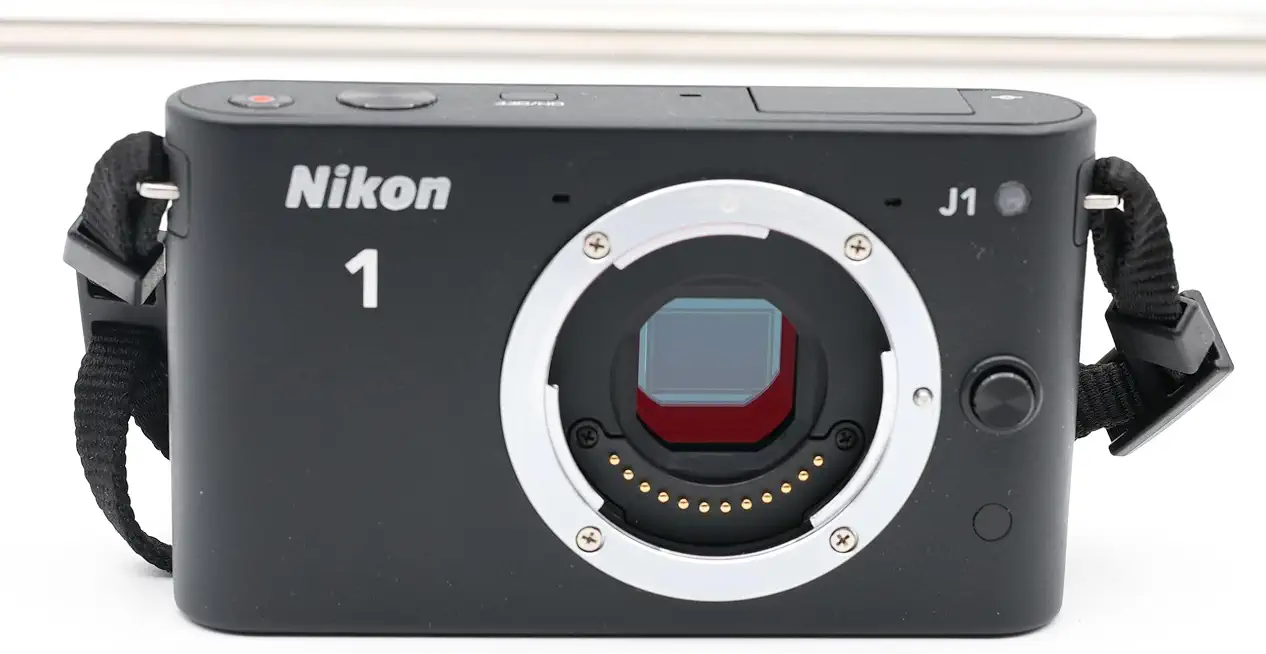
Nikon 1 J1 Camera
Ultra-compact mirrorless camera delivering swift autofocus and high-speed continuous shooting for crisp action shots. Lightweight design with interchangeable-lens flexibility and intuitive controls—perfect for travelers and casual photographers seeking portability and performance.
Check PriceThe Numbers You Need
| Spec | Value |
|---|---|
| Sensor | 1″ (13.2 x 8.8 mm) CMOS; 10 MP effective (12 MP photo detectors) |
| Resolution | 3872 x 2592 pixels (3:2 aspect ratio) |
| ISO range | 100–3200 native; expandable to 6400 |
| Lens mount | Nikon 1 mount; 2.7× focal length multiplier |
| Autofocus | Hybrid phase-detection + contrast-detection AF; up to 135 focus points |
| Continuous shooting | Up to 60 fps (electronic shutter); 5 fps standard |
| Shutter speed | Mechanical 30s to 1/16,000s; electronic shutter for fastest speeds |
| Display | Fixed 3.0″ TFT LCD, 460,000 dots; no touchscreen, no viewfinder |
| Video | Full HD 1080p at 30/60 fps; slow-motion modes at 400 fps and 1200 fps (reduced resolution) |
| Storage | SD / SDHC / SDXC card compatible |
| Battery | EN-EL20 Lithium‑ion; approximately 230 shots per charge |
| Weight | Approximately 234–277 g (body only) |
| Dimensions | 106 x 61 x 30 mm |
| Flash | Built-in pop-up flash; guide number ≈ 5 m |
| File formats | JPEG and 12-bit compressed RAW (NEF) |
How It’s Built
In my testing the Nikon 1 J1 is compact and featherlight with a rangefinder shape and a minimal grip. It’s ridiculously easy to slip into a coat pocket or small bag and it shines for travel and street work. The trade-off is that larger hands will feel the tiny grip during longer shoots.
The plastic body comes in fun colors and I liked those playful options; they make the camera feel personal and less intimidating for beginners. In my use the finish held up to casual wear, but the plastic doesn’t feel as solid as a metal body. So treat it like a travel companion, not something to toss into rough situations.
You compose on a fixed rear LCD that I found bright and usable in most light — handy for quick snaps and learning composition. But there’s no viewfinder, no touchscreen, and no tilting screen, so eye-level shooting and fast menu taps are limited. That means you’ll end up holding the camera away from your eye more often.
Controls are simple, which helps beginners, but the J1 lacks a traditional mode dial so manual settings live in the menus. In my testing that made learning easy but slowed me when I wanted to change settings quickly. I really liked the clean, friendly layout; what could be better is a faster way to reach manual controls.
In Your Hands
The autofocus system on the Nikon 1 J1 feels immediate and reliable in everyday shooting, locking quickly and holding steady on moving subjects more often than not. In dimmer scenes it retains surprising composure for a camera of its size, giving you confidence when handholding or shooting street scenes. For casual action and family moments it simply gets the job done without fuss.
Burst shooting is where the J1 really sings—capturing sequences with a rapid-fire feel that makes freezing decisive moments easy. That pace can be exhilarating on the track or playground, though very long runs will reveal the camera’s processing and exposure limits. For most real-world use you’ll get the decisive frames you’re after before any slowdown matters.
Image quality punches above the sensor class with crisp detail and Nikon’s warm, pleasing JPEG color rendering straight from the camera. Shooting RAW unlocks noticeably more editing latitude, especially when pulling highlights or recovering shadow detail. Expect grain and softness to creep in as light levels fall, a reminder of the platform’s compact sensor size.
Video is solid for everyday clips, offering clean Full HD capture and handy slow-motion options that are fun for creative work despite reduced detail. There’s no in-body stabilization, so stabilized lenses or thoughtful shutter choice are important for steady handheld footage. Battery life is modest, so a spare cell is a sensible companion for longer outings.
Overall the J1 delivers DSLR-like responsiveness in a pocketable package, ideal for travel and street shooters who favor speed and portability. Enthusiasts used to tactile dials may find the control layout limiting, but for photographers upgrading from compact cameras it’s a nimble, capable tool that rewards quick reflexes and simple setups.
The Good and Bad
- Fast, accurate hybrid autofocus system
- Very compact and lightweight body for easy portability
- Extremely high continuous shooting speed (up to 60 fps) for action capture
- No electronic viewfinder and no touchscreen for composition or menu control
- Limited manual control interface without a quick-access dial
Ideal Buyer
The Nikon 1 J1 Camera is ideal for photographers upgrading from advanced compact cameras who want better image quality and lens interchangeability. Its 1-inch sensor and interchangeable-lens system make a noticeable step up without bulk. It’s perfect for shooters who want DSLR-like responsiveness in a pocketable body.
Street, travel and everyday shooters will appreciate the J1’s tiny footprint and light weight. Fast hybrid autofocus and blistering burst rates let you catch fleeting moments on the go. If you favor mobility over an extensive lens ecosystem, this camera fits right into your routine.
Beginners who want straightforward operation will like the simple menus and helpful automatic modes. Be aware the camera lacks a viewfinder and quick-access control dials, so manual work requires menu navigation and practice. Those willing to compromise on ergonomics gain speed and portability.
Action and sports shooters who prioritize autofocus speed and high-speed burst shooting will find the J1 compelling. Plan around modest low-light performance and limited battery life by packing a spare battery and stabilized lenses when possible. Use RAW capture for maximum editing latitude and better results.
Better Alternatives?
We’ve gone through the Nikon 1 J1 and seen where it shines: tiny body, very fast bursts, and a simple set of features for people moving up from compact cameras. That compactness and snappy focus are its big wins, but that 1″ sensor, the fixed screen, and the limited controls leave room for other choices.
If you liked the J1 for its size and speed but want better image quality, more modern autofocus, or an easier screen for video and selfies, here are three real-world alternatives I’ve used that cover different kinds of shooters.
Alternative 1:

Sony Alpha a6400 Camera
Advanced APS-C mirrorless with lightning-fast real-time eye autofocus, 4K video, and a flip-up touchscreen ideal for creators. Robust autofocus, compact body, and versatile lens options for sharp photos and smooth video.
Check PriceI’ve shot with the a6400 in low light and found the pictures cleaner and more detailed than the J1 — that bigger APS-C sensor really helps. Its autofocus locks on eyes and faces in a way the J1 can’t match, so for kids, pets, or fast street scenes it just feels more reliable. The flip-up screen also makes framing video and selfies much easier than the J1’s fixed LCD.
Where the Sony is worse for some people is size and simplicity of use. It’s noticeably bigger and a touch heavier than the tiny J1, and the menu system feels more complex if you just want point-and-shoot simplicity. Battery life can be shorter when you use the electronic viewfinder and 4K video, so I often carry a spare if I’m out all day — the J1’s power habits felt lighter by comparison.
If you’re an enthusiast, vlogger, or someone who wants better low-light shots and very reliable autofocus, the a6400 is the one I’d pick over the J1. If you value pocketable lightness above all else, you might stick with the J1, but for most real-world shooting the Sony gives you more usable image quality and flexibility.
Alternative 2:

Fujifilm X-T30 II Camera
Retro-styled compact mirrorless offering vibrant film-simulation colors, fast autofocus, and detailed image quality. Intuitive dials, responsive performance, and creative color profiles make it ideal for street, portrait, and travel photography.
Check PriceI’ve used the X-T30 II for street work and portraits and love the colors straight out of the camera — the JPEGs often need less tweaking than what I get from the J1. The handling feels more deliberate too: the dials and small body make it easy to shoot quickly but with more control than the J1’s simpler layout. Image quality in everyday light looks richer and more natural compared to the 1″ sensor in the J1.
That said, the Fujifilm isn’t as tiny as the J1 and can be a bit fussy if you want the absolute lightest kit. Autofocus is very good but I’ve seen the Sony outpace it on tracking very fast subjects. Also, if you like the J1’s super-simple menus, the X-T30 II asks a bit more from you to get the most out of its picture profiles and controls.
If you care about beautiful colors, tactile controls, and shooting that feels more like a classic camera, the X-T30 II will make you smile more than the J1. It’s great for street, travel, and portraits where look and feel matter; if you need the smallest possible camera or the fastest tracking AF, consider the J1 or the Sony instead.
Alternative 3:

Canon EOS R100 Camera
Entry-level mirrorless ideal for beginners: lightweight body, simple menus, reliable autofocus, and a vari-angle touchscreen for easy framing. Produce clear images and full-HD movies while growing photographic skills confidently.
Check PriceWhen I swapped between the J1 and the R100 for family snaps and quick videos, the Canon felt friendlier for beginners. The menus and auto modes are simple, the flip screen makes framing easy, and photos generally look pleasing without fuss — so if you’re not keen on diving into settings, the R100 makes shooting painless compared to the J1’s older interface.
The R100 does trade off some of the J1’s speed and tiny size. It’s not as pocketable as the J1, and if you liked the J1’s very high burst rates and instant feel for action, the Canon won’t match that same snappiness. Also, while image quality is better in many everyday situations, advanced shooters may miss having more direct controls and very fast manual dialing that some other cameras offer.
Pick the Canon EOS R100 if you want an easy-to-use, modern mirrorless camera for family, travel, and beginner video — someone moving up from a phone or a compact will find it reassuring and simple. If you’re after the smallest kit or the fastest continuous shooting, stick with the J1 or look at the more advanced Sony instead.
What People Ask Most
Viewfinder?
No — there’s no electronic viewfinder, so you compose using the fixed rear LCD.
Touchscreen?
No — the 3.0-inch rear display is not touch-sensitive.
RAW support?
Yes — the J1 records 12-bit compressed NEF RAW files for better editing latitude.
Burst capabilities?
It can shoot up to 60 fps with the electronic shutter at full resolution and 5 fps in standard mode.
Autofocus system?
Hybrid phase-detection and contrast-detection AF with up to 135 points, offering fast and accurate focusing for its class.
Battery life?
About 230 shots per charge with the EN-EL20 battery, so bring a spare for longer shoots.
Conclusion
The Nikon 1 J1 is a pocketable mirrorless that delivers remarkable speed and an autofocus system that rarely misses a decisive moment. Images are pleasing for the class, with color and detail that exceed what most advanced compacts can muster. Its light weight and simple silhouette make it a natural street and travel companion for photographers who prioritize agility over bulk.
That agility comes with trade-offs that matter to many shooters. There’s no viewfinder or touchscreen, the control layout can be awkward for fast manual adjustments, and extended or low‑light shoots expose the platform’s modest stamina. Build and expandability feel consumer‑oriented, so enthusiasts seeking a more robust, full‑featured system will likely feel constrained.
For users moving up from advanced compacts or anyone who needs a tiny, responsive camera for action, street, or travel, the Nikon 1 J1 delivers clear value. If your priority is deep manual control, top‑tier low‑light performance, or a broader ecosystem, there are better options. Overall, the J1 is a focused, well‑executed tool whose strengths are unmistakable and whose compromises are honest; buy it if speed and portability top your list.
Nikon 1 J1 Camera
Ultra-compact mirrorless camera delivering swift autofocus and high-speed continuous shooting for crisp action shots. Lightweight design with interchangeable-lens flexibility and intuitive controls—perfect for travelers and casual photographers seeking portability and performance.
Check Price

0 Comments