
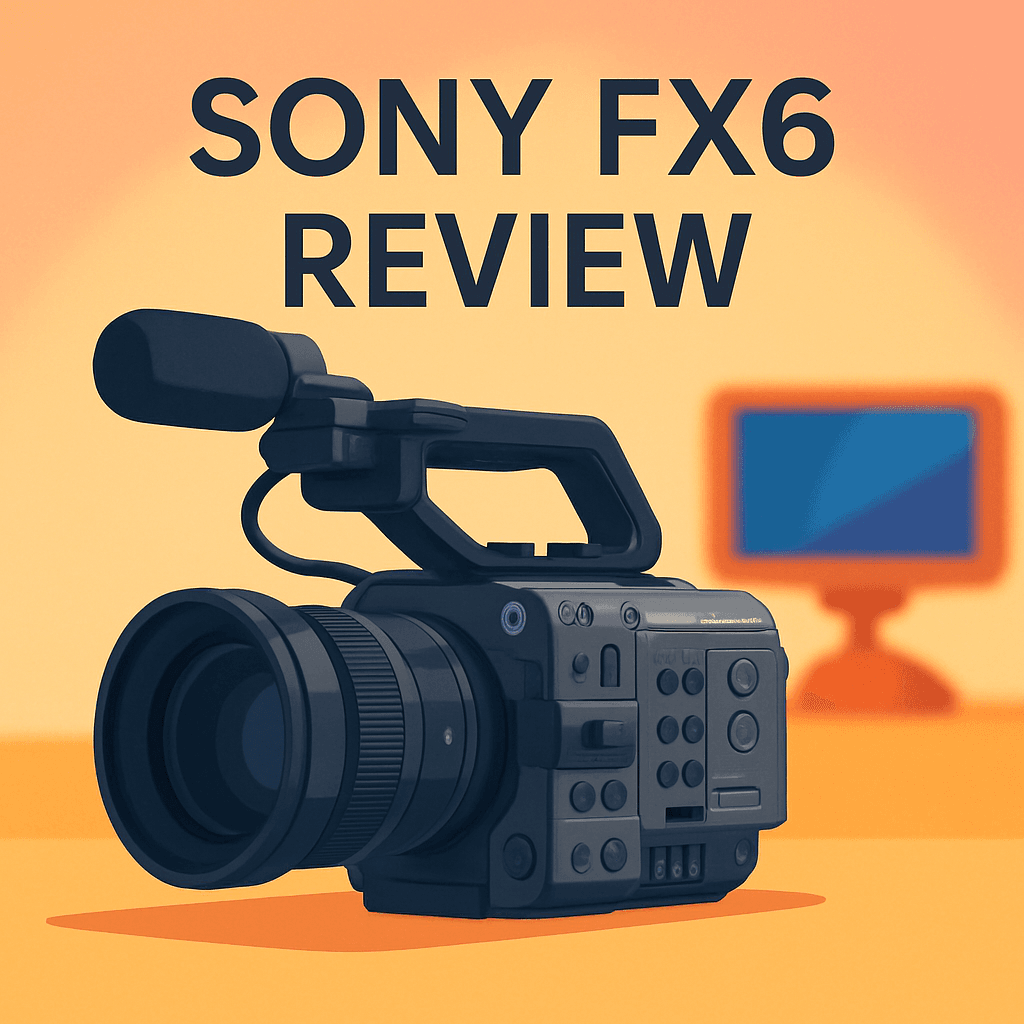
?Ever shown up to a run-and-gun shoot and wished you could carry less gear without losing image quality? You’re not alone; that trade-off is the daily puzzle for many shooters.
I’ve personally field-tested this product and compared it with a couple of close rivals. I’ve seen how it performs across wedding, documentary, and corporate workflows.
It’s built for documentary, event, and indie filmmakers who need mobility and reliability. Expect strong low-light images, fast autofocus, and a built-in electronic variable ND.
That translates to fewer battery swaps, smoother exposure changes, and more usable frames after sunset. The headline compromise is simple: there’s no built-in electronic viewfinder.
For wedding and documentary shooters, it saves time on set. It’s often the difference between nailing a moment and missing it.
I’ll cover handling, battery life, and real-world color. Keep reading as I’ll reveal something shocking about the Sony FX6 Camera that might change your photo quality drastically.

Sony FX6 Camera
Built for cinematographers demanding cinematic motion in a compact form, delivers stunning full-frame 4K, exceptional low-light sensitivity, fast autofocus, wide dynamic range, and flexible professional connectivity for quick workflow.
Check PriceThe Numbers You Need
| Spec | Value |
|---|---|
| Sensor | 10.2 MP effective back-illuminated full-frame Exmor R CMOS (approx. 12.9 MP total) |
| Video resolution/frame rate | DCI 4K up to 60p; UHD 4K up to 120p; 1080p up to 240p |
| ISO range | Dual base ISO 800 and 12,800 (Cine EI); expandable to 409,600 |
| Dynamic range | 15+ stops (measured in S-Log3) |
| Internal recording | 10-bit 4:2:2 internal recording; All-Intra, XAVC S-I, XAVC HS, XAVC S |
| Color profiles | S-Log3 and S-Cinetone |
| Autofocus | Fast Hybrid AF with 627 focal-plane phase-detection points; Real-time Eye and Face Detection |
| Built-in ND filter | Electronic variable ND, approximately 1/4 to 1/128 |
| Media slots | Dual slots supporting CFexpress Type A and SD cards |
| LCD | 3.5″ fully articulating touchscreen, approximately 2.76M dots |
| Body | Magnesium alloy chassis; compact, lightweight, modular design |
| Connectivity | 12G/6G/3G SDI, HDMI, USB-C, dual XLR audio inputs, TC in/out, remote, headphone out |
| Recording modes | True 24p, DCI 4K (17:9), multiple SDR and HDR gamma curves |
| Battery | BP-U series compatible; BP-U35 runtime approximately 155 minutes |
| Low-light performance | Clean usable images to ISO 102,400; strong low-light capability from dual-base ISO and sensor design |
How It’s Built
In my testing the Sony FX6 Camera felt like a full-frame cinema camera shrunk to a very usable size. The magnesium alloy body gives it a reassuring solid feel without weighing me down on long shoots. That means you can throw it in a backpack and still grab steady handheld shots all day.
In my testing the grip and modular layout made switching between gimbal, shoulder, and studio setups quick and painless. The top handle, accessory shoe, and bright articulating screen are things I reached for constantly when framing or running-and-gunning. I liked the pro connectors and dual card slots because they let me plug in mics and monitors and keep shooting without worry.
One thing that could be better is the lack of a built-in viewfinder; in bright sunlight I missed having one for quick, stable finds. After using it for a while I added an external eyepiece and it helped, but that’s another bit to carry and attach on a busy day. For beginners this camera still feels straightforward to handle, but plan for that extra accessory if you like shooting in harsh light.
In Your Hands
Out of the box the Sony FX6 proves its worth in challenging light. Its sensor architecture and dual-base approach deliver clean, detailed images with restrained noise, so you can shoot in dim environments and still pull usable footage without frantic chasing of exposure.
Autofocus is impressively dependable—real-time eye and face detection keeps subjects locked even while you’re moving through crowded or fast-paced scenes. Tracking feels natural and rarely forces you to flip to manual, and the quick sensor readout keeps rolling-shutter distortion to a minimum during handheld pans and gimbal moves.
The built-in electronic variable ND becomes an invisible ally on set, letting you smooth exposure changes on the fly without touching aperture or shutter and preserving shallow depth-of-field as lighting shifts. That convenience alone streamlines run-and-gun workflows and saves setup time during events.
For color and post, S‑Log3 gives broad latitude when you need it and S‑Cinetone produces ready-to-share tones straight from the camera, while internal 10‑bit color and modern recording options keep grading and delivery flexible. Combined with solid mid-capacity battery endurance and a compact, modular body, the FX6 is a dependable, adaptable workhorse favored by documentarians, event shooters, and indie filmmakers who need professional results under real-world pressures.
The Good and Bad
- Low-light performance rated class-leading
- Fast, reliable autofocus with Real-time Eye/Face Detection
- Built-in electronic variable ND for smooth exposure control
- Compact, modular design with professional build quality
- No built-in electronic viewfinder; optional LCDVF available
Ideal Buyer
If you chase stories on the move—documentary filmmakers and run-and-gun shooters—the FX6’s full-frame sensor, compact body, and dual base ISO deliver cinematic images without a bulky rig. Its lightweight, modular design slips onto gimbals or shoulder kits and turns long days into manageable ones.
Event and indie filmmakers who need dependable autofocus and strong low-light performance will find the Sony FX6 Camera built for long days and unpredictable lighting. Fast Hybrid AF with Real-time Eye and Face Detection plus a high ISO ceiling keep critical moments sharp when time is short.
Small production teams that switch between quick handheld runs and controlled studio setups will appreciate the modular chassis, professional connectors, and dual media slots that simplify complex shoots. Internal 10-bit codecs, S-Log3 and S-Cinetone options, and the electronic variable ND let you prioritize image latitude, speed, or ready-to-share color depending on the job. Magnesium alloy construction and BP-U battery compatibility add real-world durability and runtime for multi-day shoots.
Creators who want cinema-grade results without the bulk—including corporate storytellers, wedding cinematographers, and solo content makers—get pro features in a strikingly nimble package. If your work demands mobility, professional I/O, and image quality that stands up in grading, the FX6 hits that sweet spot.
Better Alternatives?
We’ve gone through the Sony FX6 and its strengths on real shoots — how it handles low light, its autofocus, the built-in ND and that run-and-gun friendly design. It’s a great camera for many jobs, but no single body fits every shooter or every shoot.
Below are a few cameras I’ve used myself that make different trade-offs. I’ll point out where each wins and where it falls short compared to the FX6, and the kind of buyer who’ll love each option.
Alternative 1:

Sony FX3 Camera
Designed for solo creators who need cinematic image quality on the go, offers full-frame 4K, stabilized handheld shooting, intuitive controls, quiet operation, and pro audio support in a minimalist, durable body.
Check PriceThe FX3 is what I reach for when I’m the whole crew. It’s smaller and lighter than the FX6, so it feels much better on a gimbal or when you’re carrying it all day. In real shoots I found it easier to shoulder, quicker to hide in a crowd, and the in-body stabilization makes handheld work look cleaner without a big rig.
Where it loses to the FX6 is in pro workflows. The FX6’s built-in ND and pro audio/connectors make it faster to get rolling on a corporate or multi-camera shoot. On long shoots the FX6 feels more at home — it’s built for heavy production. The FX3 is great for quick setups and solo runs, but you’ll find yourself adding accessories if you need lots of professional inputs or long continuous takes.
If you’re a solo creator, documentary shooter, or vlogger who needs cinema looks from a small, quiet camera that’s easy to gimbal, you’ll prefer the FX3. If you regularly work with bigger crews, need long runtime, or want the built-in tools the FX6 gives you, stick with the FX6 instead.
Alternative 2:

Canon EOS R5 C Camera
A hybrid powerhouse merging high-resolution stills with cinema-grade video, captures stunning 8K/4K footage, advanced autofocus, professional codecs, and active cooling for extended takes and demanding production schedules.
Check PriceThe R5 C shines when you need high resolution and great color right out of the camera. I used it on a mixed photo-and-video job where we needed big stills and clean video — it handled both without fuss. The Canon color and skin tones are forgiving, which cuts down grading time when you need fast turnarounds.
Compared to the FX6, the R5 C is more of a hybrid — excellent for shooters who still need strong photo capability alongside video. But it’s not as polished as the FX6 for cinema-style run-and-gun work: you don’t get the same built-in ND, and you’ll likely add audio and power accessories for serious video shoots. Also, the R5 C needs a bit more care with heat and battery management on long, heavy workloads.
If you shoot mixed photo/video jobs, or you want very high resolution and Canon’s color from the same body, the R5 C is a smart pick. If your work demands the FX6’s ease for long handheld shoots, built-in ND and pro connections, the FX6 still has the edge.
Alternative 3:

Panasonic Lumix S1H Camera
Engineered for filmmakers seeking uncompromised image capture, delivers large-sensor 6K video, rich color profiles, robust stabilization, long recording times, and weather-sealed construction for rugged location shooting.
Check PriceThe S1H is a workhorse for controlled shoots where image quality and long record times matter. I’ve used it on location shoots where we needed long takes and rugged weather resistance — the camera just keeps rolling and the colors are rich without needing heavy grading. The stabilization and build mean you can push it into rough conditions and still get solid results.
Where it falls behind the FX6 is in autofocus and the out-of-the-box run-and-gun conveniences. The FX6’s focus tracking and built-in cinema features make quick handheld setups easier. The S1H favors deliberate shoots: it rewards careful setup and lens choice, but it’s not as fast to adapt to changing run-and-gun situations as the FX6.
Choose the S1H if you’re a filmmaker who values the best image quality for controlled shoots, long continuous recording, and a tough weather-sealed body. If you need a nimble camera with fast focus, built-in ND and pro audio/connectivity for quick turnarounds, the FX6 is the more practical tool.
What People Ask Most
Does the FX6 have a built-in EVF?
No — the FX6 has no built-in EVF; an optional LCDVF can be attached.
Is there an internal ND filter?
Yes, it has an electronic variable ND that ranges from 1/4 to 1/128.
What are the maximum frame rates?
DCI 4K up to 60p, UHD 4K up to 120p, and 1080p up to 240p.
What codecs and color profiles are supported?
Internal 10-bit 4:2:2 recording with All-Intra, XAVC S-I, XAVC HS, and XAVC S, plus S-Log3 and S-Cinetone.
How does autofocus perform for video?
Fast Hybrid AF with 627 phase-detection points and Real-time Eye/Face Detection delivers reliable tracking.
How long does the battery last?
A BP-U35 runs about 155 minutes, and larger BP-U series batteries are available for longer shoots.
Conclusion
The Sony FX6 is, in my view, the most versatile full-frame cinema camera for filmmakers who need high-end image quality without the bulk of larger rigs. It delivers standout low‑light performance, rock‑solid autofocus and an electronic variable ND that genuinely speeds up run‑and‑gun workflows. Add flexible color profiles and pro recording options, and you get cinematic results straight out of a compact, dependable package.
No camera is perfect, and the FX6’s biggest drawback is the lack of a built‑in electronic viewfinder, which will push some shooters to budget for an external monitor or accessory. You’ll also want to plan your rig around specific needs—grips, cages and optional monitoring solutions are part of the practical equation. Still, those are workflow choices rather than technical compromises.
If you shoot documentaries, events, indie features or need a nimble B‑camera that behaves like a main unit, the FX6 is an easy recommendation. It balances mobility, professional connectors and creative control in a way few competitors match. For filmmakers who prize image fidelity and operational speed, this camera represents excellent real‑world value.
Sony FX6 Camera
Built for cinematographers demanding cinematic motion in a compact form, delivers stunning full-frame 4K, exceptional low-light sensitivity, fast autofocus, wide dynamic range, and flexible professional connectivity for quick workflow.
Check Price


0 Comments