
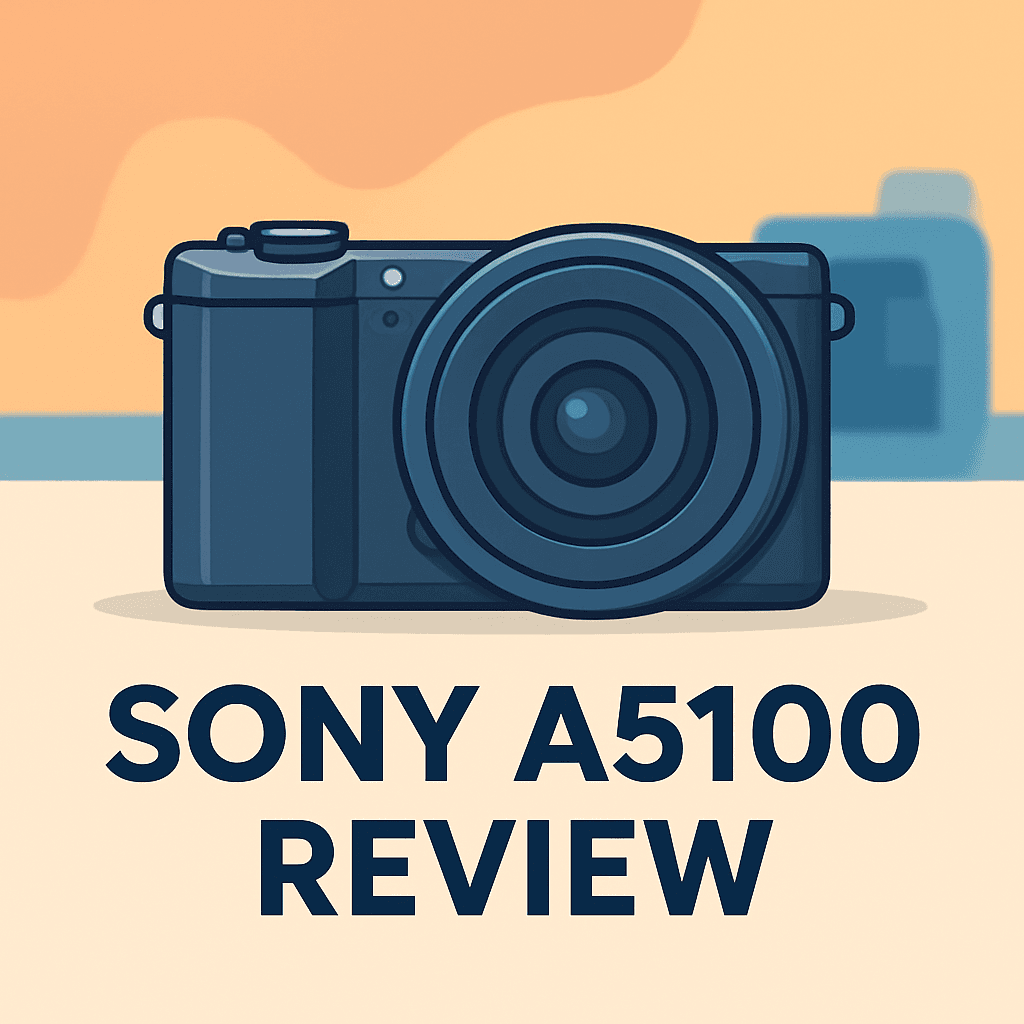
Want better photos without hauling a bulky camera kit everywhere you go?
The Sony A5100 Mirrorless Camera promises a compact APS‑C body, a tilting touchscreen and snappy touch AF that suits travel, street, and family shooters who favor simplicity over bells and whistles.
I’ve spent time shooting it in real-world situations, so this review focuses on practical payoffs — handling, autofocus, image quality, video usability, battery life and lens choices.
If you’re curious whether the A5100’s pocketable size and responsive controls match your needs — or whether its limitations actually matter — keep reading. Make sure to read the entire review as it answers those questions.

Sony A5100 Mirrorless Camera
Compact interchangeable-lens camera with a large APS‑C sensor, quick hybrid autofocus and a tilting touchscreen for selfies and vlogging. Lightweight, Wi‑Fi enabled tool perfect for travel photographers and content creators.
Check PriceThe Numbers You Need
| Spec | Value |
|---|---|
| Sensor | 24.3 MP APS-C |
| Autofocus | Fast Hybrid AF |
| LCD | 3-inch tilting |
| Resolution | Full HD |
| Body Type | Mirrorless |
| Weight | Lightweight |
| Lens Mount | E-mount |
| Wi-Fi | Built-in |
| Touchscreen | Yes |
| Continuous Shooting | Up to 6 fps |
| ISO Range | 100–25600 |
| Image Stabilization | Optical SteadyShot (lens dependent) |
| Movie Recording | 1080p @ 60 fps |
| Battery Life | Approx. 400 shots |
| Dimensions | 110 x 63 x 36 mm |
How It’s Built
In my testing the Sony A5100 Mirrorless Camera feels almost toy-like in the best way — tiny, light, and unbelievably easy to carry all day. That small size makes it a go-to for travel, street work, or family days when lugging a big kit would kill the vibe. Beginners will appreciate that ease: you shoot more when the camera doesn’t get in the way.
The 3-inch tilting touchscreen is the camera’s best handshake move — tapping to focus and dragging the frame felt natural and fast during shoots. The layout is simple, with fewer buttons than enthusiast bodies, so you’ll live in menus or the touchscreen for deeper settings. That’s great if you want simple, but it slows down on‑the‑fly tweaks.
There’s no built-in viewfinder and no hot shoe, which I noticed on bright afternoons and when I wanted to add a flash. Composing in direct sun means tipping the screen and hunting for shade, and adding dedicated flashes or accessories isn’t an option out of the box. For casual shooters it’s fine, but serious lighting setups are limited.
The E-mount lens lineup is huge and I loved swapping glass to change the camera’s personality. What could be better is built-in image stabilization — without it you’ll rely on OSS lenses or a tripod in low light. Built-in Wi‑Fi saved me time with quick transfers and remote control, which is a real beginner win.
In Your Hands
Out in real shoots the Sony A5100 Mirrorless Camera feels like a nimble companion — light in the bag, instantly usable with its tilting touchscreen and swift touch-AF. Its burst responsiveness makes it easy to catch everyday action and fleeting street moments without fuss.
Autofocus is the kind you rely on day to day: quick to lock, smooth with faces and single subjects, and forgiving in mixed light. For fast, unpredictable sports or hard-tracking scenarios it can miss a few frames, so expect higher keeper rates with steadier subjects.
Battery life carries you through most sightseeing days and family outings, though I always travel with a spare on longer assignments. Built‑in Wi‑Fi truly shines for quick sharing and remote control, which speeds workflow when you need images off the card fast.
Because there’s no in‑body stabilization, shake control depends on stabilized lenses — pick OSS-equipped glass for dim interiors or longer reach to keep images sharp. Lens selection noticeably influences rendering and low‑light confidence more than the body itself.
Video is solid for run‑and‑gun Full HD work with smooth frame cadence, but the lack of a microphone input and an EVF narrows serious multimedia setups and bright‑sun composition. For photographers who prize portability and responsive touch control, those practical tradeoffs are easy to live with.
The Good and Bad
- 24.3 MP APS-C sensor
- Fast Hybrid AF for everyday shooting
- 3-inch tilting touchscreen with responsive touch AF
- Lightweight, compact body
- No built-in EVF (challenging in bright light)
- No microphone input
Ideal Buyer
The Sony A5100 Mirrorless Camera is built for photographers who prize compact size, simplicity, and a touch-first workflow. Travel, street, and family shooters get 24MP stills and 1080p60 video in a pocketable body. It’s ideal for anyone who values quick touch AF and minimal fuss.
Budget-conscious E‑mount users gain access to a vast lens ecosystem without a big body or steep learning curve. The tilting touchscreen and built-in Wi‑Fi make framing, selfies and quick sharing effortless. Choose stabilized OSS lenses to offset the lack of in‑body stabilization for low-light or telephoto work.
This isn’t the camera for heavy flash systems, EVF-first bright‑sun composers, or creators who need 4K and a mic jack. Action photographers chasing top-tier continuous AF or pro sports shooters will prefer a6000-class bodies. Advanced users who want lots of external controls or accessory expandability should look elsewhere.
If your priority is portability, strong stills at a fair price, and a friendly touchscreen experience, the A5100 is a smart, practical pick. If you need EVF framing, extensive customization, or pro video features, consider the alternatives outlined earlier. Match the camera to how you shoot and the lenses you want.
Better Alternatives?
We’ve gone through what makes the Sony A5100 a solid small APS‑C camera: great stills in a tiny body, fast touch AF, and a simple, travel‑friendly design. But no camera is perfect, and depending on the kind of shooting you do you might want something with an EVF, more buttons, a mic input, or stronger action autofocus.
Below are three real alternatives I’ve used in the field. For each I’ll tell you what it does better and where it gives ground to the A5100, and the kind of buyer who’ll be happiest with it.
Alternative 1:

Sony A6000 Mirrorless Camera
High-speed compact body delivering fast continuous shooting and responsive phase-detection autofocus, plus an electronic viewfinder and custom controls. Ideal for action, street and enthusiast photographers seeking performance in a small package.
Check PriceThe A6000 is the closest Sony alternative and in real shooting it feels like a thicker, more capable version of the A5100. What it does better is obvious in bright sun and fast scenes: it has a built‑in EVF for composing when the LCD washes out, a hot shoe for flashes or triggers, and faster, more reliable continuous AF and burst shooting for kids, pets, or street action.
Where it loses to the A5100 is in simple, touch‑driven shooting. The A6000 doesn’t give you the same easy selfie/touch AF experience the A5100 does, and it’s a touch larger in the pocket. If you loved the A5100 for its tiny size and quick touchscreen control, you’ll notice the A6000 is a bit less breezy for casual grab‑and‑go days.
Who should pick it? Pick the A6000 if you want that EVF and stronger action performance—street shooters who work in bright light, photographers who use an on‑camera flash, or anyone who wants quicker manual controls and a bit more speed when subjects move.
Alternative 2:

Canon EOS M50 Mark II Mirrorless Camera
Updated compact mirrorless with improved autofocus, vertical video-friendly features and enhanced live-streaming support. Vari-angle touchscreen simplifies vlogging and social content creation, while reliable image quality pleases hybrid shooters.
Check PriceThe Canon M50 Mark II brings a different set of strengths to the table. In real use it wins for vlogging and mixed photo/video work thanks to its fully articulating screen and a mic input—things the A5100 lacks. Canon’s face‑friendly AF (Dual Pixel) feels smooth when you’re shooting talking heads or quick interviews, and the camera’s handling makes it easy to set up vertical video and live streams.
Its downsides compared to the A5100 show up when you need fast, continuous tracking or the broad lens choices of Sony’s E‑mount. The M50 Mark II’s 4K mode is limited and often cropped, and its continuous subject tracking isn’t quite as aggressive as Sony’s for unpredictable motion. Also, Canon’s native lens lineup for the M system is smaller, so you may need adapters for some lenses or accept fewer native options.
If you make videos, vlog, or live‑stream and want simple, reliable on‑camera audio and a flip screen, the M50 Mark II is a great pick. It’s for creators who put sound and framing control ahead of the absolute fastest AF for sports or pets.
Alternative 3:

Canon EOS M50 Mirrorless Camera
Versatile, user-friendly interchangeable-lens camera offering crisp APS‑C image quality, Dual Pixel autofocus for smooth focusing, and a flip-out touchscreen for creative framing; great for beginners and everyday enthusiasts.
Check PriceThe original Canon M50 is a very usable, beginner‑friendly option I’ve often reached for on short shoots. It gives you an EVF and a flip‑out screen that makes framing in bright light or doing self‑recorded clips easier than on the A5100. Canon’s autofocus feels reassuring for faces and casual video, and the menus and JPEGs are friendly for people who want good results straight away.
In hands‑on shooting it shares the M50 Mark II’s limits: its 4K is workable but restricted, and for fast, unpredictable action you’ll notice Sony’s autofocus tends to keep up better. The smaller EF‑M lens ecosystem also means you’ll have fewer native lens choices than with Sony’s E‑mount unless you start adapting lenses.
Choose the original M50 if you’re a beginner or budget‑focused shooter who wants Canon colors, an easy user experience, and a real EVF plus a usable flip screen. It’s a good everyday camera for family photos, travel, and casual video when you value simple controls over pro‑level action performance.
What People Ask Most
Is the Sony a5100 worth buying?
Yes — it’s a compact, affordable APS-C camera with excellent autofocus and image quality for photos and casual video, making it great value especially if bought used.
How does the Sony a5100 compare to the Sony a6000?
They share a similar 24MP sensor and fast AF, but the a6000 adds a built-in electronic viewfinder, more physical controls and slightly better handling for enthusiasts.
Is the Sony a5100 good for beginners?
Yes — its simple menus, touchscreen and reliable autofocus make it easy to learn photography with solid results.
Is the Sony a5100 good for video or vlogging?
It shoots clean 1080p up to 60fps with great AF, but lacks 4K, a mic input and a flip-out screen, so it’s best for casual vlogging rather than professional video.
Does the Sony a5100 have a viewfinder?
No, the a5100 has only a tilting LCD touchscreen and does not include a built-in electronic viewfinder.
Does the Sony a5100 have image stabilization?
No, it has no in-body stabilization, so you need lenses with OSS or external stabilization like a gimbal for steady shots.
Conclusion
The Sony A5100 Mirrorless Camera is a compact APS-C option that delivers strong stills, a handy tilting touchscreen and a simple, share-ready workflow. For photographers who prize portability, quick touch AF and access to the E‑mount lens ecosystem, it punches well above its size.
That convenience comes with clear trade-offs: no viewfinder, no hot shoe, no mic input, no in-body stabilization and no 4K — features some users will miss. Advanced shooters seeking fast-action tracking, on-camera flash flexibility or serious video capabilities will find the platform limiting.
In short, buy the A5100 if you shoot travel, street or family moments and want a small, straightforward camera that makes good stills and easy sharing a priority. If you prioritize sports/action AF, vlogging with external audio, or a top-tier control layout, compare the a6000, Canon M50 Mark II and Fujifilm X‑A7 before committing. Each of those closes specific A5100 gaps.
My take: it’s an honest, well-rounded compact for everyday shooters, not a do-everything pro tool. Match your needs to its strengths and you’ll get a lot of value; if your checklist includes the features above, choose an alternative.
Sony A5100 Mirrorless Camera
Compact interchangeable-lens camera with a large APS‑C sensor, quick hybrid autofocus and a tilting touchscreen for selfies and vlogging. Lightweight, Wi‑Fi enabled tool perfect for travel photographers and content creators.
Check Price

0 Comments