
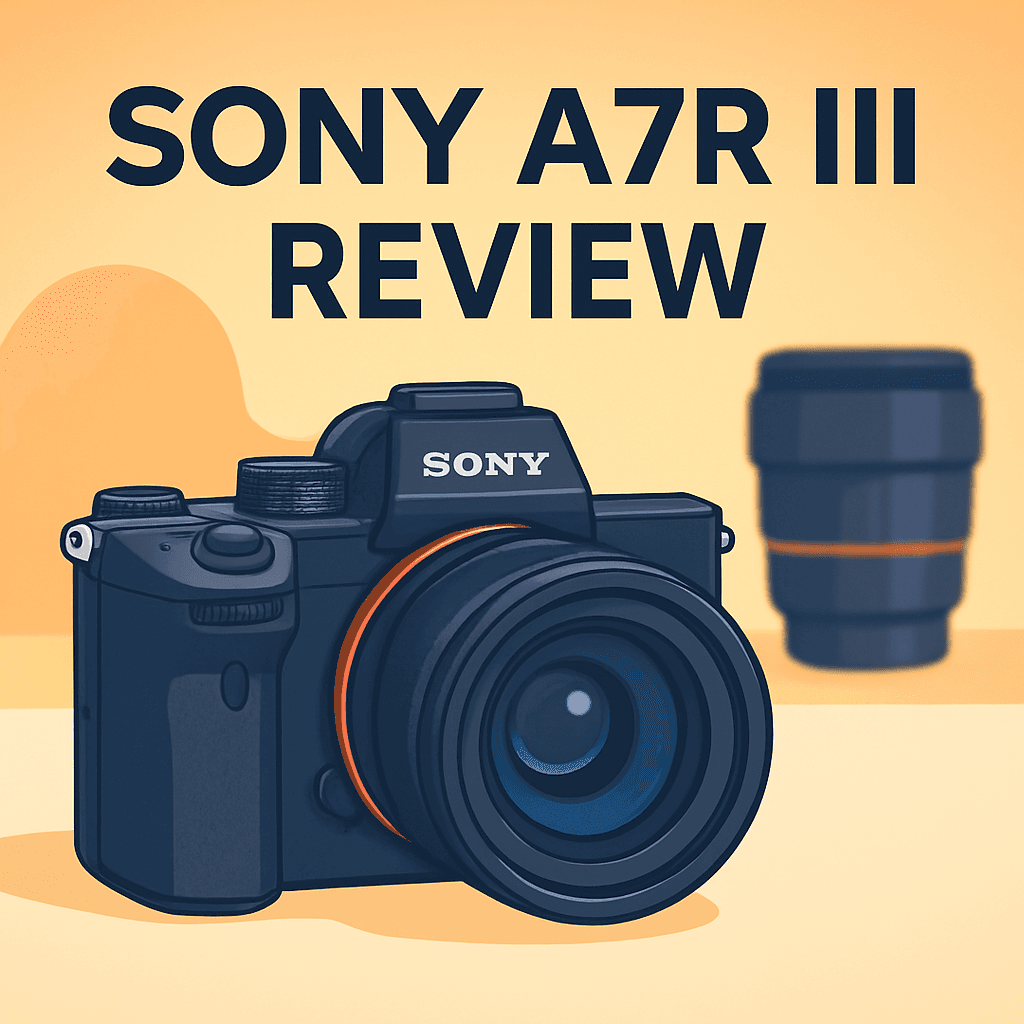
Looking to up your image quality or finally decide whether this camera fits your workflow?
I took the Sony A7R III Camera into the field to see how it performs where it matters most.
This hands-on review comes from a pro photographer’s perspective and real-world shoots. You’ll get observations from studio, portrait, landscape, event, and travel scenarios.
I’m focused on practical image detail, handling, autofocus reliability, in-body stabilization and video usability. Those translate to cleaner prints, steadier handheld shots, and fewer missed moments.
I tested stills and video in mixed light, handheld and on tripod, with fast action and controlled scenes, and I’ll cover workflow tradeoffs. Make sure to read the entire review as I unpack what works, what doesn’t, and when it’s worth buying.

Sony A7R III Camera
State-of-the-art 42MP full-frame mirrorless delivers exceptional resolution and dynamic range, five-axis stabilization for tack-sharp hand-held images, fast autofocus, robust build, and long battery life for demanding professional shoots.
Check PriceThe Numbers You Need
| Spec | Value |
|---|---|
| Sensor | 42.4 MP |
| Format | Full-frame |
| Continuous Shooting | Up to 10 fps |
| Video | 4K resolution |
| Stabilization | 5-axis in-body |
| Autofocus | Fast Hybrid AF |
| ISO Range | 100–32000 (expandable to 102400) |
| Shutter Speed | 1/8000s to 30s |
| Memory Cards | Dual SD/SDHC/SDXC slots |
| Weight | Approximately 657 grams |
| Dimensions | 126.9 x 73.7 x 42.4 mm |
| Viewfinder | 3.69M dots OLED |
| LCD | 3-inch tilting touchscreen |
| Lens Mount | Sony E-mount |
| Built-in Flash | No |
How It’s Built
In my testing the A7R III feels like a serious camera without being a chore to carry all day. It balances nicely with the lenses I usually bring, so it didn’t pull my wrist forward during long shoots. That balance makes handheld landscape or event days much less tiring.
The electronic viewfinder is a highlight for me — clear, responsive, and easy on the eye during long sessions. The tilting touchscreen is handy for low and high angles and the touch AF works when I need it fast. After using it for a while, I wished the screen tilted a bit further for self-recording and awkward angles.
Buttons and dials are placed in a way that felt natural to reach mid-shoot, and the grip stayed secure even when I was moving fast. I liked that the controls give quick access to the settings I use most. For beginners, the dual card slots are a lifesaver: you can set one as a backup and avoid accidental data loss.
Because it uses the standard E-mount, planning your lens choices is simple and gives you lots of options. There’s no built-in flash, so carry a small speedlight or use off-camera options if you want fill light on the go. Overall the body felt solid and well-made, with doors and dials that held up to daily use.
In Your Hands
The A7R III’s high‑resolution full‑frame sensor delivers images with unmistakable clarity and generous cropping latitude, so you can confidently recompose or extract tight details in post without losing the character of the shot. High‑volume shoots require disciplined file handling—expect longer culling sessions and the need for fast storage and a tuned workflow to keep review and export snappy. In practice, the payoff is large, gallery‑ready files that respond well to careful sharpening and color work.
Sony’s Fast Hybrid AF is a real-world ally: subjects are acquired quickly and held reliably through mixed scenes, and Eye AF consistently nails portraits even when faces turn or light falls off. In dimmer environments the system remains cooperative, though careful attention to focus points and framing pays dividends when contrast drops. For event work the tracking is steady enough to let you concentrate on timing and composition.
Continuous shooting at brisk rates is genuinely useful for weddings and action, but you’ll want a strategy for burst management—use dual‑slot workflows to overflow or mirror files and clear buffers between takes. Silent shooting modes and smart card handling reduce the risk of missed shots, while the camera’s responsiveness keeps you in the moment rather than waiting on write‑backs. Thoughtful use of burst bursts translates directly into better coverage.
The body’s five‑axis stabilization changes handheld low‑light behavior, letting you shoot slower shutter speeds with confidence and rescue shots with primes that lack optical stabilization. For long exposures or ultra‑fast freezes, classic tripod discipline and shutter choices still apply, but IBIS widens usable scenarios without packing a tripod for every job. That versatility is especially welcome on travel days.
4K video is sharp and integrates well with stills for hybrid projects, with autofocus behavior that holds steady in run‑and‑gun situations and color that matches the still pipeline with modest grading. The high‑resolution EVF and tilting touchscreen make manual focus, critical framing, and touch AF straightforward in landscapes, studio portraits, events, travel, macro work, and mixed shoots. Tethering feels mature for studio use, though large file sizes mean you’ll want a robust ingest and cataloging plan to keep sessions flowing.
The Good and Bad
- 42.4 MP full-frame sensor offers substantial detail and cropping flexibility
- Up to 10 fps continuous shooting supports action and event coverage
- 5-axis in-body stabilization improves handheld sharpness
- Fast Hybrid AF enhances acquisition and tracking
- No built-in flash limits quick on-camera fill without accessories
- Tilting (not fully articulating) screen can constrain self-facing or complex angles
Ideal Buyer
The Sony A7R III Camera is for photographers who choose resolution over compromise. Its 42.4MP sensor rewards landscape, commercial, product, and fine-art work with extraordinary detail and generous cropping latitude. If you sell large prints or need critical retouching room, this body pays back in pixels.
Hybrid creators who switch between stills and motion will appreciate the A7R III’s 4K chops paired with a detailed EVF and responsive tilting touchscreen. IBIS and reliable AF behavior make handheld video and quick run‑and‑gun setups far less stressful. This camera balances image quality with usable video features without forcing a dedicated cinema workflow.
Event and portrait shooters will value the camera’s 10 fps burst, Fast Hybrid AF, and dependable Eye/subject tracking for decisive moments and headshots. Dual card slots offer practical redundancy for weddings and critical jobs where backups matter. The body’s ergonomics and controls let you change key settings on the fly during fast-paced coverage.
Travel and documentary shooters who want high resolution but need a manageable package will like the A7R III’s size, weight, and IBIS for handheld flexibility. Expect to be comfortable managing larger files and battery strategies; the camera rewards those who plan storage and workflow. If you need extreme video specs or ultra-long exposure tools, consider alternatives, but for balanced high-res hybrid work this is a strong choice.
Better Alternatives?
We’ve already gone through the Sony A7R III in detail — how it feels in hand, how its 42MP files behave, and how it performs in real shoots from landscapes to weddings. If the A7R III fits your needs it’s a great choice, but some shooters want newer autofocus, more video power, or different handling. Below I’ll walk through a few real-world alternatives I’ve used and how they compare on the street, in the studio, and in the field.
These picks are about what you actually notice while shooting: subject tracking that won’t give up, video limits that affect a full day of work, and how big files change your workflow. I’ll point out where each one clearly beats the A7R III, where it falls short, and what kind of buyer would prefer it.
Alternative 1:

Sony A7R V Camera
Advanced high-resolution mirrorless with a cutting-edge sensor and AI-driven autofocus, offering ultra-detailed files, cinematic video tools, refined ergonomics, lightning-fast processing, and improved in-body stabilization for creative flexibility.
Check PriceI’ve shot with the A7R V in studio and on location. Compared to the Sony A7R III Camera, the A7R V gives you noticeably sharper files and better subject tracking — the autofocus locks and holds more confidently on a moving subject. Its improved in-body stabilization really helps when I’m walking around with a long lens or doing handheld landscapes; I can use slower shutter speeds and still get usable frames more often than on the A7R III.
Where it’s worse than the A7R III is mostly cost and workflow. The files are bigger and the camera pushes more processing in-camera, so your computer and cards work harder. For quick event coverage where speed and small files matter, the A7R III still feels snappier on a full day shoot. Also, if you’re used to the older menu flow, the extra features can feel like more to learn before you’re fast with it.
If you want the cleanest stills, the best Sony AF and stabilization in real shoots, or you do hybrid work that leans toward higher-res stills plus video, the A7R V is the one to choose. It’s best for landscape, commercial, and hybrid pros who accept the extra file and processing load for better files and smoother autofocus.
Alternative 2:

Canon EOS R5 Camera
Full-frame hybrid powerhouse captures stunning 45MP images with exceptional color fidelity, 5-axis stabilization for razor-sharp handheld shots, rapid autofocus, and professional-grade build and controls for studio or location work.
Check PriceI use the Canon EOS R5 a lot when clients need a mix of stills and serious video. Compared with the Sony A7R III Camera, the R5 often gives more reliable tracking in tight situations and its color straight out of camera needs less fixing for skin tones. The R5’s body and controls feel a touch more ergonomic for long shoots, and the stabilization pairing with many RF lenses makes handheld low-light shooting easier than the A7R III in many real shoots.
Where the R5 can be worse is battery life and heat management in demanding video work — if you’re shooting long 8K clips you have to plan for cooling breaks and big cards. Also, Canon’s files and workflow are different; swapping systems means relearning tethering or color steps. For pure stills shooters who love Sony’s menu or lens choices, the A7R III might still be a simpler daily tool.
The R5 is for hybrid shooters who need strong video plus excellent stills and who value Canon color and handling. Wedding photo/video teams, commercial shooters who also produce short films, and anyone who wants very fast burst performance will like the R5 more than the A7R III in many real-world jobs.
Alternative 3:
Canon EOS R5 Camera
Cinema-ready hybrid offering 8K capture, precise AF, and high-speed recording modes alongside outstanding stills performance; advanced heat management, dual card slots, and ergonomic controls streamline extended video production workflows.
Check PriceLooking at the R5 from a video-first view, it beats the Sony A7R III Camera for motion work in real shoots. I’ve used the R5 on interviews and short shoots where the 8K option and reliable autofocus during recording saved time in post. Its handling for long-form video, with easy menu access to picture profiles and dual slots, makes multi-hour shoots more manageable than trying to push the older A7R III into the same role.
On the downside, the R5’s video power brings practical limits you won’t get with the A7R III: more heat checks, bigger storage needs, and shorter times between charges if you’re recording a lot. If your day is mostly stills, the A7R III will run cooler and simpler, and you won’t be juggling the same card and edit load that the R5 can create.
If your work is video-heavy — run-and-gun filmmakers, content studios, or photographers who frequently shoot client video — the R5 will feel like a more complete tool than the A7R III. For stills-first shooters who want simplicity and longer battery life between charges, the A7R III still holds its ground.
What People Ask Most
Is the Sony A7R III worth buying?
Yes — it still offers excellent image quality, fast autofocus and strong value, especially used or on sale, making it a great choice for high-resolution shooters who don’t need the absolute latest model.
How does the Sony A7R III compare to the A7R IV?
The A7R IV has higher resolution and improved ergonomics and AF, but the A7R III delivers very similar image quality and better value for most users.
How does the Sony A7R III compare to the A7R II?
The A7R III is a clear upgrade with much better autofocus, faster continuous shooting, improved battery life and dual card slots, while keeping improved image quality and dynamic range.
What are the main specifications of the Sony A7R III?
Key specs: 42.4MP full-frame sensor, 5-axis in-body image stabilization, up to 10 fps continuous shooting, 4K video, 399 phase-detect AF points, dual card slots and NP-FZ100 battery support.
How good is the autofocus on the Sony A7R III?
The AF is excellent for its generation, offering fast, reliable subject and eye tracking for both stills and video.
Is the Sony A7R III good for landscape photography?
Yes — its high resolution, wide dynamic range and IBIS make it ideal for landscapes, whether handheld or on a tripod.
Conclusion
The Sony A7R III Camera remains one of the most balanced high-resolution hybrid bodies I’ve relied on in the field. Its combination of resolving detail, dependable autofocus, in-body stabilization, credible video capabilities and dual-slot redundancy delivers real-world versatility for pro assignments. The detailed EVF and responsive touchscreen keep composition and focus work fast and confident.
That balance comes with clear tradeoffs, and I won’t sugarcoat them. Handling very large files affects speed and storage decisions, the tilting screen limits some selfie or vlogging angles, and the lack of a built-in flash means you still need accessories for quick fill. For extreme long-exposure work you’ll want to plan for external solutions.
In practical terms this body excels for landscapes, commercial and portrait work where image detail and reliable AF matter, and it serves hybrid shooters who need robust stills plus usable motion. Event and travel photographers will appreciate the redundancy and stabilization in real shoots.
Buy the Sony A7R III Camera if its strengths match your workflow and you accept the workflow and handling compromises. If you prioritize the very latest in resolution, autofocus or video innovation, consider newer alternatives; otherwise this is a mature, highly capable tool that still earns a place in professional kits.
Sony A7R III Camera
State-of-the-art 42MP full-frame mirrorless delivers exceptional resolution and dynamic range, five-axis stabilization for tack-sharp hand-held images, fast autofocus, robust build, and long battery life for demanding professional shoots.
Check Price

0 Comments