
Want wider, more dramatic images for landscapes and architecture?
I’ve taken the Canon EF 16-35mm f/2.8L III into the field to see how it performs in real shooting conditions.
It’s Canon’s pro ultra-wide for EF bodies — constant f/2.8, rugged L-series build, weather sealing, USM autofocus, and simple 82mm filter use; it’s heavier and lacks stabilization, so make sure to read the entire review as I unpack sharpness, handling, and whether it’s the right upgrade for you — keep reading.
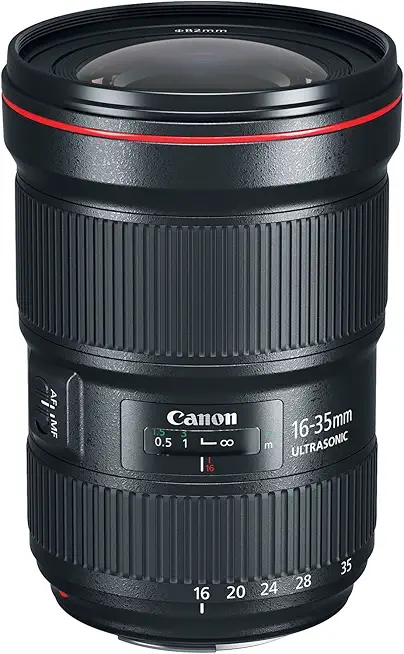
Canon EF 16-35mm f/2.8L III
Professional-grade ultra-wide zoom with a constant bright aperture delivers stunning edge-to-edge sharpness, contrast, and weather-sealed durability—ideal for landscapes, architecture, dramatic interiors, and low-light event photography.
Check PriceThe Numbers You Need
| Spec | Value |
|---|---|
| Mount | Canon EF |
| Focal Length | 16–35mm |
| Aperture | f/2.8 (constant) |
| Lens Construction | 16 elements in 11 groups |
| Special Elements | 2 aspherical, 3 UD (Ultra-Low Dispersion) |
| Minimum Focus Distance | 0.28 m |
| Filter Size | 82 mm |
| Weight | 790 g |
| Weather Sealing | Yes |
| Image Stabilization | No |
| Autofocus | USM (Ultrasonic Motor) |
| Diaphragm Blades | 9 (circular aperture) |
| Compatible Cameras | Canon full-frame DSLRs |
| Lens Hood | EW-95 (included) |
| Build | Rugged L-series metal, fluorine coat |
How It’s Built
In my testing the Canon EF 16-35mm f/2.8L III feels like a pro lens. The metal barrel, solid mount, and weather seals stood up to wind and light rain when I regularly used it in the field. The fluorine coating on the front made cleaning dust and smudges easy.
It’s not light in hand, so you know it’s there. Mounted on my full-frame Canon body it sat balanced and felt steady for slow pans. The zoom and focus rings are smooth and positive, and the included hood snaps on securely.
The 82mm filter thread is a big win for real shooting. I could slap on ND, polarizers, and grads without special holders, which is great for beginners. Having a normal front thread keeps filters simple and workflow faster when you’re learning the ropes.
The nine‑blade circular aperture gives pleasing out‑of‑focus areas at f/2.8, so you can get subject separation even wide. What I really liked was the dependable build and feel; what could be better is the weight for long handheld days. After using it for a while I found it easy to keep clean and ready for tough shoots, just plan for the heft.
In Your Hands
On-camera the Canon EF 16-35mm f/2.8L III’s ring-type USM feels instant and precise; autofocus is fast and accurate in most conditions, reliably locking on landscapes and architectural edges. For video the AF is mostly quiet, with only faint mechanical noise in very silent scenes.
That constant f/2.8 aperture is a real asset for dim interiors, evening cityscapes and event work, letting you keep shutter speeds usable without overcooking ISO. Because the lens lacks in-lens stabilization you’ll lean on higher shutter speeds, bracing techniques, or higher ISO more often than with stabilized glass.
Handheld shooting feels natural on a pro DSLR, but long exposures and deliberate landscape framing benefit from a tripod; gimbals also pair well for cinematic motion thanks to the lens’s balanced front-to-back feel. Close-focusing capability lets you exaggerate foreground interest for dramatic wide-angle storytelling while preserving environmental context at longer focal lengths.
The standard front thread accepts screw-on filters quickly, which speeds field workflows for grads and NDs and keeps composition flowing during changing light. Robust weather sealing inspires confidence in damp conditions, though I still rinse and gently dry the front element after salty spray and wipe threads to keep the filter mount smooth.
The Good and Bad
- Constant f/2.8 across 16-35mm
- Rugged L-series build with weather sealing and fluorine coat
- USM autofocus (fast/quiet)
- Accepts standard 82mm screw-on filters
- No image stabilization
- Weight: 790g
Ideal Buyer
If you shoot Canon full‑frame DSLRs and need a pro‑grade ultra‑wide, the Canon EF 16‑35mm f/2.8L III is aimed squarely at you. Its constant f/2.8 and 16–35mm reach suit everything from sweeping landscapes to tight interiors and environmental portraits. Expect pro handling, fast USM AF and an L‑series build that works in the field.
Landscape and architecture photographers who depend on screw‑on filters will appreciate the conventional 82mm front threads and easy use of NDs and grads. The fluorine‑coated elements and weather sealing make beach, mountain and rainy‑city work less nerve‑wracking. The included EW‑95 hood and durable metal construction stand up to heavy use.
Low‑light shooters get a real advantage from the constant f/2.8 aperture for events, interiors and nightscapes. There’s no image stabilization, so handheld low‑light work benefits from solid technique, higher ISOs or a tripod when you need tack‑sharp exposures. At roughly 790g it balances well on pro bodies but isn’t a featherweight.
Working professionals who prize consistent optical performance, easy filter workflows and rugged reliability will find this lens a dependable tool. If you favor ultimate edge‑to‑edge sharpness, weather tolerance and predictable rendering over in‑lens stabilization or RF compatibility, this is a smart choice. Budget‑minded shooters or those who need built‑in IS should compare other wide options first.
Better Alternatives?
We’ve already gone through the Canon EF 16-35mm f/2.8L III and what makes it a go-to for pros — solid build, constant f/2.8, and that handy 82mm filter thread. It’s a great all-rounder for landscapes, architecture, and low-light work, but no single lens fits every shooting style.
If you want a different balance of angle, stabilization, or price, there are three common alternatives I’ve used in the field that are worth considering. Below I’ll lay out what each does better and worse than the Canon, and who I’d pick them for based on real shooting experience.
Alternative 1:

Canon EF 14-24mm f/2.8 DG HSM
Ultra-wide rectilinear optic with a fast aperture and advanced anti-reflective coatings produces minimal distortion and exceptional corner performance—perfect for sweeping landscapes, astrophotography, interiors, and dramatic architectural perspectives.
Check PriceI used this 14–24mm when I wanted the widest views possible. Compared to the Canon 16–35L III it gives a noticeably wider field at the short end, which makes foregrounds pop and shows more sky for night shots. Optically it’s extremely sharp across the frame, often holding up better in the corners at the widest setting. The downside is the bulbous front element — you lose the easy 82mm screw-on filter workflow that made the Canon so handy, and you’ll need special filter holders if you want grads or NDs.
In the real world, that extra two millimetres at 14mm changes compositions. I reach for this when shooting big mountain scenes, tight city squares where I want dramatic perspective, or the Milky Way when I need more sky. But in small interiors it can feel too wide and introduces more distortion to manage. If you rely on simple screw-on filters for landscapes, the Canon’s 82mm front is still more practical.
Who should pick this: photographers who want the widest, sharpest ultra-wide for landscapes, architecture, or astrophotography and who don’t mind carrying a special filter system. It’s for people who prioritize field-of-view and corner detail over filter convenience and slightly lighter handling.
Alternative 2:

Canon EF 15-30mm f/2.8 SP Di VC USD G2
Bright, stabilized ultra-wide zoom with effective image stabilization and swift autofocus ensures crisp handheld results, consistent color, and contrast—ideal for travel, events, architecture, and low-light reportage.
Check PriceThis Tamron 15–30mm stands out in the field for one big reason: image stabilization. Compared to the Canon 16–35L III, it gives you extra help on handheld shots in low light, which matters when you can’t use a tripod—weddings, run-and-gun interiors, or slow sunset scenes. Optical sharpness is very good, but the Tamron’s front element is also bulbous, so again you lose the ease of screw-on filters the Canon gives you.
In shooting terms the VC (stabilization) lets me drop shutter speeds a stop or two and still get usable frames when I’m moving around. Autofocus is quick and dependable for most work, and the lens handles flare well in bright scenes. The tradeoff is size and the need for a filter adapter if you want to use grads or polarizers; also, at the extreme edges it’s not always quite as clinically sharp as the Canon III stopped down.
Who should pick this: travel, event, and wedding shooters or videographers who need steady handheld performance and appreciate stabilization more than the convenience of an 82mm filter thread. If you often shoot hand-held in mixed light, the Tamron will save you time and missed shots.
Alternative 3:
Canon EF 15-30mm f/2.8 SP Di VC USD G2
Refined optical design and robust construction deliver improved edge-to-edge resolution, flare control, and steady handheld performance; quick, reliable focusing makes it a pro favorite for landscapes, interiors, and fast-paced shoots.
Check PriceRevisiting the Tamron with a slightly different eye, it’s worth saying how solid it feels on long shoots. Compared to the Canon 16–35L III, the Tamron can feel more damping when handholding because of the VC, and its build is rugged enough for heavy use. Optically it behaves slightly differently in color and contrast; some of my images needed minor tweaks to match the Canon’s rendering, but that’s easy to fix in processing.
In practice I’ve used this lens on multi-hour weddings and travel days where I didn’t want to stop and swap gear. The quick, predictable autofocus and stabilization meant fewer blurry frames and faster turnaround. Again, the filter situation is the main practical downside compared with the Canon — carrying filter holders is one more thing to manage on location shoots.
Who should pick this: photographers who value steady handheld reliability and a robust working lens for long days. If you want something that gets you more usable shots in mixed light and you don’t mind the extra size or filter workaround, this Tamron is a strong, practical alternative to the Canon 16–35L III.
What People Ask Most
Is the Canon EF 16-35mm f/2.8L III worth buying?
Yes — it’s worth it for photographers who need a fast, pro-quality wide-angle with excellent optics and build, but it’s heavy and pricey so not ideal for casual use.
How sharp is the Canon EF 16-35mm f/2.8L III?
Very sharp in the center across the zoom range, with improved edges and corners compared with older versions, especially when stopped down a bit.
What is the difference between the Canon EF 16-35mm f/2.8L II and III?
The Mark III has updated optics and coatings for better corner sharpness, reduced flare and coma, and overall improved image quality over the Mark II.
Does the Canon EF 16-35mm f/2.8L III have image stabilization?
No, this lens does not include image stabilization.
Is the Canon EF 16-35mm f/2.8L III weather-sealed?
Yes, it features professional-grade weather resistance and a rubber gasket at the mount to help keep out dust and moisture.
Is the Canon EF 16-35mm f/2.8L III good for astrophotography?
Yes, its fast f/2.8 and improved control of coma and flare make it excellent for wide-field astrophotography, though a tracker helps for longer exposures.
Conclusion
The Canon EF 16-35mm f/2.8L III is a clear professional choice for shooters who want a fast, flexible ultra‑wide zoom with pro-grade build and handling. Its constant f/2.8 aperture, rugged L-series construction, weather sealing, reliable USM autofocus and convenient screw‑on filter workflow make it a tool you can trust in the field.
The tradeoffs are real and important to acknowledge: there’s no in‑lens stabilization, it’s a solid chunk of glass to carry, and it will only suit EF-mount systems without adapters. That said, those limitations are survivable with the right technique, a tripod for stills or a gimbal for motion, and a commitment to Canon’s DSLR ecosystem. For working pros these are acceptable compromises for consistent results.
Optically it brings meaningful refinements where it counts, delivering edge improvement and microcontrast that make a visible difference for landscapes and architecture. Compared to bulbous-front competitors it preserves practical filter use and a more straightforward field workflow. In short, it’s a lens that lets you shoot how you work, not how you retrofit.
If you’re a Canon full‑frame DSLR shooter who prioritizes durability, filter convenience and fast low‑light performance, the 16‑35mm f/2.8L III is worth the investment. For anyone wanting in‑lens stabilization or an RF-native design, look elsewhere—but for pure pro-grade ultra‑wide performance this remains one of the best options.
Canon EF 16-35mm f/2.8L III
Professional-grade ultra-wide zoom with a constant bright aperture delivers stunning edge-to-edge sharpness, contrast, and weather-sealed durability—ideal for landscapes, architecture, dramatic interiors, and low-light event photography.
Check Price



0 Comments