
Want to capture the widest rectilinear views your full-frame can manage?
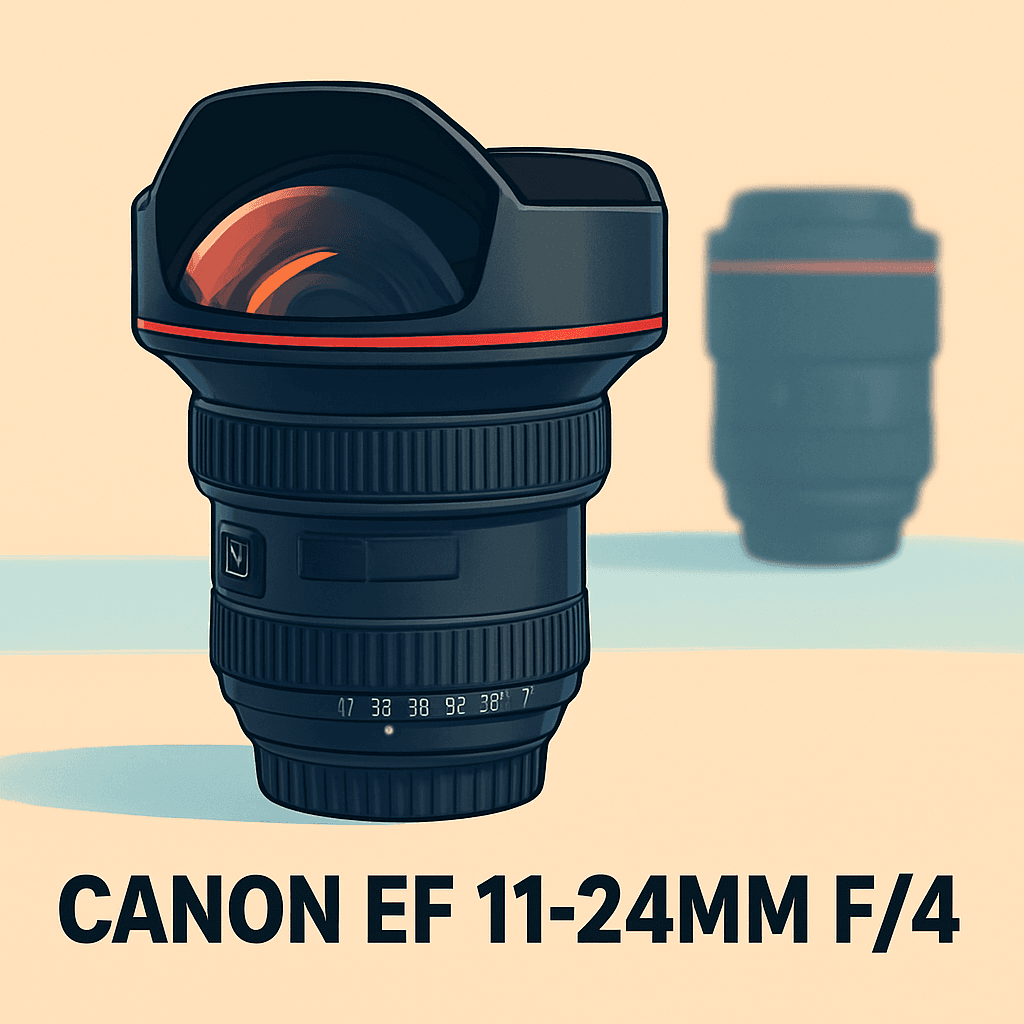
The Canon EF 11-24mm f/4L is an ultra-wide zoom for full-frame EF shooters, and it’s built as an L-series optic with constant f/4, integrated hood and a bulbous front.
Photographers shooting architecture, interiors, real estate, cityscapes or tripod-first landscapes will care most. I’ve shot it in the field and focused on handling, optical behavior across the zoom, and real-world workflow tradeoffs.
This review will walk practical payoffs, who benefits, and the material compromises you’ll live with or avoid. Make sure to read the entire review as I break down handling, sharpness, vignetting and real-world use.

Canon EF 11-24mm f/4L
Expansive rectilinear ultra-wide zoom delivers breathtaking edge-to-edge clarity and minimal distortion for landscapes and architecture. Robust weather-sealed construction and consistent f/4 aperture ensure reliability in demanding shooting conditions.
Check PriceThe Numbers You Need
| Spec | Value |
|---|---|
| Mount | Canon EF |
| Focal length | 11–24 mm |
| Maximum aperture | Constant f/4 |
| Lens type | Ultra-wide-angle zoom |
| Format compatibility | Full-frame |
| Lens construction | 16 elements in 11 groups |
| Minimum focusing distance | 0.28 m |
| Maximum magnification | 0.14× |
| Filter | No front filter thread (bulbous front element) |
| Image stabilization | None |
| Autofocus motor | Ultrasonic Motor (USM) |
| Diaphragm blades | 9, rounded |
| Weather sealing | Yes (L-series; dust- and moisture-resistant) |
| Weight | Approximately 1180 g |
| Dimensions | Approx. 108 × 137 mm (diameter × length) |
How It’s Built
In my testing the Canon EF 11-24mm f/4L feels like a proper pro lens from the moment you pick it up. It’s an EF-mount, full-frame ultra-wide with a constant aperture and a built-in petal hood, so you know what you’re getting—wide views and a no-nonsense exterior. The bulbous front element and lack of a front filter thread mean you’ll need to change how you work with filters in the field.
The build quality is solid and reassuring. Zoom and focus rings move smoothly with just the right amount of resistance, and the USM autofocus feels quick and confident on my bodies. In practice that means fine manual focus adjustments are easy and the lens doesn’t fidget when you’re composing tight interiors or landscapes.
On a typical EF DSLR the lens is noticeably front‑heavy but still manageable handheld for short bursts; I found myself supporting the barrel more than usual. What I really liked was the L-series weather sealing—after using it in light rain I had real confidence to keep shooting. What could be better is the size and weight for long handheld days; beginners should expect to use a tripod or a steady grip.
Because there’s no front filter thread, plan for rear or clamp filters and a reliable lens cap routine to protect that curved glass. For newcomers: pack a towel, use a tripod when you can, and treat the lens like a precision tool—do that and it rewards you with dramatic wide-angle images.
In Your Hands
The autofocus system is fast and confident in normal light, locking quickly and staying steady when recomposing or tracking slow-moving subjects. Switching to manual focus feels natural—smooth resistance and enough throw to dial in precise focus for landscape or interior work without hunting.
Close-focus behavior encourages dramatic foreground compositions that emphasize scale, though it won’t replace a dedicated macro lens for tiny subjects. Those near-field opportunities are great for leading lines and exaggerated perspective if you mind the inevitable wide-angle distortion.
With its constant aperture you get predictable exposure across the zoom range, but low-light shooting often becomes a discipline of tripod, higher ISO, or acceptance of longer shutter speeds. For selective night work the lens is capable, yet it rewards careful technique and support to avoid softness from camera shake.
Architects and real-estate shooters will appreciate the expansive field of view, though perspective control and profile corrections in post are often part of the workflow. Landscapes benefit from deep depth-of-field strategies wide open and stopped down, and cityscapes reveal respectable flare resistance with attractive sunstars from the rounded-blade diaphragm.
No optical stabilization means handheld low-light work demands steady hands or support, and the integrated hood plus bulbous front element shapes your cap-and-cover routine—protection and a disciplined workflow are essential. The weather sealing provides real confidence in damp or dusty conditions, though routine care after rough shoots keeps the lens performing at its best.
The Good and Bad
- Extreme ultra-wide 11mm coverage on full-frame
- Constant f/4 aperture
- L-series build with dust- and moisture-resistant sealing
- Integrated petal hood included
- No image stabilization
- No front filter thread due to bulbous front element
Ideal Buyer
If your work demands the absolute widest rectilinear view on full-frame, the Canon EF 11-24mm f/4L was made for you. It delivers perspectives that no standard wide can touch, and it rewards photographers who plan their shots rather than fire-and-pray.
Architects, interior and real-estate shooters will get the most immediate mileage from this lens, where space is tight and control of lines is critical. Landscape photographers who favor tripod-first workflows and creative foreground drama will also find the coverage invaluable. Cityscape and selective night shooters who prioritize edge-to-edge framing will appreciate the field of view more than raw low-light speed.
Pros who value pro-grade build and weather sealing will feel confident using it in challenging outdoor conditions. It suits shooters who are comfortable with a constant f/4 and without image stabilization, relying on technique, support or higher ISOs when necessary.
If you rely heavily on front-mounted circular filters, crave f/2.8 low-light performance, or need the lightest possible rig for handheld events, look elsewhere. Those users will find faster, stabilized or more filter-friendly alternatives better aligned with their workflow and priorities.
Better Alternatives?
We’ve gone through what the Canon 11-24mm f/4 L brings to the table: extreme width, rock-solid L-series build, and a very specific set of trade‑offs like no front filters and a constant f/4. If you liked its stretch‑your-shoulders perspective but are wondering about other ways to get wide shots, there are a few real-world choices that change one or two of those tradeoffs.
Below I’ll walk through three lenses I’ve used in the field that people trade the Canon for: a more budget‑minded ultra‑wide, a faster f/2.8 option for low light and night work, and a second take on that same f/2.8 design focused on star and flare control. I’ll point out what each one does better and worse than the Canon, and who I’d recommend each to.
Alternative 1:

Sigma 12-24mm f/4 DG HSM Art Canon EF
Wide-to-ultra-wide zoom engineered for high-resolution sensors, offering sharpness across the frame and smooth autofocus. Compact, well-corrected optics reduce chromatic aberration and deliver striking perspective for interiors and panoramas.
Check PriceI’ve used the Sigma 12-24mm f/4 Art when I needed ultra-wide coverage but didn’t want to pay Canon L prices. What it does better than the 11-24L is cost and value—you’re getting an honest, very usable ultra-wide field of view at a much lower price. In real shoots I found the center detail very good and the lens is lighter, so it’s easier to handhold for quick interior runs.
Where it falls short compared to the Canon is in edge control, weather sealing, and overall refinement. The Sigma showed more vignetting and distortion in some of my room and architecture shots, and it doesn’t inspire the same confidence in wet weather as the Canon L. Autofocus is solid, but not quite as snappy on some bodies I used.
If you’re a photographer who wants ultra-wide power on a tighter budget—real estate shooters, travel landscape shooters who don’t mind correcting a bit in post, or someone who prefers lighter gear—the Sigma 12-24 is the type to consider. If you need the absolute best corner performance, sealed build, or the last stop of edge sharpness, the Canon still pulls ahead.
Alternative 2:

Sigma 14-24mm f/2.8 DG HSM Art Canon EF
Fast-aperture ultra-wide lens designed for low-light and night-sky work, producing creamy bokeh and exceptional center-to-edge sharpness. Durable build and quick autofocus support demanding landscape and astrophotography shooting.
Check PriceThe Sigma 14-24mm f/2.8 Art is the one I reach for when light is low or I want better control over depth of field. Compared with the Canon 11-24 f/4, the big plus is the f/2.8 aperture—real-world benefit is cleaner low-light shots, shorter shutter speeds, and better star capture when I’m shooting the Milky Way without pushing ISO as hard.
On the downside, you give up some field of view—14mm isn’t as wide as 11mm—so you lose that extreme perspective the Canon gives. In cityscapes and tight interiors that extra 3mm can matter. I also found both lenses have tricky front elements for filters, so you don’t gain much there, but the Sigma’s low-light performance can let you shoot handheld in situations where the Canon needed a tripod.
This lens fits photographers who shoot a lot of night sky, early-morning landscapes, or events where light is limited and speed matters. If you’re often under street lights, doing astro work, or want shallower backgrounds in wide shots, the 14-24 f/2.8 is a better match. If your priority is the absolute widest rectilinear look for architecture, stick with the Canon.
Alternative 3:
Sigma 14-24mm f/2.8 DG HSM Art Canon EF
Ultra-wide pro optic delivers dramatic perspectives with exceptional coma and flare control for pinpoint stars and accurate color. Rugged handling and advanced coatings ensure dependable performance for night and landscape photographers.
Check PriceI’ll repeat the 14-24 here because in practice it’s also the lens I choose when star points and flare control matter most. Compared to the Canon 11-24, the Sigma handles point lights and stars in the frame differently—often cleaner and with less ugly streaking. On clear nights I noticed tighter star points toward the edges, which saves a lot of time in post for astro shoots.
That said, compared to the Canon you still lose that maximum wide-angle reach and the Canon’s build/feel. The Sigma’s coatings and flare control are excellent in my experience, but if you need the 11mm dramatic foreground exaggeration or the top-tier weather sealing for constant field abuse, the Canon keeps its lead.
So pick this Sigma variant if your work is heavy on nightscapes or long-exposure landscapes and you want a wide lens that gives clean stars and good flare resistance. If you’re an architectural pro who needs every millimeter of coverage and the toughest weather protection, the Canon 11-24 still wins on those fronts.
What People Ask Most
Is the Canon EF 11-24mm f/4 L worth buying?
Yes—if you need the widest rectilinear coverage, top glass and rugged build for pro landscape or architectural work; it’s pricey and heavy, so skip it if cost or weight are major concerns.
Is the Canon EF 11-24mm f/4 L compatible with full-frame and APS-C cameras?
Yes—it’s designed for full-frame Canon DSLRs and works on APS-C bodies where it gives roughly a 17.6–38.4mm equivalent field of view (1.6x crop).
Can you use front or screw-in filters with the Canon EF 11-24mm f/4 L?
No—the bulbous front element prevents standard screw-in filters; you need rear/gel filters or a specialized holder made for the 11-24mm.
How sharp is the Canon EF 11-24mm f/4 L across the frame?
Very sharp in the center and strong across the frame when stopped down, with some corner softness and vignetting wide open at the extreme 11mm end.
Is the Canon EF 11-24mm f/4 L good for astrophotography and landscape photography?
Excellent for landscapes thanks to its wide field and resolving power; usable for astrophotography but expect to stop down and correct for coma/vignetting, and it’s not as fast as f/2.8 primes.
Is the Canon EF 11-24mm f/4 L weather-sealed?
Yes—Canon L-series weather sealing is present for dust and moisture resistance, but it’s not fully waterproof so take care in heavy storms.
Conclusion
The Canon EF 11-24mm f/4L is an uncompromising L-series ultra-wide zoom that gives full-frame shooters the widest rectilinear view, solid construction and weather resistance. In use its combination of expansive field of view, reliable USM focusing and an integrated hood makes it an immediate go-to for professionals who need dramatic perspective control.
That capability comes with practical tradeoffs: the lens is large and heavy, uses a bulbous front element that precludes standard screw-on filters, and it has no image stabilization. Those realities push the workflow toward tripod work, careful handling in the field and acceptance of f/4 exposure compromises versus faster alternatives.
For architecture, interiors and real estate it’s hard to beat the compositional freedom and robust weather sealing; for landscapes and selective night work it rewards a tripod-first approach. If you shoot events, hand-held night scenes, or rely on front-mounted filters you’ll likely prefer faster or stabilized alternatives.
Compared with competitor options that buy speed, stabilization or savings, the Canon prioritizes maximum width, superior build and a refined rendering that I value for professional architectural and landscape assignments. My verdict: if the absolute widest rectilinear perspective and L-series durability are essential, this lens is worth the premium; otherwise the Sigma and Tamron alternatives offer compelling tradeoffs.
Canon EF 11-24mm f/4L
Expansive rectilinear ultra-wide zoom delivers breathtaking edge-to-edge clarity and minimal distortion for landscapes and architecture. Robust weather-sealed construction and consistent f/4 aperture ensure reliability in demanding shooting conditions.
Check Price


0 Comments