
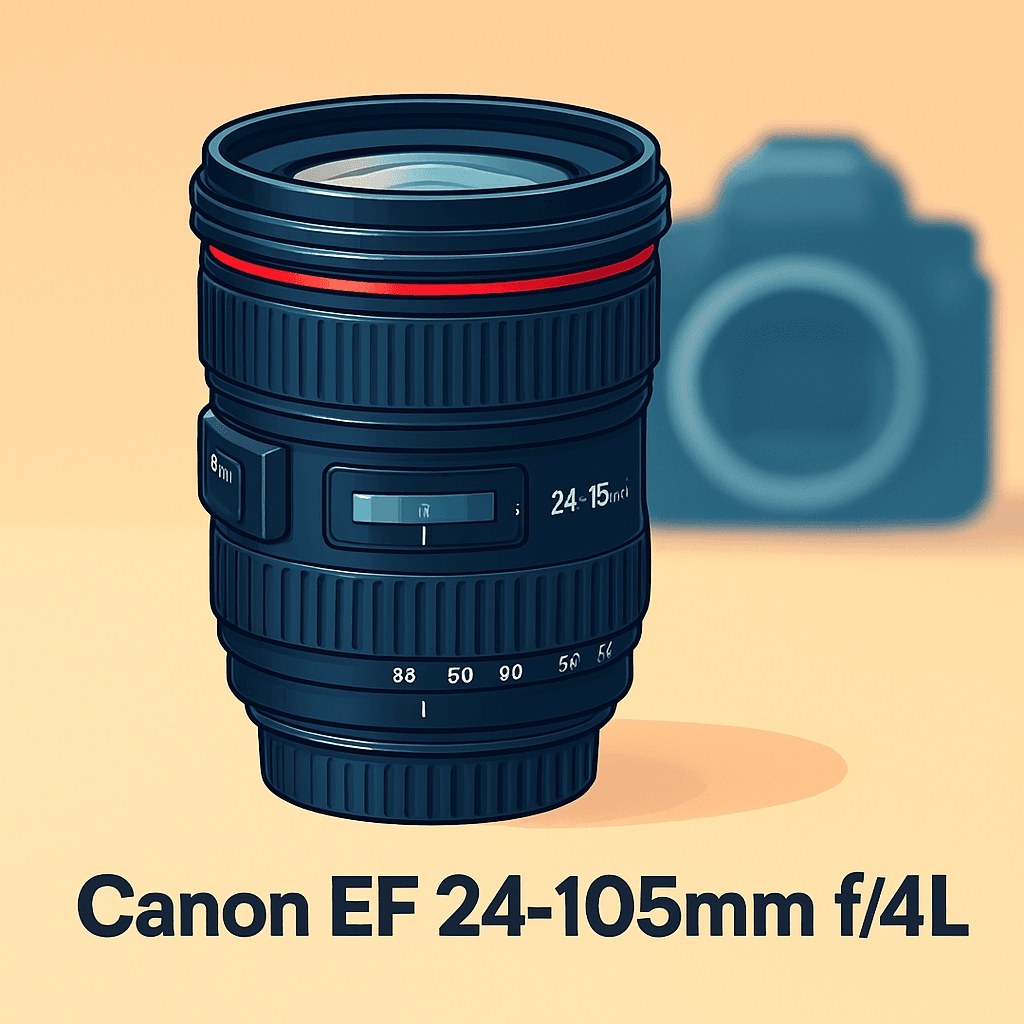
Want a single lens that can carry you through travel, weddings, and landscapes without constant swapping?
We’re looking at the Canon EF 24-105mm f/4L, a workhorse L-series standard zoom for full-frame bodies with a constant f/4, image stabilization, weather sealing and USM.
Having shot with it across rainy gigs and long travel days, I saw how it performs where it counts for real assignments.
I’ll cover handling, image quality, autofocus and stabilization so you can decide if it earns space in your kit — make sure to read the entire review as I compare it to common alternatives and share practical takeaways, so keep reading.

Canon EF 24-105mm f/4L
A versatile wide-to-tele zoom with constant f/4 aperture, pro-grade optics, fast and quiet focusing, and weather-resistant construction—perfect for travel, events, landscape, and everyday professional shooting.
Check PriceThe Numbers You Need
| Spec | Value |
|---|---|
| Focal Length | 24-105mm |
| Aperture | f/4 |
| Lens Type | Standard Zoom |
| Image Stabilization | Yes |
| Weather Sealing | Yes |
| Lens Mount | Canon EF |
| Lens Series | L-series |
| Minimum Focus Distance | Not specified |
| Optical Elements | Not specified |
| Lens Construction | Not specified |
| Diameter and Length | Not specified |
| Weight | Not specified |
| Filter Size | Not specified |
| Special Features | Ultrasonic Motor (USM) |
| Use | Full-frame DSLRs |
How It’s Built
In my testing the Canon EF 24-105mm f/4L feels like a proper pro lens from the moment you pick it up. The L-series build is solid and the weather sealing actually lets you keep shooting in light rain or a dusty venue without panicking. I liked how confident that makes you feel on a job.
The zoom and focus rings are smooth and give good tactile feedback. Zoom resistance is nicely damped and I didn’t notice annoying zoom creep during normal use, so framing stays predictable. The USM focus action is quiet and feels fast when tracking subjects.
Controls are simple and easy for beginners—AF/MF and IS switches are where you expect them to be. The hood mounts securely and really helps cut flare when shooting into the sun. The overall look is classic Canon L—clean and professional.
It’s not a tiny walkaround optic, so you’ll feel the weight after hours on your shoulder or long hikes. In my use it packed well in a travel bag and handled event days fine, but if you want featherlight gear this isn’t it.
The EF mount is straightforward on full-frame bodies and becomes a very useful reach on crop cameras. After using it for a while I found it a dependable, beginner-friendly workhorse with one clear trade-off: excellent build versus modest heft.
In Your Hands
The Canon EF 24-105mm f/4L covers everything from sweeping interiors to tighter portrait moments, letting you work a scene without swapping glass. In practice that range is why I reached for it at weddings, on street assignments, and during travel shoots—it frames landscapes and compresses subjects at the long end with reassuring versatility.
Its constant f/4 aperture keeps exposure predictable as you zoom, which is a real advantage when moving between dim interiors and bright exteriors or when shooting a sequence of candid moments. It won’t produce the ultra-shallow background blur of faster pro zooms, but combining focal length and subject distance still yields pleasing subject separation for portraits. For event and documentary work that tradeoff leans heavily toward practicality.
Center sharpness is strong across the range, while edges and the longest reach show a touch more softness that’s easily controlled in-camera or corrected in post. Color and contrast favor Canon’s natural, faithful rendering, and coatings keep flare in check most of the time—using the hood pays dividends in harsh light. The overall look is dependable and client-friendly.
Image stabilization meaningfully increases handheld confidence, so indoor and walk-and-shoot situations stay usable without extreme ISO or support; video benefits from a steadying influence, though it won’t replace a gimbal for heavy motion. Close-focus capability is handy for environmental detail, but don’t expect macro performance and be mindful of modest focus breathing during focus pulls. In everyday professional use the lens balances flexibility, reliability, and image quality in a way that keeps it in heavy rotation.
The Good and Bad
- 24-105mm focal range for broad coverage
- Constant f/4 aperture
- Image Stabilization
- L-series build and weather sealing
- Limited f/4 aperture reduces subject isolation and low-light performance versus f/2.8 alternatives
- Some softness at the edges/tele end
Ideal Buyer
If you want one reliable L-series zoom that covers landscapes, portraits and the majority of run-and-gun assignments, the Canon EF 24-105mm f/4L is built for you. It gives full-frame shooters a true all-purpose tool with image stabilization and weather sealing you can trust in imperfect conditions. Event, travel and documentary photographers will appreciate the range and durability without juggling lenses.
Hybrid photo/video shooters who prize smooth focal coverage and workable low-light handheld performance will find this lens especially useful. The 24–105mm span reduces lens changes and keeps you composed for fast-moving storytelling situations.
If your work demands the shallowest depth of field or the widest apertures for freezing action and extreme subject isolation, look elsewhere. Sports and concert photographers who need f/2.8 speed, pixel-peepers chasing edge-to-edge ultimate sharpness, or shooters committed to the lightest mirrorless packs should consider faster primes, the 24–70 f/2.8 class, or higher-res alternatives like the Sigma Art or Canon’s updated 24-105 II.
In short, pick this lens if you value versatility, build and dependable AF/IS in a single walkaround package. Pass if your workflow prioritizes ultimate speed, absolute corner resolution, or minimum weight.
Better Alternatives?
We’ve gone over the Canon EF 24-105mm f/4L and what makes it a solid all-around pro zoom: the 24–105 range, constant f/4, IS, and that L-series build. It’s a great one-lens solution for events, travel, and run-and-gun shoots, but no lens is perfect for every job.
If you want something a bit different—sharper in the middle, lighter to carry, or higher resolving at the long end—there are a few real-world alternatives worth considering. Below are three options I’ve used in the field and how each stacks up against the Canon 24-105L.
Alternative 1:

Canon EF 24-70mm f/4L
Compact, reliable standard zoom delivering consistent performance at f/4, crisp center-to-edge sharpness, durable build, and smooth handling—ideal for portraits, weddings, street photography, and run-and-gun assignments.
Check PriceThe 24-70mm f/4L is a close cousin to the 24-105 but feels a bit more purpose-built. In my experience it delivers a touch crisper images in the wide-to-mid range — landscapes, environmental portraits, and interiors just look cleaner across the frame. That extra edge and center clarity shows up when you need tight crops or large prints.
What it gives up vs the 24-105 is reach. You lose the 70–105mm tele headroom, so if you shoot lots of tighter portraits or need reach at events you’ll find yourself swapping lenses or stepping back. Handling-wise it’s a bit shorter and lighter, which makes it nicer to carry all day and quicker on a gimbal or gimbal-like setups.
Who should pick this: shooters who value slightly better sharpness and a more compact walkaround lens over extra tele reach. Wedding second shooters, street photographers, and travel shooters who rarely need 85–105mm will like it. If you need that extra compression at 105mm, stick with the 24-105 or add a small tele prime.
Alternative 2:

Sigma 24-105mm f/4 Art Canon EF
High-resolution Art-series zoom engineered for exceptional edge-to-edge detail, advanced coatings for contrast and flare control, and refined bokeh—designed for photographers prioritizing resolution and image quality across focal lengths.
Check PriceThe Sigma 24-105mm Art is the one I reach for when I want the best raw detail across the frame without stepping up to an f/2.8. In real shoots it often looks sharper, especially toward the edges and at the long end — landscapes and editorial work benefit from the extra resolving power. Colors and contrast also pop more straight out of camera compared to the older Canon 24-105.
Downsides compared to the Canon 24-105L are weight and handling—Sigma’s Art zoom is chunkier and sits heavier on the body, which matters on long shoots. Autofocus is usually very good, but on some camera bodies I’ve seen occasional focus quirks that need microadjust or a firmware update. Weather sealing and Canon-native integration aren’t as seamless as Canon’s L-series either.
Who should pick this: photographers who care most about image resolution and value — studio shooters, landscape photographers, and anyone who crops or prints big. If you don’t mind the extra weight and you’re willing to check AF behavior on your camera, this lens gives a lot of optical bang for the buck.
Alternative 3:
Sigma 24-105mm f/4 Art Canon EF
Precision-crafted zoom offering studio-grade sharpness, robust mechanics, and responsive autofocus—delivers versatile framing and consistent performance for full-frame shooters seeking an alternative with superb optical character and value.
Check PriceLooking at the Sigma again from a different angle: it’s the more “optics-first” choice. In controlled shoots and when I need a pleasing background fall-off, the Sigma’s rendering and micro-contrast feel a step up. The mechanics are solid too — the zoom and focus rings have a nice, precise feel that I liked when doing careful work in the studio.
Where it loses to the Canon 24-105L is in everyday field convenience. The Canon is a touch quicker to lock focus on moving subjects and its weather sealing gives me more confidence in rain or dusty conditions. The Sigma also demands a little more attention to AF setup on some bodies, which can be a hassle on a busy job where you don’t want to tinker.
Who should pick this: photographers who want studio-grade sharpness and don’t mind carrying a heavier lens — fine-art shooters, product photographers, and anyone who prioritizes image quality over full-time weather-sealed reliability. If you test it on your camera and the AF behaves, it’s a strong value alternative to the Canon 24-105L.
What People Ask Most
Is the Canon EF 24-105mm f/4 L a good all-purpose lens?
Yes — it’s a versatile walkaround zoom that covers wide to short telephoto and works well for travel, events, and general use.
Is the Canon EF 24-105mm f/4 L weather-sealed?
Yes, it has L-series weather resistance with a rubber gasket at the mount, but it’s not fully waterproof so avoid heavy exposure to rain or salt spray.
How sharp is the Canon EF 24-105mm f/4 L across the zoom range?
Center sharpness is strong, but corners can be a bit soft at the extremes; stopping down to f/5.6–f/8 noticeably improves overall detail.
Is the Canon EF 24-105mm f/4 L compatible with APS-C bodies?
Yes — it mounts on APS-C Canon bodies and gives an effective focal length of about 38–168mm, making it a useful short-tele zoom on crop cameras.
What is the difference between the Canon EF 24-105mm f/4 L and the Canon 24-70mm f/2.8?
The 24-105mm offers a longer zoom range and typically includes IS, while the 24-70mm f/2.8 is faster, often sharper, and better in low light and for shallow depth of field.
Is the Canon EF 24-105mm f/4 L image stabilized?
Yes — the EF 24-105mm f/4L IS models include Image Stabilization that usually buys you around 3 stops of shake reduction in real-world use.
Conclusion
The Canon EF 24-105mm f/4L remains a remarkably useful workhorse. Its broad, go-anywhere range, constant f/4 performance, dependable IS and professional L-series build make it a comfortable daily tool for demanding shoots. USM AF and weather sealing keep it in the kit for unpredictable assignments.
In practice it shines for events, travel and documentary work where changing lenses is a liability. Autofocus and stabilization deliver confidence handheld and on the move. Its compromises are straightforward: the f/4 ceiling limits subject isolation and low-light latitude, and you’ll notice softer corners and teleend rendering if you inspect critically.
If you need one durable, versatile lens that covers most scenarios, this is an excellent choice. If you prioritize ultimate edge-to-edge sharpness, lighter carry, or a faster aperture, consider the Canon 24-70mm f/4L IS, the Sigma 24-105 Art, or the Canon 24-105L IS II instead. Each alternative trades the original’s balance for specific gains.
Bottom line: the Canon EF 24-105mm f/4L still earns a place in a professional full-frame kit as a trustworthy, all-around L zoom. It excels where reliability, range and weather resistance matter most, while pixel-peepers or low-light specialists will want to look elsewhere.
Canon EF 24-105mm f/4L
A versatile wide-to-tele zoom with constant f/4 aperture, pro-grade optics, fast and quiet focusing, and weather-resistant construction—perfect for travel, events, landscape, and everyday professional shooting.
Check Price



0 Comments