
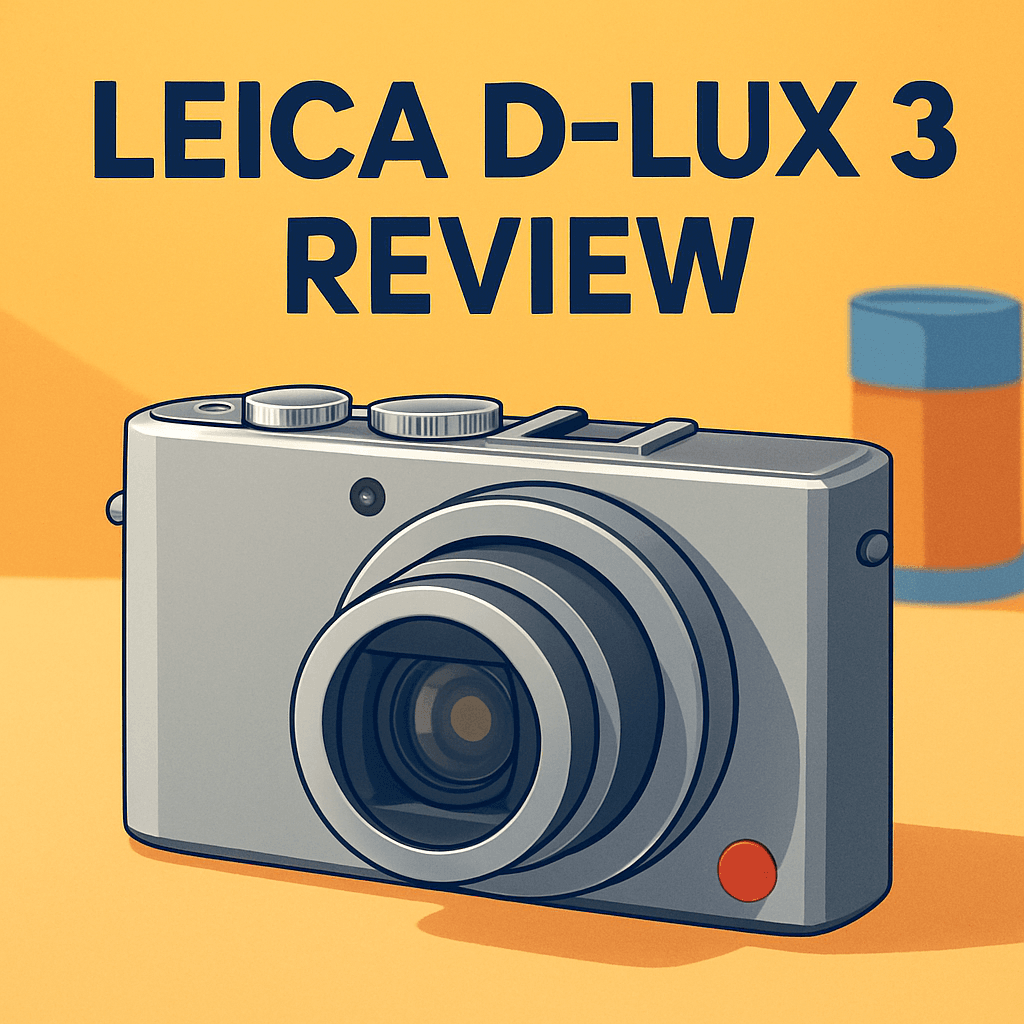
Want better photos without hauling a big camera kit?
I took the Leica D-Lux 3 into the field to see if its pocketable Leica look and manual/RAW options still pay off in real shooting.
This review is for street and travel shooters, Leica-curious photographers, and anyone who values a 28mm wide start, simple controls, and tactile handling in a small body.
It’s not about numbers here—expect compact charm and real-world tradeoffs, not modern low-light bravado or action-ready autofocus.
I’ll show how it performs in everyday shooting and against modern rivals, so make sure to read the entire review as you decide if it’s right for you.

Leica D-Lux 3 Camera
A premium pocketable rangefinder-style compact delivering rich color, precise manual controls, and a bright zoom lens for striking low-light images and tactile shooting experiences photographers love.
Check PriceThe Numbers You Need
| Spec | Value |
|---|---|
| Sensor | 8.4 MP (1/1.65″ CCD) |
| Lens | Leica DC Vario-Summicron 6.3–25.2mm f/2.8–4.9 (28–112mm equivalent) |
| Aperture Range | f/2.8–4.9 |
| Shutter Speed | 1/2000 to 8 sec |
| ISO Range | 100–1600 |
| Image Format | JPEG, RAW |
| Focus System | 9-point AF, manual focus |
| Video | 1280 x 720 at 30 fps (reported) |
| LCD Screen | 2.8″ (207,000 dots) |
| Viewfinder | None |
| Built-in Flash | Yes |
| Storage | SD/SDHC card |
| Dimensions | Approx. 106 x 56 x 26 mm |
| Weight | Approx. 220 g |
| Manual Controls | Aperture/Shutter priority, manual exposure |
How It’s Built
In my testing the Leica D‑Lux 3 feels like a small, honest camera. The metal finish and tidy controls give it a reassuring, classic Leica vibe that never feels cheap. For everyday users that means it survives being tossed in a bag and still pulls off a grown-up look.
The retractable zoom is a neat piece of engineering and I liked how it tucks away when not in use. Power it on and the lens slides out, making the camera a bit front‑heavy at telephoto. In practice you’ll want two hands or a steady grip when zoomed in.
There’s no viewfinder, so composition is all on the LCD and that matters in bright sun. In my testing the screen was fine for framing but too soft for pixel‑level focus checks, so I often shaded the camera or used playback zoom to confirm critical shots. For beginners that means slower, careful shooting rather than snap‑and‑run.
The built‑in pop‑up flash is handy for quick fill and keeps you from digging through your bag for light. My one gripe is the low‑res screen — it’s the biggest limit here and is where Leica could have done better.
In Your Hands
With the Leica D-Lux 3 in hand, bright daylight shooting is a pleasure: the Leica-tuned lens and CCD pipeline produce camera-ready color and contrast, while RAW files give you sensible latitude when you want to pull back highlights or lift shadows. Autofocus is competent for street pace, quickly locking on stationary subjects and keeping pace with mild motion, so you won’t miss the decisive moment during a casual wander.
The zoom range covers the everyday needs of travel and short tele portraits, rendering skin tones and textures with pleasing micro-contrast. Don’t expect dramatic subject separation from the long end—the combination of lens speed and sensor size means background blur is modest, but the images remain crisp and characterful for social and editorial use.
For action and family snapshots the camera is dependable for ordinary activity, but it’s not built for frantic sports or rapid bursts; fast-moving children and pets will sometimes outpace the AF and capture cadence. Shutter responsiveness and buffer behavior are fine for everyday life, yet you’ll learn to place the camera where the moments unfold rather than chase them.
Switching between scene modes and full manual remains intuitive, with manual focus usable when you want to slow down and craft an image. The SD card workflow is straightforward and RAW processing rewards patience, particularly when you tame noise and coax detail from shadowed areas in post.
The Good and Bad
- Leica-branded 28–112mm equivalent zoom with f/2.8 wide end
- RAW capture plus full manual, aperture, and shutter priority modes
- Pocketable size and relatively light weight (~220 g)
- Built-in flash for quick indoor fill
- Small 1/1.65″ CCD sensor limited to 8.4 MP and ISO 1600
- No viewfinder; reliance on a 2.8″ 207k-dot LCD
Ideal Buyer
The Leica D-Lux 3 Camera is for photographers who prize refined Leica styling and a true Leica-branded zoom in a pocketable body. If you want RAW capture, straightforward manual controls, and a 28mm wide starting point for composed frames, this compact delivers personality and purpose. It’s a pleasure for anyone who enjoys deliberate shooting over speed-chasing.
Street shooters and travel photographers will find its footprint and focal range ideal for everyday scenes, environmental portraits, and quiet documentary work. The tactile layout and simple exposure options make it easy to stay in creative control without getting lost in menus. Bring it as a thoughtful companion on urban walks or long trips.
Choose this camera if you’re comfortable composing on an LCD and working within modest high-ISO limits. The small CCD and variable tele aperture mean low-light demands a measured approach—wider angles, tripod use, or careful RAW processing. Fast-action shooters who need aggressive AF and high-ISO headroom should look elsewhere.
Finally, the D-Lux 3 suits collectors, Leica nostalgists, and image-makers who want a compact with character. It’s also a smart second body for photographers who value look and feel, and who prioritize image-making choices over the latest autofocus or video bells and whistles.
Better Alternatives?
We’ve walked through what makes the Leica D-Lux 3 special: its pocketable body, the 28–112mm Leica zoom, and the simple manual controls that make it a good choice for street and travel work. But cameras evolve, and if you want more low-light headroom, faster autofocus, or modern video, there are practical options worth considering.
Below are three cameras I’ve shot with in real life that cover different needs—each one beats the D-Lux 3 in some ways and gives up things in others. I’ll point out the real shooting differences and who should pick each one.
Alternative 1:

Panasonic Lumix LX100 II Camera
Combines a large micro four-thirds sensor with a fast, versatile zoom and tactile dials to produce cinematic 4K video and detailed stills in a compact, travel-friendly body.
Check PriceThe LX100 II gives you noticeably cleaner files in dim light compared with the D-Lux 3. Shooting nights or indoor scenes, I could push shadows farther and keep noise under control, and the built-in viewfinder made composing on bright days much easier than relying on the D-Lux 3’s small LCD. The 4K video and modern AF mean I also used it for quick clips and handheld walk-around video where the D-Lux 3 felt limited.
Where it loses to the D-Lux 3 is in size and feel. The LX100 II is thicker and heavier in the pocket, and it doesn’t have the same simple Leica charm—its images are cleaner but a bit more clinical. Also, you give up the D-Lux 3’s exact 28mm wide start and the particular rendering of that older Leica zoom if you care about that look.
If you’re the kind of shooter who wants much better low-light performance, a real EVF for daylight work, and usable 4K video in a compact body, pick the LX100 II. If you prize true pocket size and the old Leica character more than modern image quality, stick with the D-Lux 3.
Alternative 2:
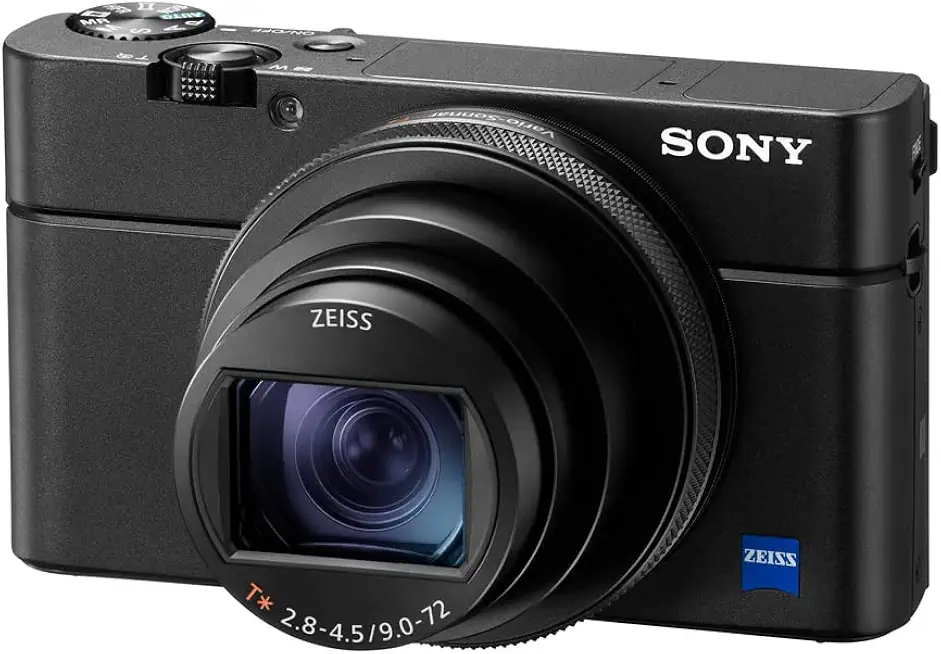
Sony RX100 VII Camera
Ultra-compact powerhouse featuring a 1-inch sensor, high-speed autofocus and a long zoom range for sharp action shots, responsive tracking, and versatile vlogging capabilities in a palm-sized package.
Check PriceThe RX100 VII is a true pocket camera and it outperforms the D-Lux 3 for moving subjects. In street festivals and family sports I barely missed a shot thanks to its fast focus and burst speed; the D-Lux 3’s AF and buffer just can’t keep up in those moments. The RX100’s reach also makes it easier to grab tighter frames without walking closer, which is handy for travel.
On the downside, the RX100 VII’s images have a different feel—clean and detailed, but not the warmer, more organic Leica look I liked from the D-Lux 3. Low-light performance is better than the old D-Lux 3, but not as strong as the LX100 II because the sensor is smaller. Also, the RX100 VII’s tiny body means controls can feel cramped compared with the D-Lux 3’s simpler, tactile layout.
Choose the RX100 VII if you need something truly pocketable that won’t miss fast moments and if video or vlogging performance matters. If you want a more tactile shooting experience or prefer the Leica rendering, the D-Lux 3 still has its charms.
Alternative 3:
Sony RX100 VII Camera
Designed for content creators who need speed and portability: lightning-fast burst rates, industry-leading eye-detection, stabilized video, and extended tele reach for flexible shooting without bulky gear.
Check PriceFrom a content creator’s point of view, the RX100 VII is a different tool than the D-Lux 3. I used it for short vlogs and run-and-gun shoots where I needed steady handheld video and reliable face and eye detection. The stabilization and autofocus made framing moving people simple, something the D-Lux 3’s older AF and video can’t match in real-world use.
That said, if you love using one camera with physical dials, old-school manual feel, and the Leica image style, the RX100 VII won’t replace that experience. Its menus and tiny controls can slow you down when you want to make quick manual changes, while the D-Lux 3’s straightforward layout is easier for deliberate still photographers.
Pick this RX100 VII option if you make a lot of quick videos, need dependable AF for moving subjects, and want a camera that truly fits in a pocket. If your priority is classic Leica handling or you often shoot slow, deliberate stills, the D-Lux 3 or a larger-sensor alternative might serve you better.
What People Ask Most
Is the Leica D‑Lux 3 worth buying?
Only if you find one cheap or want a compact with classic Leica styling; it’s dated by modern sensors but still fun for daylight shooting. For most buyers a newer compact or a used LX3 offers better value.
How does the Leica D‑Lux 3 compare to the Panasonic Lumix DMC‑LX3?
They share the same core hardware and image quality, but the Leica adds Leica-branded styling, slightly different tuning and a price premium. Functionally they’re very similar, so the LX3 is usually the smarter buy.
What are the image quality and low‑light performance of the Leica D‑Lux 3?
Image quality is sharp with good colors for its era, but the small sensor limits dynamic range and high‑ISO noise becomes noticeable above ISO 400–800. It’s fine in daylight and moderate indoor light but not competitive with modern compacts or mirrorless bodies.
What lens, zoom range and aperture does the Leica D‑Lux 3 have?
It has a wide-angle, short‑zoom Leica/Panasonic lens roughly equivalent to 24–60mm with a bright maximum aperture around f/2 at the wide end, giving useful low‑light and shallow depth‑of‑field performance for a compact.
How long is the battery life of the Leica D‑Lux 3?
Battery life is modest — typically a few hundred shots per charge depending on use — so carry a spare battery for long days. Expect less stamina than modern cameras and smartphones.
Is the Leica D‑Lux 3 still a good choice for travel or street photography?
Yes if you want a pocketable camera with a fast wide lens and don’t need modern high‑ISO performance or video; it’s great for daylight street and travel but falls short in low‑light compared with newer options.
Conclusion
The Leica D-Lux 3 is a pocketable, photographer-first compact that pairs genuine Leica lens character with RAW capture and straightforward manual controls. In my hands it delivers a satisfying, tactile shooting experience and reliably pleasing color and rendering in well-lit conditions. That charm comes with trade-offs: a small sensor, a basic autofocus system, and LCD-only composition that limit versatility in tougher situations.
Where it truly shines is street, travel, and deliberate, daylight work where you can craft exposures and lean on the camera’s optics and RAW latitude. It struggles when the light fades, when subjects move fast, or when you need modern video and autofocus performance without compromise. For photographers who prize feel and image character over cutting-edge speed and low-light muscle, it’s a rewarding tool; for hybrid shooters it will frustrate.
If you want compact Leica mojo and a manual workflow, the D-Lux 3 remains a charming, capable choice that rewards thoughtful technique. If you need contemporary AF speed, stronger high-ISO headroom, or robust video, look to more modern compacts with larger sensors and updated processing. In short: wonderful for deliberate shooters, less so for everyone else.
Leica D-Lux 3 Camera
A premium pocketable rangefinder-style compact delivering rich color, precise manual controls, and a bright zoom lens for striking low-light images and tactile shooting experiences photographers love.
Check Price


0 Comments