
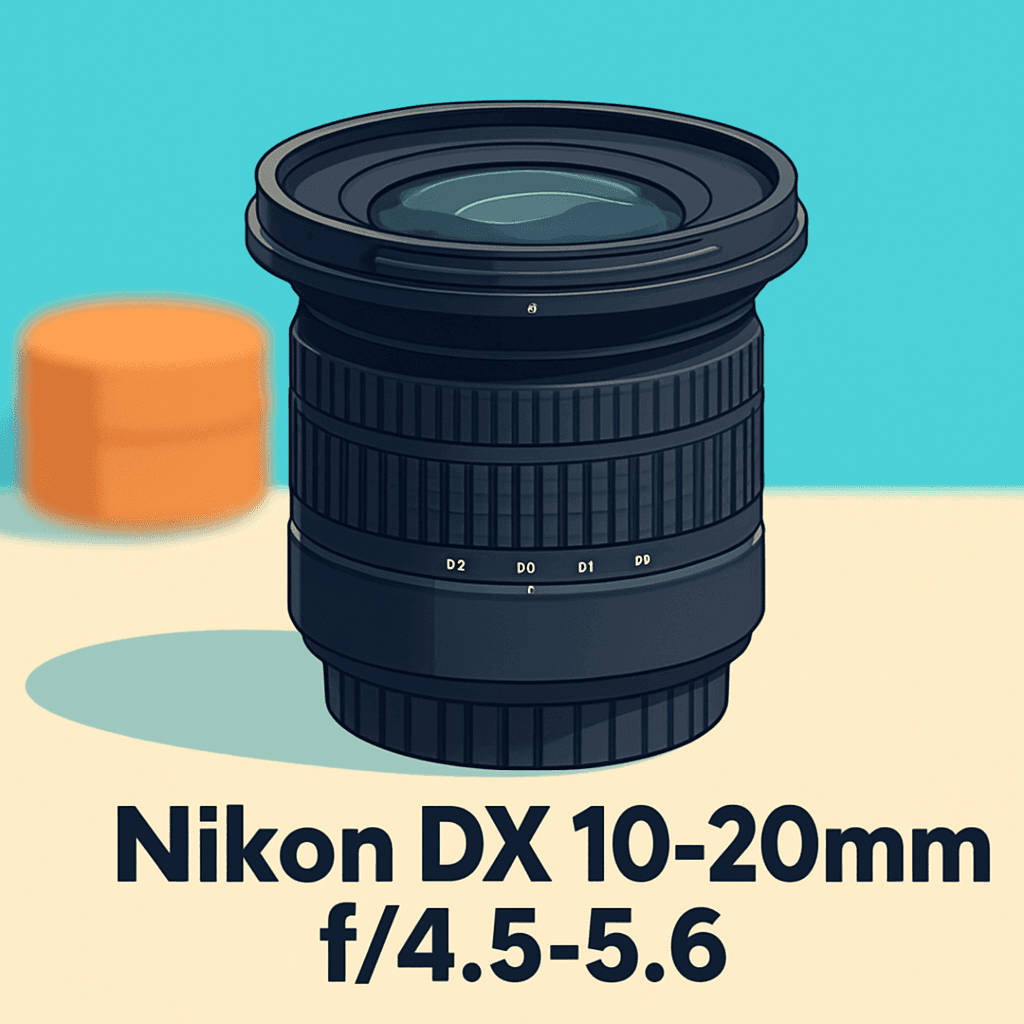
Want to stretch your perspective without hauling heavy glass? The Nikon AF-P DX NIKKOR 10-20mm f/4.5-5.6G VR promises ultra-wide angles in a travel-friendly package.
It’s light, stabilized and uses quiet AF-P focusing, so handheld interiors and video feel easier. You’ll get dramatic vistas without fighting weight on long walks.
Travelers, interior shooters, casual landscape photographers and vloggers will benefit from its portability and VR. I’ve spent time with it in the field and saw where it shines.
You’ll trade faster apertures and pro-level build for convenience; corners can be softer wide open and low-light performance is limited. That’s an important trade-off to keep in mind.
I’ll cover handling, sharpness, AF and VR in real shooting tests so you can decide if it fits your kit. Make sure to read the entire review — keep reading.

Nikon AF-P DX NIKKOR 10-20mm f/4.5-5.6G VR
Ultra-wide zoom for DX-format shooters delivers sharp, distortion-controlled landscapes and architecture shots. Built-in vibration reduction and rapid focusing make handheld low-light and video capture smoother and more reliable.
Check PriceThe Numbers You Need
| Spec | Value |
|---|---|
| Lens type | Ultra-wide-angle zoom |
| Compatible sensor format | Nikon DX (APS-C) |
| Focal length | 10–20 mm |
| 35mm equivalent focal length | 15–30 mm |
| Maximum aperture | f/4.5–5.6 (variable) |
| Lens construction | 14 elements in 10 groups |
| Vibration Reduction (VR) | Yes |
| Focus type | AF-P (Pulse motor autofocus) |
| Minimum focus distance | 0.22 m (8.7 in) |
| Maximum reproduction ratio | 0.16x |
| Filter size | 72 mm |
| Weight | Approximately 230 g (8.1 oz) |
| Dimensions (diameter × length) | Approximately 78 × 72 mm |
| Aperture blades | 7 rounded blades |
| Angle of view | 109°–72° (diagonal) |
How It’s Built
In my testing with the Nikon AF-P DX NIKKOR 10-20mm f/4.5-5.6G VR I was struck by how light and compact it feels in the hand. It’s the kind of lens you don’t mind tossing into a daypack for travel or a city walk. That translates to less fatigue and more shooting time for beginners and travelers.
Mounted on small Nikon DX bodies it balances really well at the widest end and feels slightly more nose-heavy as you zoom toward the longer end, but never awkward. The zoom ring turns smoothly with just the right amount of resistance, and the focus ring is quiet and a bit light—fine for quick tweaks but not ideal if you prefer heavy, mechanical feedback.
After using it for a while I liked the portability the most; it makes ultra-wide shooting approachable without a big camera bag. What could be better is the build — the lens is mostly plastic and lacks weather sealing, so I’d be careful in rough outdoor conditions or rainy shoots.
Practical note: it takes 72 mm filters, which are common and useful for polarizers and NDs on landscapes. In real-world use that means you can add a circular polarizer or an ND without exotic adapters, though good filters are an added cost to consider.
In Your Hands
The ultra‑wide field of view transforms compositions—landscapes feel expansive, buildings gain presence, and cramped interiors suddenly breathe. On a DX body this perspective emphasizes foreground‑to‑background relationships and rewards intentional framing. The broad coverage is liberating but asks you to watch for exaggerated edge geometry.
Central sharpness is pleasing for everyday shooting, while the extreme wide setting shows softer corners that improve when you stop down. Practically, the ultra‑wide end suits dramatic scenes where some edge softness is acceptable; the mid‑range is the sweet spot for balance, and the longer wide position tightens framing with crisper edges. Stop down for horizons or architectural detail to pull the frame together.
The lens focuses close enough to use strong foregrounds for depth without pretending to be a macro, which is ideal for rocks, flowers, or textured elements that lead the eye. Stabilization makes handheld interiors and low‑light static scenes more usable, but it won’t freeze subject motion—moving people still benefit from faster glass or a tripod. For twilight cityscapes and travel handheld work it converts marginal shutter speeds into reliable captures while keeping you nimble.
Everyday real‑world use is defined by portability and practicality; it’s a travel‑friendly ultra‑wide that nudges you toward thoughtful composition and modest aperture discipline. For photographers who favor mobility and stabilized wide views, it performs exactly where it matters.
The Good and Bad
- Very lightweight and compact, travel-friendly
- VR adds real handheld flexibility for interiors, twilight, and static scenes
- AF-P focusing is quiet, quick, and smooth for live view and video on compatible bodies
- Good central image quality for the price; improves when stopped down
- Slow variable aperture f/4.5-5.6 limits low-light performance and subject isolation
- Corner and edge softness at the widest end requires stopping down for best results
Ideal Buyer
If you prize weight and wide-angle reach over pro-grade weather sealing, the Nikon AF-P DX NIKKOR 10-20mm f/4.5-5.6G VR is designed for you. Its compact 10–20mm spread, tiny footprint and sub‑250‑gram heft make it a perfect travel companion for hikers, city wanderers, architecture students and anyone who prefers to move fast with light gear.
Interior and twilight shooters who need usable handheld exposures will love the built-in VR for static scenes, letting you work at slower shutter speeds without immediately breaking for a tripod. Landscape shooters who enjoy dramatic foregrounds and sweeping skies will find the close minimum focus distance and strong central sharpness—especially when stopped down—very useful for storytelling compositions.
Video creators and live‑view shooters will appreciate the quiet, smooth AF‑P focus action that keeps conversational vlogs, architectural walkthroughs and run‑and‑gun b‑roll looking clean and unobtrusive. The stabilization complements steady pans and low‑light handheld takes, reducing the need for gimbals in everyday situations.
This isn’t the lens for astrophotography, low‑light action or anyone needing creamy background separation; the slow variable f/4.5–5.6 and modest corner performance at 10mm impose real limits. Also step up to a more rugged, weather‑sealed zoom if you routinely shoot in harsh environments or need professional‑level durability.
Better Alternatives?
We’ve already walked through the Nikon DX 10-20mm f/4.5-5.6 and what it does best: very light weight, useful VR for handheld interiors and twilight, and quiet AF-P focusing for video. That combo makes it a great travel and casual landscape lens, but it leaves room for other choices if you need different priorities.
If you want more speed in low light, a tougher build, or a longer zoom reach, the three options below are the ones I turn to in the field. I’ve used each of these and will spell out where they win and where they give up the conveniences of the Nikon 10–20 VR.
Alternative 1:
Nikon AF-P DX NIKKOR 10-20mm f/4.5-5.6G VR
Compact ultra-wide-angle lens offers immersive perspectives, crisp edge-to-edge detail, and steady stabilization ideal for travel and interiors. Lightweight design pairs well with entry-level APS-C DSLRs for beginners and enthusiasts.
Check PriceThis listing is the lens we’ve been reviewing, so there’s no secret upgrade here — what you get is exactly what I described earlier. In real use it’s hard to beat for travel: small, light, and VR actually lets you handhold shots at surprisingly slow shutter speeds indoors and at dusk.
Compared to itself there’s nothing it does better or worse — the trade-offs are the same: great portability and quiet AF-P focus, but a relatively slow variable aperture and softer corners at the widest end unless you stop down. If you plan to shoot a lot in very dark places or want the absolute best corner sharpness wide open, this is where you’ll feel the limits.
If you want the lightest, most video-friendly ultra-wide for a DX Nikon and value VR, this is the one to choose. It’s aimed at travelers, vloggers, and interior shooters who prefer small kit and steady handheld results over faster glass or pro weather sealing.
Alternative 2:

Tokina AT-X PRO DX 11-20mm f/2.8 Nikon F
Constant f/2.8 aperture delivers bright, consistent exposure across the zoom range for dramatic night, interior, and astro shots. Rugged build and precise manual focus ring satisfy demanding wide-angle shooters.
Check PriceI’ve used the Tokina 11–20mm on several night shoots and interior sports sessions — the constant f/2.8 is the real difference out in the field. Compared to the Nikon 10–20 VR, the Tokina lets you work in lower light without cranking ISO or a tripod, and it gives noticeably more subject separation when you want it.
Where the Tokina loses out versus the Nikon is in weight, size, and convenience: it’s heavier and lacks VR, so handheld dusk interiors aren’t as easy unless you’re comfortable with higher ISO or a monopod. Its autofocus is solid for stills but can be noisier and less smooth for live view video than the quiet AF-P lens.
Buy the Tokina if you often shoot in low light, do star work, or need a fast, consistent aperture for indoor action. Choose it when image speed and a tougher build matter more to you than the Nikon’s light weight and built-in stabilization.
Alternative 3:
Tokina AT-X PRO DX 11-20mm f/2.8 Nikon F
Fast wide-angle zoom engineered for dynamic landscapes and indoor sports; smooth bokeh and reliable contrast in low light thanks to the constant aperture. Durable construction withstands professional field use.
Check PriceFrom a handling and build point of view, the Tokina feels like a step up in ruggedness compared with the Nikon 10–20. Its focus ring and zoom action have a firmer, more professional feel, so if you’re rough on gear or shoot in tougher conditions you’ll notice that right away.
In practical shooting terms the Tokina gives better control over shallow depth and cleaner results at night, but you trade away the Nikon’s VR and featherlight packing. If you move around a lot and depend on handheld VR for interiors or travel video, the Nikon wins on ease of use; if you need a lens that performs in tougher light and holds up to heavy use, the Tokina is the better tool.
This variant of the Tokina is a good pick for advanced hobbyists or pros who want a fast wide zoom with solid build and don’t mind carrying a bit more weight. Pick it when low-light performance and durability are priorities and you can live without optical stabilization.
What People Ask Most
Is the Nikon DX 10-20mm f/4.5-5.6 a DX lens or full-frame lens?
It’s a DX lens designed for APS-C (DX) cameras, not full-frame (FX) bodies.
Is the Nikon 10-20mm f/4.5-5.6 good for landscape photography?
Yes—its ultra-wide view and light weight make it great for landscapes, especially when stopped down a bit for better edge sharpness.
Does the Nikon 10-20mm f/4.5-5.6 have vibration reduction (VR)?
No, this lens does not include vibration reduction.
Can you use the Nikon 10-20mm f/4.5-5.6 on full-frame cameras?
It will physically mount on F‑mount full-frame bodies but the image circle is for DX sensors, so expect heavy vignetting or the camera will force a DX crop.
What is the 35mm equivalent focal length of the Nikon 10-20mm on a DX body?
On a DX body (1.5× crop) it’s roughly 15–30mm in 35mm equivalent terms.
Is the Nikon 10-20mm f/4.5-5.6 sharp and worth buying?
For the price it’s a very good value—reasonably sharp, especially stopped down, and a smart buy for hobbyists and travel shooters who want an affordable ultra-wide.
Conclusion
The Nikon AF-P DX NIKKOR 10-20mm f/4.5-5.6G VR is a compact, stabilized ultra-wide that delivers exactly what it promises: easy travel handling, usable handheld interiors and smooth live-view/video focus. Its quiet AF-P system and solid central imaging make it a reliable everyday UWA for DX shooters who value convenience over heavy glass. In short, it’s an honest, practical lens for casual landscapes, architecture and vlogging.
The trade-offs are obvious and tolerable depending on how you shoot. You give up low-light speed and pro-grade weather sealing, and the widest angle shows softer edges that respond well to stopping down. Still, VR genuinely extends handheld usability for static scenes and twilight work — just don’t expect it to stop subject motion.
If you prize portability, stabilization and smooth AF-P performance, this lens represents strong value for its intended users. If instead you need faster apertures or a longer zoom range, consider the constant-speed Tokina option or a stabilized Tamron alternative. Overall, the Nikon AF-P DX NIKKOR 10-20mm f/4.5-5.6G VR is a smart, budget-minded choice for photographers who shoot light, move fast, and favor convenience over pro-level ruggedness.
Nikon AF-P DX NIKKOR 10-20mm f/4.5-5.6G VR
Ultra-wide zoom for DX-format shooters delivers sharp, distortion-controlled landscapes and architecture shots. Built-in vibration reduction and rapid focusing make handheld low-light and video capture smoother and more reliable.
Check Price




0 Comments