
Want wider, more dramatic images without lugging heavy glass? If you’re deciding between portability and image quality, this lens review will help you choose.
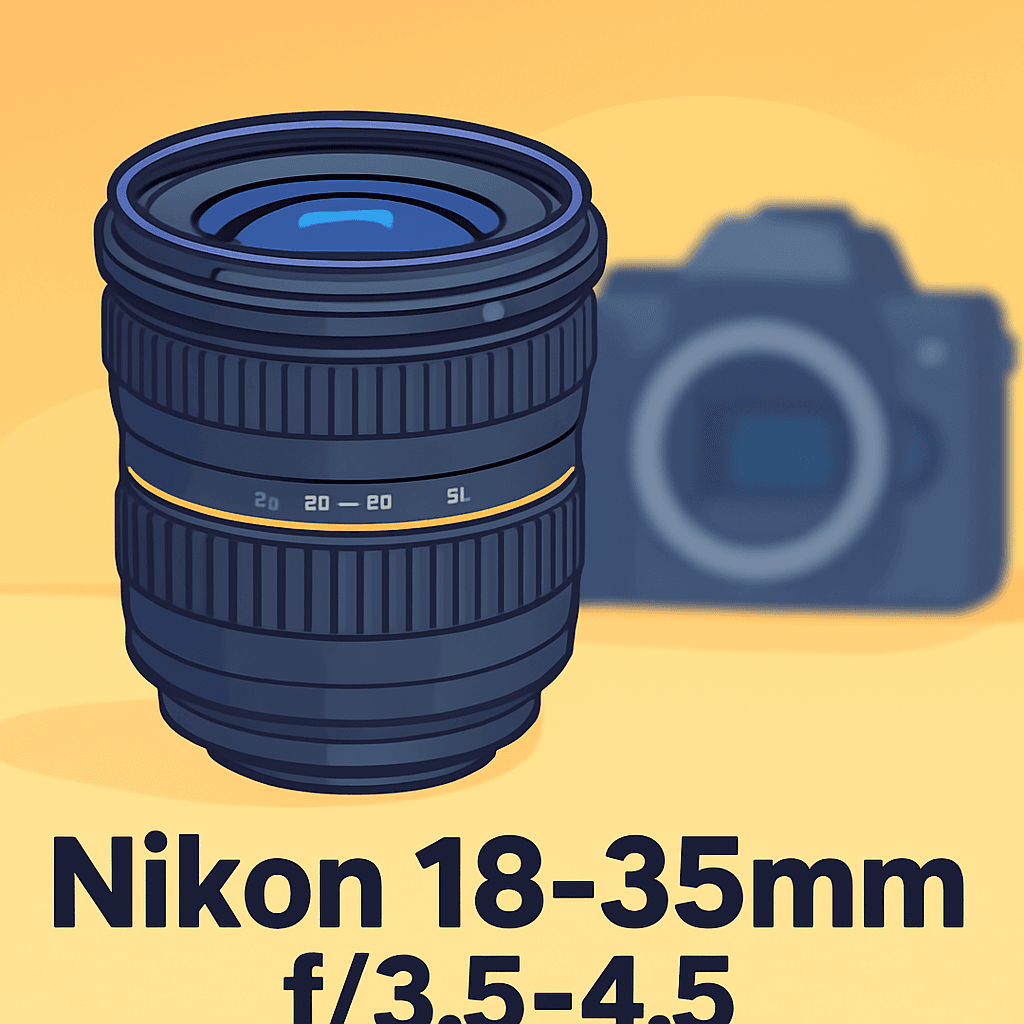
The Nikon AF-S FX NIKKOR 18-35mm f/3.5-4.5G is a compact F‑mount wide zoom for FX and DX; it’s variable aperture, lacks VR, and accepts 67mm filters.
Travel, interior and landscape shooters will care most. I field-tested it on Nikon bodies — make sure to read the entire review and keep reading.

Nikon AF-S FX NIKKOR 18-35mm f/3.5-4.5G
Versatile wide-angle zoom designed for full-frame shooters, delivering sharp landscapes and lively interiors with reliable autofocus and compact handling. Ideal for travel, architecture, and everyday wide-angle creativity.
Check PriceThe Numbers You Need
| Spec | Value |
|---|---|
| Focal Length | 18-35 mm |
| Maximum Aperture | f/3.5-4.5 |
| Lens Mount | Nikon F (FX/APS-C) |
| Format Compatibility | Full-frame (FX) and APS-C (DX) |
| Optical Design | 13 elements in 11 groups |
| Minimum Focus Distance | 0.28 m (11 in) |
| Maximum Reproduction Ratio | 0.19x |
| Diaphragm Blades | 7, rounded |
| Autofocus | Silent Wave Motor (SWM) |
| Filter Size | 67 mm |
| Dimensions (Diameter x Length) | approx. 78 x 81 mm |
| Weight | approx. 460 g |
| Lens Coating | Extra-low Dispersion (ED) glass element |
| Image Stabilization | No |
| Aperture Ring | No |
How It’s Built
In my testing the Nikon AF-S FX NIKKOR 18-35mm f/3.5-4.5G felt instantly familiar on Nikon bodies. The F-mount mates cleanly and the lens is compact and light enough to carry all day. That portability is what I really liked — it’s a travel-friendly wide zoom.
Externally it’s simple and uncluttered, with a standard filter thread that makes polarizers and NDs easy to use. There’s no aperture ring, so you control stops from the camera body — beginners, that’s normal and fine. One thing that could be better is the lack of image stabilization, so plan for a tripod or slightly higher ISO in low light.
The zoom ring has a short, predictable throw and a smooth feel, which makes framing quick shots effortless. The focus ring is responsive and offers usable manual override for picky focus work. In my testing manual focus felt precise enough for landscapes and close details.
Overall the build matches the lens’s lightweight aim — it feels solid without being heavy. That balance makes it easy to handhold for hours and keeps fatigue low on walks. After using it for a while I found it a practical lens for beginners who want wide coverage without bulk.
In Your Hands
The lens delivers the kind of wide-to-moderate wide coverage you reach for on trips, city walks and tight interiors, making horizons feel roomy without forcing exaggerated perspectives. On crop bodies that same coverage tightens up, which shifts it toward everyday wide-angle uses rather than ultra-wide landscapes; it feels like a different but still useful tool in that setup. Shooting at several focal lengths showed it slotting neatly into real shoots where portability matters more than extreme reach.
Because the design leans toward compactness it forgoes built-in stabilization and relies on the camera and technique in lower light, so you trade shutter speed for higher ISO or a tripod more often than with stabilized glass. In practice that meant keeping an eye on shutter speeds in dim interiors and making small compromises—steady stance, in-body high-ISO comfort, or a monopod were common solutions. For daytime travel and sunlit scenes it never felt compromised.
Close-focus performance is one of the pleasant surprises: you can get in tight for environmental close-ups and subject details without swapping to a macro lens, and the background separation is pleasant for context shots even if it won’t produce extreme blur. Highlights render smoothly and out-of-focus areas are generally pleasing for landscape foregrounds and street portraits. Manual focus feels intuitive for those moments when precision matters.
As a travel-friendly optic it pairs well with mid-sized DSLR bodies, balancing without a heavy front end and accepting standard filters that are easy to carry and stack. Handling is straightforward—fast zoom throw, a responsive focus ring and predictable behavior when relying on in-camera correction tools for distortion and vignetting. Overall it’s the kind of lens you’ll grab when practicality and wide coverage beat brute-force performance.
The Good and Bad
- Compact and relatively lightweight for an FX wide-angle zoom (approx. 78 x 81 mm, 460 g)
- Useful 18–35 mm range covering wide to moderate wide perspectives
- FX and DX compatibility on Nikon F-mount bodies
- SWM autofocus and 7 rounded diaphragm blades
- No image stabilization (VR)
- Variable maximum aperture f/3.5–4.5
Ideal Buyer
The Nikon AF-S FX NIKKOR 18-35mm f/3.5-4.5G is ideal for photographers who prioritize a lightweight, compact wide-angle zoom for travel and everyday carry. Landscape, cityscape and interior shooters will like its useful field coverage and the common 67 mm filter thread for polarizers and NDs. It works well on FX bodies and behaves as a versatile walkaround on DX cameras too.
Hobbyists, photojournalists and street shooters who value portability and straightforward handling will find this lens practical. Close-focus ability to 0.28 m (0.19x) plus SWM autofocus make it handy for environmental details and quick handheld frames. On mid-size Nikon DSLRs the balance and compact footprint keep long days less fatiguing.
It’s less suitable for those who need built‑in VR for steady low‑light handholding or a constant fast aperture for shallow depth of field. Serious landscape, architectural or pro users chasing ultimate edge‑to‑edge performance should consider the 16‑35 f/4 VR or faster alternatives instead. If portability, filter friendliness and a sensible price-performance tradeoff are your priorities, this lens is a smart, budget‑minded pick.
Better Alternatives?
We’ve covered what the Nikon 18-35mm f/3.5-4.5 offers: a light, handy wide zoom that’s easy to carry and useful for travel, landscapes, and interiors. It’s a practical lens, but it isn’t the last word for every shooter — no VR, a variable aperture, and only 18mm at the wide end mean some photographers will want something different.
Below are three real-world alternatives I’ve used and can recommend in different situations. Each one trades some of what the 18–35 does well for strengths you might need more: wider coverage and built-in stabilization, or a much faster aperture for low light and subject separation. I’ll point out what each does better and worse than the Nikon 18–35 and who should pick it.
Alternative 1:

Nikon AF-S FX NIKKOR 16-35mm f/4G VR
Constant-aperture wide-angle zoom with image stabilization and weather-resistant construction, offering consistent sharpness and controlled vibrations for handheld landscapes, cinematic video, and professional outdoor shooting in challenging conditions.
Check PriceI’ve used the 16–35mm f/4G VR on long hikes and windy coastal shoots. Compared to the 18–35, the 16–35 starts wider at 16mm so you get a noticeably bigger scene — great for big landscapes and tight interiors. The built-in VR actually lets me handhold at slower shutter speeds when I didn’t want to haul a tripod, which is a real advantage over the non-VR 18–35.
Where it’s worse: the 16–35 is heavier and larger, and it costs more. If you’re trying to travel light the 18–35 will win on size and balance. Also, the 16–35’s constant f/4 isn’t dramatically faster in low light than the 18–35’s f/3.5 at 18mm, but the steadier performance across the zoom range and VR make it more usable in dim conditions.
Who should buy it: pick the 16–35 if you shoot landscapes, architecture, or run-and-gun video outdoors and need wider coverage, weather sealing, and stabilization. If you value compactness above all, stick with the 18–35.
Alternative 2:

Sigma 18-35mm f/1.8 DC HSM Art Nikon
Groundbreaking constant f/1.8 wide-angle zoom built for crop-sensor bodies, producing creamy bokeh, exceptional low-light performance, and razor-sharp detail—perfect for creative portraits, environmental shots, and fast-action capture.
Check PriceI used the Sigma 18–35mm Art on an APS-C Nikon body for event and low-light work and it’s a different animal. Compared to the Nikon 18–35, the Sigma’s constant f/1.8 gives far better low-light performance and much shallower depth of field — you can isolate subjects and get a creamy background even at wider focal lengths, something the Nikon can’t do.
Downsides versus the 18–35: the Sigma is a DX-only lens, so on full-frame bodies it vignettes or forces you to shoot cropped — that makes the Nikon 18–35 more flexible for FX shooters. It’s also heavier and has a big front element, so filters are less convenient and the whole setup feels chunkier than the compact Nikon zoom.
Who should buy it: APS-C shooters who want speed and subject separation. If you shoot events, portraits in tight spaces, or low-light gigs on a crop body, the Sigma’s performance is hard to beat. If you need full-frame coverage or a lighter travel lens, the Nikon 18–35 is the better pick.
Alternative 3:
Sigma 18-35mm f/1.8 DC HSM Art Nikon
Premium art-series optic delivering unmatched sharpness across the zoom range, ultra-fast aperture for subject isolation, quiet hypersonic autofocus, and robust construction—ideal for studio, street, and low-light videography.
Check PriceUsing the Sigma Art on a street and studio job showed me its other strengths: the autofocus is smooth and quiet, and the lens gives a punchy look with strong center sharpness even wide open. Compared to the Nikon 18–35, you get a more “cinematic” look thanks to the f/1.8 aperture and nicer subject separation, which is great for video and portraits on crop bodies.
Where it falls short versus the 18–35 is the lack of FX compatibility and the size. The Nikon 18–35 stays smaller on a Nikon DSLR and accepts common 67mm filters easily; the Sigma’s big front element and weight change handling and accessory choices. Also, neither Sigma Art nor the 18–35 has VR, so both need higher ISOs or tripods in very low light.
Who should buy it: go for this Sigma build if you’re shooting on APS-C and want top image quality, fast aperture for creative work, and quiet AF for video. If you shoot full-frame or need a light, travel-friendly wide zoom, the original Nikon 18–35 will be more practical.
What People Ask Most
Is the Nikon 18-35mm f/3.5-4.5 a DX or FX lens?
It’s a full-frame (FX) design made before Nikon’s DX line, so it will work on both FX and DX bodies but is not labeled DX.
How sharp is the Nikon 18-35mm f/3.5-4.5?
Center sharpness is decent, especially stopped down, but edges and corners can be soft wide open—more noticeable on full-frame bodies.
Is the Nikon 18-35mm f/3.5-4.5 good for landscape photography?
Yes, it can be a good budget landscape lens—works very well on DX and is usable on FX if you stop down to improve corner performance.
Does the Nikon 18-35mm f/3.5-4.5 have a built-in autofocus motor?
No, it’s a screw-drive AF lens and does not have Nikon’s built-in Silent Wave (AF-S) motor.
Will the Nikon 18-35mm f/3.5-4.5 autofocus on entry-level Nikon bodies (D3xxx/D5xxx)?
No, entry-level D3xxx/D5xxx bodies lack the in-body screw-drive motor, so this lens will not autofocus on those cameras.
What are the best alternatives to the Nikon 18-35mm f/3.5-4.5?
For full-frame, consider the Nikon 16-35mm f/4 VR; for DX or more speed, look at the Sigma 18-35mm f/1.8 Art or a sharp 17-50mm f/2.8 zoom from Tamron/Sigma.
Conclusion
The Nikon AF-S FX NIKKOR 18-35mm f/3.5-4.5G is the kind of wide-angle zoom that belongs in a light travel kit. It’s small, unobtrusive, and capable of delivering reliably usable images across a range of scenes. It doesn’t pretend to be the ultimate wide-angle, but it gives you a lot of practical mileage without weighing you down.
Its strengths are plain and useful: compact handling, quiet and dependable autofocus, and a close-focus capability that expands creative framing. Common filters work easily with it, which is a big plus for landscape shooters who travel light. In real-world use it’s a very friendly lens to shoot with on everyday outings.
Those conveniences come with trade-offs. The absence of stabilization and a variable-aperture design limit low-light handheld performance and shallow-depth-of-field control, and it won’t match the edge-to-edge finesse of higher-end wide-angle zooms. Be prepared to rely on a tripod, faster ISO, or in-camera corrections in demanding situations.
If portability, simplicity, and a useful wide-to-moderate wide range are your priorities, this lens is a smart, economical choice. If you need stabilization, a constant fast aperture, or the finest corner performance, look to the alternatives I discussed earlier instead.
Nikon AF-S FX NIKKOR 18-35mm f/3.5-4.5G
Versatile wide-angle zoom designed for full-frame shooters, delivering sharp landscapes and lively interiors with reliable autofocus and compact handling. Ideal for travel, architecture, and everyday wide-angle creativity.
Check Price


0 Comments