
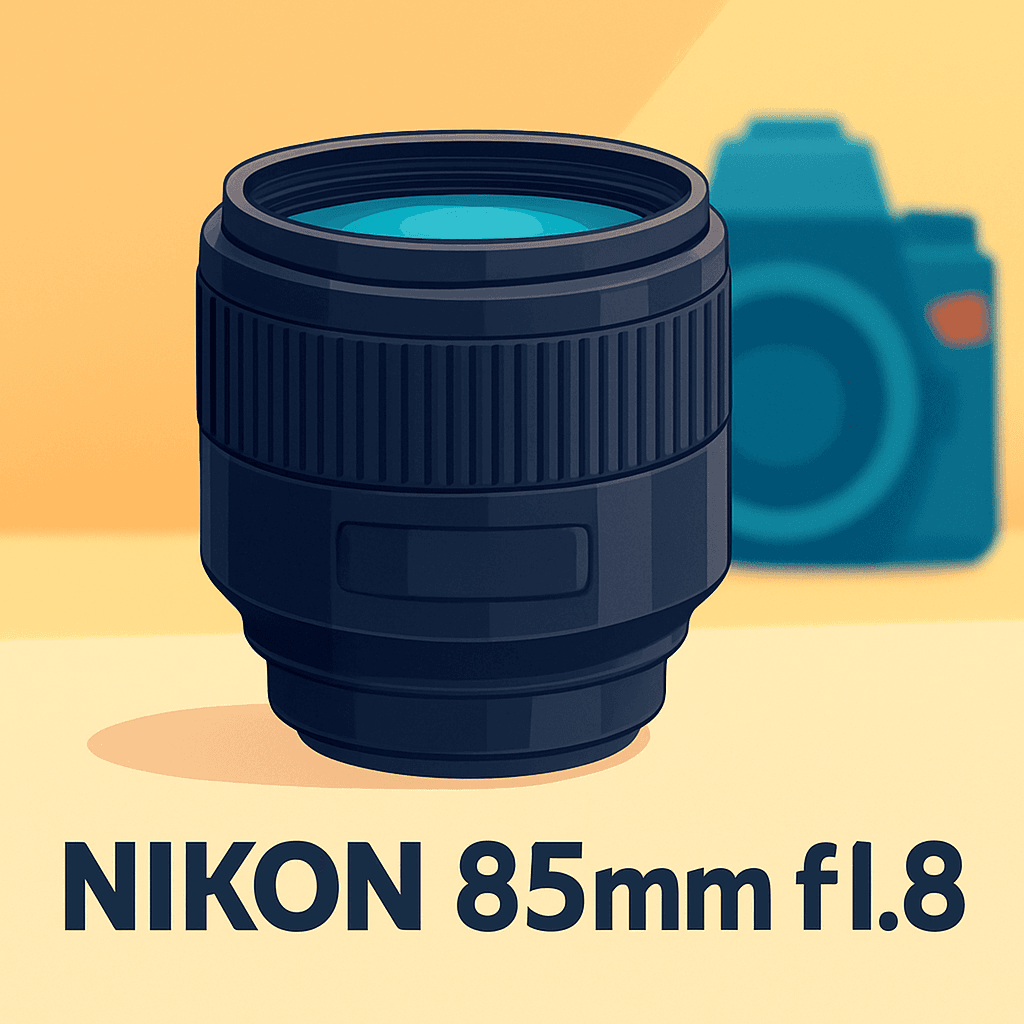
Want sharper, more flattering portraits without lugging around a heavy lens? The Nikon F 85mm f/1.8G AF-S NIKKOR is an FX‑format F‑mount prime built for portrait and short‑telephoto work.
If you shoot headshots, events, or lifestyle work on Nikon DSLRs—full‑frame or crop—you’ll find the focal length and bright f/1.8 very usable. It’s compact, relatively light, and uses AF‑S autofocus for quick focusing in real shoots.
Having shot plenty of 85mm primes, I was eager to field‑test this one across studio sessions and run‑and‑gun events. That real‑world time helped shape the hands‑on perspective you’ll get here.
I’ll cover handling, autofocus behavior, bokeh character, and practical pros and cons, plus sensible alternatives for different needs. Make sure to read the entire review as I break down when this lens really earns its keep—keep reading.

Nikon F 85mm f/1.8G AF-S NIKKOR
Compact, fast short-tele prime delivering crisp portraits and smooth bokeh at wide apertures. Lightweight, quick autofocus and excellent edge-to-edge sharpness make it ideal for event and everyday portrait work.
Check PriceThe Numbers You Need
| Spec | Value |
|---|---|
| Focal length | 85mm |
| Maximum aperture | f/1.8 |
| Lens mount | Nikon F-mount (FX format) |
| Lens type | Prime lens |
| Autofocus | Silent Wave Motor (AF-S) |
| Minimum focus distance | 0.80 meters (2.62 feet) |
| Optical construction | 9 elements in 7 groups |
| Diaphragm blades | 7, rounded |
| Filter size | 67mm |
| Angle of view | 28° 30′ (full-frame) |
| Maximum reproduction ratio | 1:8.4 |
| Dimensions (diameter × length) | approximately 78 mm × 73.5 mm |
| Weight | approximately 350 grams |
| Coating | Super Integrated Coating (SIC) |
| Compatibility | Full-frame and APS-C Nikon DSLRs (crop factor applies) |
How It’s Built
In my testing the Nikon F 85mm f/1.8G AF-S NIKKOR feels noticeably compact and light for its class. It slips onto a camera without making the kit feel bulky. That makes it easy to carry for a full day of shooting.
The lens’ optical design and rounded diaphragm blades give a pleasing overall look to images in normal use. I noticed the Super Integrated Coating helped keep backlit scenes from looking washed out. The electronic diaphragm and full-time manual focus override worked smoothly when I needed fine control.
Ergonomically it balances well on everyday Nikon DSLRs and stays comfortable during long shoots. The focus ring is smooth and accurate for small adjustments, which I liked a lot. One small gripe is the ring can feel a bit narrow if you wear gloves or like a chunkier grip.
Build-wise it feels solid and confident in the hand without being heavy. I didn’t find any obvious weather sealing, so I’d be cautious in bad weather. That’s the one area I’d like to see improved for outdoor pros and travel shooters.
For beginners this lens is simple to use and forgiving to carry around. After using it for a while I found it reliable for portraits and events. It’s an easy lens to learn on and enjoy shooting with.
In Your Hands
On a full-frame body the 85mm framing is ideal for classic portraits—tight headshots with flattering compression at normal portrait distances, and comfortable half‑body framing if you take a step back. On APS‑C cameras the field of view feels noticeably tighter, useful when you want more subject isolation but requiring more working room in confined spaces.
The lens’s bright aperture is a real asset in available light, letting you preserve usable shutter speeds and keep ISOs lower for cleaner images. In practice you can shoot indoor events and ambient‑lit scenes without leaning on flash, while still separating subjects from busy backgrounds.
Close-up capability is modest, so the optic isn’t meant for macro work; for very tight head fills or detail shots you’ll often need to back up or crop. That limitation doesn’t hinder its portrait strengths, but it’s worth planning your distance for the look you want.
Optically the lens delivers where it counts: a crisp, contrasty center wide open with edges that firm up noticeably as you stop down. Colors stay natural and the Super Integrated Coating helps resist veiling flare in backlit situations, though a touch of vignetting is visible when used wide open and diminishes when stopped down.
All told, this is a practical, workhorse portrait lens—great for headshots, candid coverage, and environmental portraits outdoors or under ambient indoor light. If your workflow centers on moderate distances and clean, punchy rendering, it’s consistently dependable in real‑world use.
The Good and Bad
- Bright f/1.8 aperture for depth of field control and low-light flexibility
- Compact and lightweight for an 85mm (approx. 350 g; 78 x 73.5 mm)
- AF-S autofocus with full-time manual focus override
- Super Integrated Coating to reduce flare and ghosting
- No optical stabilization
- Minimum focus distance of 0.80 m and 1:8.4 maximum reproduction ratio limit tight close-ups
Ideal Buyer
The Nikon F 85mm f/1.8G AF-S NIKKOR is ideal for Nikon DSLR shooters who want a compact, fast 85mm prime that handles like a classic portrait lens. It’s a smart choice for portrait and headshot photographers who prioritize portability and quick handling on full-frame and APS-C bodies.
Event and lifestyle shooters who move between candid frames and controlled portraits will appreciate the bright f/1.8 for available light and subject separation. If you prefer a lightweight kit that won’t tire you out during long days, this lens delivers a useful balance of size and speed. It also suits photographers who don’t need in-lens stabilization and are fine working at its 0.80 m minimum focus distance.
Think of it as a practical workhorse: a primary portrait optic for beginners and pros who want a reliable, straightforward look without the weight or price of f/1.4 alternatives. APS-C shooters will find the crop tighter for headshots, while full-frame shooters will enjoy classic 85mm framing and shallow depth of field. Choose this lens if you want fast glass that stays simple, light, and consistently usable in real-world portrait workflows.
Better Alternatives?
We’ve already walked through what the Nikon 85mm f/1.8 does well: it’s light, fast enough for most portraits, and gives pleasing background blur for the price. If you like that balance of size, speed, and value, it’s a great pick.
But depending on your work you might want more than the 85/1.8 offers — creamier bokeh, shallower depth of field, or even more edge-to-edge sharpness and flare control. Below are a few lenses I’ve used in the field that change the picture in real, usable ways.
Alternative 1:

Nikon F 85mm f/1.4G AF-S NIKKOR
Ultra-fast aperture produces dreamy background separation and exceptional low-light performance. Rich, natural skin tone rendering with accurate autofocus and robust construction, designed for pro portraiture and creative shallow-depth artistry.
Check PriceI’ve shot headshots and small weddings with the 85mm f/1.4G, and the most obvious difference from the f/1.8 is the look. Wide open the f/1.4 gives a much shallower plane of focus and a very creamy background. Skin tones have a slightly richer, more “three-dimensional” feel compared with the cleaner look of the 85/1.8.
That comes with real trade-offs. The 1.4 is heavier and feels more like a pro lens on the camera — great for the studio, a bit tiring if you’re handheld all day. Wide open you’ll also see stronger corner fall-off and a more characterful rendering than the neutral f/1.8; some people love that character, others prefer the cleaner files of the 85/1.8.
This is the lens I’d pick if you’re a portrait pro or a wedding shooter who cares most about subject separation and that classic “painterly” look. If you want lighter gear, or you shoot a lot of run-and-gun work, the 85/1.8 still makes more sense.
Alternative 2:

Nikon F 85mm f/1.4 DG HSM Art
Engineered for optical excellence, this premium portrait optic delivers razor-sharp central resolution, sculpted bokeh and superior micro-contrast. Durable, smooth-focus mechanism empowers studio and available-light shooters seeking ultimate image quality.
Check PriceOn shoots where I needed every bit of detail — tight editorial portraits or when I knew clients would crop in — this 85mm delivered more punch than the 85/1.8. The center detail and mid-tone contrast are noticeably stronger, so images look “cleaner” and more three-dimensional straight out of camera.
The downside is size and handling. It’s noticeably bulkier and heavier than the 85/1.8, and you feel that on long days. Also, that clinical sharpness can work against you if you want a softer, more forgiving skin rendering without retouching — the 85/1.8 gives a bit more forgiveness in that respect.
If you’re a studio or editorial shooter who wants the sharpest files and doesn’t mind carrying a bigger lens, this is a great step up. If you prefer a lighter, more relaxed look for quick portrait sessions, stick with the 85/1.8.
Alternative 3:
Nikon F 85mm f/1.4 DG HSM Art
High-performance construction paired with refined optics produces stunning subject separation and edge-to-edge clarity even wide open. Advanced coatings minimize flare while the responsive focus system handles fast-paced portrait and editorial work.
Check PriceWhen I needed consistent performance in mixed lighting — backlit portraits, window light, or quick location changes — this lens stood out for keeping good contrast and resisting flare compared with the 85/1.8. You get more usable sharpness across the frame at wider apertures, so tight groupings and off-center subjects hold up better.
Again, the trade-offs are weight, size, and price. It’s not as nimble as the 85/1.8, and carrying it all day shows. Focus feel is smooth and reliable for fast-paced work, but you’ll pay more for that reliability than you would for the simpler 85/1.8.
Pick this version if you shoot fast-moving portrait work or editorial spreads and want a lens that gives you consistent, edge-to-edge images in a variety of light. If you want a small, lightweight lens that’s easier to carry and still makes great portraits, the 85/1.8 remains the practical choice.
What People Ask Most
Is the Nikon 85mm f/1.8 a good portrait lens?
Yes — it’s a classic portrait focal length that gives flattering compression, sharp results, and easy handling for most shooters.
How sharp is the Nikon 85mm f/1.8?
Very sharp for the price; center sharpness is strong wide open and becomes a bit crisper stopped down to f/2–f/4.
How is the bokeh on the Nikon 85mm f/1.8?
It produces smooth, pleasing background blur that separates subjects well, though it’s not as creamy as the f/1.4 version.
Nikon 85mm f/1.8 vs 85mm f/1.4 — which is better?
For most photographers the f/1.8 is the better value—lighter, cheaper, and nearly as sharp; choose the f/1.4 only if you need the very widest aperture and slightly richer bokeh.
Does the Nikon 85mm f/1.8 autofocus on all Nikon cameras?
The AF‑S version has a built‑in motor, so it autofocuses on entry‑level DSLRs and full‑frame bodies, and it also works on Z mirrorless bodies with the FTZ adapter.
Can you use the Nikon 85mm f/1.8 on a DX (crop sensor) camera?
Yes — it mounts and works fine, but gives a tighter field of view (about 127mm equivalent), which is great for headshots but less helpful for wider portraits.
Conclusion
The Nikon F 85mm f/1.8G AF-S NIKKOR arrives as a no-nonsense portrait lens: a bright f/1.8 optic in a compact, well-balanced package with AF-S drive, Super Integrated Coating, and full FX/DX compatibility. In practical use it reads like a purpose-built tool for shooters who want solid results without fuss. It feels right in hand and keeps the emphasis on making images rather than wrestling gear.
Its real strengths are obvious — punchy subject separation at f/1.8, light weight for long days on location, and reliable autofocus behavior. Its limitations are equally straightforward: no optical stabilization, a minimum focus distance of 0.80 m, and a maximum reproduction ratio of 1:8.4 that curbs tight close-up work. Those trade-offs matter if you frequently shoot handheld in the dimmest rooms or need macro-like framing.
For portraitists, wedding shooters, and lifestyle photographers who prize mobility and consistency, this lens represents strong value and clear purpose. If you crave an even creamier look and don’t mind extra bulk or cost, step up to an 85mm f/1.4 from Nikon or Sigma. If stabilization for handheld low-light work is a priority, the Tamron 85mm f/1.8 VC is the practical alternative.
Overall, this Nikon delivers a compelling balance of speed, size, and everyday usability. For most photographers seeking a straightforward, high-quality 85mm that keeps the camera on the subject rather than in the bag, it’s an easy recommendation.
Nikon F 85mm f/1.8G AF-S NIKKOR
Compact, fast short-tele prime delivering crisp portraits and smooth bokeh at wide apertures. Lightweight, quick autofocus and excellent edge-to-edge sharpness make it ideal for event and everyday portrait work.
Check Price




0 Comments