
Want a single lens that covers travel, street, and environmental portraits without weighing you down?
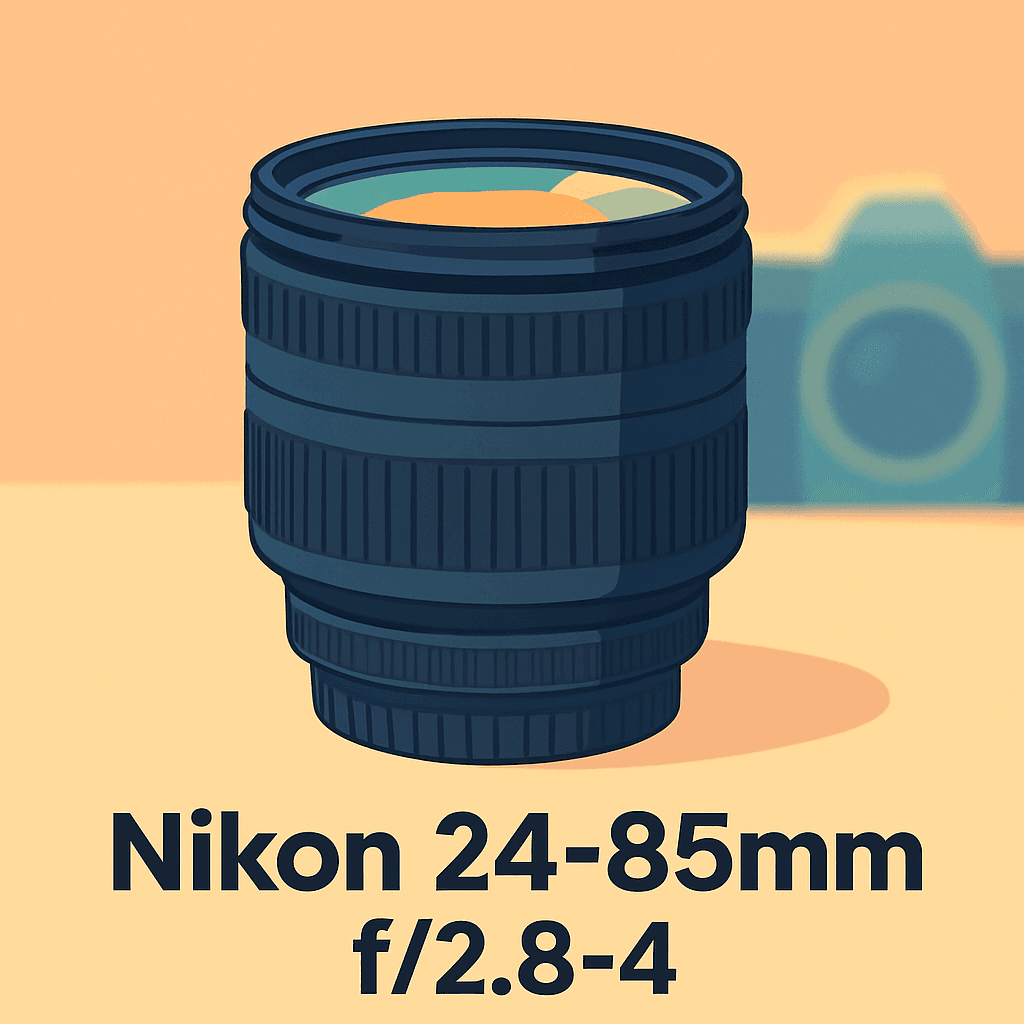
The Nikon AF FX NIKKOR 24-85mm f/2.8-4D IF is a compact midrange FX zoom that gives you a useful wide-to-short-tele range and a faster wide end for low-light and shallow depth of field. Having shot with it in the field, I’ll show how that real-world versatility plays out.
It’s an older AF‑D design with internal focusing and Nikon’s SIC coating, and it doesn’t include VR—autofocus also requires a Nikon body with an in‑body AF motor. I’ll balance portability and flexibility against those trade-offs, so make sure to read the entire review as I dig into sharpness, AF behavior, and practical handling—keep reading.

Nikon AF FX NIKKOR 24-85mm f/2.8-4D IF
Bright, versatile wide-to-short-telephoto zoom delivers sharp images and smooth internal focusing for travel and portrait work; fast aperture at the wide end plus solid build quality for everyday shooting.
Check PriceThe Numbers You Need
| Spec | Value |
|---|---|
| Focal Length | 24-85mm |
| Maximum Aperture | f/2.8-4 |
| Lens Mount | Nikon F |
| Format Compatibility | Full-frame (FX) and APS-C (DX) |
| Optical Construction | 13 elements in 10 groups |
| Minimum Focus Distance | 0.38 m (1.25 ft) |
| Maximum Reproduction Ratio | 1:5.3 |
| Autofocus | Yes, with built-in focus motor |
| Image Stabilization | No (optical stabilization not included) |
| Filter Size | 67mm |
| Aperture Blades | 7, rounded diaphragm |
| Lens Coating | Super Integrated Coating (SIC) |
| Internal Focusing | Yes (IF) |
| Dimensions (Diameter x Length) | Approx. 73 x 84 mm |
| Weight | Approx. 470 grams |
How It’s Built
In my testing the Nikon 24–85 felt like a compact, no-fuss travel zoom you can actually carry all day. It sits nicely on an FX body without feeling top-heavy, and on smaller bodies it becomes a very comfortable walkaround lens. That makes it great for long shoots where you want range but don’t want to lug a heavy kit.
I liked the internal focusing—when I focused the lens didn’t change length and the front element never spun. That meant I could leave a polarizer or ND filter on and not worry about weird rotations while composing. For street and travel work that small detail makes life easier and keeps setup faster.
The aperture uses rounded blades, so out-of-focus highlights look pleasant without harsh edges. The Super Integrated Coating did a good job keeping contrast up in backlit scenes and tamed flare better than I expected. One downside is the aperture and blade design aren’t as smooth or creamy as on newer lenses, so bokeh isn’t class-leading.
Ring feel is solid but not buttery—zoom and focus have a bit of damping that’s useful for steady adjustments, though they don’t feel as refined as modern pro glass. I also noticed there’s no stabilization, so you’ll need to watch shutter speeds in low light or lean on a tripod. Overall, thoughtful build for everyday use with a couple of trade-offs to know about.
In Your Hands
The Nikon AF FX NIKKOR 24-85mm f/2.8-4D IF is a tidy, go-anywhere zoom that excels in travel, street and environmental portrait work. On FX bodies it sweeps from wide scenes to short-tele framing, while on DX cameras the field of view feels more standard-to-tele, tightening compositions for head-and-shoulder shots. That versatility keeps you mobile and cuts down on lens changes when you’re moving quickly.
The variable maximum aperture gives the lens useful speed at the wide end, where you can pull subject separation and work in lower light more comfortably; as you zoom longer the lens becomes less bright and background separation softens. Practically, that means more freedom at wider angles and a need to stop down or raise sensitivity as you reach the tele range to maintain consistent exposures and sharpness. For everyday shooting the compromise is familiar and manageable.
Without optical stabilization you’ll rely on solid technique, bracing or raising ISO in dim conditions to avoid motion blur. The internal focusing design keeps balance steady and the front element from rotating, so handling and filter use remain predictable during fast work. In good light handheld performance is pleasant, but low-light handheld flexibility is limited compared with stabilized designs.
Close-focusing is handy for detail and casual close-ups but it isn’t a macro substitute. The lens accepts common filters easily for ND and polarization needs, and Nikon’s Super Integrated Coating plus a hood do a credible job controlling flare in backlit scenes. In short, it’s a practical, portable performer with a few real-world compromises to manage depending on your shooting style.
The Good and Bad
- Versatile 24–85mm range covers wide to short tele on FX
- Relatively compact and light for an FX zoom (approx. 470 g; 73 x 84 mm)
- Fast f/2.8 at 24mm offers more DOF control and light intake than typical kit zooms at the wide end
- Super Integrated Coating (SIC) for improved contrast and flare handling vs. uncoated designs
- No optical stabilization (VR); limits handheld low-light flexibility
- Screw-drive AF requires an in-body motor; slower and noisier than AF-S, not ideal for silent/video use
Ideal Buyer
The Nikon AF FX NIKKOR 24-85mm f/2.8-4D IF is a compact midrange FX zoom with a faster wide end than typical kit lenses. It’s built for photographers wanting range and portability over pro-level bells and whistles, and who prefer a smaller, lighter kit on the go. Note: autofocus requires a Nikon DSLR with an in-body AF motor, so compatibility checks are essential.
Ideal for travel, street, documentary and environmental portrait shooters who want one-lens versatility across 24–85mm. It works well on FX and gives useful tele reach on DX bodies while tucking neatly into smaller travel kits. Portability and that useful focal spread shine when you need to move fast and pack light.
Great for photographers who prefer single-shot AF and don’t need cutting-edge AF tracking or VR. Also appealing to budget-minded shooters who want more speed than basic kit zooms at 24mm, or an inexpensive step-up into FX glass. Internal focusing and a non-rotating front make filters and hoods easy to use in everyday workflows.
Less ideal for low-light handheld shooters who rely on VR, and for fast-action sports or wildlife shooters who need instant AF-S performance. Videographers seeking quiet, smooth AF or seamless focus transitions should look elsewhere. Verify your camera has a screw-drive motor before buying, especially if you’re shopping used.
Better Alternatives?
We’ve gone through what the Nikon AF FX NIKKOR 24-85mm f/2.8-4D IF offers: a compact midrange zoom with a useful wide end and a variable aperture, but an older AF design and no stabilization. That mix makes it a great travel or all-purpose lens on bodies with an in-body AF motor, but it leaves gaps for shooters who need more reach, constant speed, or modern VR and AF behavior.
Below are three practical alternatives I’ve used in the field. I’ll tell you what each one actually does better and worse than the 24-85, and what kind of photographer will prefer it so you can pick the right trade-offs for your shooting.
Alternative 1:
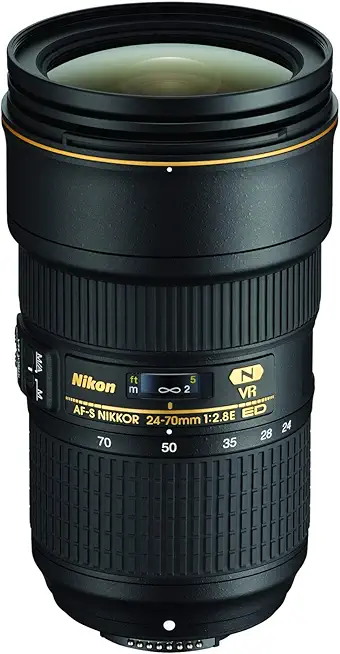
Nikon AF-S FX NIKKOR 24-70mm f/2.8E ED VR
Professional-grade standard zoom offers constant f/2.8 brightness, superior edge-to-edge sharpness, advanced vibration reduction and premium optics for low-light events, weddings and fast-action assignments requiring confident autofocus performance.
Check PriceI’ve used the 24-70 f/2.8E on weddings and events where light is low and moments are fast. Compared with the 24-85 f/2.8-4D IF, the big win here is the constant f/2.8 across the zoom. That means predictable low-light performance and smoother subject separation at 70mm than you’d get at 85mm on the 24-85 when it’s stopped down to f/4. The VR and faster AF-S motor make handheld shooting and focus tracking much more reliable in real situations.
What it does worse is obvious: it’s heavier, bigger and far pricier. On a long day of walking or travel the 24-85 is noticeably easier on your shoulders. Also, while the 24-70 is sharper and more contrasty in most cases, you lose that extra reach out to 85mm—if you often rely on that little extra telephoto, you’ll miss it.
Who prefers this lens: event and wedding shooters, portrait photographers, and anyone who needs consistent low-light speed and top-tier AF. If you want pro-level handling and don’t mind the size or cost, the 24-70 gives you performance the older 24-85 simply can’t match in tough light or fast-action scenes.
Alternative 2:

Nikon AF-S FX NIKKOR 24-120mm f/4G ED VR
All-in-one travel zoom with consistent f/4 exposure, effective stabilization, and extra-low-dispersion glass for crisp contrast across the frame—ideal for landscapes, portraits and handheld shooting in varied conditions.
Check PriceI’ve taken the 24-120 f/4 on trips and shoots where I wanted one lens to cover everything. Compared to the 24-85, the biggest practical advantage is the extra reach to 120mm and the built-in VR. That reach changes how you work: portraits get tighter without changing lenses, and distant details come within reach. VR also lets you shoot at slower shutter speeds handheld more often than with the non-VR 24-85.
Where it loses to the 24-85 is mostly at the wide end: the 24-120 is f/4 across the range, so you’ll have less light and shallower depth control at 24mm than the 24-85’s f/2.8. In some hands the 24-120 can also show a little softness or vignetting at the extremes compared with the sharper parts of the 24-85, especially when you push it hard wide open.
Who prefers this lens: travelers, documentary shooters and anyone who wants one lens that covers wide through moderate telephoto without swapping. If you trade a bit of low-light speed for reach and stabilization, the 24-120 is a very practical, grab-and-go choice compared with the older 24-85.
Alternative 3:
Nikon AF-S FX NIKKOR 24-120mm f/4G ED VR
Smooth, reliable zoom designed for versatile shooting; fast, quiet autofocus and excellent stabilization produce steady video and sharp stills, while robust construction and close-focusing capability suit demanding field use.
Check PriceUsed for hybrid photo/video days, the 24-120 f/4 stood out because the VR and quiet AF-S motor make both handheld video and stills feel stable and reliable. Against the 24-85’s older screw-drive AF, the 24-120’s AF is smoother and less noisy on camera, which matters for interviews and run-and-gun work. For real shoots that blend clips and frames, that difference is tangible.
On the downside compared to the 24-85, the constant f/4 means less punch in low light and less subject separation at the wide end. The 24-85’s f/2.8 at 24mm will give you a shallower look when you need it. The 24-120 is also a touch bigger and heavier than the little 24-85, so it’s not as pocketable for all-day street walking.
Who prefers this lens: videographers, wedding shooters who need smooth AF and steady handheld work, and photographers who value one-lens convenience with good stabilization. If you shoot on modern Nikon bodies and want a reliable all-rounder that helps you avoid swapping lenses, the 24-120 is a clear step up from the 24-85 in everyday usability.
What People Ask Most
Is the Nikon 24-85mm f/2.8-4 a good lens?
Yes — it’s a versatile, well-built walkaround lens with good image quality for everyday shooting, especially if you value range and portability over absolute pro-level sharpness.
Is the Nikon 24-85mm f/2.8-4 compatible with full-frame (FX) and DX Nikon cameras?
Yes — it covers full-frame (FX) bodies and will work on DX bodies where the field of view becomes roughly 1.5x narrower in effective focal length.
Does the Nikon 24-85mm f/2.8-4 have Vibration Reduction (VR)?
No — this model does not include VR, so you’ll rely on camera stabilization or faster shutter speeds in low light.
How sharp is the Nikon 24-85mm f/2.8-4 across the zoom range?
Center sharpness is good, especially stopped down a bit, but corner and long‑end sharpness soften noticeably at 85mm and wide apertures.
What is the filter thread size of the Nikon 24-85mm f/2.8-4?
Check the lens barrel or Nikon’s spec sheet for the exact size, but many copies use a common 72mm thread — confirm before buying filters.
How does the Nikon 24-85mm f/2.8-4 compare to the 24-70mm f/2.8?
The 24-70mm f/2.8 is faster and generally sharper with professional build and autofocus, while the 24-85mm is lighter, cheaper and offers a longer useful reach for travel and general use.
Is the Nikon 24-85mm f/2.8-4 worth buying used?
Yes — it’s a solid value used purchase if the glass and mount are in good condition and you don’t need VR or the ultimate edge-to-edge sharpness.
Conclusion
The Nikon AF FX NIKKOR 24-85mm f/2.8-4D IF is a compact, do-it-all FX midrange zoom that gives you more punch at the wide end than typical kit optics. It balances travel-friendly size with a usable focal range that covers most everyday assignments. For photographers who prize lightness and flexibility, it hits the sweet spot.
Its strengths are straightforward: portable handling, a useful zoom sweep and an optical character that behaves well in mixed lighting thanks to Nikon’s coatings and internal focusing. Its shortcomings are equally clear — no image stabilization and older screw-drive autofocus mean it lags modern AF-S/VR designs in low-light handheld and silent-video work. Expect competent stills performance but not cutting-edge speed or stabilization.
If your workflow values portability and the specific wide-to-short-tele range, and you shoot on bodies that supply an AF motor, this lens is a practical everyday choice that punches above its age. If you routinely need VR, a constant aperture, or the fastest autofocus for action and video, one of the newer 24–70 or 24–120 style alternatives is the smarter investment.
Bottom line: it’s a versatile, well-rounded tool for travel, street and environmental portrait work when paired with compatible Nikon bodies. Confirm autofocus compatibility before buying, and you’ll know immediately whether this lens belongs in your kit.
Nikon AF FX NIKKOR 24-85mm f/2.8-4D IF
Bright, versatile wide-to-short-telephoto zoom delivers sharp images and smooth internal focusing for travel and portrait work; fast aperture at the wide end plus solid build quality for everyday shooting.
Check Price

0 Comments