
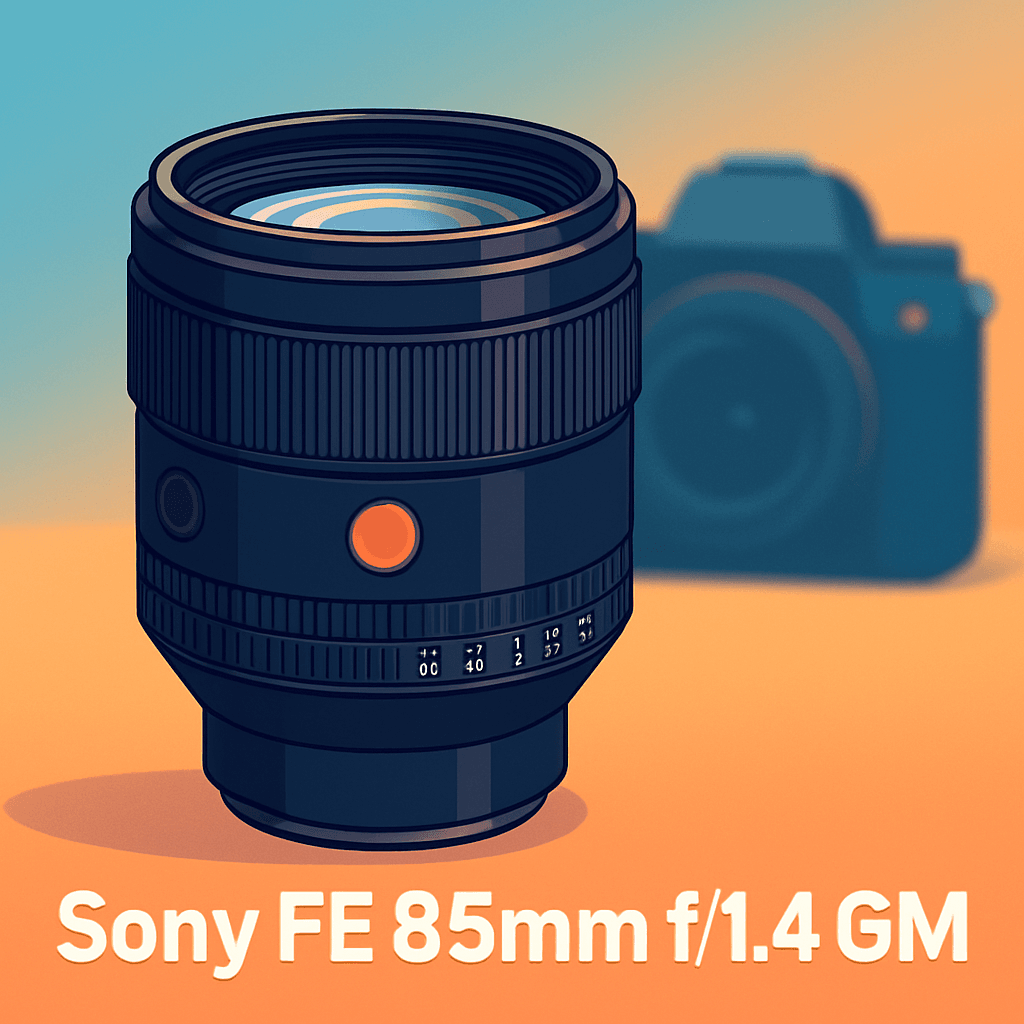
Want to make your portraits pop with richer separation and creamier backgrounds?
The Sony FE 85mm f/1.4 GM is billed as a premium portrait prime, and for shooters who care about subject isolation, bokeh quality, true-to-skin tones, and reliable autofocus, it’s a lens that demands attention.
It’s built for headshots, fashion, weddings and editorial work, and APS-C users should expect a tighter field of view. After putting it through real portrait shoots, I focused on how it performs where it matters: on people, not charts.
I’ll walk through outdoor backlit, indoor window-light and low-light scenarios, handheld vs tripod work, and full-frame versus APS-C framing, testing wide-open and at mid apertures. Make sure to read the entire review as I break down what really mattered on real shoots—keep reading.

Sony FE 85mm f/1.4 GM
Creamy bokeh, razor-sharp center, exceptional low-light performance, and fast autofocus deliver stunning portrait separation and detail for professionals and enthusiasts seeking ultimate image quality and beautiful rendering.
Check PriceThe Numbers You Need
| Spec | Value |
|---|---|
| Focal length | 85 mm |
| Maximum aperture | f/1.4 |
| Mount type | Sony E-mount (full-frame) |
| Optical design / Series | Sony G Master series |
| Autofocus | Fast, accurate AF with DDSSM (Direct Drive Super Sonic wave Motor) |
| Aperture blades | 9 rounded blades for smooth bokeh |
| Minimum focus distance | Approximately 0.8 m |
| Maximum magnification | Approximately 0.12× |
| Filter size | 77 mm |
| Lens construction | Approx. 11 elements in 8 groups |
| Dimensions | About 88 mm diameter × 106 mm length |
| Weight | Approximately 820 g |
| Image stabilization | None (relies on camera body stabilization) |
| Weather resistance | Dust- and moisture-resistant |
| Compatible sensor size | Full-frame and APS-C (crop factor applies) |
How It’s Built
In my testing the Sony FE 85mm f/1.4 GM feels like a proper pro lens—solid metal build, nicely weighted, and it has weather sealing so I didn’t worry about light rain during outdoor shoots. That premium feel matters in real life because it inspires confidence on a job. I really liked how reassuring and well-put-together it felt in my hands.
That said, it’s not a tiny lens. It’s fairly heavy and chunky, and after a long handheld session I noticed shoulder fatigue. On smaller Sony bodies it balances fine, but you’ll appreciate a grip or a strap on long weddings or events.
The optics and nine rounded blades translate to smooth highlights and creamy transitions that are forgiving for beginners learning to isolate subjects. The manual focus ring is smooth and nicely damped for fine adjustments, though most of the time I left it to autofocus. Do keep in mind the lens doesn’t focus super close, so it’s not ideal for tight macro-style shots.
There’s no in-lens stabilization, so you’ll rely on your camera’s IBIS or faster shutter speeds for handheld low-light work. For newcomers: bring a tripod or raise ISO if needed, and you’ll get the best from this robust, high-quality portrait prime.
In Your Hands
Wide-open the Sony FE 85mm f/1.4 GM delivers the kind of crisp center detail and micro-contrast portrait photographers crave, rendering faces with a natural three-dimensional look while gently rolling focus toward the background. Edges and corners soften sooner than the center, and that subtle field curvature can actually flatter single-subject headshots though it calls for care in tight group frames. A touch of natural vignetting helps draw the eye to the subject and usually reads as pleasing rather than corrective.
Stopping down brings a visible lift in edge-to-edge uniformity and makes environmental and group portraits feel noticeably cleaner; you don’t need to close it much to gain predictability across the frame. In studio work a modest stop-down yields very reliable sharpness for multi-subject setups without losing the lens’s character. For run-and-gun scenarios you’ll find a useful balance between isolation and coverage in those mid apertures.
Color and contrast skew natural with a slightly punchy midtone response that flatters most skin tones straight out of camera, minimizing heavy-handed processing. The lens resists flare well in practical backlit shoots, though strong direct light can introduce mild veiling that’s easy to manage with lens hood discipline or slight exposure adjustments. Overall color handling makes post work simple and skin rendition very pleasing.
High-contrast edges can show subtle axial fringing when used wide-open, most noticeable in specular highlights and hairlines, while lateral chromatic artifacts are modest and straightforward to correct in post. Because the lens relies on body stabilization, handheld low-light portrait work benefits from steady technique or higher shutter choices on bodies with IBIS, and video users should pair it with in-body or external stabilization for the smoothest results.
On cropped bodies the lens reads as a tighter portrait optic, changing how you frame and how shallow the scene appears at equivalent framing, which many shooters will appreciate for headshots. Practical workflow is easy—standard filter threads make ND and polarizer use simple—and performance remains consistent from close portrait distances through longer environmental ranges, though it’s not intended as a close-up specialist.
The Good and Bad
- f/1.4 aperture for strong subject isolation and low-light flexibility
- G Master optical design targeting high performance
- Fast, accurate AF with DDSSM
- 9 rounded blades for smooth, pleasing bokeh
- Relatively large and heavy for long handheld sessions
- No optical stabilization; relies on camera IBIS
Ideal Buyer
If your work lives in headshots, weddings, fashion or editorial, the Sony FE 85mm f/1.4 GM is built for you. Its f/1.4 separation and creamy bokeh lift subjects and increase keeper rates in real assignments.
Shooters who demand fast, rock-solid AF and weather resistance will appreciate the GM’s design and DDSSM performance. You’ll feel that reliability on backlit, low‑light and run‑and‑gun shoots, even if it adds a bit of mass to your kit.
Full-frame Sony users who don’t mind carrying a heavier prime will get the most from its wide‑open character and edge-to-edge performance stopped down. APS-C shooters also benefit, gaining a tighter portrait field of view while retaining f/1.4 rendering. If portability or in‑lens stabilization are priorities, this lens isn’t the best match.
It’s not ideal for photographers who need close‑up or pseudo‑macro work due to the minimum focus distance and low magnification. For pros and advanced enthusiasts seeking ultimate subject isolation, creamy bokeh and dependable AF, this lens is a clear, workhorse choice.
Expect to manage more weight on long wedding days; a comfortable strap or battery grip helps with balance and fatigue. If you’re willing to trade grams for faster glass and refined rendering, the results justify the extra carry.
Better Alternatives?
We’ve already gone deep into what the Sony FE 85mm f/1.4 GM brings to the table: beautiful subject separation, creamy bokeh, and that premium feel you notice on paid portrait jobs. It’s a go-to when you need the absolute best wide-open look and rock-solid AF for faces and eyes.
That said, not everyone needs or wants to carry the GM everywhere. Below are a few real-world alternatives I’ve shot with, what they do better or worse compared to the GM, and the kind of photographer who’ll be happiest with each one.
Alternative 1:

Sigma 85mm f/1.4 DG DN Sony E
Studio-grade optics with smooth bokeh, precise rendering, and robust build provide high-resolution portraits and consistent results across apertures, offering excellent value for demanding creatives and wedding photographers.
Check PriceI’ve used the Sigma 85mm f/1.4 DG DN on a handful of weddings and studio shoots. What it does better than the Sony GM is value — you get very similar sharpness and creamy bokeh for noticeably less money. In practice that means you can get the same punchy headshots and creamy background falloff without the GM price, which helps when you’re building a kit on a budget.
Where it falls short versus the GM is in the tiny details: the Sigma’s micro-contrast and overall “pop” feel are a hair different, and the GM is just a touch cleaner in very contrasty backlight or when you need the absolute smoothest out-of-focus highlights. Autofocus on modern Sony bodies is solid with the Sigma, but on very fast-moving work the native Sony GM still edges it for repeatable eye AF tracking.
This lens is for photographers who want top-tier portrait looks without spending flagship money — wedding shooters, studio photographers, and creatives who value image quality and aren’t afraid of a lens that’s still fairly big. If you want near-GM results but need better value, the Sigma is the practical choice.
Alternative 2:

Sony FE 85mm f/1.8
Lightweight, compact design combined with sharp optics and quick autofocus makes it ideal for on-the-go portraiture, delivering crisp images and pleasing background separation without weighing down your kit.
Check PriceThe Sony FE 85mm f/1.8 is the little workhorse I reach for when I’m walking between locations or shooting long wedding days. It beats the GM on size, weight, and ease of use — you can handhold it all day and hardly notice it. In real shoots that means less fatigue and faster setup when you need to move quickly.
What it gives up compared to the GM is the ultimate wide-open character. At f/1.8 you still get good separation and smooth backgrounds, but you won’t get the same ultra-shallow look, or the identical bokeh texture, that the f/1.4 GM produces. Low-light headroom is also reduced, so in very dim rooms the GM lets you push shutter speed or ISO a bit more comfortably.
Choose this Sony 85mm f/1.8 if you want a compact, affordable portrait lens that’s sharp and fast enough for run-and-gun work. It’s ideal for event shooters, street portraiture, and anyone who prefers a lighter kit over squeezing the last drop of creamy separation from a prime.
Alternative 3:
Sony FE 85mm f/1.8
Affordable yet capable telephoto brings flattering perspective, reliable performance, and smooth bokeh for everyday portraits and events, offering photographers an excellent balance of image quality and portability.
Check PriceI’ll say it again from experience: the 85/1.8 is a great everyday lens. On family sessions, corporate headshots, or quick editorial work it delivers flattering perspective and clean images straight out of camera. The autofocus is reliable and quiet, which matters when you’re switching between posed and candid moments.
Compared with the GM, the 85/1.8 won’t give you the same “wow” wide-open separation or the extra stop of low-light flexibility. If your job depends on that very specific look at f/1.4 — delicate bokeh transitions and the shallowest depth of field — the GM holds the advantage. But for most commercial, portrait, and event work the 1.8’s results are more than good enough.
This one is for the photographer who needs a practical, budget-friendly portrait lens: hobbyists, second shooters, and pros who want a light backup body lens or prefer to stay nimble during long days. If portability and price are higher priorities than squeezing every ounce of background blur, the 85/1.8 is the sensible pick.
What People Ask Most
Is the Sony FE 85mm f/1.4 GM worth the price?
It’s expensive but worth it if you need top-tier sharpness, bokeh and build for professional portrait or commercial work; hobbyists may prefer the cheaper f/1.8 for value.
How sharp is the Sony FE 85mm f/1.4 GM?
Extremely sharp in the center at f/1.4 and becomes very sharp across the frame by f/2–f/2.8, with excellent micro-contrast and detail.
Is the Sony FE 85mm f/1.4 GM good for portrait photography?
Yes — it delivers creamy bokeh, strong subject isolation and flattering compression that make it ideal for portraits.
How does the Sony FE 85mm f/1.4 GM compare to the Sony FE 85mm f/1.8?
The f/1.4 offers smoother bokeh, slightly better sharpness and low-light performance but is heavier and much pricier, while the f/1.8 is lighter, cheaper and still very capable.
Does the Sony FE 85mm f/1.4 GM have weather sealing?
Yes, it has dust and moisture resistance around the mount and a weather-resistant construction, though you should still avoid prolonged exposure in heavy rain.
How fast and accurate is the autofocus on the Sony FE 85mm f/1.4 GM?
Autofocus is fast and very accurate on modern Sony bodies, with reliable eye-AF and tracking for portraits, though extremely fast action can still be challenging for any 85mm prime.
Conclusion
The Sony FE 85mm f/1.4 GM is a portraitist’s tool, built to deliver the kinds of subject separation and creamy background rendering that define professional headshots and wedding work. Its G Master pedigree shows in the way skin tones, micro‑contrast and focus reliability translate to keepers. For shooters who demand consistent, film‑like results it rarely disappoints.
Those strengths come at a cost in handling and versatility. The lens is noticeably substantial in the bag, it forgoes in‑lens stabilization, and it won’t replace a dedicated close‑up optic. If you shoot long handheld days, travel light, or need macro reach, expect meaningful compromises.
For full‑frame Sony portrait and event shooters who prize image character and autofocus confidence, this is a lens that earns its place on the camera. If budget, weight, or a different rendering signature matter more, look toward the lighter Sony alternative or third‑party classics from Sigma and Zeiss.
In practical workflow terms the Sony FE 85mm f/1.4 GM raises the keeper rate and elevates final galleries with minimal post fuss. It’s not a casual buy, but as a deliberate upgrade for assignment work it pays visible dividends. I recommend it to photographers who are ready to trade carry weight for unmistakable portrait quality.
Sony FE 85mm f/1.4 GM
Creamy bokeh, razor-sharp center, exceptional low-light performance, and fast autofocus deliver stunning portrait separation and detail for professionals and enthusiasts seeking ultimate image quality and beautiful rendering.
Check Price




0 Comments