
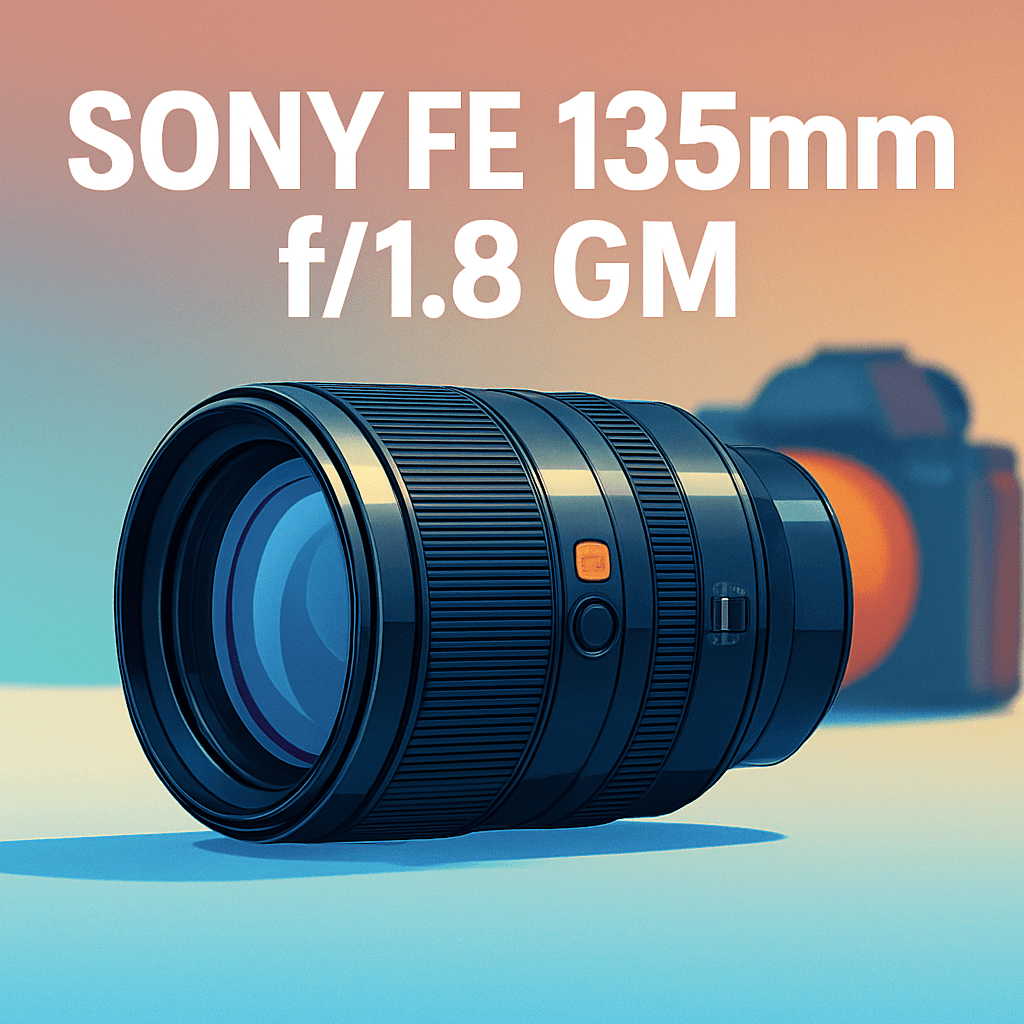
Want portraits that leap off the frame with cinematic subject separation? If you shoot people, that’s the goal you and every pro chase.
The Sony FE 135mm f/1.8 GM — it’s built to deliver razor-sharp detail, creamy bokeh, fast, quiet autofocus and weather resistance. Having taken it into the field, I saw how those traits translate to real shoots.
This review walks through handling, focus behavior, real-world performance, who benefits and the trade-offs you’ll need to weigh. Make sure to read the entire review as I separate real gain from marketing — keep reading.

Sony FE 135mm f/1.8 GM
Flagship telephoto prime delivering exceptional resolution, lightning-fast autofocus, and ultra-creamy bokeh for stunning subject isolation. Built for professionals with robust weather sealing and smooth rendering ideal for portraits and events.
Check PriceThe Numbers You Need
| Spec | Value |
|---|---|
| Focal length | 135 mm |
| Maximum aperture | f/1.8 |
| Lens mount | Sony E-mount (full-frame) |
| Lens type | Telephoto prime |
| Optical design | Includes XA (extreme aspherical) elements |
| Minimum focus distance | Approximately 0.7 m / 2.3 ft |
| Maximum magnification | Around 0.25× |
| Aperture blades | 11 (rounded) |
| Autofocus | Fast, quiet linear motor system |
| Image stabilization | No optical stabilization (relies on camera body) |
| Filter size | 82 mm |
| Dimensions (approx.) | 88 mm diameter × 120 mm length |
| Weight | Around 950 g (2.1 lbs) |
| Weather sealing | Yes — dust and moisture resistant |
| Bokeh quality | Smooth and creamy due to wide aperture and optical design |
How It’s Built
In my testing the Sony FE 135mm f/1.8 GM feels like a premium tele prime. It has a dense, solid build that inspires confidence in the field.
The lens uses extreme aspherical elements and an eleven-blade rounded diaphragm for pleasing out-of-focus areas. That translates to smooth, circular highlights and creamy backgrounds without weird edges.
Weather sealing is real — I used it in drizzle and dusty locations and saw no issues. For outdoor shoots that ease of mind matters a lot.
It’s a hefty piece of glass and the big front element needs large filters, so expect it to feel front-heavy on smaller bodies. I found that after a few hours of handheld shooting my shoulder noticed the weight. The size is a trade-off for the optical performance.
There’s no built-in stabilization, so you’ll want a camera with in-body stabilization or to use faster shutter speeds. For beginners that means either steady hands, a tripod, or bumping ISO a bit more.
What I really liked was the smooth, well-damped focus ring and the precise clicks of the control ring — it makes framing and fine adjustments a pleasure. If weight were a touch lower and filters smaller it would be near perfect for travel and long sessions.
In Your Hands
The Sony FE 135mm f/1.8 GM renders subjects with a luxurious smoothness that turns backgrounds into velvety canvases, while highlights remain pleasingly rounded and controlled. Even in busy scenes the transition from plane of focus to blur feels natural and cinematic, which makes separating a subject effortless.
Sharpness and contrast are immediately apparent straight off the camera, with skin textures and fine details resolving cleanly without distracting color fringing. That strong optical pedigree also pays dividends in dimmer environments, where the wide aperture gives you more headroom for faster shutter speeds and cleaner ISO choices when light is limited.
At portrait distances the lens compresses perspective in a way that flatters features and pushes backgrounds away, producing subject isolation that photographers crave for headshots and event work. It also focuses close enough to let you pull tighter compositions when you want intimate detail instead of a full-length view, offering framing flexibility beyond many classic portrait primes.
Handling leans toward professional use: the build feels substantial and balances solidly on full-frame bodies, though it can feel weighty during long handheld stints. Since there’s no in-lens stabilization, plan workflows around in-body stabilization or conservative shutter speeds when working handheld, and expect the best results when you pair careful technique with the lens’s optical strengths.
The Good and Bad
- Extremely sharp with high contrast
- Smooth, creamy bokeh
- Fast, quiet linear-motor AF
- f/1.8 aperture for low light and depth-of-field control
- No optical stabilization (must rely on IBIS or faster shutter)
- Hefty for a prime (~950 g)
Ideal Buyer
If you make your living shooting portraits and headshots and want subject separation that reads on billboards, the Sony FE 135mm f/1.8 GM is aimed at you. Its f/1.8 aperture, razor-sharp rendering and creamy bokeh give heads-and-shoulders work a distinctly polished look. A close minimum focus of about 0.7 m and roughly 0.25x magnification lets you frame tighter details without switching to a macro.
Working pros who demand consistent contrast, minimal aberrations and fast, quiet AF in real-world locations will appreciate the lens’ reliability and weather sealing. It’s a tool for assignments where image quality and muted backgrounds matter more than convenience. The linear-motor drive locks quickly and stays discreet for weddings, studio sessions and editorial sets.
You should be comfortable managing a near-kilo prime and an 82mm front element, or rely on your camera’s IBIS and technique to cover the lack of OSS. Wedding, editorial and commercial shooters who already use Sony full-frame bodies will find it integrates cleanly into demanding workflows. Expect thoughtful hand-held framing and balance planning for longer days.
If you prize absolute optical refinement and subject isolation over lightweight travel convenience or the lowest price, this is the lens to consider. Otherwise, value-focused alternatives exist, but few match this combination of bokeh, sharpness and AF polish. Consider it a professional’s finishing touch when rendering and reliability are non-negotiable.
Better Alternatives?
We’ve gone over the Sony FE 135mm f/1.8 GM in detail — its razor-sharp images, creamy bokeh, and rock-solid autofocus make it a top pick for portrait and location work. But not everyone needs (or wants) the highest-end option; there are lenses that give most of the look and feel for less money, or offer a lighter, more travel-friendly package.
Below are three real-world alternatives I’ve used. I’ll point out where each one wins or loses compared to the Sony, and who I’d recommend them to based on actual shoots — from studio headshots to outdoor weddings and travel sessions.
Alternative 1:

Sigma 135mm f/1.8 Art Sony E
High-performance Art-series optic offering edge-to-edge sharpness, rich microcontrast, and velvety background blur. Solidly constructed with precise optics, it produces crisp, three-dimensional portraits and excellent low-light capability.
Check PriceIn real use the Sigma 135mm f/1.8 Art gets you very close to the Sony GM’s look for a noticeably lower price. It gives crisp detail and a pleasant, smooth background separation that works brilliantly for portraits. I’ve shot studio headshots and outdoor sessions where the Sigma’s images looked almost identical to the GM at normal viewing sizes.
Where it falls short versus the Sony is subtle: the Sigma can feel a touch less refined in micro-contrast and the very finest highlight roll-off, and its autofocus, while fast and reliable, isn’t quite as whisper-quiet or instant in tricky low-light tracking. Build-wise it’s solid and weather-resistant on newer versions, but the overall finish and ergonomics don’t feel quite as premium as the GM.
Buy the Sigma if you want nearly GM-level image quality without the GM price. It’s a great pick for pros or serious enthusiasts who shoot portraits, events, or low-light sessions and want top optical results while saving money or carrying one less-expensive backup lens.
Alternative 2:

Samyang 135mm f/1.8 Sony E
Compact, value-focused short-tele prime with a bright aperture for beautiful subject separation and punchy colors. Lightweight handling and reliable performance make it ideal for on-location portraits and travel shoots.
Check PriceThe Samyang 135mm f/1.8 is noticeably lighter and smaller than the Sony, and that matters on long days. On location I appreciated how easy it was to hand-hold and move with, and it still gives very pleasing subject separation and good color. For travel portraits or a busy wedding day where you don’t want the heft of the GM, Samyang is a real relief.
Compared to the Sony GM, the Samyang trades some optical polish and absolute corner/edge performance, especially wide open. Its bokeh is nice but can be a touch less creamy and smooth at the very edges. Autofocus is fine for posed work and most event shots, but it’s a step behind the Sony when you need the fastest, most repeatable tracking in low light or with moving subjects.
Pick the Samyang if you want a bright 135mm that’s light on your shoulders and on your wallet. It’s ideal for traveling photographers, shooters who do a lot of on-foot location work, or hobbyists who want a great portrait look without carrying a heavier pro lens.
Alternative 3:
Samyang 135mm f/1.8 Sony E
Affordable, well-corrected portrait lens that balances sharpness and creamy bokeh with pleasing tonal rendering. Portable metal construction and intuitive controls deliver consistent results for weddings, studio work, and everyday photography.
Check PriceIf you want consistent, repeatable results for weddings, studio sessions, or day-long shoots but can’t justify the Sony’s price, this Samyang does a great job. In practice it gives dependable sharpness where it counts — the face and eyes — and a forgiving rendering that’s flattering for most skin tones. The controls are simple and it feels reliable on a shoot.
The downsides versus the Sony are familiar: less refined bokeh edges in certain backlight situations, slightly slower/less confident AF for fast-moving moments, and fewer premium weather-seal points. You’ll notice these limits only in very demanding professional situations; for many normal shoots the images are excellent.
Choose this Samyang if you’re a wedding photographer on a budget, a studio shooter who wants a light second lens, or a weekend pro who needs good results without the extra cost and weight of the GM. It’s a practical, workhorse option that gives most of the look with fewer compromises in everyday use.
What People Ask Most
Is the Sony FE 135mm f/1.8 GM worth buying?
Yes — if you want top-tier sharpness, creamy bokeh and reliable AF for portraits and low-light work; it’s pricey but delivers pro-level results.
How sharp is the Sony FE 135mm f/1.8 GM?
Extremely sharp even at f/1.8, with excellent edge-to-edge resolution and strong microcontrast.
Is the Sony FE 135mm f/1.8 GM good for portrait photography?
Yes, its focal length, fast aperture and subject separation make it ideal for headshots and flattering portraits.
How is the bokeh of the Sony FE 135mm f/1.8 GM?
The bokeh is very smooth and natural, producing pleasing out-of-focus backgrounds and creamy highlights.
How does the Sony FE 135mm f/1.8 GM compare to the Sigma 135mm f/1.8?
Both are optically excellent, but the Sony has better AF integration, build and weather sealing while the Sigma is often cheaper and close in sharpness.
Is the Sony FE 135mm f/1.8 GM weather sealed and suitable for outdoor use?
Yes, it features robust weather sealing suitable for most outdoor shooting, though avoid prolonged exposure in extreme conditions.
Conclusion
The Sony FE 135mm f/1.8 GM is a lens that delivers class-leading sharpness, high contrast, and some of the creamiest bokeh I’ve used in a tele prime. Its fast, quiet autofocus and robust weather resistance make it a dependable tool in demanding portrait and location work.
Those virtues come with real-world trade-offs: the lens is substantial in hand and calls for deliberate handling, and it lacks in-lens stabilization so you must lean on your body or technique for steady shots. The physical size and filter demands are part of the package and influence portability for extended shoots.
For photographers whose priority is subject separation, refined rendering, and rock-solid AF reliability, this is one of the clearest choices on Sony full-frame. If you shoot professionally or frequently in mixed light, its optical and operational polish pays dividends.
If budget, weight or a different character matter, excellent alternatives exist—Sigma for near-GM IQ at a friendlier price, Samyang for lighter, value-minded use, and manual options like TTArtisan for creative looks. But if you insist on the most refined bokeh, contrast and autofocus behavior in this focal range, Sony’s offering remains the benchmark. I’d recommend it without hesitation to portrait shooters who demand the best.
Sony FE 135mm f/1.8 GM
Flagship telephoto prime delivering exceptional resolution, lightning-fast autofocus, and ultra-creamy bokeh for stunning subject isolation. Built for professionals with robust weather sealing and smooth rendering ideal for portraits and events.
Check Price



0 Comments