
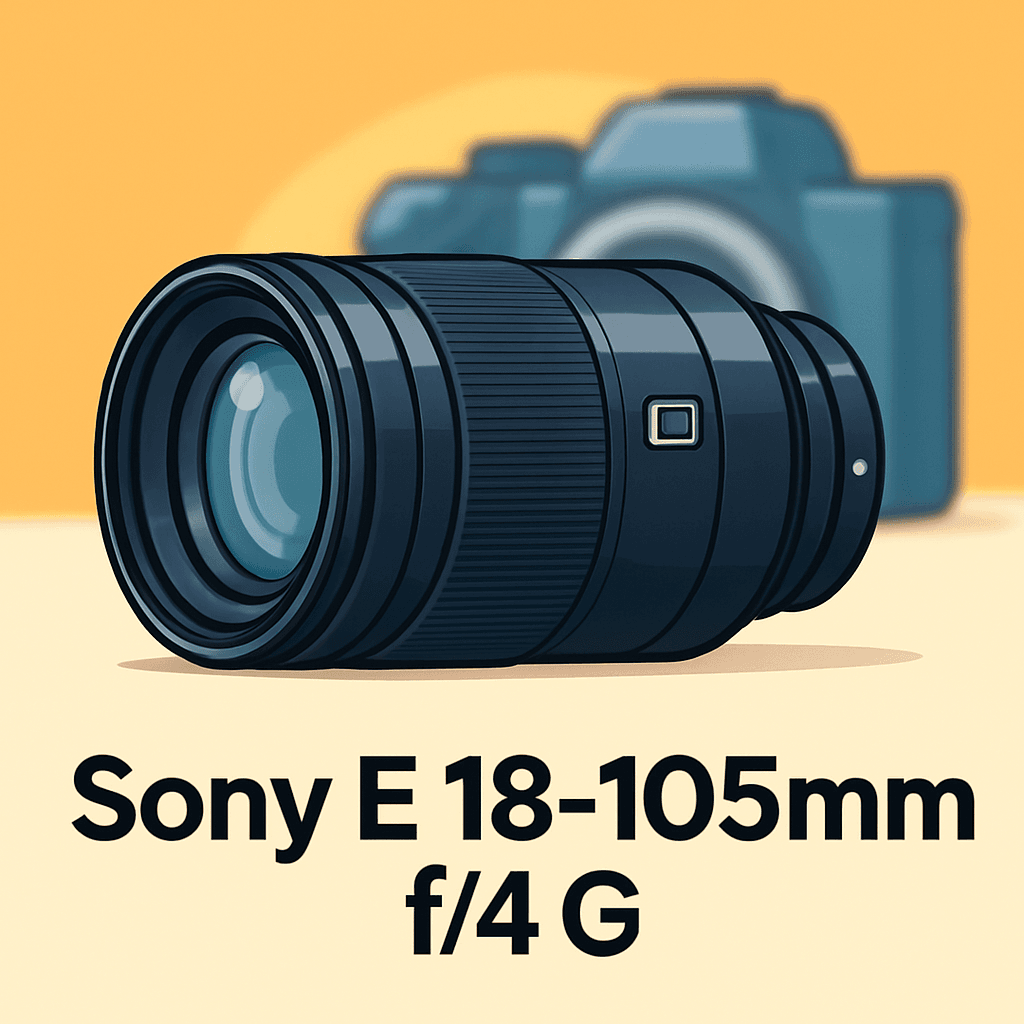
Want one lens that handles travel, run-and-gun video, and everyday stills without constant lens swaps?
The Sony E 18-105mm F4 G promises that kind of one-lens convenience with a constant f/4, smooth power zoom and built-in Optical SteadyShot (OSS), aimed squarely at hybrid and video-focused shooters.
I’ve spent time shooting with it in the field and can vouch that the real-world strengths—stabilized handheld work, consistent exposure, and fluid zooms—are exactly what many creators need. Make sure to read the entire review as I break down handling, AF, sharpness, pros and cons, and who should buy it.

Sony E 18-105mm F4 G
Constant F4 zoom offering uniform exposure across the range, premium optics and smooth, responsive control. Tailored for hybrid shooters who want sharp, contrast-rich images and reliable autofocus for photo and video.
Check PriceThe Numbers You Need
| Spec | Value |
|---|---|
| Lens Type | Zoom lens |
| Focal Length | 18-105mm |
| Aperture | F4 constant |
| Mount | Sony E-mount |
| Image Stabilization | Optical SteadyShot (OSS) |
| Autofocus | Quick AF |
| Zoom Mechanism | Power zoom |
| Lens Design | G-series |
| Equivalent Focal Length on APS-C | 27-157.5mm |
| Format | APS-C |
| Lens Elements/Groups | Not specified |
| Special Features | Smooth power zoom for video |
| Minimum Focus Distance | Not specified |
| Maximum Magnification | Not specified |
| Lens Material/Construction | Not specified |
How It’s Built
In my testing the Sony E 18-105mm F4 G feels like a purpose-built, video-first zoom. It has that G-series finish that gives you confidence without fuss, and the E-mount balance on APS-C bodies is natural and predictable.
The power-zoom is the headline here and I found it very easy to use for smooth, cinematic moves. The zoom ring and rocker are laid out so you can make slow ramps or quick reframes without needing to look down at the lens.
Optical SteadyShot really helps when I’m shooting handheld. After using it for a while I could grab cleaner stills at lower shutter speeds and noticeably steadier walk-and-talk video.
On small Sony bodies the lens doesn’t feel front-heavy, which matters when you’re running and gunning all day. Beginners will appreciate that it behaves like a single go-to lens — fewer lens swaps, fewer surprises in the field.
What I liked most was the smooth, repeatable zoom control for video. One thing that could be better is slightly tighter resistance on the zoom for very precise framing. When you try it, check the zoom ramp for any lag and make sure the repeatability fits your shooting style.
In Your Hands
The Sony E 18-105mm F4 G feels like a one-lens workhorse on shoots where changing glass isn’t an option, covering everything from wide environmental frames to useful mid-tele portrait and detail shots without interrupting the flow. Its constant aperture keeps exposure steady while you reframe, which is a huge practical win for event and documentary work where lighting and timing change on the fly. In practice that consistency translates to fewer stops spent adjusting settings and more time capturing decisive moments.
Optical SteadyShot noticeably boosts handheld confidence for both stills and motion, taming small shakes and making slow pans feel composed rather than jittery. It pairs naturally with in-body systems if present, creating a complementary stabilization platform without fighting the operator. For travel and run-and-gun days, that steadiness means more usable images and cleaner handheld clips straight off the camera.
The powered zoom is the feature most filmmakers will notice first—zoom ramps are smooth and predictable, lending cinematic control to on-the-fly reframes and slow pushes. It’s not built for frantic, snap-zooming; instead the action is measured, repeatable, and very video-friendly. During recording the lens responds well to small focal nudges and maintains frame confidence as you adjust composition.
Across real shoots—behind-the-scenes, weddings, street and travel work—the lens proved reliable and forgiving, with consistent behavior throughout the range and minimal fuss. Autofocus and zoom behaved steadily during recording, and small adjustments felt intuitive whether I was framing a candid or composing a portrait. For hybrid shooters who prize versatility and steady, smooth operation, it’s a practical everyday tool that simply gets the job done.
The Good and Bad
- Constant f/4 aperture across the zoom range
- Broad 18–105mm coverage (27–157.5mm equivalent on APS-C) for versatile framing
- Optical SteadyShot (OSS) aids handheld shooting
- Power zoom enables smooth, controlled zooming for video
- f/4 is slower than f/2.8 alternatives for low light and subject separation
- 105mm top end is shorter than extended-reach options
Ideal Buyer
The Sony E 18-105mm F4 G is the lens for APS‑C creators who put video first and want silky, controllable zooms and built‑in steadiness. It’s ideal for vloggers, documentary shooters, and hybrid creators who swap between handheld talking heads and run‑and‑gun b‑roll. It pairs naturally with Sony E‑mount APS‑C bodies and balances well for handheld work.
Travel and event shooters will appreciate the one‑lens coverage from wide to mid‑tele and the constant f/4 exposure when reframing. OSS makes handheld work more forgiving, cutting the need to reach for a gimbal on many shoots. The constant aperture and zoom range mean fewer lens changes on fast assignments.
Choose this lens if you prize smooth zoom ramps, reliable autofocus, and convenience over the last stop of aperture speed. If you’re comfortable working with f/4 depth of field and modest low‑light margins, it’s a powerful everyday tool. Autofocus reliability and OSS make it a confident everyday choice for mixed stills and motion.
Skip it if you need the shallowest backgrounds, extreme reach, or the brightest frames in dim venues — those needs push you toward faster or longer alternatives. For shooters who want an all‑purpose, video‑friendly APS‑C companion, this hits the sweet spot between versatility and usability. If convenience, steady handheld footage, and smooth power‑zoom control rank above ultimate low‑light or extreme reach, this is an easy pick.
Better Alternatives?
We’ve already walked through the Sony E 18-105mm F4 G and what makes it a go-to for hybrid shooters: constant f/4, OSS, and that smooth power-zoom feel for video. It’s a very useful one-lens solution for run-and-gun work where steady, predictable zooming and consistent exposure matter.
If you want something different—faster glass for low light, more reach for travel, or a cheaper/smaller option—there are clear alternatives that trade the 18-105’s video-first perks for other real-world strengths. Below are three lenses I’ve used in the field and how they compare to the Sony 18-105 in real shooting situations.
Alternative 1:

Tamron 17-70mm F2.8 Di III-A Sony E
Bright constant f/2.8 aperture with a versatile focal range for low-light shooting and creative background separation. Compact, fast-focusing design delivers excellent sharpness, close-focus capability and flexible all-day performance.
Check PriceThe Tamron 17-70mm f/2.8 shines where the 18-105 gives ground: it’s noticeably faster and gives you better low-light performance and easier background blur. In real shoots I found the Tamron lets you isolate subjects and work at lower ISOs more often—very handy for portraits or dim venues. The wider aperture also makes the autofocus feel snappier in harder light because there’s more light for the camera to work with.
Where it’s worse than the Sony 18-105 is in video ergonomics and reach. The Tamron doesn’t have a power zoom, so you lose the silky, motorized zoom moves useful in run-and-gun video. It also stops at 70mm, so you give up some tele reach compared to the 105mm end. Stabilization is good (it has VC), but if you rely on power zoom for smooth ramping, the Tamron won’t replace that workflow.
Who should pick it? Still shooters and hybrid users who want better low-light ability and creamier backgrounds will love the Tamron. If your work leans toward portraits, events in mixed light, or you want sharper, punchier stills more often than you need motorized zooms, this is the better daily lens.
Alternative 2:

Sony E 18-135mm F3.5-5.6
Lightweight, all-in-one travel zoom that covers wide-angle to telephoto, ideal for explorers and vloggers. Delivers steady handheld shooting, balanced handling, dependable autofocus and pleasing image quality for everyday adventures.
Check PriceThe Sony 18-135mm is the reach-focused counterpoint to the 18-105. In real travel days I appreciated the extra telephoto headroom—those tight portrait or distant-subject shots are easier without swapping lenses. It’s lighter and often more pocket-friendly for long walks, and its OSS gives you usable handheld shots when light gets soft.
On the downside versus the 18-105, the 18-135 has a variable aperture, so exposure and depth-of-field change as you zoom; that makes consistent video exposure a bit more work. I also found it a touch less sharp at the long end compared to the 18-105’s mid-range performance, and it lacks a power zoom for smooth motorized pulls. For casual video it’s fine, but for precise zoom ramps the 18-105 still wins.
If you’re a traveler, family photographer, or content creator who values one-lens simplicity and longer reach over constant aperture or motorized zoom control, the 18-135 is a great pick. It’s for people who want to cover a lot of ground without changing glass and can live with variable aperture tradeoffs.
Alternative 3:
Sony E 18-135mm F3.5-5.6
Compact superzoom crafted for convenience on the go, offering broad focal reach and steady shots without swapping lenses. Great for travel and family photography—easy handling, quiet focusing and consistent image rendering.
Check PriceLooking at the same 18-135 from a different angle: it’s a very practical everyday lens. In family shoots and casual events I liked its quiet focus and consistent rendering—colors and contrast feel pleasant out of camera, and that makes editing simpler. The broader range means fewer lens changes, which in busy situations can save time and missed moments.
Compared to the 18-105, this 18-135 again trades the video-friendly power zoom and constant exposure for convenience and reach. You’ll notice more exposure shifts when zooming in video, and if you push to the long end the corners and fine detail aren’t as strong as on some sharper zooms. But for many real-world uses the trade is worth it for the fewer lens swaps and lighter pack.
This version of the 18-135 is for the buyer who wants a no-fuss, do-it-all lens for travel, family, and run-and-gun photo work. If you prioritize compactness, long reach and quiet AF for casual videos and photos, and you don’t need the 18-105’s motorized zoom or exact exposure consistency, this is a solid, practical alternative.
What People Ask Most
Is the Sony E 18-105mm f/4 G a good lens for Sony APS-C cameras?
Yes — it’s a versatile all-in-one zoom with a constant f/4 that works very well as a walkaround for APS-C shooters.
Does the Sony E 18-105mm f/4 G have image stabilization (OSS)?
Yes, it includes Sony’s Optical SteadyShot (OSS) to help with handheld shooting and video.
Is the Sony E 18-105mm f/4 G suitable for video and vlogging?
Yes — the constant aperture, smooth zoom action, and OSS make it excellent for run-and-gun video, though it’s a bit large for selfie-style vlogging.
Is the Sony E 18-105mm f/4 G compatible with full-frame Sony cameras?
It’s an APS-C lens, so on full-frame bodies you’ll get heavy vignetting unless you use APS-C crop mode, making it not ideal for full-frame use.
How sharp is the Sony E 18-105mm f/4 G across the zoom range?
Centers are generally sharp throughout and improve when stopped down, while corners can be softer at the wide and long ends, especially wide open.
Is the Sony E 18-105mm f/4 G weather-sealed or dust-resistant?
It does not offer full professional weather sealing, so avoid heavy rain and dusty conditions without extra protection.
Conclusion
The Sony E 18-105mm F4 G is an unapologetically video-first, do-everything lens that delivers the convenience and control many hybrid shooters crave. Its constant exposure, built-in stabilization and smooth power zoom make handheld run-and-gun work and on-the-fly reframes feel effortless and repeatable. In practice it’s the kind of single-lens solution that keeps you shooting and avoids constant lens swaps.
That convenience has tradeoffs, and they’re clear in use. If your priority is the shallowest backgrounds or the very best low-light performance, a faster prime or an f/2.8 zoom will serve you better. Likewise, photographers who need extreme tele reach or class-leading corner-to-corner sharpness will want to consider other options.
If you want crisper stills and a wider aperture, look to faster zooms built for stills-first work. If reach and compact one‑lens travel convenience matter more than silky zoom control, a longer-range variable-aperture option is worth considering. For pure stills performance with a brighter aperture, a dedicated f/2.8 alternative remains the go-to choice.
Bottom line: buy the Sony E 18-105mm F4 G if you’re a Sony APS-C creator who values smooth, stabilized video performance and flexible all‑around coverage. Pass if your work demands maximum aperture speed or the ultimate tele reach. For its intended audience it’s a high-value, highly practical tool that earns its place on a run-and-gun kit.
Sony E 18-105mm F4 G
Constant F4 zoom offering uniform exposure across the range, premium optics and smooth, responsive control. Tailored for hybrid shooters who want sharp, contrast-rich images and reliable autofocus for photo and video.
Check Price



0 Comments