
Want a single camera that gets you close to distant subjects without swapping lenses?
If you’re deciding between reach and convenience, this review will help.
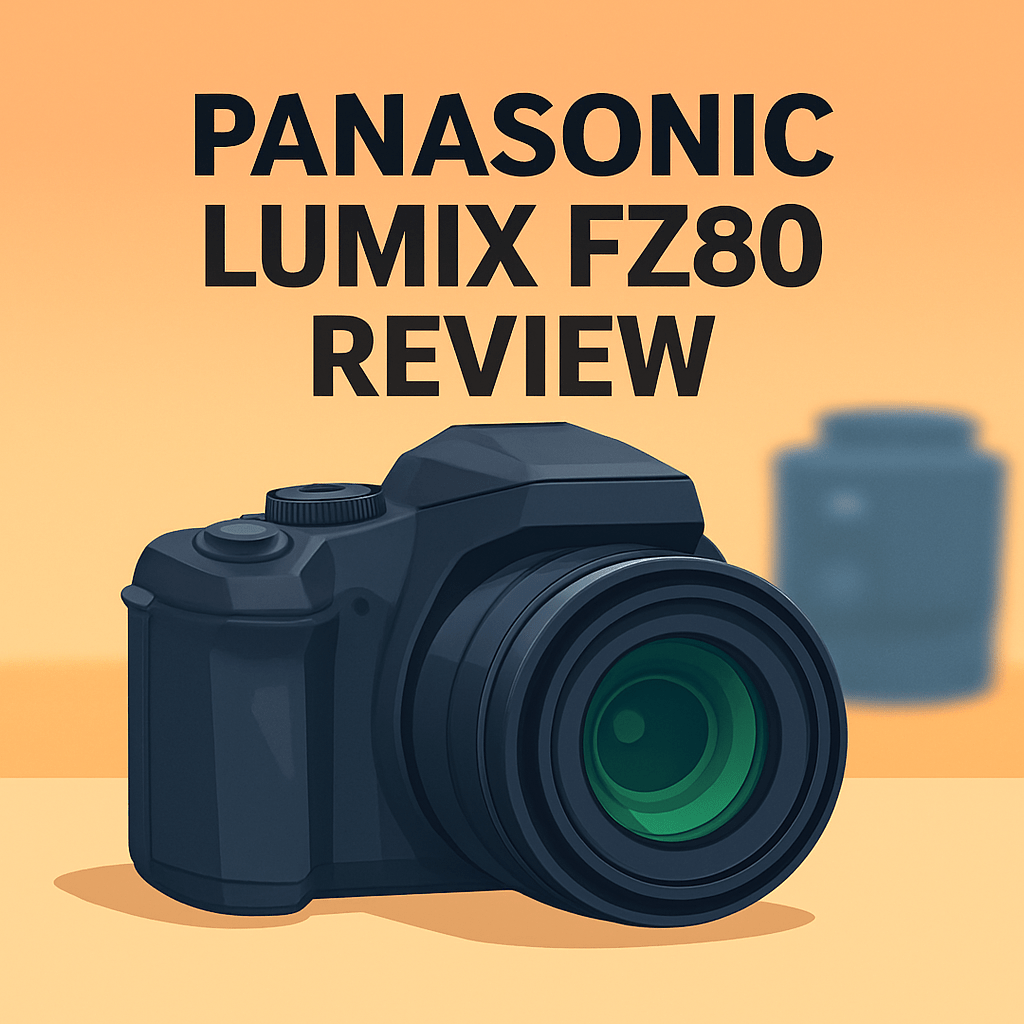
The Panasonic Lumix FZ80 Camera is an all‑in‑one superzoom that pairs extreme reach with 4K handheld video, and it’s aimed at shooters who want maximum reach without fuss.
It’s built around a small sensor, so expect daylight versatility and long‑reach convenience rather than low‑light magic.
I took it out on wildlife, travel, and street shoots to see how handling, stabilization, AF, and 4K hold up, and that hands‑on time highlighted practical strengths and clear tradeoffs you’ll want to know about.
This review focuses on real‑world payoffs: who benefits, when to choose it, and what you’ll actually get in the field — make sure to read the entire review as you’ll want to keep reading.

Panasonic Lumix FZ80 Camera
Compact bridge camera with massive 60x optical zoom and 4K video capture, delivering versatile reach, sharp detail, and user-friendly controls for travel and wildlife photography in a pocket-friendly package.
Check PriceThe Numbers You Need
| Spec | Value |
|---|---|
| Sensor | 1/2.3" CMOS |
| Effective Pixels | 18 MP |
| Optical Zoom | 60x |
| Lens Aperture | f/2.8 – f/5.9 |
| ISO Range | 100 – 3200 |
| Image Stabilization | Optical Image Stabilization (OIS) |
| Video Resolution | 4K UHD (3840 x 2160) at 30 fps |
| Electronic Viewfinder | 0.2-inch, 1.17M dots |
| LCD Screen | 3.0-inch, 1040K dots, tiltable |
| Burst Shooting Speed | 9 fps |
| Shutter Speed | 1/2000 to 8 seconds |
| Focus System | Contrast-detect autofocus with face and eye detection |
| Connectivity | Wi-Fi, NFC |
| Battery Life | Approx. 430 shots per charge |
| Weight | Approx. 610 grams |
How It’s Built
In my testing the Panasonic Lumix FZ80 Camera feels like a well-packed travel companion. It balances nicely with the long lens attached, so you don’t feel like you’re wrestling a brick during long walks. I liked the grip — it’s shaped so beginners can hold steady without a harness or extra gear.
After using it for a while the electronic viewfinder is usable but a touch cramped for my taste. It’s good for bright days when the rear screen washes out, but don’t expect a cinema-window feel when you’re tracking distant subjects. The tilting LCD saved my neck on low and high shots and made framing much easier for folks who aren’t comfortable shoulder-level shooting.
The optical stabilization surprised me by making handheld telephoto shots practical more often than not. At wide angles it’s rock solid, and at the long end it buys you a lot of keepers — though it’s not magic and a steady stance helps. For beginners this means fewer blurry shots and more confident handheld shooting.
Wireless features worked smoothly enough for quick transfers and remote snaps in the field, and the battery easily gets you through a full outing of mixed stills and video. One thing I really liked was the overall handling and balance, and one thing that could be better is that the viewfinder feels a bit small for long tracking sessions.
In Your Hands
In daylight the Panasonic Lumix FZ80’s contrast-detect AF locks reasonably quickly on static and slow-moving subjects, and its face and eye detection reliably keep people sharp. In dimmer scenes or when you push the zoom to its limit, acquisition slows and you’ll see more focus hunting and occasional misses. Overall it’s dependable for travel, wildlife at a distance, and family snaps when the light cooperates.
Burst shooting is useful for short action sequences — you can extract usable frames from a rapid series, but sustained tracking of unpredictable subjects isn’t its strong suit and the buffer fills during longer runs. The camera’s shutter behavior means you’ll want to be mindful of exposure in very bright situations at long reach, and in low light the system leans on stabilization to preserve images. Timing and anticipation make a noticeable difference with moving subjects.
Optical image stabilization is the FZ80’s unsung hero, turning many extreme-zoom handheld shots into keepers when you steady your stance and time your presses. For best results brace your elbows, use short bursts or the self-timer, and consider a monopod or tripod for truly distant targets. The stabilization also lets you use lower sensitivity settings than you might expect, which helps preserve fine detail in moderate light.
At full telephoto the small electronic viewfinder can feel a touch cramped but remains practical in bright conditions, while the tilting LCD is a real asset for awkward angles and low framing. Wireless transfer and remote-control functions smooth quick sharing and tripod work, though large transfers can be a bit sluggish in the field. In everyday use the FZ80 rewards patient framing and steady technique more than brute speed.
The Good and Bad
- 60x optical zoom for extreme reach in a single package
- 4K UHD 30p capture
- Optical Image Stabilization for handheld telephoto
- Approx. 430-shot battery life supports full-day outings
- Small 1/2.3″ sensor limits low-light and high-ISO performance
- Lens closes to f/5.9 at telephoto, reducing light for distant subjects
Ideal Buyer
If you want extreme reach without swapping glass, the Panasonic Lumix FZ80 Camera is built for you. Its 60× optical zoom and 4K recording make it a compact travel and wildlife tool for cityscapes, birding, and distant sporting moments. It’s the kind of camera that turns hotel rooms, parks, and roadside pullouts into prime shooting spots.
Families, beginners, and casual shooters will appreciate the FZ80’s one‑body simplicity and steadying Optical Image Stabilization. The tiltable LCD, EVF and Wi‑Fi sharing make framing and delivering images easy on the go. Controls are approachable so you can capture memories fast without a steep learning curve.
Budget-minded photographers who prioritize reach, portability and value over low‑light mastery will find the FZ80 hard to beat. Its respectable battery life and 9 fps bursts mean you can spend full days shooting landscapes, vacations, and backyard wildlife. For daytime work it delivers a lot of utility for the price.
If you need cleaner high‑ISO performance, faster AF for pro sports, or more advanced controls, consider stepping up to a 1‑inch or interchangeable‑lens option. The FZ80 shines in daylight and long‑reach scenarios but isn’t the choice for night‑time or demanding action work. Buy it when convenience and zoom trump low‑light IQ and pro responsiveness.
Better Alternatives?
We’ve gone through the FZ80’s strengths and where it struggles, especially that 60x reach, 4K video, and the limits of a small 1/2.3″ sensor. If you like the idea of a one-lens camera but want different trade-offs — more extreme reach, better handling, or just a different feel in the hand — there are other bridge cameras worth considering.
Below are three real alternatives I’ve used in the field. I’ll tell you what each one shoots better or worse than the FZ80, who might prefer it, and how they actually behave when you’re out shooting wildlife, travel, or low-light scenes.
Alternative 1:

Nikon COOLPIX P1000 Camera
Record distant wildlife and lunar details with unrivaled 125x optical reach, stabilized lens, and robust manual controls—ideal for astrophotography, nature, extreme telephoto storytelling, and handheld versatility.
Check PriceThe P1000’s killer feature is its 125x zoom — you can pull in subjects that are simply out of reach for the FZ80. I’ve used it on lunar shots and distant shore birds where the extra reach makes a real difference. If you need to isolate tiny subjects far away, the P1000 gives you that power in a single body.
That reach comes with real-world downsides. The P1000 is much bigger and heavier than the FZ80, and at extreme focal lengths it’s harder to keep steady without a tripod or monopod. It uses the same small sensor family as the FZ80, so low-light noise and detail at high ISO stay limited — you’re trading portability and ease for brute-force zoom.
This camera is for the serious reach seeker: birders, moon/astro shooters on a budget, and people who accept a chunkier setup and extra weight to get way more telephoto. If you want lightweight travel ease, the P1000 feels like overkill; if you need to see things the FZ80 can’t, it’s the go-to.
Alternative 2:

Canon PowerShot SX70 Camera
A versatile travel-friendly model offering 65x optical zoom, intuitive ergonomics, 4K video, and reliable autofocus—perfect for everyday adventures and flexible creative framing without swapping lenses.
Check PriceThe SX70 feels more refined in the hand compared with the FZ80. In daylight I found its autofocus a touch more responsive and the controls easier to reach during long shoots. It gives nearly the same long-range feel (65x vs the FZ80’s 60x) but with a nicer grip and menu flow, which matters when you shoot for hours.
It doesn’t fix the small-sensor limits: low light and high ISO images are on par with the FZ80, so don’t expect miracles indoors or at night. The SX70 is also slightly larger, so you get better handling for a small penalty in size and weight. In real use the difference is comfort and confidence rather than image quality gains.
Pick the SX70 if you want a long-zoom camera that’s easier to use all day — travel shooters, family photographers, and hobbyists who dislike fiddly menus will like it. If maximum reach or the absolute lightest carry is your top goal, then consider the P1000 or stick with the FZ80.
Alternative 3:
Panasonic Lumix FZ80 Camera
Enjoy immersive framing through an electronic viewfinder, crisp 4K stills and video, powerful zoom stabilization, and beginner-friendly shooting modes that make long-reach photography approachable and fun.
Check PriceThis is the FZ80 itself — so what it does better than the other two is balance. Compared to the P1000 it’s much lighter and easier to carry, and compared to the SX70 it’s often a little more affordable while still giving solid stabilization and 4K. In the real world that means more shots taken because you’ll actually bring it along.
Where it falls short is obvious next to those alternatives: it doesn’t reach as far as the P1000 and its ergonomics and menu polish feel a bit simpler than the SX70. Low-light limits are the same general story for all three because of the small sensor, so if you need cleaner night images, none of these will match a larger-sensor camera.
Buy the FZ80 if you want a no-fuss, good-value superzoom that’s light enough for day trips and still strong on stabilization and 4K. It’s the best choice for people who want reach without a heavy rig or anyone stepping up from a compact and wanting simple, reliable results in daylight.
What People Ask Most
Is the Panasonic Lumix FZ80 a good camera?
Yes—it’s a very capable all‑in‑one superzoom for casual shooters and travelers, though its small sensor limits ultimate image quality compared with larger‑sensor cameras.
Does the Panasonic Lumix FZ80 shoot in RAW?
Yes, the FZ80 can record RAW (.RW2) files for greater flexibility in post‑processing.
Is the Panasonic Lumix FZ80 4K?
Yes, it records 4K UHD video and includes 4K Photo modes for extracting high‑resolution stills from footage.
What is the zoom range on the Panasonic Lumix FZ80?
It has a 60x optical zoom covering roughly a 20–1200mm equivalent focal length range.
How is the low-light performance/image quality of the Panasonic Lumix FZ80?
Low‑light performance is limited by the small 1/2.3″ sensor, with noticeable noise at higher ISOs, so it performs best in good light.
Is the Panasonic Lumix FZ80 worth buying?
Yes if you want an affordable, feature‑packed superzoom with 4K and RAW; skip it if you need superior low‑light or professional image quality from a larger‑sensor camera.
Conclusion
The Panasonic Lumix FZ80 Camera is a travel‑friendly bridge shooter that gives you reach, 4K capture, and usable stabilization in an easy, one‑body package. It’s designed for photographers who want to get close without swapping glass. In daylight and on the move it delivers exactly what it promises.
Its strengths are obvious: enormous tele reach, steady handheld results, and straightforward 4K workflow that keeps storytelling simple. Handling is approachable for beginners and forgiving for travelers who value convenience over fine detail. For snapshots, wildlife at a distance, and travel video it’s a dependable companion.
The trade‑offs are equally plain. The small sensor and slower long‑end aperture limit low‑light performance and fine image finesse. Autofocus and the compact electronic viewfinder are serviceable but fall short of enthusiast or pro expectations in demanding action or dim scenes.
If your priority is maximum zoom and convenience in good light, buy it without hesitation. If you need cleaner high‑ISO files, faster AF, or more advanced controls, step up to one‑inch sensor models or more professional bodies. Overall, it’s a smart, value‑focused choice for daylight shooters who prize reach and simplicity.
Panasonic Lumix FZ80 Camera
Compact bridge camera with massive 60x optical zoom and 4K video capture, delivering versatile reach, sharp detail, and user-friendly controls for travel and wildlife photography in a pocket-friendly package.
Check Price

0 Comments