
Want to freeze the crack of the bat, the sprint of an outfielder, and the blur of a fastball in a single, unforgettable frame? Baseball tests a photographer like few sports do — sudden bursts of motion, shifting light, and moments that demand utter precision. This guide cuts through the clutter to spotlight five top camera picks for baseball, plus straightforward lens advice, action-focused shooting techniques, and a practical FAQ to get you game-ready.
You’ll see choices that range from rugged, professional bodies to compact, value-packed systems built for long days on the sidelines. I’ll explain how lens selection changes the story you tell, when reach matters, and when a wider frame captures the emotion around the play. Action techniques and practical settings advice are presented in plain language so you can start shooting better immediately.
This is a field-tested, photographer-first guide that balances technical reality with the day-to-day realities of game-day logistics. You’ll get clear trade-offs rather than marketing blur, and smart tips to keep you sharp through innings, rain delays, and long tournaments. By the end you’ll know which camera matches your shooting style and budget, and how to make it perform when the next big play unfolds.
1. Canon EOS-1D X Mark III For Baseball

Canon EOS-1D X Mark III Body
Professional-grade DSLR delivering unmatched speed, durability, and low-light performance for sports and wildlife photographers.
Check PriceAs a working sports photographer, the Canon EOS-1D X Mark III is the kind of tool you reach for when you need absolute reliability on the diamond. It’s one of the last great sports DSLRs, built to perform in fast-paced baseball environments with an optical viewfinder that keeps you locked into the action.
The camera’s deep-learning autofocus is a standout — it learns and improves with use and excels at tracking athletes through unpredictable motion. That tracking, combined with a 20 fps burst rate in live view (mechanical shutter) and a buffer that feels practically unlimited, means you’ll catch the decisive frames from pitches, swings, and dives without worrying about missing the sequence.
Low-light is where many games are won or lost, and the 1D X Mark III delivers excellent high-ISO performance so you can keep shutter speeds high under stadium lights. The body itself is rugged and weather-sealed, built to withstand rain, dust, and the rigors of long assignments, which is a real comfort during multi-game days or postseason storms.
Bear in mind the trade-offs: it’s large and heavy, so carrying it all day will fatigue you faster than a lighter mirrorless rig. Also, Canon’s future lens development is shifting toward mirrorless, so if you’re starting fresh, consider that EF lens line growth may slow over time.
- Exceptional autofocus tracking for erratic, fast-moving subjects
- 20 fps burst with nearly limitless buffer depth
- Outstanding low-light / high-ISO performance
- Durable, professional-grade weather-sealed build
- Large and heavy; less portable for all-day events
- Future lens development shifting to Canon mirrorless; EF line may not grow
2. Sony A1 For Baseball
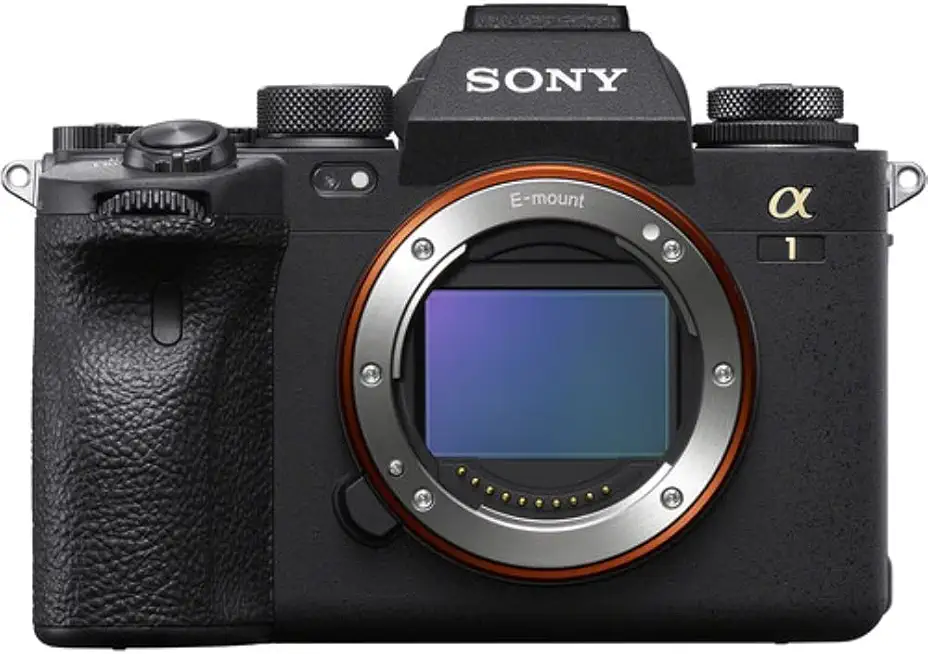
Sony Alpha 1
Flagship mirrorless combining ultra-high resolution, extreme speed, and pro-level 8K video for hybrid shooters.
Check PriceThe Sony A1 is a full-frame mirrorless body that blends high resolution, speed, and advanced autofocus—an excellent all-around tool for baseball. It packs a 50 MP sensor for heavy cropping and shoots at 30 fps continuous with no viewfinder blackout, which means you can nail the decisive frame and still have room to crop.
Its real-time AF tracking is tuned to lock onto players and even baseballs, so you spend less time fighting focus and more time shooting. The electronic shutter features a global readout to reduce distortion on fast-moving subjects, and the camera’s silent shooting is a real advantage on the sideline where you don’t want to distract players or coaches.
Practically speaking, the A1’s combination of 50 MP detail and 30 fps speed lets you capture long sequences and still extract tight, high-quality images for print or editorial use. The compact mirrorless body is easier to handle than many pro DSLRs during long games, helping reduce fatigue when you’re covering multiple innings or a tournament day.
There are trade-offs: battery life is shorter than top-tier DSLRs, so I always bring spares for a full day of action. Sony’s menu system can be complex at first, but once customized it becomes incredibly powerful and fast, matching the camera’s elite performance.
- 30 fps with no viewfinder blackout
- 50 MP sensor for heavy cropping
- Real-time tracking AF locks onto players/balls
- Silent shutter—non-distracting on sidelines
- Shorter battery life—spares required
- Complex menu system learning curve
3. Canon EOS R3 For Baseball

Canon EOS R3 Body
High-speed full-frame mirrorless engineered for tracking fast action, reliable autofocus, and superior low-light responsiveness.
Check PriceThe Canon EOS R3 is Canon’s flagship mirrorless sports body and is widely viewed as the successor to the EOS-1D X Mark III. It’s built from the ground up for action work, so right away you get a camera designed for pace and reliability.
Its standout autofocus features make it special. Eye-control AF lets you select subjects simply by looking through the viewfinder, and the deep-learning AF is tuned to handle unpredictable motion like dives, slides, and pop-ups.
For sequences, the R3 delivers serious speed: 30 fps with the electronic shutter and a 12 fps mechanical option. That combination gives you both extreme burst capability and a mechanical option when you want it.
The body is rugged and weather-sealed with a very comfortable grip, so it can survive rain, dust, and long days on the sideline. That toughness paired with mirrorless responsiveness makes it feel like a true pro tool in the field.
If you’re a professional sports shooter or a well-funded enthusiast invested in Canon’s RF ecosystem, the R3 is one of the most capable options you can buy right now. Be mindful that it’s large and heavy and carries a premium price, and battery life is not as long as top DSLRs—trade-offs to consider if you shoot back-to-back games all day.
- Eye-control AF for intuitive subject selection
- 30 fps electronic / 12 fps mechanical burst rates
- Best-in-class deep-learning autofocus
- Rugged, weather-sealed design with comfortable grip
- Large and heavy; less portable over long shoots
- High price; battery life shorter than top DSLRs
4. Sony A9 III For Baseball

Sony Alpha 9 III
Silent, blackout-free performance with lightning-fast autofocus and continuous shooting tailored for professional sports and news photography.
Check PriceThe Sony A9 III is built for ultimate speed and sequence coverage. It uses a global shutter sensor, so you don’t get rolling-shutter distortion when panning across the field.
Its headline feature is up to 120 fps continuous shooting with AF/AE, which means you can capture entire pitch-to-swing sequences frame by frame. Be aware the buffer fills quickly at those extreme rates, so long sustained bursts will be interrupted.
Autofocus on the A9 III is lightning-fast and excellent in low light, which is exactly what you want under night lights and in shadowed stands. The body is compact and light for a professional sports camera, so you can carry it around the sidelines without being exhausted by the end of the game.
There are trade-offs to consider. Resolution is modest at 24 MP, so heavy cropping is limited compared with higher-megapixel rivals. Also, the camera is very expensive and many shooters will find some features overkill; extreme burst shooting will also generate huge file volumes that can overwhelm storage and workflow.
If you’re a pro who needs split-second timing, wants the absolute fastest performance, and can handle the cost and files, the A9 III is a weapon in your kit. If you mostly shoot for fun or need huge cropping flexibility, the price and 24 MP cap may not be worth it.
- Global shutter eliminates rolling-shutter distortion
- Up to 120 fps with AF/AE for extreme sequence coverage
- Excellent low-light AF performance
- Lightweight and compact for a pro body
- Very expensive; features may be overkill
- 24 MP limits heavy cropping; very high burst rates can overwhelm buffers and file volume
5. Fujifilm X-H2S For Baseball

Fujifilm X-H2S Body
Compact powerhouse delivering high-speed burst capability, advanced stabilization, and cinematic 8K-ready video for hybrid creators.
Check PriceThe Fujifilm X-H2S is the top APS-C mirrorless sports option in this lineup. It pairs a fast sensor readout with reliable AF, which makes it a surprisingly serious tool for baseball action.
Its 40 fps electronic shutter and strong subject-tracking performance let you capture decisive sequences without missing the moment. That high burst rate combined with Fujifilm’s tracking makes it easy to nail pitches, swings, and infield chaos.
It’s also lightweight and portable, so you can cover multiple games in a day without the fatigue you get from heavier pro bodies. The camera benefits from a robust, affordable lens lineup that keeps overall system costs down compared with full-frame alternatives.
Where it compromises is in extreme low light and long days. Images are slightly noisier in very low light versus full-frame cameras, and battery life is shorter than DSLRs, so spares are recommended for long events.
Overall, if you’re an enthusiast or semi-pro who values portability, Fujifilm color science, and value over absolute full-frame low-light performance, the X-H2S is an excellent choice. It gives pro-level speed and tracking in a much more manageable, budget-friendly package.
- 40 fps burst with reliable AF tracking
- Lightweight and portable
- Excellent value vs full-frame
- Strong, affordable lens ecosystem
- Slightly noisier in very low light vs full-frame
- Shorter battery life than DSLRs — spares recommended
Choosing Lenses For Baseball Photography

Choosing the right lenses will make or break your baseball coverage more than the camera body. On the sideline I treat my glass like a toolkit: fast, flexible telephotos for the action and a shorter zoom for atmosphere and dugout moments.
The 70–200mm f/2.8 is the workhorse for most baseball situations. It’s sharp, fast to focus, and wide enough to follow infield plays while giving you beautiful subject separation—useful for freezing swings and capturing emotion without cutting the scene off.
For outfield action and plays that happen far from the baseline, reach matters. A 100–400mm or a 200–400mm f/4 gives you the flexibility to track fly balls and crop tightly; if you can afford it, a 400mm f/2.8 prime is the pro’s go-to for its speed, edge-to-edge sharpness, and reliable AF.
If you shoot APS-C bodies like the Fujifilm X-H2S, remember the crop factor effectively extends your reach, which can make lighter telezooms more valuable. Teleconverters are another way to gain reach, but they cost light and can reduce AF performance—use them only when you can sacrifice a stop or two.
Don’t forget a 24–70mm f/2.8 (or similar) for pregame, celebrations, and dugout portraits; those wider shots tell the story around the game. I keep this on a second body or in my bag for quick swaps when the moment demands context instead of long reach.
Managing weight and lens swaps is practical: if you can, use two bodies to avoid missing plays while changing glass. Otherwise, a single versatile setup like 70–200 plus a 100–400 covers most gigs, and a monopod eases the load during long innings.
Finally, prioritize fast apertures (f/2.8–f/4) to freeze motion and isolate subjects, use lens hoods to maintain contrast, and don’t be afraid to rent a heavy prime for a big game. The right lens choices let you be in the right place, frame the decisive moment, and walk away with images that feel like you were there.
Action Techniques For Baseball Photography
Baseball moves in bursts, so your job is to be ready for the burst. Learn the rhythm of the game—pitch, swing, contact, throw—and position yourself mentally before the play unfolds. Anticipation wins more photos than fancy gear.
For settings, start with 1/1000s or faster to freeze swings and sprints, open up to f/2.8 when you can to isolate the subject, and let ISO float so exposure stays fast and clean. Use continuous AF (AF‑C) with a tracking mode or eye/subject-detect when available, and switch to back-button focus so your focus and shutter are decoupled.
Lens choice changes how you work. A 70–200mm f/2.8 is your do-everything tool for near-baselines and dugout emotion. Reach out with a 100–400mm or 400mm prime for outfield plays, and carry a 24–70mm for dugout interaction and celebration shots.
Keep bursts short and purposeful. Instead of holding the shutter through an entire at-bat, fire 5–12 frame bursts at the key moments—stride, contact, and follow-through—so your buffer and cards don’t drown you in frames. This also makes culling faster and keeps battery drain down.
Positioning is simple: behind home for pitches and catcher reactions, down the third-base line for batting and plays at the bag, and shallow outfield for fly-ball arcs. Always consider your background; a clean sky or outfield wall makes players pop far more than cluttered stands.
For creative variety, try deliberate panning at 1/125–1/250s to convey speed, or underexpose slightly to preserve highlights under stadium lights. Shoot RAW, tag your keepers quickly, and keep spare batteries and cards handy—nothing kills momentum like swapping gear mid‑inning.
Finally, trust your instincts and be patient. The best shots come when you blend technique with game sense: know the player tendencies, pick your moments, and let the camera capture the drama.
What People Ask Most
What is the best camera for baseball photography?
The best camera depends on your priorities such as autofocus reliability, burst rate, buffer depth, and high-ISO performance. Choose a body that balances speed, handling, and lens options to match your shooting style.
What camera do professional baseball photographers use?
Professional photographers typically use flagship bodies with top-tier autofocus, fast continuous shooting, and rugged build quality. Those tools help deliver consistent results in unpredictable, fast-paced games.
What lens is best for baseball photography?
Telephoto lenses are essential for reaching the action, with a versatile mid-telephoto zoom for most situations and longer reach for outfield plays. Wide or standard zooms are useful for atmosphere, celebrations, and close-up moments.
Are mirrorless cameras good for shooting baseball?
Mirrorless cameras are well-suited to baseball thanks to advanced autofocus systems and silent shooting options. Be mindful of battery life and large file volumes when planning long shoots.
What shutter speed should I use for baseball photos?
Use a fast shutter to freeze swings, pitches, and running; many photographers shoot at very fast speeds such as around 1/1000 sec or faster. Adjust the shutter speed based on available light to avoid underexposure.
What autofocus settings are best for shooting baseball?
Continuous tracking autofocus with subject-tracking modes is ideal for keeping moving players sharp throughout the play. Tailor focus area selection and consider using back-button focus or tracking aids for greater consistency.
How do I choose a camera for shooting baseball games?
Match the camera to your needs—prioritize speed and autofocus if you cover pro-level games, or favor portability and value for amateur or multi-game days. Also consider lens availability, battery life, and comfortable handling for long events.
Conclusion For Best Camera For Baseball
Baseball photography comes down to a few clear priorities — reliable autofocus, high burst rates, deep buffers, strong high‑ISO performance, and choosing lenses that match the action — and weighing those factors will point you to different kinds of bodies and systems.
The five picks above cover that spectrum so professionals who chase speed and tracking can get the tools they need while enthusiasts can opt for portability and value without sacrificing key features.
Keep in mind the everyday trade‑offs: battery life, file volume, and body weight affect how well a camera performs over multiple innings or full tournaments just as much as peak specs do.
If you want to sharpen your technique and fine‑tune gear choices, read more articles on the site for practical tips, shooting examples, and decision help to boost your results at the ballpark.
Have a question or a shooting tip to share? Leave a comment below — we usually reply within a few hours.




0 Comments