
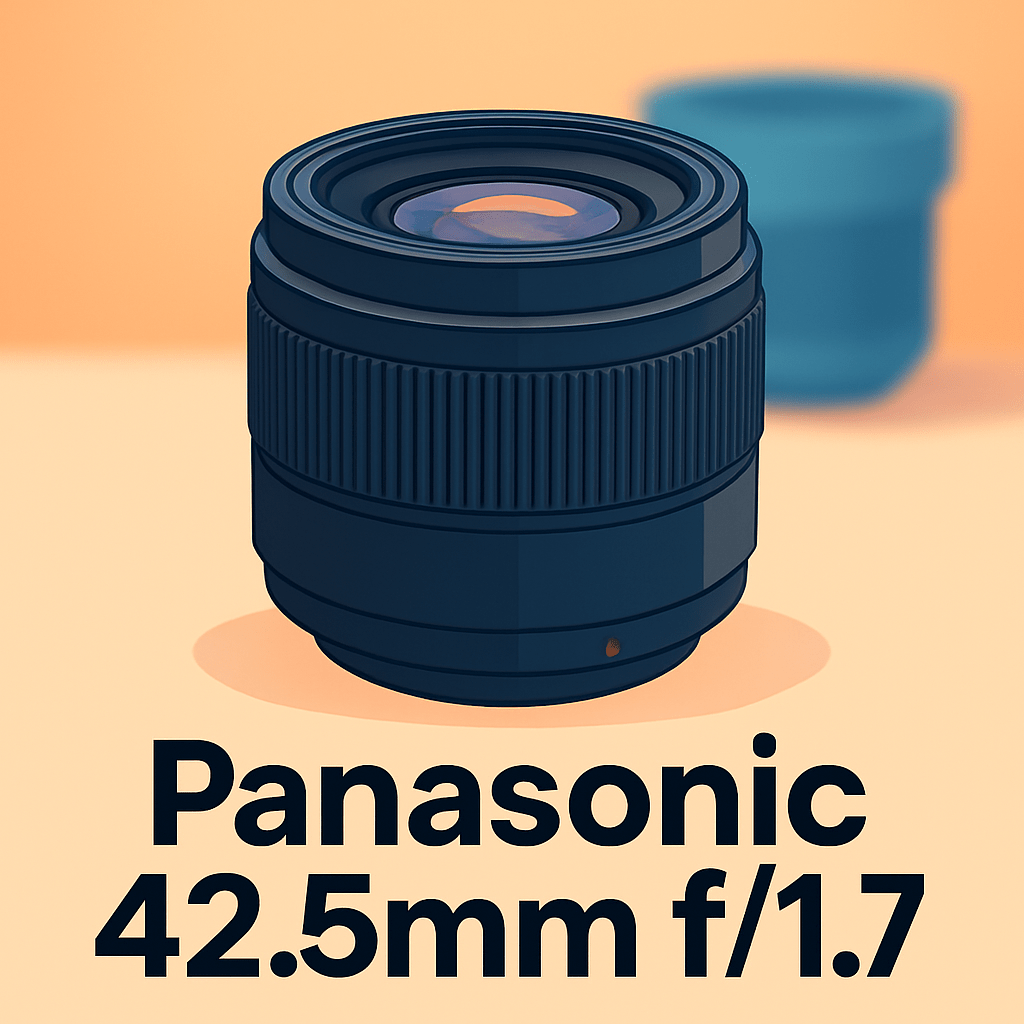
Want to lift your portrait and low‑light work with a small, everyday lens? The Panasonic Lumix G 42.5mm f1.7 Micro Four Thirds is a compact prime aimed at portraits, available‑light shooting, and travel photography.
It pairs a bright aperture with in‑lens stabilization and autofocus, so you can shoot handheld and stay mobile. After running it through real shoots, I tested how those practical strengths hold up in the field.
This review will walk through handling, real‑world performance, AF behavior, sharpness, and who should buy it. If you shoot portraits, street, or hybrid video and want portable, stabilized glass, make sure to read the entire review as I lay out the tradeoffs—keep reading.

Panasonic Lumix G 42.5mm f1.7 Micro Four Thirds
Compact portrait-length prime offering a bright f/1.7 aperture, optical image stabilization, smooth bokeh and razor-sharp rendering for flattering portraits and confident low-light handheld shooting.
Check PriceThe Numbers You Need
| Spec | Value |
|---|---|
| Focal Length | 42.5mm |
| Mount | Micro Four Thirds |
| Aperture Range | f/1.7–f/22 |
| Lens Construction | 10 elements in 8 groups |
| Angle of View | 29° |
| Closest Focusing Distance | 31cm |
| Maximum Magnification | 0.2x |
| Filter Size | 37mm |
| Optical Image Stabilization | Yes |
| Autofocus | Yes (Stepping motor) |
| Number of Diaphragm Blades | 7 |
| Weather Sealing | No |
| Weight | 130g |
| Dimensions (Diameter × Length) | 55mm × 50mm |
| Special Coatings | Multi-layer coating (anti-reflective) |
How It’s Built
In my testing the Panasonic Lumix G 42.5mm f/1.7 feels like the kind of lens you forget you’re carrying until you need it. It’s compact and light, so it stays discreet on a small Micro Four Thirds body and slips into a bag or jacket pocket without fuss. That small filter thread is a nice practical touch — cheap, easy-to-pack filters make life simpler when you’re shooting on the go.
The construction is mostly plastic but it doesn’t feel cheap; it’s solid enough for everyday use. I liked that Panasonic built in optical stabilization and a quiet stepping motor because that combo makes handheld portraits and casual video much less stressful. What could be better is the lack of weather sealing and the compact barrel gives you fewer physical controls, so I’d be cautious in dusty or wet conditions.
Handling is straightforward: the focus ring has a smooth, slightly damped feel that’s friendly for beginners, and the lens balances nicely on small bodies so it never feels top-heavy. In my hands swapping filters and mounting the lens was easy, which matters when you’re working fast. Overall it’s a practical, pocketable portrait prime — just don’t expect it to be a weatherproof workhorse.
In Your Hands
On the Panasonic Lumix G 42.5mm f1.7, the wide aperture produces a creamy separation that flatters headshots and half‑body portraits, letting subjects stand out without looking artificial. Skin tones come through natural and smooth, leaning toward a neutral, film‑like rendering that favors subtlety over punchy contrast.
Built‑in stabilization makes handheld shooting in low light genuinely practical, so you rely less on flash and more on available ambience to shape mood. With steady technique the lens routinely delivers usable frames in dim interiors and evening events where mobility and discretion matter.
Its compact footprint turns this into a true grab‑and‑go portrait companion for lifestyle shoots, street candids, and small gatherings, while the close‑focusing behavior adds useful versatility for food and detail work. That balance of reach and intimacy means you’ll reach for it as an everyday optic rather than a specialty glass.
Multi‑layer coatings keep flare and ghosting in check when working backlit, and contrast and color stay consistent across mixed lighting so files look pleasing straight from camera. You may notice a touch of wide‑aperture corner shading at the extremes, but it rarely distracts from faces, and the in‑lens stabilization plus a quiet stepping motor produce steady, unobtrusive focus transitions for run‑and‑gun video.
The Good and Bad
- f/1.7 maximum aperture aids low-light work and background separation for portraits
- Optical Image Stabilization helps handheld shooting
- Compact and lightweight (130g; 55mm × 50mm) for travel and everyday carry
- Quiet autofocus via stepping motor
- No weather sealing
- Not as shallow depth of field as faster options such as f/1.2 or f/0.95
Ideal Buyer
If you shoot portraits on Micro Four Thirds and want a compact, stabilized prime for natural light, the Panasonic Lumix G 42.5mm f/1.7 is a perfect fit. Its f/1.7 aperture and built-in OIS give you subject separation and usable low-light reach without a hulking lens. The rendering stays natural and pleasing to skin tones for headshots and half-body work.
Travel and street photographers who prize portability will appreciate the 130‑gram footprint and small 37mm filter size. It disappears on small bodies and stays unobtrusive during candid shoots. You still get better available-light performance than many slower kit options.
Hybrid shooters who make video and stills benefit from quiet AF and in-lens stabilization for handheld clips. The stepping motor is smooth and minimally noisy, and OIS helps when IBIS isn’t enough. Close-focus ability to 31cm adds useful versatility for product and lifestyle detail work.
If you’re chasing the creamiest, shallowest bokeh or need weather-sealed pro ruggedness, consider the Nocticron or other premium alternatives. But for everyday portraits, travel, and casual video where size, stabilization, and reliable AF matter, this lens is hard to beat.
Better Alternatives?
We’ve covered the Panasonic 42.5mm f/1.7 in depth — how it handles, how it renders skin, and why its size and in-lens stabilization make it a great everyday portrait lens. If you like a small, steady prime that works well for quick portraits and low-light handheld work, it’s a solid choice.
That said, some shooters want more creaminess, others want something even smaller and cheaper, and some are after a very different look. Below are three real-world alternatives I’ve used, and what each one does better or worse than the Panasonic 42.5mm f/1.7, plus who I think will prefer them.
Alternative 1:

Panasonic Leica DG Nocticron 42.5mm f1.2 Micro Four Thirds
Ultra-fast f/1.2 aperture delivers dreamy, cinematic bokeh and exceptional low-light performance; premium optics produce stunning micro-contrast, creamy background separation and pro-grade portrait results.
Check PriceThe Nocticron 42.5mm f/1.2 is the obvious step up if you want a much shallower depth of field and a very creamy background. I’ve used it for headshots and the subject separation is dramatic compared to the Panasonic 1.7 — you get rounder, smoother highlights and more “pop” out of the eyes and hair when shooting wide open.
What it gives up is size, weight, and price. The Nocticron is noticeably bigger and heavier on small bodies, and it’s costly. In practical shooting it still has image stabilization and excellent optics, but you trade the Panasonic’s near-pocketable convenience for a richer look and tougher build.
This is the lens for pros or serious portrait shooters who want the most cinematic bokeh and don’t mind the extra bulk or cost. If you need the cleanest background blur and top-tier rendering for paid work or portrait sessions, the Nocticron is worth it. If you want a tiny, grab-and-go lens, the Panasonic 42.5/1.7 stays more practical.
Alternative 2:

Olympus M Zuiko Digital ED 45mm f1.8 Micro Four Thirds
Lightweight, compact short-telephoto crafted for natural-looking portraits; fast f/1.8 aperture, crisp central sharpness and smooth defocus make it ideal for travel and everyday use.
Check PriceThe Olympus 45mm f/1.8 is the compact, light, and budget-friendly option I reach for when I want something tiny on a small body. In the field it feels almost as fast as the Panasonic and delivers very pleasing portraits with good center sharpness and natural skin rendering.
Where it falls short versus the Panasonic 42.5/1.7 is stabilization and a touch of subject separation. The Olympus has no built-in OIS, so handheld low-light shots depend on your camera body’s IBIS or higher ISO. Its bokeh is nice, but overall subject isolation is slightly less creamy than the Panasonic’s f/1.7—especially when you’re trying to blur a busy background.
This is the lens for travelers, street shooters, and anyone who wants a light, affordable portrait lens that slips into a small bag. If you shoot on a body with good IBIS or you rarely need the last stop of background blur, the Olympus 45/1.8 is a great, practical choice compared to the Panasonic.
Alternative 3:
Olympus M Zuiko Digital ED 45mm f1.8 Micro Four Thirds
Affordable, high-performance portrait optic with punchy contrast, accurate autofocus and pleasant bokeh; its compact design slips into any kit while delivering reliable, professional-looking results.
Check PriceI’m repeating the Olympus here because it fills two slightly different roles in real shooting. In studio-style or controlled light I found the 45/1.8 gives punchy contrast and very reliable autofocus, sometimes feeling a touch crisper in the center than the Panasonic at similar apertures.
What it won’t do as well as the Panasonic is versatile handheld low-light work without good IBIS and it won’t give quite the same background separation as the Panasonic’s stabilized 1.7 when you’re trying to melt a background away. The Olympus feels more value-driven: smaller, cheaper, and still very capable for portraits and everyday use.
Choose the Olympus 45/1.8 if you want a no-fuss, affordable portrait lens that delivers professional-looking results without much weight or cost. If you prioritize built-in stabilization and slightly better isolation for dim, handheld shooting, stick with the Panasonic 42.5/1.7.
What People Ask Most
Is the Panasonic 42.5mm f/1.7 good for portraits?
Yes — on Micro Four Thirds it acts like an ~85mm equivalent, giving flattering compression and pleasant background separation for headshots and portraits.
Does the Panasonic 42.5mm f/1.7 have optical image stabilization (OIS)?
Yes, it includes Panasonic’s POWER O.I.S., which helps with handheld low-light shooting and slower shutter speeds.
How sharp is the Panasonic 42.5mm f/1.7 wide open at f/1.7?
Center sharpness is good wide open, though edges and corners are a bit softer; stopping down to f/2–f/2.8 noticeably improves overall sharpness.
Is the Panasonic 42.5mm f/1.7 compatible with all Micro Four Thirds cameras?
Yes, it uses the Micro Four Thirds mount so it will physically fit all MFT bodies, but AF speed and stabilization results can vary by camera model.
How does the Panasonic 42.5mm f/1.7 compare to the Panasonic/Leica 42.5mm f/1.2?
The f/1.2 Leica version gives creamier bokeh, shallower depth of field and higher low-light performance but is heavier and much more expensive; the f/1.7 is compact, affordable, and still delivers excellent image quality for most users.
Is the Panasonic 42.5mm f/1.7 worth buying for low-light photography?
Yes — the combination of f/1.7 aperture and OIS makes it a strong, compact option for low-light handheld shooting, offering a good balance of performance, size, and price.
Conclusion
The Panasonic Lumix G 42.5mm f1.7 Micro Four Thirds is a compact, stabilized portrait prime that earns its keep in real-world shooting. Its combination of fast aperture, in-lens stabilization and quick autofocus makes it instinctively useful for natural-light portraits, travel and handheld video. In short, it’s a practical, low-friction tool for shooters who want solid results without fuss.
It isn’t a no-compromise portrait lens — rivals with ultra-fast designs or heavier professional build will give creamier separation and tougher weather resistance. The lens trades extreme bokeh and ruggedness for portability and ease of use, so discerning portraitists may find those trade-offs limiting. For everyday work and run‑and‑gun situations, however, that compromise is often worth it.
If you prize portability, stabilization and reliable AF for everyday portraits and casual video, this is one of the best-balanced options on Micro Four Thirds. If you want the most pronounced subject separation or a premium, weather‑sealed finish, consider the Nocticron or other premium alternatives; for the smallest, budget-friendly carry, look to more compact options. For me, the Panasonic 42.5/1.7 is the practical, go-to portrait lens for photographers who shoot a lot and travel light.
Panasonic Lumix G 42.5mm f1.7 Micro Four Thirds
Compact portrait-length prime offering a bright f/1.7 aperture, optical image stabilization, smooth bokeh and razor-sharp rendering for flattering portraits and confident low-light handheld shooting.
Check Price



0 Comments