

Ever stood beneath the Milky Way and wondered which camera will actually capture that moment? You’re not alone—choosing the right gear can be the difference between a keeper and an empty memory card.
This guide narrows the field to five carefully selected cameras ideal for night-sky work. It also walks you through sensor-versus-crop trade-offs, lens choices, and a practical FAQ to answer the questions you’ll have on the trail.
We focus on what matters after dark: low-light capability, usable ISO performance, stabilization options, and lenses that minimize star coma. Expect field-tested advice, not marketing spin.
Whether you favor sweeping Milky Way panoramas or tight portraits of the galactic core, the camera and glass you choose will shape your results. I’ll help you match priorities like portability, image quality, and lens availability to the right system.
You’ll get honest trade-offs that clarify how sensor size, resolution, and focal length affect framing, noise, and print potential. Practical tips for composition, exposure strategy, and gear choices round out the guide so you can shoot confidently under dark skies.
If you’re buying your first astro camera or upgrading your kit, this piece gives a clear path forward. Let’s dig in and get you under a better sky with gear that performs when the stars come out.
1. Nikon Z6 II for Milky Way
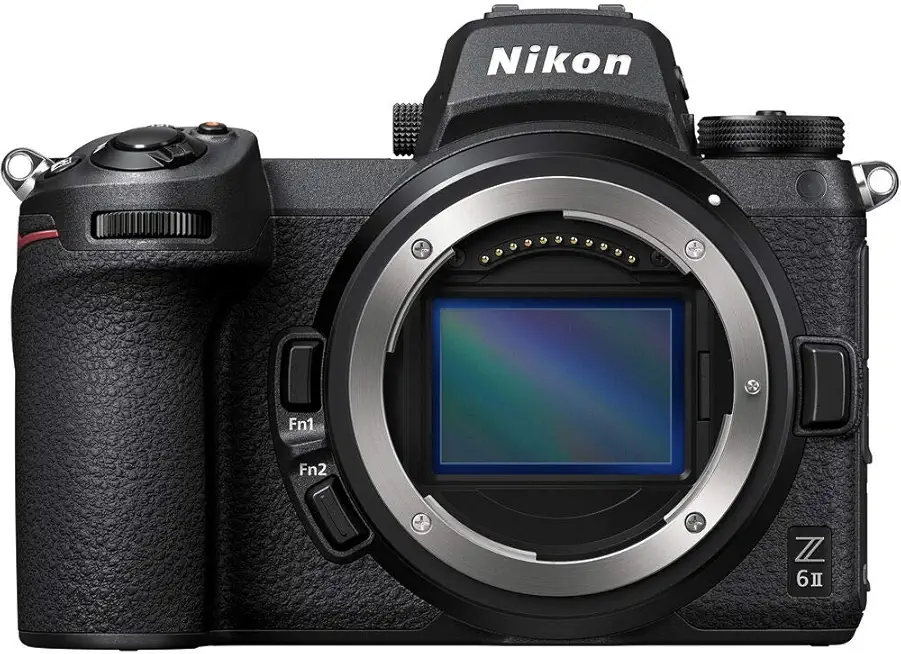
Nikon Z 6II
Versatile full-frame mirrorless camera delivering exceptional low-light performance, fast autofocus, and professional 4K video for hybrid shooters and content creators.
Check PriceThe Nikon Z6 II is a widely recognized full-frame mirrorless option for Milky Way photography. Its 24.2MP sensor delivers strong dynamic range and impressively low noise at high ISO, so you can pull clean detail from deep shadows without crushing the stars.
One feature I lean on in the field is the exposure metering down to -6EV — it makes composing and getting a reliable exposure in near darkness far less guesswork. When you’re pointing the camera at a sky that’s mostly black, that metering confidence speeds up setup and reduces wasted frames.
In-body image stabilization (IBIS) is another game changer here; it lets you push somewhat longer exposures without immediately introducing star trails, which is handy when you don’t have a tracker with you. Practically, that means cleaner foreground detail and fewer wasted frames while waiting for perfect clear skies.
The Z6 II’s weather sealing and solid build are reassuring on damp, cold nights when conditions get rough. And the Z‑mount lens lineup includes excellent wide-angle primes and zooms tailored for astrophotography, so you’ve got modern glass options that resolve the Milky Way cleanly across the frame.
It’s not perfect: there’s no articulating screen for awkward low-angle compositions, and the menu system could be more intuitive when you’re fumbling with settings in the dark. Overall, if you want a weather-sealed full-frame body with IBIS and strong lens support, the Z6 II is a compelling, practical choice for Milky Way shooters.
- 24.2MP full-frame sensor
- Exposure metering to -6EV
- IBIS for longer exposures without a tracker
- Weather-sealed, solid build
- No articulating screen
- Menu system could be more intuitive
2. Sony A7 IV for Milky Way
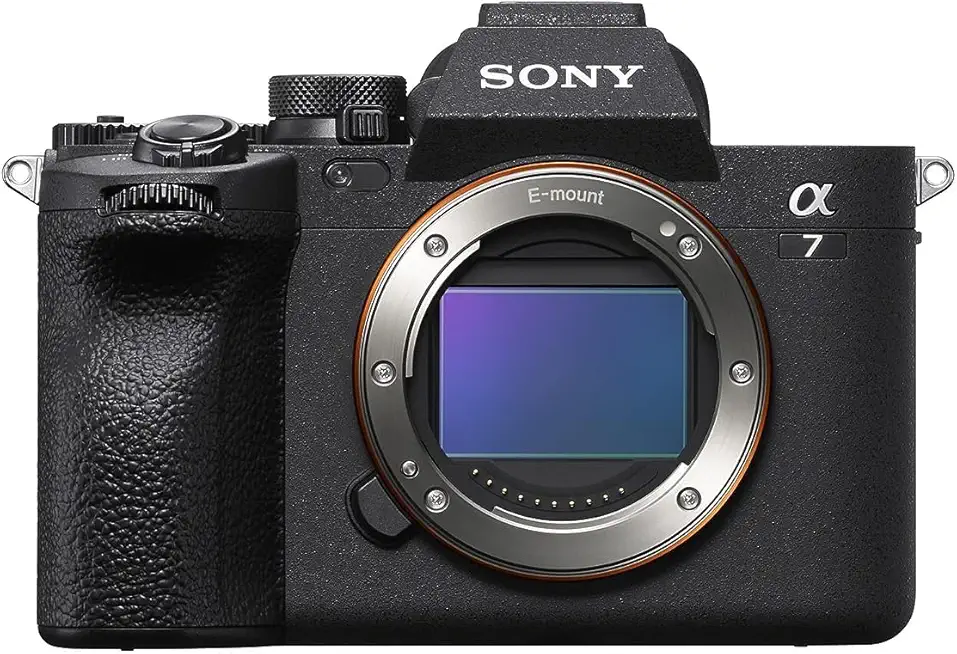
Sony Alpha 7 IV
High-resolution full-frame hybrid with advanced autofocus, cinematic 4K capture, and robust connectivity for filmmakers and photographers on the move.
Check PriceThe Sony A7 IV is a superb all‑rounder for Milky Way work thanks to its 33MP full‑frame sensor. That resolution gives you plenty of room to crop or make large prints while still retaining excellent dynamic range and manageable high‑ISO noise.
One of the features I reach for in the field is Bright Monitoring — it gives a usable real‑time preview in very dark environments so you can frame stars and foreground without fumbling. The fully articulating screen makes low‑angle compositions and awkward tripod setups much easier to nail.
For creative shoots, the built‑in intervalometer is a practical bonus for star‑trail sequences and timelapses; no external trigger needed. The A7 IV’s fast, reliable autofocus and robust build mean it feels like a camera you can depend on for mixed daytime and night projects.
Lens support is solid through Sony’s E‑mount ecosystem, and there are excellent wide‑angle options available (Sony 14mm f/1.8 GM and Sigma 14mm f/1.4 are good examples). That access to fast, low‑coma wide glass is what lets the A7 IV shine on clear, dark nights.
If you want a versatile full‑frame body that covers both Milky Way nights and general photography, this is one of the most balanced choices you can make. It’s mostly a photographer’s tool — thoughtful features that speed workflow and produce clean night images.
- 33MP full‑frame sensor
- Exceptional dynamic range & manageable high‑ISO noise
- Bright Monitoring for real‑time preview
- Fully articulating screen + built‑in intervalometer
- LCD/EVF resolution not class‑leading
- AF surpassed by newer Sony models
3. Canon EOS R6 for Milky Way
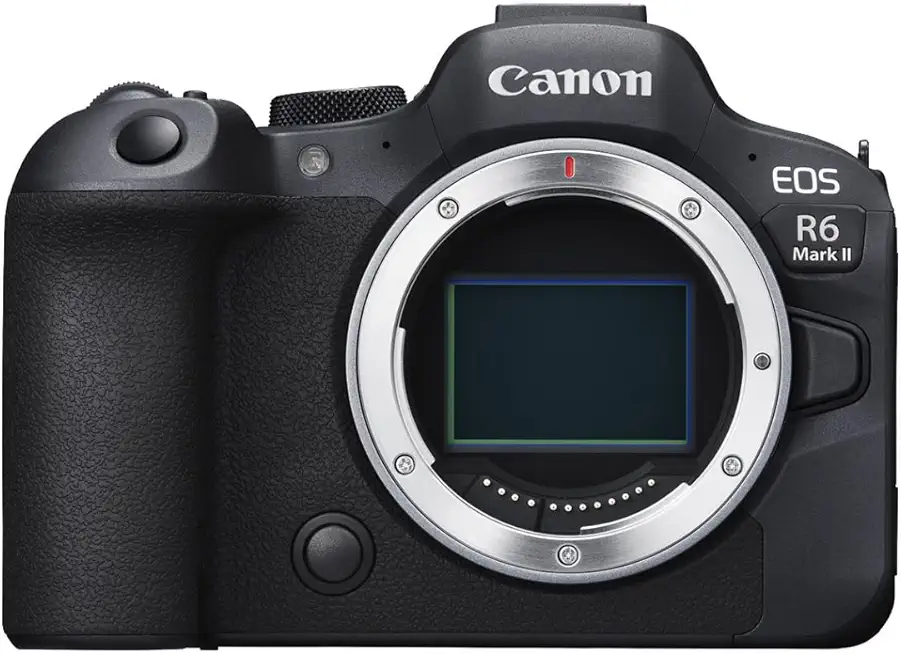
Canon EOS R6 Mark II (Body Only)
Fast-action-focused full-frame body offering blazing continuous shooting, superior autofocus, and dependable IBIS for sports and wildlife photographers.
Check PriceThe Canon EOS R6 is a compact but capable full‑frame body that I often recommend for Milky Way work when you want simplicity and dependable low‑light performance. Its 20MP sensor strikes a deliberate balance between resolution and light‑gathering ability, so you get cleaner high‑ISO files without chasing megapixels you don’t need for nightscapes.
In practice that means excellent noise control at high ISOs — useful when you need short exposures to freeze stars or minimize sky glow. The R6’s effective in‑body image stabilization is a genuine advantage for handheld scouting or longer tracked exposures, helping reduce blur and letting you concentrate on composition rather than every tiny vibration.
Ergonomically the R6 feels like it was designed for field use: intuitive controls and a robust autofocus system make it a good hybrid camera if you’re switching between nightscapes and occasional daylight or portrait work. The RF mount is expanding, and Canon already offers astrophotography‑capable wide angles, so the system is becoming more viable for dedicated night shooters.
Bottom line: if your priorities are low‑light performance, stabilization, and an easy, reliable shooting experience, the EOS R6 is a very strong choice. Be aware, though, the 20MP ceiling limits how far you can push very large prints or aggressive cropping, and the RF lens lineup — while improving — is still growing compared with longer‑established ecosystems.
- 20MP full‑frame sensor
- Excellent low‑light performance / noise control at high ISOs
- Effective in‑body image stabilization
- Robust AF and ergonomic, intuitive controls
- 20MP limits very large prints or heavy cropping
- RF lens ecosystem still growing (fewer mature astro options)
4. Panasonic S5 II/S5 IIX for Milky Way

Panasonic LUMIX S5II with 20-60mm f/3.5-5.6 L-mount lens
Compact full-frame kit combining versatile zoom range, stabilized imaging, and pro-grade video features for travel and run-and-gun filmmakers.
Check PriceThe Panasonic S5 II / S5 IIX is a genuinely useful option for Milky Way shooters who value color and handling over headline megapixel counts. Its 24MP full-frame sensor delivers clean images with good dynamic range, so you get usable high-ISO files without having to push exposure recovery too hard.
Its strong image stabilization is one of the real practical advantages for night work — it helps when you want to shoot longer handheld frames or eke out untracked exposures from a tripod. That doesn’t replace a tracker for pinpoint stars, but it reduces the frustration when you need a quick setup or want to include a tack-sharp foreground with the sky.
Color rendering is another highlight; Panasonic’s tones are pleasing straight out of camera and make post-processing less of a chore. The menus are intuitive and the body offers robust weather sealing, which matters when you’re standing in cold, damp locations waiting for the galactic core to clear the horizon.
Finally, the L-mount ecosystem (Sigma, Leica, etc.) gives access to several wide, fast primes suitable for astro work. The trade-offs are clear: autofocus performance trails top Sony and Canon bodies, and the native lens selection is smaller than other mounts. If your priorities are color science, stabilization, and ergonomics with access to high-quality L-mount glass, the S5 II / S5 IIX is a very good, practical Milky Way tool.
- 24MP full-frame — clean, low-noise files
- Strong IBIS for handheld or untracked long exposures
- Excellent color rendering out of camera
- Weather-sealed body and intuitive menus
- Autofocus trails top Sony/Canon models
- Smaller native L-mount lens selection
5. Fujifilm X-H2S for Milky Way

Fujifilm X-H2S (Body Only)
High-speed APS-C powerhouse with lightning-fast AF, professional video modes, and rugged build for action shooters and content creators.
Check PriceThe Fujifilm X-H2S stands out as the top APS-C choice in our research for Milky Way work, largely because of its stacked X-Trans sensor. That sensor gives real-world high-ISO performance that punches well above typical crop-sensor expectations, so you can collect usable frames deep into the night without excessive noise.
It’s a compact, travel-friendly body, which matters when you’re hiking to dark-sky locations or chasing clear windows of weather. The smaller system weight makes longer outings and multi-location nights far more practical than lugging a heavy full-frame rig.
One of my favorite practical touches is the bright, high-resolution electronic viewfinder — it helps with manual focusing on stars and composing scenes in near-total dark. Fujifilm’s filmic color science also gives nightscapes a distinct, pleasing tonality straight out of camera, reducing time spent on color grading.
There are trade-offs to consider: APS-C does mean a tighter field of view at a given focal length, and Fujifilm’s ecosystem currently offers fewer ultra-wide native options than full-frame systems. If your goal is the widest Milky Way arcs with minimal vignetting or the absolute lowest-noise performance in the faintest skies, full-frame still has the edge.
For a traveler or landscape shooter who values portability and a beautiful starting point for color, the X-H2S is a compelling, practical choice. It balances modern sensor tech with a pleasing shooting experience, and for most Milky Way work it will deliver more than enough image quality.
- APS-C stacked X-Trans sensor
- Excellent high-ISO performance for APS-C
- Compact and travel-friendly
- Bright, high-resolution EVF + Fujifilm color science
- Fewer ultra-wide lens options compared to full-frame
- Full-frame still outperforms in extreme low light
Full Frame vs Crop for Milky Way

Pick your sensor like you pick a campsite: based on the view you want and how much gear you want to carry. Full-frame cameras give you that expansive, dramatic Milky Way sweep with fewer seams when you stitch panoramas, cleaner high-ISO files and generally less noise—so you can push exposures and shadows farther without mushy detail.
That larger sensor also pairs nicely with ultra-wide lenses that fully illuminate the frame, which is why I reach for full-frame on wide landscape nights. You’ll also find full-frame a bit more forgiving when it comes to star trailing on very wide shots, meaning you can squeeze a few more seconds of exposure before trails become obvious.
Don’t discount crop sensors, though — they’re often smarter choices for travel and tighter framing. The crop factor gives you extra reach on the galactic core without carrying long glass, and modern APS-C chips have narrowed the low-light gap significantly; with a fast wide prime you can get astonishing results that rival full-frame in many real-world shoots.
If you shoot handheld or love lightweight setups, APS-C systems let you move faster and pack smaller while still delivering beautiful Milky Way detail. Higher pixel density on some crop bodies can also preserve detail when you crop tighter, but be honest about the lens choices: some systems lack extreme ultra-wides that fully cover a full-frame sensor.
Practical tip: match your lenses to the sensor. A fast f/1.4–f/2 prime on an APS-C body will outperform a slow wide on full-frame. And if you’re chasing pinpoint stars for prints, consider a tracker or stacking technique—those tools often make more difference than the sensor size alone.
Bottom line: choose full-frame for big, immersive nightscapes and cleaner high-ISO latitude; choose crop for lighter kits, extra reach, and travel-friendly versatility. Both will get you to the Milky Way—just pick the trade-offs you’re willing to live with on the trail.
Best Lens Focal Lengths for Milky Way
When it comes to Milky Way shooting, focal length shapes your story. Ultra-wide glass (roughly 10–24mm on full-frame) is the default for dramatic skyscapes because it captures large swathes of the Milky Way arc and leaves plenty of room for interesting foregrounds. That extra field of view also lets you use longer exposures before star trailing becomes obvious, which is a huge help if you’re not using a tracker.
Moderate wide lenses in the 16–35mm range sit nicely in the middle ground. They let the galaxy remain prominent while keeping foreground elements closer and more readable. A sharp 24mm f/1.4 or similar will give you a natural-looking composition that balances sky and landscape without feeling too small.
If your aim is to isolate the galactic core or capture fine detail, longer focal lengths (50mm and up) work, but they demand faster glass and often a tracker to avoid trailing. These lenses are great for bringing the core forward in the frame, yet they increase the need for sensitivity and better optics to keep stars tight and low in coma.
Aperture matters. Faster optics (f/2.8 or faster, ideally f/1.4–f/2.0) gather more light and let you shorten exposures and lower ISO, improving image quality. Be aware that not all fast lenses behave the same at the edges—look for designs with low coma if you care about round, sharp stars across the frame.
Lens choice also depends on sensor size. Crop sensors give you an effective focal length boost, so a 14–24mm full-frame equivalent can be approximated with shorter native glass on APS-C. That makes crop systems lighter and sometimes easier to carry for travel-focused nightscapes.
My practical takeaway: start with an ultra-wide to wide prime in the 14–24mm full-frame range with a fast aperture, then add a moderate wide or a longer lens depending on whether you want sweeping landscapes or closer Milky Way detail. Choose optics known for low coma and strong edge performance, and your nightscapes will thank you.
What People Ask Most
What is the best camera for Milky Way photography?
There is no single best camera; choose one with strong low-light performance, a supportive lens ecosystem, and a durable build for night work. Balance noise control, stabilization, and portability to match your shooting style.
Do I need a full-frame camera to shoot the Milky Way?
No, full-frame offers advantages like a wider field of view and better low-light handling, but crop sensors remain very capable with fast wide lenses and lighter setups. Pick the system that fits your priorities for framing, weight, and lens availability.
Can I photograph the Milky Way with an APS-C/crop sensor camera?
Yes; APS-C cameras can produce excellent Milky Way images when paired with fast, wide lenses and careful technique. They also offer effective focal length increase and often make for a lighter, more affordable system.
Is mirrorless or DSLR better for Milky Way photography?
Both can work, though mirrorless bodies are commonly chosen for their modern features and composing aids in low light. Focus on sensor low-light performance, lens options, and practical shooting features rather than body type alone.
How many megapixels do I need for Milky Way photography?
Higher megapixels give more flexibility for cropping and larger prints, but they should be balanced against low-light noise performance. Prioritize overall image quality and usable high-ISO results rather than pixel count alone.
What camera features are most important for Milky Way photography?
Key features include strong high-ISO performance, stabilization options, reliable weather sealing, and access to fast wide-angle lenses. Composing aids and interval shooting tools are also useful for nightscapes and timelapses.
Can I capture the Milky Way with a smartphone or compact camera?
Some smartphones and compacts can record bright sky features in ideal conditions using long-exposure or night modes, but results vary widely by device and conditions. For greater control and image quality, dedicated cameras with fast lenses are generally preferred.
Conclusion for Best Milky Way Cameras
These five camera picks span APS-C to full-frame and highlight different strengths you’ll care about for Milky Way work: low-noise sensors, effective stabilization, resolution trade-offs, color rendering, and system portability.
The main takeaway is simple—match a camera to the priorities that matter most to your nightscape photography, whether that’s ultimate low-light performance, in-body stabilization, lens availability, or a lighter travel setup.
Beyond gear, the biggest gains come from learning practical techniques: mastering manual focus, exposure, and composition under dark skies will make any of these cameras perform better for astro work.
If you want to improve your skills and deepen your gear knowledge, read more articles on the site for technique tips, comparisons, and workflow guidance tailored to night photography.
Have a question or want to share your experiences with one of these bodies? Leave a comment below and we usually reply within a few hours.





0 Comments