
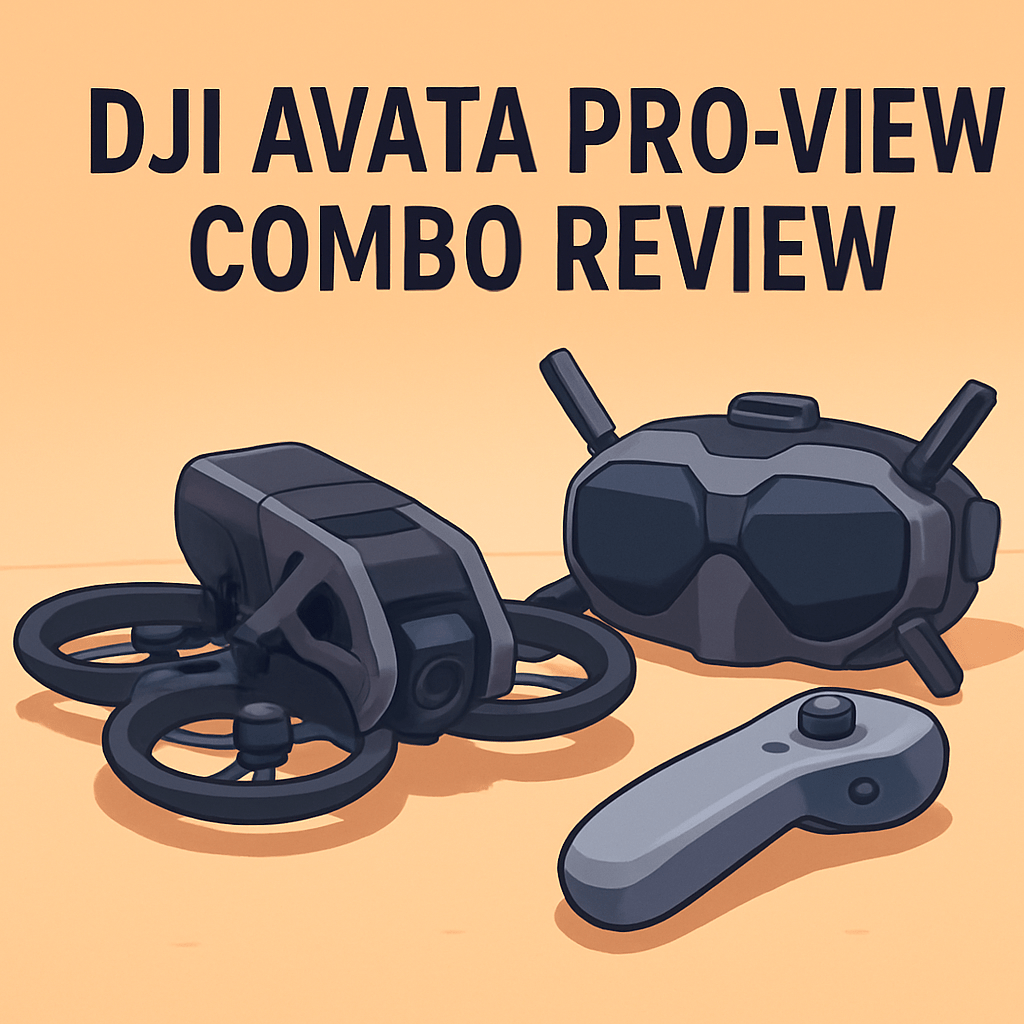
Want to know if the DJI Avata Drone Pro-View Combo is the right FPV drone for your cinematic work?
I’ll focus on real-world payoff—how it flies, how footage looks, and whether it fits production workflows. It’s a ready-to-fly cinewhoop with built-in stabilization and 4K capture, paired with DJI Goggles 2 and the Motion Controller.
Expect roughly 18 minutes per battery, about 60 mph top speed, a wide 122° field of view, and a low-latency video feed. I field-tested it across locations to assess image pipeline, stabilization, and control feel—keep reading for the full assessment.

DJI Avata Drone
Experience cinematic, first-person flight with a compact, ultra-maneuverable craft built for agile indoor and outdoor filming. Smooth stabilization, intuitive controls, and immersive video make capturing dynamic aerial shots effortless.
Check PriceThe Numbers You Need
| Spec | Value |
|---|---|
| Drone Type | FPV Cinewhoop |
| Camera Resolution | 4K |
| Camera Stabilization | 1/1.7" CMOS sensor with RockSteady and HorizonSteady stabilization |
| Goggles | DJI Goggles 2 |
| Controller | Motion Controller |
| Max Flight Speed | Typically around 60 mph |
| Flight Time | Approximately 18 minutes |
| Video Transmission | Low-latency video transmission |
| Video Recording | 4K at 60fps |
| Sensor | 1/1.7" CMOS |
| Lens FOV | 122° |
| Audio | No built-in audio; compatible with external audio devices |
| Flight Modes | Sport, Normal, Slow, and more |
| Transmission Range | Enhanced transmission distance |
| Wind Resistance | Resistant to level 3 winds |
How It’s Built
In my testing the DJI Avata Drone felt like a true cinewhoop from the moment I picked it up. Those ducted props give you the confidence to thread it through tighter spaces and protect the props if you clip a branch or wall, which is huge when you’re learning or shooting close to subjects.
It’s light in your hands, so flying feels lively and it’s easy to carry between locations. That lightness also makes it less noisy and more nimble for smooth lines, though you’ll notice it’s more affected by gusts than heavier rigs—plan your outdoor days accordingly.
The Pro‑View kit I tested comes ready to fly with Goggles 2 and the Motion Controller, and that out‑of‑box simplicity is something I really liked. Setup was quick and swapping batteries in the field is simple, but be prepared to bring spares and a charger; the single‑battery workflow means you’ll be swapping more often than on bigger drones. The Motion Controller is intuitive and fun, though it can feel a bit awkward after long sessions.
From a field‑work view the integrated design is a double‑edged sword. I loved the turnkey reliability for run‑and‑gun shoots, but repairs or upgrades aren’t as straightforward as with modular builds. For beginners this means an easier start, but also a note to carry spare props and know your local service options.
In Your Hands
The Avata’s handling leans toward a cinematic, pilot-friendly character: in its sportier settings it pushes with surprising authority, while the normal and slow modes trade raw speed for buttery, controllable motion that’s ideal for carefully framed reveals and tight indoor passes. The cinewhoop form factor and ducted props make close-proximity work feel safe and forgiving, so you can commit to a line without the twitchy unpredictability of an open-frame racer. Overall it encourages smooth, flowing camera moves rather than aggressive, acrobatic flying.
The Motion Controller adds an intuitive, one-handed dimension to flying; there’s a short acclimation period, but once you sync your muscle memory it becomes a very precise tool for drawing cinematic arcs and holding steady gimballed shots. Paired with the goggles, the control-to-image connection feels immediate, which builds confidence when threading between obstacles or sweeping along architecture. For pro workflows it’s a win for repeatable, creative moves after a few practice runs.
Runtime is best described as sufficient for focused shot lists but not endless, and how you fly will noticeably affect how many batteries you burn through a day. On production shoots I plan for rapid swaps and a simple charging rotation so downtime doesn’t kill momentum, and I treat the goggles’ endurance as part of that logistics puzzle. Efficient workflow—preloaded shot lists and staged batteries—keeps shoots moving.
The digital video link is impressively stable in real-world conditions, delivering low-latency imagery with solid penetration through trees and urban clutter, which translates to confident piloting in complex environments. In breezy conditions the ducted design helps the Avata hold attitude better than many tiny quads, but I still avoid sustained high winds for critical takes. As with any production tool, a quick preflight sweep—basic calibration, prop checks and link confirmation—keeps surprises to a minimum and keeps you airborne when the window opens.
The Good and Bad
- 4K at 60 fps on a 1/1.7" CMOS sensor for detailed, immersive footage
- RockSteady and HorizonSteady built-in stabilization for cinematic results
- Low-latency, enhanced-range digital video transmission for confident FPV control
- Pro-View Combo includes DJI Goggles 2 and Motion Controller for a turnkey start
- Battery life up to approximately 18 minutes necessitates frequent swaps on production days
- No built-in audio; requires external audio devices if ambient sound is needed
Ideal Buyer
If you’re a cinematic FPV creator who wants a ready-to-fly, integrated cinewhoop, the DJI Avata Drone is built for you. It removes the tinkering and gets you straight to creative flying.
Professional photographers and filmmakers who prioritize stabilized, post-ready footage over deep customization will appreciate the Avata’s 4K60 sensor and RockSteady/HorizonSteady pipeline. It’s designed to deliver usable clips that cut into timelines with minimal fuss.
Pilots working in close quarters, indoor corridors, or crowded location shoots will value the cinewhoop ducts, predictable handling, and safety-minded design. The included DJI Goggles 2 and Motion Controller make setup fast and help operators focus on composition and motion rather than gear. That workflow is a boon when time on set is tight.
The trade-offs are clear: you give up extreme top-end customizability and modular tinkering in exchange for a streamlined, production-friendly tool. Buyers who can plan around roughly 18‑minute flight windows and who want pro-looking FPV plates out of the box will find the Avata a strong fit.
It’s also a smart pick for content teams, wedding videographers, and agencies that need repeatable, cinematic moves without a full FPV rig. If you plan to push top speed or require modular upgrades, a more specialized kit makes sense instead.
Better Alternatives?
We’ve gone deep on the DJI Avata Pro‑View Combo — how it handles, how the images look, and what it’s like to fly with the Goggles 2 and Motion Controller. It’s a strong, ready‑to‑fly cinewhoop that makes cinematic FPV accessible, but it’s not the only way to get creative shots.
Below are a few real alternatives I’ve flown and used on shoots. I’ll point out what each one does better and worse than the Avata, and who I’d recommend them to, so you can pick the right tool for your style and budget.
Alternative 1:

DJI FPV Drone
Feel the rush of high-speed, adrenaline-fueled flight combined with cinematic capture capability. Low-latency video, responsive handling, and customizable flight modes deliver thrilling performance for racers and action filmmakers alike.
Check PriceI’ve pushed the DJI FPV hard and what stands out is speed and raw, punchy control. Compared with the Avata, the FPV is better when you want fast chase shots or aggressive camera moves — it feels alive and immediate. What it doesn’t do as well as the Avata is tolerant close‑in flying: without ducts and with a harsher flight feel, it’s less friendly in tight indoor scenes and more likely to give you jerky footage if you don’t have solid stick control.
On real shoots the FPV gives a thrilling look — lots of sense of motion and speed — but to get smooth, cinema‑ready clips you either need a very skilled pilot or to do more stabilization in post. Battery life and positional steadiness aren’t as forgiving as the Avata for long, slow cinematic lines, so plan for more practice and extra batteries when you bring it to a job.
This is the drone I’d pick when I want adrenaline and wide, fast chases: action filmmakers, experienced FPV pilots, or anyone after a very dynamic look. If you need turnkey, safe indoor shots or want the most stable out‑of‑camera video, stick with the Avata instead.
Alternative 2:

BETAFPV Cetus Pro FPV Drone
Perfect for beginners, this lightweight trainer offers forgiving handling, stable hover performance, and safe prop guards. Plug-and-play setup, easy maintenance, and predictable controls accelerate skill-building and confidence.
Check PriceThe BETAFPV Cetus Pro is all about safe, easy flying — better than the Avata for learning, indoor practice, and low‑risk sessions. It hovers steadily and the prop guards help when you’re flying around people or walls. But it’s not built to deliver the same cinematic image quality or stabilized 4K footage the Avata gives you, so don’t expect the same post‑ready clips.
In real shoots I use the Cetus Pro as a practice rig or a “B” camera for tight indoor scouting runs. It’s forgiving and small, so I’m less worried about crashes and can afford to experiment with lines. The tradeoff is a softer image and shorter run times — if you need polished footage straight from the drone, the Avata will save you time in editing.
Choose the Cetus Pro if you’re new to FPV, want a cheap crash‑friendly trainer, or need a compact drone for practice and tight indoor shots. If your priority is production‑grade footage and streamlined workflow, the Avata is still the better pick.
Alternative 3:
BETAFPV Cetus Pro FPV Drone
Compact and durable, this indoor-friendly quad prioritizes stability and pilot development with modular parts and straightforward tuning. Enjoy practice sessions, smooth maneuvers, and reliable, damage-resistant flights for everyday training.
Check PriceUsed as a compact, durable trainer, the Cetus Pro shines where the Avata is too big or nervous — small rooms, cramped corridors, or busy studios. It’s easier to repair on the fly and parts are cheap, so after a crash you’re back up faster than you would be with a damaged Avata. The downside is that the Cetus Pro won’t match the Avata’s stabilization, field of view, or image fidelity, so shots will need more care to look cinematic.
When I’m working on pilot skills or rehearsing complicated moves, the Cetus Pro gives predictable, repeatable behavior that helps me nail a line before switching to the Avata for the final take. It’s quieter and less intrusive in small spaces, but if you need a polished, wide 4K shot with built‑in steadying, the Avata remains the more professional tool.
If you want a durable daily trainer for indoor practice, quick run‑throughs, or to teach new pilots, the Cetus Pro is a great choice. If your shoot needs high‑quality out‑of‑camera footage and an easy end‑to‑end workflow, stick with the Avata Pro‑View Combo.
What People Ask Most
Is the DJI Avata Pro‑View Combo worth buying?
Yes, if you want immersive FPV footage and a ready-to-fly package with goggles and a motion controller; it’s great for creators but overkill if you only need simple aerial photos or long flight times.
What’s included in the DJI Avata Pro‑View Combo?
The combo bundles the Avata drone with DJI FPV-style goggles, a motion controller or RC, batteries, charger, spare props and essential cables/tools for immediate flight.
How long is the battery life on the DJI Avata Pro‑View Combo?
Expect roughly 15–18 minutes per battery in calm conditions, with real-world times dropping to around 10–14 minutes during aggressive flying or high-quality recording.
How does the video quality and stabilization compare on the Avata Pro‑View Combo?
The Avata delivers cinematic, immersive footage with strong electronic stabilization tuned for FPV, giving much smoother results than raw freestyle FPV but not quite the ultra-smooth gimbal output of larger cinema drones.
What are the differences between the DJI Avata Pro‑View Combo and the standard Avata or Fly More Combo?
The Pro‑View adds goggles and a motion controller for immersive flight, while the Fly More focuses on extra batteries and charging accessories without the FPV goggles.
Is the DJI Avata Pro‑View Combo suitable for beginners?
It can be approachable thanks to assisted modes, but FPV flying has a learning curve—start with a simulator or an easier toy drone before committing to the Pro‑View Combo.
Conclusion
The DJI Avata Drone lands as a refined, production-ready FPV cinewhoop that makes cinematic flights feel accessible. Its stabilized image pipeline, immersive headset feed, and intuitive motion controller turn complex aerial moves into repeatable shots. For filmmakers who want clean, usable footage fast, it’s a clear win.
It isn’t flawless, though, and you pay for that convenience. Limited endurance and environmental margins mean more planning and battery swaps on real shoots, and the integrated design trades some repairability and customization for plug-and-play ease. Pilots should also budget practice time to get the most out of its handling.
Value sits in the system-level thinking: this is for creators who prioritize turnkey workflows, safety in close quarters, and a cinematic-ready result over DIY tuning or raw top speed. If you want raw aggression, a pure racer will serve better, while micro cinewhoops or larger rigs still have their places for ultra-tight corridors or payload flexibility.
Bottom line — match the tool to the job. Buy the Avata Drone if you need efficient, repeatable, immersive FPV cinema with minimal setup. Walk away if your work demands maximum customization, endurance, or outright speed.
DJI Avata Drone
Experience cinematic, first-person flight with a compact, ultra-maneuverable craft built for agile indoor and outdoor filming. Smooth stabilization, intuitive controls, and immersive video make capturing dynamic aerial shots effortless.
Check Price

0 Comments