

Ever watched a decisive play blur past because your camera couldn’t keep up? Capturing peak action demands more than luck; it needs gear that tracks, focuses, and fires without missing a beat.
This guide puts five Sony cameras through paces — from elite pro bodies to budget and compact options. We evaluate them not by lab specs alone, but by real-world performance that matters on the sidelines. Hands-on tests include stadium nights, indoor courts, and rainy sidelines.
Our lens is on the features that matter most to sports shooters: autofocus precision, burst speed, low-light prowess, and handling under pressure. We break down practical pros and cons so you can match a camera to your shooting style, venue, and budget. We also weigh ergonomics and battery life for long shoots.
Whether you’re a press photographer chasing split-second plays, a coach documenting drills, or an enthusiast shooting weekend games, this guide is geared to help. Expect candid observations, real-shooting examples, and clear trade-offs — not marketing copy. You’ll get practical advice to help choose the right kit for your needs.
By the end you’ll know which Sony approach suits fast action, tight budgets, or low-light arenas. Read on to find the camera that keeps up with the moment, every time.
1. Sony A9 III Pro Sports Speed

Sony Alpha 9 III mirrorless camera
Professional-speed sensor and blackout-free continuous shooting with advanced autofocus, low-light performance, and rugged build for demanding sports and action photography.
Check PriceAs a sports shooter, the Sony A9 III is built for split-second decision making — it delivers 120 fps full-resolution RAW/JPEG bursts using a global shutter, and you get blackout-free viewfinder shooting so you never lose the action. That combination makes it ideal for press photographers and elite action shooters who need to commit to long sequences without missing frames.
Autofocus is driven by a dedicated AI processor that predicts subject movement with roughly 90% accuracy, and the camera features a very high count of phase-detection AF points (759). In practice that means reliable real-time eye and subject tracking across the frame, so you can focus on composition while the body nails focus most of the time.
The global shutter removes rolling-shutter distortion and prevents flicker issues under LED stadium lighting, a huge practical win for indoor arenas and mixed artificial-light situations. It also allows flash sync at any shutter speed, which is a creative advantage for freezing athletes with off-camera light or high-speed flash techniques.
There are trade-offs to be aware of: the global-shutter design narrows the usable ISO range to about 250–25,600, which limits extreme low-light flexibility compared with some other Sony bodies. Color rendering can also require extra post-processing in mixed or artificial lighting, so plan for color workflow when shooting varied venues.
- 120 fps blackout-free bursts
- Global shutter — no rolling distortion and flash sync at any speed
- Highly effective AF with real-time eye/subject tracking
- Dedicated AI AF predicts movement (~90% accuracy)
- Narrow ISO range: 250–25,600
- Color often needs post-processing in mixed/artificial light
2. Sony A7 IV Versatile All Around
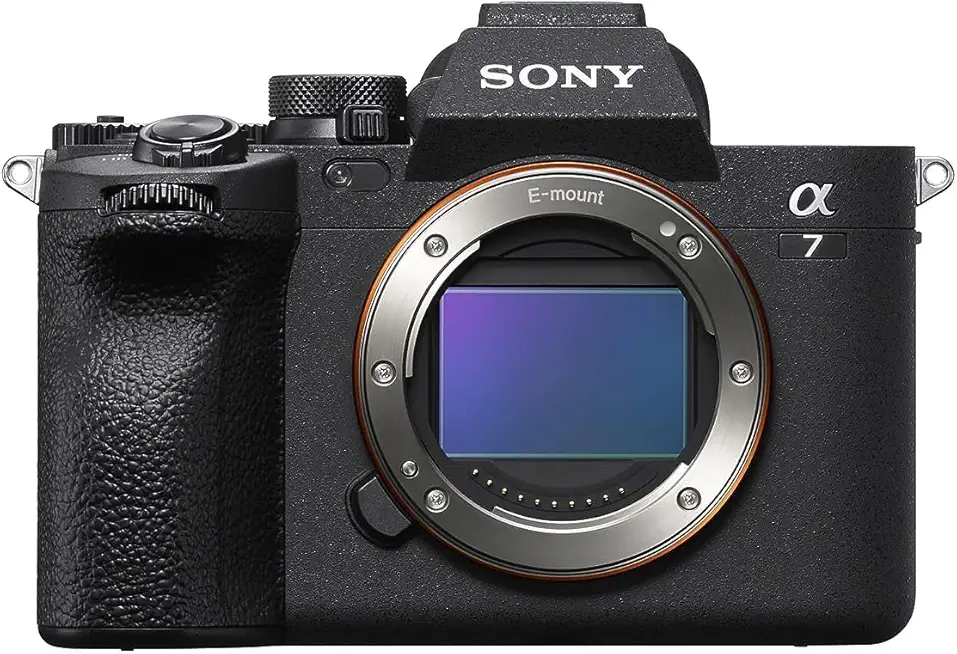
Sony Alpha 7 IV full-frame mirrorless camera
High-resolution full-frame sensor, hybrid photo/video capabilities, reliable autofocus, and versatile connectivity for creators and professionals.
Check PriceThe Sony A7 IV is my go-to recommendation for shooters who want one body that handles both stills and video well. Its 33 MP sensor delivers excellent image quality and ample dynamic range, which helps preserve highlight and shadow detail on fast-moving subjects and in contrasty stadium light.
Autofocus is reliable in real-world sports scenarios thanks to wide AF coverage and 759 phase-detection AF points, so you can trust it to keep runners, players, and cyclists locked in most of the time. The burst rate is solid for many sports, though it’s noticeably slower than the top-tier sport-focused models and will slow further when you shoot uncompressed RAW.
Build and handling are strong positives for event work: robust construction, weather sealing, and a fully articulated touchscreen make it easy to shoot from awkward angles and keep shooting in mixed conditions. Video shooters will appreciate true hybrid capability — clean 4K 60p recording with no time limits — so you can capture slow-motion replays or extended sideline coverage without interruption.
For enthusiasts and semi-pro hybrid shooters who cover a mix of action, portraits, and video, the A7 IV strikes a great balance between resolution, autofocus performance, and professional features. If your primary need is relentless high-frame-rate shooting at full raw resolution, you may notice its limits; otherwise it’s a very capable, versatile sports camera.
- 33 MP high-resolution sensor
- 759 phase-detection AF points with reliable tracking
- Weather-sealed, robust build with articulated touchscreen
- 4K 60p video with no recording limits
- Burst speed slower than pro sport models
- Slows notably when shooting uncompressed RAW
3. Sony A7S III Low Light Specialist

Sony Alpha 7S III full-frame mirrorless camera
Exceptional low-light sensitivity and cinematic video performance with high ISO, advanced stabilization, and professional video features for filmmakers.
Check PriceAs a working photographer I reach for the Sony A7S III when the lights go down or the gym is a cave. It’s built around clean high-ISO performance, which makes it exceptional for indoor and nighttime sports where other cameras start to fall apart.
The native still resolution is intentionally low at 12 MP, but that’s part of the design trade-off—Sony prioritized noise control and dynamic range at extreme ISOs over megapixels. In practice that means usable files at ISO values that would be unusable on higher-resolution bodies, so you actually get more keepers in challenging light.
Autofocus on the A7S III is reliable and fast with strong subject tracking, so it locks onto moving athletes and stays with them even when lighting is poor. That consistency is a huge advantage: fewer missed moments and less time hunting for focus.
Video shooters will love its strong video features for slow motion and cinematic capture; it truly shines as a hybrid tool if you need both stills and high-quality footage from the same body. The compact body aids mobility too, so you can move quickly along sidelines or in tight venues without fatigue.
Bottom line: if most of your assignments are indoor or night sports, or you need top-tier video with dependable AF, the A7S III is a fantastic, pragmatic choice. If you regularly need very large prints or heavy cropping, however, that 12 MP ceiling is an important limitation to accept.
- Superb low-light performance with minimal noise at very high ISO
- Excellent, fast, and reliable autofocus even at high frame rates
- Strong video features for slow motion and cinematic capture
- Compact body aids mobility
- Low resolution (12 MP) may be inadequate for large prints or heavy cropping
- Less versatile if high-resolution stills are frequently required
4. Sony A6000 Budget Sports Starter

Sony Alpha a6000 mirrorless camera with 16-50mm Power Zoom lens
Affordable, compact interchangeable-lens camera with fast autofocus and easy-to-use controls, ideal for travel, everyday shooting, and beginner photographers.
Check PriceThe Sony A6000 is over a decade old but still a genuinely useful budget sports camera for beginners and enthusiasts. It delivers decent continuous shooting speed and reliable autofocus for fast action, all at an affordable price.
Its compact, lightweight body makes it an easy choice for travel or as a secondary sports camera you can carry all day without strain.
In real-world use it captures plenty of keepers at youth games, club matches, and weekend meets. The autofocus is surprisingly capable for its class, and the continuous bursts help you catch decisive moments without needing pro-level frame rates. Battery life is another practical upside — you’ll get more shooting time than with many small compacts, so it’s better for long sessions.
Where it shows its age is in image quality and features. The older sensor and tech lag modern cameras in dynamic range and noise control, so low-light shoots and heavy post-processing are less forgiving. Video capabilities are limited, and you won’t find the more advanced features present on newer mirrorless bodies.
If you’re building skills or need an inexpensive second body for sideline work, the A6000 is mostly a smart buy. Expect solid autofocus and usable burst performance for everyday sports photography, but plan to upgrade if you move into demanding pro situations that require better ISO handling, dynamic range, or advanced features.
- Affordable and accessible for entry-level sports photographers
- Fast and reliable autofocus for its class
- Lightweight and compact
- Good battery life compared to smaller point-and-shoots
- Older sensor and tech lag modern cameras in dynamic range and noise control
- Limited video capabilities and fewer advanced features versus newer mirrorless models
5. Sony RX100 VII Pocketable Sports Zoom
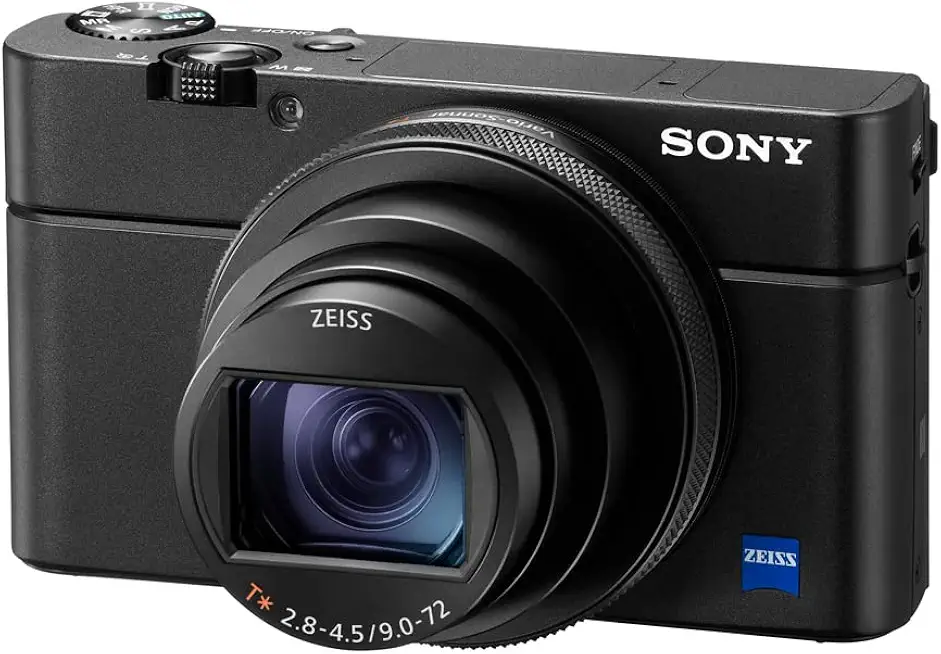
Sony RX100 VII compact camera
Premium pocket-sized travel zoom with large 1-inch sensor, versatile telephoto reach, fast autofocus, and excellent image quality for enthusiasts and vloggers.
Check PriceAs a working photographer who often shoots on the move, the Sony RX100 VII is a breath of fresh air for casual and travel sports. It’s a premium compact that balances portability with the reach you need to frame action without hauling a bag full of glass.
The built-in 24–200mm equivalent lens gives you real flexibility for distant subjects and quick reframing. That zoom range alone makes it possible to follow plays and capture reactions from the stands or sidelines.
Autofocus on the RX100 VII is impressively responsive and accurate given the 1-inch sensor. In real-world sports scenarios it tracks reasonably well and gets you usable frames fast, which is crucial when moments happen in a blink.
Image quality punches above its weight for a compact, delivering very good results for web, social, and modest prints. The camera’s built-in EVF and pop-up flash are handy extras that add compositional and exposure flexibility without extra kit.
Battery life is the main trade-off to keep in mind. For extended shoots you’ll need spares, because the RX100 VII won’t last an all-day event on a single charge.
If you want a pocketable sports-ready camera that won’t slow you down, this is an excellent choice. It’s best for photographers who prioritize mobility and versatility over the low-light performance and ultimate image quality of larger-sensor systems.
- Highly portable and pocketable with a versatile built-in zoom
- Built-in 24–200mm equivalent lens for distant subjects
- Fast, accurate autofocus suitable for tracking sports action reasonably well
- Very good image quality for a compact (1-inch sensor) + built-in EVF and pop-up flash
- Limited battery life—requires spares for extended sessions
- Smaller sensor limits low-light performance and image quality versus APS-C/full-frame
Autofocus Performance Overview
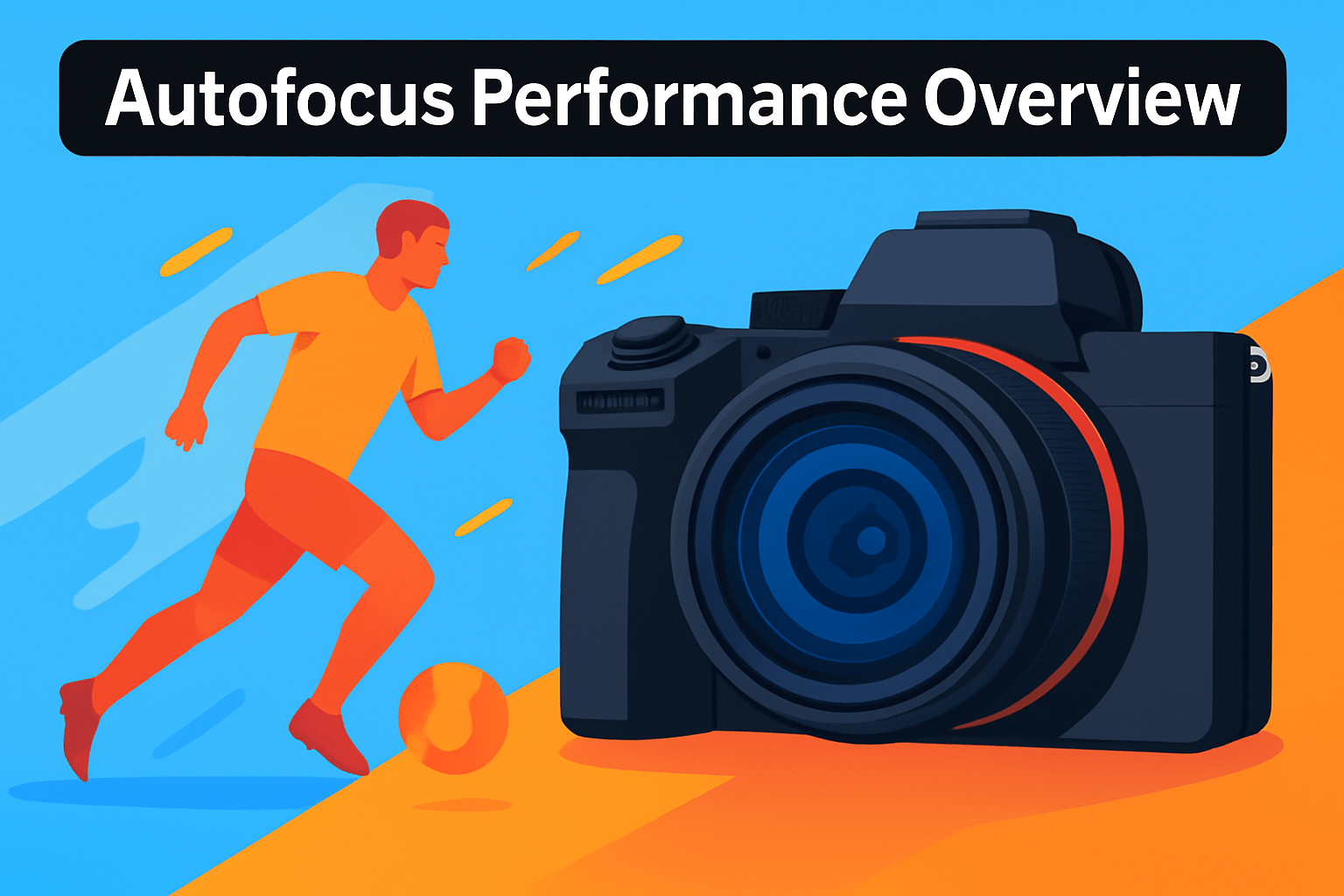
Autofocus is the quiet hero of sports photography — it’s what turns frantic moments into keepers. Modern Sony bodies bring seriously capable tracking: high-density phase-detection coverage (think hundreds of AF points across the frame) plus real-time subject recognition that lets you lock onto a runner, a helmet, or a goalkeeper and follow through the chaos.
Recent models add AI-driven improvements that really matter in the field. That predictive smarts helps the camera anticipate trajectories during fast bursts, which is why elite shooters reach for the latest A9-series bodies for pro sports. Still, no system is perfect; extremely erratic motion or very low-contrast subjects can confuse even the best AF.
Practical settings matter as much as hardware. Use continuous AF (AF-C), set a sensible AF-area mode (zone or expand rather than single-point), and try a higher tracking sensitivity when subjects are darting. Back-button AF is a simple change that gives you way more control over when the camera reacquires focus during a sequence.
Don’t forget lens selection — AF speed and consistency are influenced by the glass. Fast, native autofocus lenses with good communication to the body will yield far better results than slower third-party options, especially when paired with high-frame-rate shooting.
Low light exposes AF limits. If you shoot indoor or night sports, bodies optimized for high-ISO performance and low-light AF will be noticeably easier to work with. Also keep firmware updated; manufacturers often refine tracking and subject-detection algorithms through updates.
In short: choose a camera whose AF philosophy matches your shooting style, tune the AF-area and sensitivity for the sport you cover, and prioritize fast, reliable glass. Do that and you’ll spend less time chasing focus and more time nailing the decisive play.
Burst Rate and Shooting Speed
When I’m covering fast-paced sports, burst rate is the single feature that most often decides whether I get “the” frame. Higher frame rates simply give you more chances to catch the exact moment — a cleat hitting the ball, a split-second facial expression, or a mid-air connection. But more frames means more data, so you need a plan beyond just hitting the button.
At the top end, cameras that shoot 120 fps in silent, blackout-free modes change the game for action work. The ability to keep the viewfinder live while firing long bursts lets you track and compose between frames, and global-shutter designs remove rolling-shutter wobble and LED flicker that can ruin indoor sports sequences. Slightly lower high-end options that do 20–30 fps still deliver pro-level results for most field and court sports.
Buffer depth and card speed are everything. If your camera can do 120 fps but the buffer dumps out after a second, you’ve lost the advantage. Use fast UHS-II/CFexpress cards, pick compressed RAW or high-quality JPEGs when you need longer bursts, and pre-emptively switch settings for crunch moments rather than trying to change mid-play.
Remember to balance burst rate with shutter speed and ISO. Shooting 20–30 fps with a shutter that’s too slow just multiplies blur. For panning sports, I’ll sometimes drop frames per second to keep ISO lower and shutter faster; for split-second plays I’ll crank fps and accept higher ISO, especially under stadium lights where global-shutter benefits are obvious.
There are trade-offs: some ultra-high-speed designs limit native ISO range or require color correction in mixed lighting, while versatile hybrids may slow down when you use uncompressed RAW. Know your camera’s weak points and do a few practice sequences so you know how long you can sustain bursts and how your autofocus behaves in real scenarios.
Finally, don’t dismiss compact or budget bodies for sports practice or travel shoots. Their burst rates and AF are often surprisingly capable, and they’re great as a second camera when you need portability. Use them for warmups and training, and save the big bursts for the moments that really matter.
What People Ask Most
What Sony camera is best for sports photography?
Pick a model that prioritizes fast continuous shooting and reliable subject tracking for the kind of sport you shoot. Higher-tier, sports-focused bodies suit professional coverage while midrange models work well for enthusiasts and hybrid shooters.
Which Sony mirrorless camera is best for action and fast-moving subjects?
Choose a camera with blackout-free high-speed shooting and advanced autofocus tracking to handle unpredictable motion. Pro-oriented bodies are optimized for these tasks, while versatile hybrid models offer a balance of speed and other features.
Is the Sony A1 or A9 better for sports photography?
Both are strong choices for sports work, but they emphasize different strengths. One model leans toward top-tier continuous shooting for action specialists, while the other balances speed with higher resolution and broader versatility.
Is the Sony A7 IV good for sports photography?
Yes, it is a capable all-around choice with reliable autofocus and good image quality for many sports situations. It is less specialized for extreme burst performance compared with flagship sports bodies and can slow when using certain file formats.
Which Sony camera has the best autofocus and burst rate for sports?
Sony’s top-tier, sports-focused models offer the most advanced autofocus and the fastest continuous shooting designed for action. Those cameras are intended for professional sports shooting where tracking and frame rate are critical.
Can Sony APS-C cameras like the a6600/a6400 handle sports photography?
Yes, APS-C models can handle many sports scenarios and are a good, affordable option for beginners and travel shooters. They may be at a disadvantage in very low light and for extreme professional use compared with full-frame pro bodies.
What features should I look for in a Sony camera for sports?
Prioritize strong autofocus subject tracking, fast and reliable continuous shooting, a deep buffer with quick processing, and good low-light performance. Comfortable handling and solid battery life also matter for long shooting sessions.
Conclusion for Best Sony Sports Cameras
This roundup shows how Sony’s lineup spans elite pro bodies to compact travel-ready models, highlighting real-world strengths and where compromises appear in action photography.
The main trade-offs are clear: autofocus and burst speed often come at the expense of ISO range, resolution, or pocketability, so prioritize AF, burst performance, and low-light ability to match your shooting needs and test gear in the field when you can.
If you want to improve your skills and make better gear choices, read more on the site to build practical knowledge and sharpen your technique.
Please leave a comment with your questions or experiences — we usually reply within a few hours and welcome the conversation.





0 Comments