

Looking for the best Nikon DSLR for video that can handle everything from quick vlogs to cinematic interviews? Choosing the right body isn’t just about stills — it’s about autofocus that tracks, controls that don’t slow you down, and a build that survives real shoots.
This guide cuts through marketing fluff and evaluates five Nikon DSLR bodies spanning beginner to pro. We focus on how they perform when you actually hit record, not just on paper specs. We’ll highlight who each body is best for and which compromises are acceptable.
Our comparisons concentrate on video quality, autofocus reliability, construction, and ease of use so you can match a camera to your shooting style. We also consider handling, menus, and the practical tradeoffs that matter day-to-day. Autofocus behavior during motion and subject tracking gets special scrutiny.
Expect straightforward, real-world takeaways — whether you need a nimble entry-level rig, a hybrid workhorse, or a rugged field camera. We’ll translate features into clear recommendations so you spend your budget wisely.
We checked lenses, stabilization strategies, and everyday workflows so you’ll know what to prioritize when buying. By the end you’ll have the confidence to choose rather than guess. Read on for a concise shortlist that aligns with your needs and creative goals.
1. Nikon D780 for Video
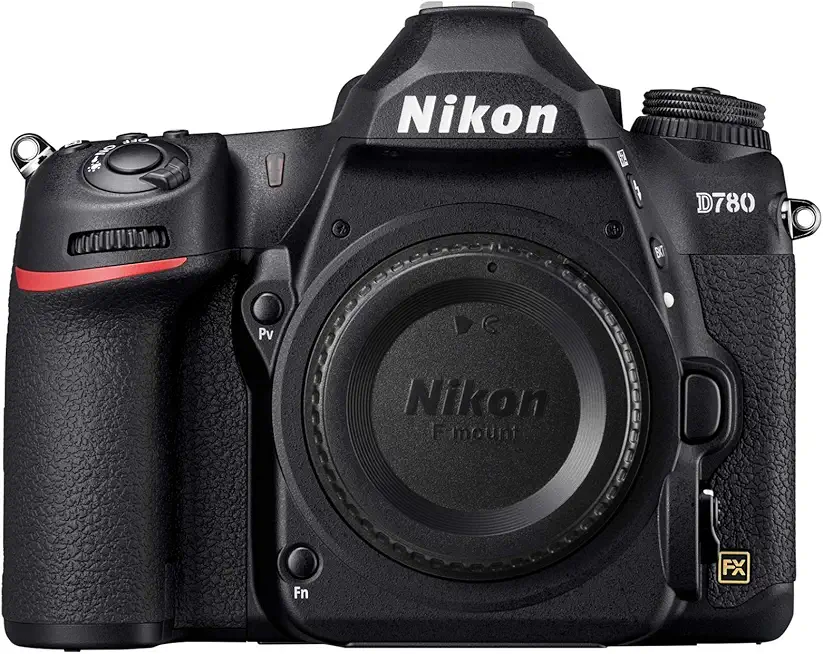
Nikon D780 Body
Versatile full-frame DSLR delivering high-resolution images, fast hybrid autofocus, impressive low-light performance, and pro-level 4K video capture.
Check PriceAs a working photographer who shoots run-and-gun interviews and longer narrative pieces, the Nikon D780 feels like a reliable workhorse. It combines mirrorless-style live-view video tech with the tactile confidence of a traditional DSLR body, which many pros appreciate.
Video-wise it covers the essentials: 4K UHD up to 30fps using the full sensor width (no crop), and Full HD 1080p at up to 120fps for clean slow motion. That full-sensor 4K is especially useful when you need the widest coverage without changing lenses.
Autofocus in live view is a standout — hybrid on-sensor AF with 273 phase-detection points and face and eye detection gives smooth, reliable subject tracking for run-and-gun shoots. Users consistently report smooth AF and excellent image quality in video, which matches my experience for documentary and corporate work.
The D780 keeps the traditional DSLR advantages: an optical viewfinder for stills, a weather-sealed magnesium-alloy body, and excellent battery life (~2260 shots per charge), so you can shoot long days without swapping batteries constantly. It’s on the heftier side, but that weight translates to a well-balanced, durable tool that handles pro workloads.
If you’re a hybrid shooter who wants mirrorless-style video AF inside a DSLR chassis, the D780 is an excellent choice. Just be aware it tops out at 30fps for 4K and is heavier than comparable mirrorless models—but for many shooters those trade-offs are worth the reliability and ergonomics.
- Full-sensor 4K up to 30fps (no crop)
- 1080p up to 120fps for slow motion
- 273-point hybrid on-sensor AF with face/eye detection
- Long battery life (~2260 shots) & weather-sealed magnesium body
- No 4K at 60fps (capped at 30fps)
- Heavier than mirrorless alternatives
2. Nikon D850 for Video

Nikon D850 Body
Ultra-high-resolution FX camera offering exceptional detail, dynamic range, fast continuous shooting, and professional durability for demanding stills and video work.
Check PriceThe Nikon D850 is a filmmaker’s DSLR if you value resolution and detail. It shoots 4K UHD at 30fps and Full HD 1080p up to 60fps, giving you clean, high-resolution footage for most documentary and commercial work.
Its 45.7MP full-frame BSI CMOS sensor delivers exceptional dynamic range and color depth. That sensor is ideal when you need extra latitude for grading or to pull stills from high-res video.
Autofocus is strong thanks to 153 AF points, 99 of them cross-type, which translates to fast and accurate subject acquisition. You also get external 4:2:2 uncompressed HDMI output for recording higher-quality footage to an external recorder.
Build quality is a major plus. The magnesium-alloy weather-sealed body feels robust and reliable in the field, and dual card slots (XQD + SD) make long shoots and instant backups much easier to manage.
Remember the limitations too. The D850 tops out at 4K 30fps, so you won’t get 60fps 4K for very smooth slow motion. The camera is also on the heavier side, which can make extended handheld runs tiring without good stabilization.
In short, if you’re a professional or serious enthusiast who prioritizes image quality, autofocus accuracy, and durability, the D850 is one of the best DSLR choices for video. It’s less ideal if you need 4K at 60fps or prefer a lightweight, run-and-gun rig.
- 4K UHD at 30fps; Full HD 1080p up to 60fps
- 45.7MP full-frame BSI CMOS sensor
- 153 AF points (99 cross-type) — excellent AF accuracy
- Dual card slots (XQD + SD) for backup/extended shooting
- No 4K at 60fps (30fps max)
- Heavier and bulkier for handheld video
3. Nikon D7500 for Video

Nikon D7500 Body
Crop-sensor performance with high-speed shooting, advanced autofocus, excellent low-light capabilities, and 4K video for enthusiast photographers.
Check PriceThe Nikon D7500 is a very capable choice if you want solid video features without moving to full‑frame. It records 4K UHD at 30fps and delivers 10‑bit output over HDMI with N‑Log, which is excellent for color grading in post.
Its 20.9MP APS‑C sensor gives you a good balance of detail and manageable files, and the camera can shoot 8fps bursts for hybrid stills/video work. The vari‑angle touchscreen is genuinely useful for run‑and‑gun video or handheld vlogging, letting you frame low and high angles with ease.
Autofocus is driven by a 51‑point system with 15 cross‑type sensors, and users report that AF in video is generally solid for most situations. That said, the AF can be slower and will occasionally hunt in low light or during fast action compared with newer mirrorless systems.
Build and ergonomics are strong points: the D7500 is weather‑sealed and feels like a professional‑grade body while remaining lighter than Nikon’s full‑frame DSLRs, so handheld shooting is less fatiguing. Battery life is reported as good, making this a practical body for longer shoots without constant battery swaps.
- 4K UHD 30fps with N‑Log 10‑bit HDMI
- Vari‑angle touchscreen for flexible framing
- Weather‑sealed, professional‑grade but lighter body
- Good continuous AF in video mode
- 4K crop factor limits widest angles
- Autofocus can hunt in low light or fast movement
4. Nikon D3500 for Video

Nikon D3500 with AF-P DX NIKKOR 18-55mm f/3.5-5.6G VR
Beginner-friendly camera kit with lightweight body and versatile 18–55mm stabilised zoom, offering simple controls and superb image quality for new photographers.
Check PriceThe Nikon D3500 is a classic beginner’s DSLR that makes diving into video work really approachable. It records Full HD 1080p up to 60fps, but it does not offer 4K video, so keep expectations realistic.
Under the hood it uses a 24.2MP APS-C CMOS sensor that delivers very clean, detailed stills and pleasing video color for its class. Autofocus in live view is contrast-detect AF (no on-sensor phase-detect) and is noticeably slower for video than more advanced systems.
Physically the D3500 is lightweight and compact, which makes long handheld takes and run-and-gun shooting comfortable. Controls are deliberately simple and it even includes a Guide mode to help beginners learn camera basics quickly.
In real-world use many new videographers praise the D3500 because it’s easy to handle and produces excellent stills image quality for an entry-level DSLR. On the video side however, users often report that the video AF is slow and sometimes frustrating, so plan to rely on manual focus for demanding shots.
If you’re starting out and want a dependable, inexpensive body to learn DSLR video, the D3500 is a very good teacher. But if you need 4K or fast, reliable continuous AF for moving subjects, this isn’t the body for those needs.
- Excellent stills image quality for an entry-level DSLR
- Very light and easy to handle
- Simple controls with Guide mode for beginners
- Long battery life vs mirrorless
- No 4K, limits future-proofing
- Slow/unreliable autofocus in video mode
5. Nikon D500 for Video

Nikon D500 Body
Pro-grade DX camera delivering lightning-fast autofocus, high-speed continuous shooting, rugged weather-sealed construction, and superb low-light performance for action photographers.
Check PriceThe Nikon D500 is a purpose-built APS-C DSLR for shooters who need speed and durability. It records 4K UHD at 30fps and Full HD up to 60fps, and it can output to an external recorder for higher-quality workflows.
At its heart is a 20.9MP APS-C sensor paired with Nikon’s flagship-grade 153-point AF system (99 cross-type). That autofocus delivers fast, reliable tracking — exactly what you want when subjects are moving at speed.
Physically the D500 is built like a tank. The weather-sealed magnesium-alloy body, substantial grip, and good battery life make it comfortable for long handheld sessions in the field.
As a working videographer you’ll appreciate how well it locks onto wildlife and sports subjects; users favour it for those exact reasons. Do remember the APS-C crop does narrow your field of view, so very wide shots will be harder to achieve than on full-frame bodies.
In short, choose the D500 if your primary need is action-orientated video with rock-solid AF and rugged handling. If you need ultra-wide framing or the lightest possible rig, those are the trade-offs — but for fast, reliable video in challenging conditions, this camera is hard to beat.
- Reliable, fast AF ideal for action video
- Robust weather-sealed magnesium-alloy body
- Comfortable ergonomics and substantial grip
- Strong 4K video capability (4K UHD 30fps; 1080p 60fps)
- APS-C sensor yields narrower field of view than full-frame
- Heavier than entry-level DSLRs
Lens Compatibility for Nikon DSLRs
Nikon’s lens ecosystem is one of its biggest strengths. The lineup splits into FX (full-frame) and DX (APS-C) optics, but both use the same F‑mount so glass is broadly interchangeable. Keep in mind that DX lenses on an FX body will vignette unless you shoot in crop mode, and FX glass on a DX body gives you a tighter field of view due to the crop factor.
For video, the type of focus drive matters as much as focal length. AF‑S lenses with the Silent Wave Motor are fast and quiet, which helps when you’re recording audio on set. AF‑P lenses use a stepping (pulse) motor and are even smoother for on‑sensor continuous autofocus, making them a great match for the D780 or D500 and other bodies with modern live view systems.
Older F‑mount lenses still have value, but check compatibility first. Some legacy lenses depend on a camera’s internal focus motor and won’t autofocus on entry‑level bodies that lack one. If you’re mixing systems or thinking of moving to mirrorless later, the FTZ/FTZ II adapter lets you use F‑mount glass on Z‑series cameras while retaining AF and VR on many lenses.
When choosing lenses for video, prioritize optical stabilization (VR) for handheld work, quiet AF for live recording, and a focal range that matches your shooting style. On full frame I often reach for an AF‑S 16‑35mm f/4 for interiors and wide B‑roll, or the 24‑120mm f/4 when I need one lens to cover interviews and medium shots. For APS‑C work, the AF‑P DX 70‑300mm is a surprisingly good, cost‑effective telephoto with quiet AF.
Don’t forget primes: a fast 50mm or 85mm instantly improves low‑light performance and gives cinematic shallow depth of field. Finally, buy lenses that balance on your chosen body. Heavy pro glass can be beautiful, but it changes how the camera handles during long handheld takes.
Budget Considerations for DSLR Video
Budgeting for DSLR video is less about the flashy newest body and more about practical choices that actually improve your footage. Decide early whether you need long-form, run-and-gun, or cine-style shooting—each pushes your budget toward different priorities like lenses, stabilization, or audio gear.
If you want the best bang-for-buck camera body from the Nikon lineup, the D7500 is a sweet spot. It gives 4K, a useful articulating screen, and solid ergonomics without the full-frame price tag, so you get video-ready features without blowing your budget on a flagship body.
Spend more on glass than on the camera body whenever possible. A versatile zoom or a sharp prime will change your image far more than upgrading to the next DSLR model; consider budget-friendly tele options like the AF-P DX 70-300mm for reach, and keep the AF-S 24-120mm or 16-35mm in mind if you need wider, more professional coverage.
When weighing cameras, focus on features that save you money long-term: in-lens or in-body stabilization reduces the need for expensive gimbals, weather sealing keeps you shooting outdoors in rough conditions, and built-in Wi‑Fi/Bluetooth speeds up workflows. These practical features often matter more than megapixel counts or headline frame rates.
Buying used or a slightly older Nikon DSLR makes a lot of sense; you can pick up robust bodies for far less and pair them with modern lenses. Don’t overlook third-party makers like Sigma — their lenses often match quality at a lower price and play nicely on Nikon F-mount bodies.
In practice, prioritize a solid lens, stabilization, and decent audio before upgrading your body. Allocate your budget where it directly affects picture and sound, check compatibility carefully, and you’ll be surprised how professional your video looks even on a mid-range DSLR.
What People Ask Most
Which Nikon DSLR is best for shooting video?
That depends on your priorities: full-frame image quality and robust feature sets favor certain models, while lighter, cropped-sensor bodies offer good action performance and value. Choose based on whether you need full-frame video, advanced autofocus, or a beginner-friendly option.
Is the Nikon D850 good for video recording?
Yes, the D850 is frequently praised for its outstanding image quality and strong video features. It is robust and well suited to demanding shoots, though it is heavier and less focused on the latest high-frame-rate 4K options.
Which Nikon DSLR is best for vlogging and YouTube videos?
The model with a vari-angle screen and reliable video features is the most practical choice for vlogging, as it simplifies framing and on-camera monitoring. Look for a body that combines an articulating display with good autofocus and handling for solo creators.
Which Nikon DSLR records 4K video?
Several of the models discussed support 4K video while one entry-level DSLR does not. If 4K capture is important, choose a model that explicitly lists 4K capability rather than the entry-level option.
What Nikon DSLR has the best autofocus for video?
Flagship and higher-tier models offer the most advanced autofocus systems and tracking for video, while midrange bodies provide solid performance and entry-level cameras have more limited video AF. Select based on how much subject tracking and speed you require for your shoots.
Which Nikon DSLR has a flip-out or vari-angle screen for video?
The enthusiast-level body with a fully articulating display is the go-to for flexible framing and vlogging. Other higher-end models may offer tilting touchscreens or fixed displays, so check the screen type when choosing for video work.
Can Nikon DSLRs compete with mirrorless cameras for video?
Nikon DSLRs remain capable video tools and some models incorporate mirrorless-style video autofocus and features while retaining DSLR ergonomics. However, mirrorless systems often lead in compactness and some newer autofocus technologies, so consider the trade-offs for your needs.
Conclusion for Best Nikon DSLR Video
This roundup was designed to help you match Nikon’s DSLR strengths to your video priorities — from autofocus and sensor size to build and ease of use — so you can pick the camera that best fits your shooting style.
Rather than one perfect body, the models here reflect trade-offs most videographers face: full-frame image quality and robustness versus APS-C agility and cost, plus the balance between advanced video AF and traditional DSLR ergonomics.
For practical decisions, the guide highlights which bodies tend to suit full-frame shooters, APS-C enthusiasts, and beginners learning the basics, so you can narrow choices without getting lost in specs.
If you want to sharpen your technique or learn workflow tips that make the most of whatever Nikon DSLR you choose, explore more articles on the site to build skills and confidence behind the camera.
Have questions or want advice on a specific shooting scenario? Leave a comment below — we usually reply within a few hours and are happy to help.



0 Comments