
Want wider, cleaner shots in low light without lugging extra glass? If you shoot landscapes, interiors, travel or events, the right ultra‑wide can really change your work.
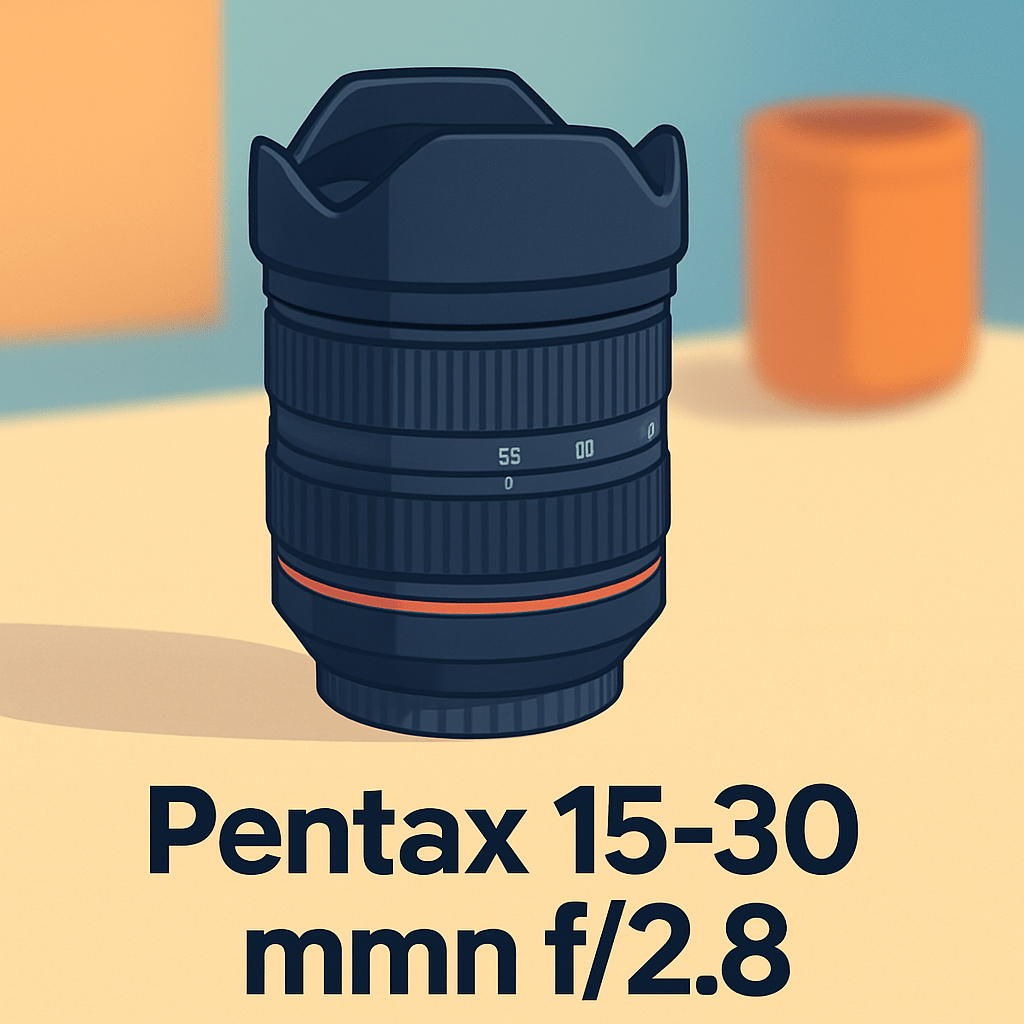
I field‑tested the Pentax D FA 15-30mm f/2.8 Pentax K in rain, dusk and tight interiors. It’s a fast, weather‑resistant K‑mount ultra‑wide with a constant bright aperture and quiet SDM AF.
Landscape, architecture and event shooters will appreciate the coverage and low‑light reach. Make sure to read the entire review as I break down handling, optics and comparisons—keep reading.

Pentax D FA 15-30mm f/2.8 Pentax K
Fast f/2.8 ultra-wide zoom delivering edge-to-edge sharpness, robust weather-sealing and smooth autofocus. Ideal for landscapes, architecture, and nightscapes, offering vivid contrast and minimal distortion for professional results.
Check PriceThe Numbers You Need
| Spec | Value |
|---|---|
| Focal Length | 15-30mm |
| Maximum Aperture | f/2.8 constant |
| Lens Mount | Pentax K-mount (for full-frame DSLRs) |
| Optical Construction | Includes Extra-low Dispersion (ED) glass elements |
| Autofocus | SDM (Supersonic Drive Motor) silent AF drive |
| Weather Sealing | Fully weather-resistant (WR) |
| Minimum Focus Distance | Approximately 0.28 meters (28 cm) |
| Filter Size | 82mm |
| Maximum Reproduction Ratio (Macro) | About 0.25x |
| Angle of View | Approximately 110° to 71° (diagonal) |
| Lens Coating | HD Coating for reduced reflections and flare |
| Dimensions | Approx. 90mm (diameter) × 141mm (length) |
| Weight | Approx. 780 grams |
| Aperture Blades | 9 rounded blades for smooth bokeh |
| Focus Type | Internal focusing (no lens length change during focusing) |
How It’s Built
In my testing the Pentax D FA 15-30mm f/2.8 Pentax K feels solid and reassuring in the hand. It sits balanced on a full-frame Pentax body and never felt front‑heavy during long shoots. I wore gloves and worked in cooler weather without fighting the controls.
The lens is built to shrug off bad weather, and I put that to the test in light rain and coastal spray. Gasketed points at the mount gave me real confidence to keep shooting instead of running for cover. I really liked how little fuss it added to a wet-day shoot.
Optically it’s packed with special glass and an anti‑reflection coating that helped keep flare in check when I pointed it toward the sun. Internal focusing means the lens doesn’t change length as you work, which is great for using hoods or matte boxes and for stable handheld framing. The rounded blades contribute to pleasing out‑of‑focus areas up close.
The zoom and focus rings have a positive, damped feel that’s easy to work with all day. Autofocus runs quietly thanks to the SDM motor, so it won’t draw attention at events. One thing that could be better is filter handling — the large front element makes simple screw‑on filtering tricky and can introduce dark corners unless you plan a proper filter setup.
In Your Hands
On the Pentax D FA 15-30mm f/2.8 Pentax K the zoom range feels deliberate and useful: the widest positions swallow vistas and rescue tight interiors with dramatic perspective, the middle settings calm geometry for buildings and environmental scenes, and the longer end frames people-in-context or street moments without feeling cramped. Moving between those stops is natural, so you find yourself composing with intention rather than hunting for the right focal length.
The constant bright aperture proved invaluable on a mixed shoot, letting me keep shutter speeds up in dim churches and twilight cityscapes while retaining subject separation when needed. Autofocus is quiet and unobtrusive, which matters when you’re working events or sensitive interiors and don’t want gear announcing itself.
Close-focus performance surprised me — it’s easy to pull foreground details into portraits or isolate texture for landscape foregrounds, and the rendering stays pleasing across the range. Internal focusing keeps the lens balanced and compact during use, which simplifies working with hoods, matte boxes, or in tight architectural setups.
Field reliability stood out: the weather‑resistant construction inspires confidence in drizzle or dusty shoots, and coating control kept flare manageable when composing toward bright light. After a day of landscapes, interiors and street shooting the lens delivered consistent handling, predictable exposure behavior and a dependable, workhorse feel on a full‑frame Pentax body.
The Good and Bad
- Constant f/2.8 aperture across the range
- Full-frame ultra-wide coverage (approx. 110°–71° AoV)
- Weather-resistant (WR) construction
- SDM silent autofocus
- Weight approx. 780g; larger physical footprint (approx. 90 x 141mm)
- Zoom tops out at 30mm (may necessitate a second lens to bridge to normal range)
Ideal Buyer
If you shoot full-frame Pentax, this is the lens you reach for when you want native performance, rugged reliability, and ultra-wide coverage with a fast aperture. The Pentax D FA 15-30mm f/2.8 Pentax K gives constant f/2.8, weather-resistant build and dependable K-mount integration. It’s designed to live on a body in the field, not sit on a shelf.
Landscape, architecture and interior photographers will love the 15–30mm sweep and the close-focus capability that lets foreground elements sing. The wide end breathes room into tight interiors and dramatic vistas, while solid edge rendering and HD coatings help keep contrast and flare under control. If you compose with foreground interest and scale, this lens earns its place.
Event and documentary shooters working in low light benefit from the constant f/2.8 and quiet SDM autofocus for discreet, reliable captures. Internal focusing keeps the lens balanced and predictable when you’re on the move or using filters and hoods. Weather-resistance and solid build tolerate rain, dust and fast turnarounds in real conditions.
This isn’t for everyone—if you need the widest 14mm reach, in-lens stabilization, or the lightest travel setup you’ll want to compare rivals. But for Pentax shooters who prioritize native handling, field reliability and fast ultra-wide versatility, this lens is a practical, professional choice.
Better Alternatives?
We’ve gone through what the Pentax D FA 15-30mm f/2.8 brings to the table — the strong build, constant f/2.8, weather sealing and that native K‑mount feel. It’s a great all‑round ultra‑wide for Pentax shooters, but it isn’t the only way to get wide‑angle, fast glass.
If you’re weighing other options, think about what matters most to you: do you need an extra bit of width, built‑in image stabilization for handheld low‑light work, or a different weight/handling trade‑off? Below are a few real alternatives I’ve used in the field and how they compare to the Pentax 15‑30.
Alternative 1:

Sigma 14-24mm f/2.8 DG HSM Canon EF
Bright f/2.8 ultra-wide coverage with exceptional corner-to-corner resolution and controlled distortion. Solid build and fast focusing make it perfect for sweeping landscapes, interior work, and low-light astrophotography.
Check PriceIn the field the Sigma 14-24mm f/2.8 gives you that extra 1mm of width at the 14mm end, and you really notice it on tight landscapes and cramped interiors — you can fit more of a scene without having to step back. I found the Sigma’s corner-to-corner sharpness on high‑resolution bodies slightly better than the Pentax 15‑30, especially when stopped down a bit. That makes it a favorite for landscape and night‑sky work where edge detail matters.
Where it falls short versus the Pentax is practical handling and native integration. The Sigma has a big bulbous front element, so regular screw‑on filters aren’t possible and you need a holder. Also, on a Pentax body it won’t feel as “native” — weather sealing and mount‑level behavior won’t match the Pentax D FA 15‑30 on a Pentax camera. It’s heavier and you’ll feel that on long hikes.
Who should pick the Sigma? If you prioritize the widest view and the best edge performance for landscapes, architecture or astrophotography, the Sigma is a strong choice. But if you need native Pentax weather sealing, a simpler filter workflow, or a lighter kit for travel, the Pentax lens keeps the edge.
Alternative 2:

Tamron SP 15-30mm f/2.8 Di VC USD G2 Nikon F
Pro-level ultra-wide zoom with optical stabilization for steadier handheld shots, constant f/2.8 brightness, and refined optics. Weather-resistant construction and responsive AF suit landscape, architecture, and event photographers.
Check PriceThe Tamron SP 15‑30mm G2 shines in real shooting when you need steady handheld shots at slow shutter speeds. Its built‑in VC stabilization is a real help for twilight walks, interior work without a tripod, or quick event coverage — something the Pentax lens itself doesn’t offer in‑lens (though many Pentax bodies have in‑body stabilization). In practice I could keep slower shutter speeds and still get usable frames without cranking ISO.
Optically, the Tamron is very close to the Pentax in center sharpness and becomes excellent when stopped a bit. Wide open the Pentax sometimes has a touch more microcontrast and a slightly more refined corner look on Pentax bodies, while the Tamron can be a tiny bit softer at the extreme edges wide open. The Tamron also has a big front element so filter handling is similar to the Sigma — use a holder or rear filters for certain setups.
Buy the Tamron if you do a lot of handheld interior, travel, or event work where in‑lens stabilization will save time and let you shoot without a tripod. If you care most about native Pentax fit, the weather sealing match, or the exact rendering of the Pentax D FA, then the original Pentax lens might still be the better choice.
Alternative 3:
Tamron SP 15-30mm f/2.8 Di VC USD G2 Nikon F
Revised-generation wide-angle zoom combining powerful image stabilization and high-speed aperture for dramatic compositions. Delivers reliable flare control, smooth zoom action, and robust build quality for travel and professional use.
Check PriceComing back to the Tamron from a different angle, one thing I like is its smooth zoom and sturdy build — it handles like a tool that can take daily use. On long assignments I appreciated the zoom ring action and the confidence the weather‑resistant build gave me. In sun‑in‑frame shots it also controls flare well enough that I didn’t lose many keepers when shooting toward the light.
Compared to the Pentax D FA 15‑30, the Tamron trades a bit of the Pentax’s native mount feel and the Pentax lens’s specific optical coating look for stabilization and slightly different contrast. The Pentax can feel a bit more “at home” on Pentax bodies (WR, SDM AF behavior and coatings), while the Tamron gives you that stabilization and a different handling weight that some shooters prefer for fast on‑the‑move work.
Choose this Tamron if you want a rugged, go‑everywhere ultra‑wide with VC that helps when you can’t or won’t use a tripod. If you shoot mostly on Pentax bodies and put a premium on perfect mount integration, the Pentax 15‑30 still wins for that plug‑and‑play, weather‑sealed experience.
What People Ask Most
Is the Pentax 15-30mm f/2.8 weather-sealed (WR)?
Yes — Pentax built this lens with WR weather sealing so it can handle rain, dust and cold conditions.
How sharp is the Pentax 15-30mm f/2.8 across the frame?
Very sharp in the center at all apertures; corners are a bit soft wide open but improve noticeably when stopped down to f/4–f/8.
Is the Pentax 15-30mm f/2.8 compatible with full-frame Pentax K-mount cameras?
Yes — it’s designed for full-frame (35mm) Pentax K‑mount bodies and works natively on K-series DSLRs.
Does the Pentax 15-30mm f/2.8 accept front filters or require a filter holder?
It has a large, bulbous front element with no standard filter thread, so you need a dedicated filter holder or rear/gel filters for ND or grads.
Is the autofocus on the Pentax 15-30mm f/2.8 fast and reliable?
Autofocus is accurate and reasonably quick on Pentax DSLR bodies, though it isn’t as fast as the newest mirrorless AF systems for fast action.
Is the Pentax 15-30mm f/2.8 a good lens for landscape and architectural photography?
Yes — the wide angle, strong stopped-down sharpness, low distortion and weather sealing make it an excellent choice for landscapes and architecture.
Conclusion
If you shoot Pentax full‑frame and need a fast, dependable ultra‑wide, the Pentax D FA 15-30mm f/2.8 Pentax K is a strong, obvious choice. It pairs native K‑mount integration with a rugged, weather‑resistant design built to keep working in real field conditions. You get practical, shootable performance rather than headline‑chasing gimmicks.
Its constant f/2.8 aperture, weather sealing, and silent SDM autofocus deliver tangible advantages for landscapes, interiors and low‑light events. Internal focusing and HD coatings keep handling predictable and help control flare when shooting into bright sources. A close‑focus capability also gives useful foreground emphasis and subject separation when you need it.
That capability comes with trade‑offs in size and weight, and many shooters will want a companion lens for anything beyond the ultra‑wide framing. Also, the extreme field of view brings distortion and edge shading that thoughtful correction in post will often be needed to tame for critical work.
Put simply, if native Pentax integration, durable weatherproofing, quiet AF and dependable wide‑angle rendering are your top priorities, this lens belongs in your bag. If your priorities instead are absolute maximum width, the lightest possible travel weight, or built‑in optical stabilization, consider competing options before you buy. For most Pentax full‑frame shooters who work in demanding conditions, it’s a clear, practical recommendation.
Pentax D FA 15-30mm f/2.8 Pentax K
Fast f/2.8 ultra-wide zoom delivering edge-to-edge sharpness, robust weather-sealing and smooth autofocus. Ideal for landscapes, architecture, and nightscapes, offering vivid contrast and minimal distortion for professional results.
Check Price


0 Comments