
Want great night shots without lugging a DSLR and a tripod?
This guide walks you through choosing the best point-and-shoot for low-light work.
We’ll help you cut through marketing claims and find a compact camera that actually performs in dim settings.
Expect real-world tradeoffs and clear buying guidance rather than jargon.
Low-light prowess usually comes down to a few key tradeoffs: sensor size, lens aperture, stabilization and portability.
Bigger sensors and faster glass help image quality, while stabilization and compactness decide how you shoot on the move.
There is no one perfect camera for every low-light task.
You may favor image quality for night street scenes or prefer a tiny body for travel and quick handheld frames.
We test and compare five standout point-and-shoots across those tradeoffs.
Along the way we’ll highlight practical buying considerations to match a camera to your shooting style.
By the end you’ll know which features truly matter in low light and which are just good marketing.
Read on to narrow choices and get a camera that makes low-light shooting less frustrating and more fun.
We’ll walk you through real-world pros and cons so you can pick a camera that fits how you actually shoot.
No fluff. Just practical advice for evenings, indoor events, and low-contrast scenes.
1. Sony RX100 VII Compact Camera
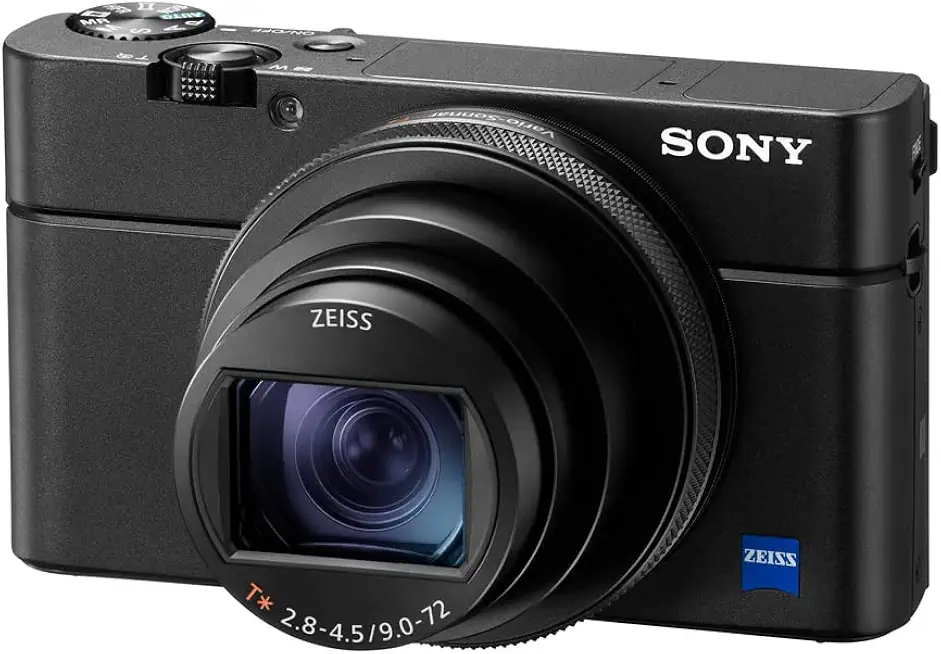
Sony RX100 VII DSC-RX100M7
Pocket-sized powerhouse with 24–200mm zoom, lightning-fast autofocus, and pro-quality 4K video—ideal for travel, action, and vlogging.
Check PriceThe Sony RX100 VII is a compact powerhouse that balances portability with speed. It packs a 20.1MP 1-inch stacked CMOS sensor and a versatile Zeiss Vario‑Sonnar T* 24–200mm f/2.8–f/4.5 lens, so you get a long zoom in a pocketable body.
Autofocus is a real highlight — 357-point phase detection plus 425-point contrast detection makes the camera fast and reliable for grabbing fleeting moments. That responsiveness, combined with a fast burst mode and strong video capabilities, makes it ideal for travel, street shooting, and vlogging.
ISO flexibility helps you work in dimmer scenes: native ISO 64–12800, expandable to 25600. In practice the RX100 VII performs well up to about ISO 1600, but expect noticeable noise and trickier RAW edits beyond that point.
The lens reach is a huge advantage for framing variety without changing bodies, and the pop-up flash is handy for fill in close quarters. At the same time the aperture range (f/2.8–f/4.5) means it can struggle in very low light compared with wider-aperture compacts or APS‑C models.
One practical quirk is the lack of a built-in viewfinder, which can make composing in bright sunlight less comfortable. Overall, if you need a fast, compact camera with exceptional autofocus and a long zoom for everyday use and video, the RX100 VII delivers — but don’t expect it to replace larger-sensor cameras for extreme low-light or clean high-ISO work.
- Excellent AF speed/accuracy (357 + 425 points)
- Compact and travel-friendly
- Fast burst mode and strong video capabilities
- 20.1MP 1-inch sensor; ISO 64–12800 (expandable to 25600)
- Lens aperture f/2.8–f/4.5 limits extreme low-light
- High ISO noise noticeable above ISO 1600
2. Sony ZV-1 Compact Camera

Sony ZV-1
Creator-focused compact delivering bright 1-inch imaging, directional mic, flip screen and effortless background defocus for polished on-the-go vlogs.
Check PriceThe Sony ZV-1 pairs a 20.1MP 1‑inch Exmor RS CMOS sensor with a Zeiss Vario‑Sonnar T* 24–70mm f/1.8–f/2.8 lens, which is a real advantage in low light. That f/1.8 maximum aperture at the wide end lets you gather more light than many pocketable compacts, giving cleaner exposures and shallower depth of field when you want subject separation.
Autofocus is fast and reliable thanks to a hybrid AF system with 315‑point phase detection, so you’ll lock onto faces or moving subjects quickly even as light drops. The ZV‑1 also offers ISO 100–12800 (expandable to 25600), so you have room to push sensitivity — but be mindful that higher ISOs will show noise in RAW files.
Where this camera really shines for creators is usability: a vari‑angle screen, built‑in directional microphone and compact, lightweight body make it genuinely vlog‑friendly straight out of the box. Image stabilization helps keep handheld shots steady at slower shutter speeds, so you can shoot in lower light without always resorting to a tripod.
In short, the ZV‑1 is an excellent pick if you want a small, easy‑to‑use camera that performs strongly in dim conditions and makes good audio a non‑issue. If you need long reach or an EVF, however, its 24–70mm range and lack of a built‑in viewfinder may feel limiting. Also expect some noise when pushing RAW at high ISOs.
- f/1.8–f/2.8 wide‑aperture Zeiss lens
- 315‑point fast hybrid AF
- Vari‑angle screen + built‑in directional mic
- Compact, lightweight with good stabilization
- Limited 24–70mm zoom range
- No built‑in viewfinder
3. Ricoh GR II Compact Camera

Kinokoo Case for Ricoh GR, GR II, GR III, GR IIIx, GR IV
Premium leather half-case offering snug fit, enhanced grip, and quick access to controls while protecting your compact camera during everyday shooting.
Check PriceThe Ricoh GR II packs a 16.2MP APS-C CMOS sensor into a very compact body paired with a 28mm f/2.8 fixed lens. That sensor size gives you noticeably better low-light headroom and dynamic range than typical 1‑inch point‑and‑shoots. Its ISO range of 100–25600 means you can push sensitivity when needed, while still retaining usable files at moderate ISOs.
In everyday use it shines for discreet street and night work. The GR II’s Snap Focus makes quick framing and spontaneous shooting easier, and the camera’s small footprint keeps you unobtrusive. Images in RAW are very editable, so you can recover highlights and shadows and tame noise during post.
There are trade-offs to accept. The 28mm fixed lens delivers a classic wide-street perspective but offers no zoom, which limits framing flexibility for distant subjects. The camera also lacks a built-in flash and video stabilization, so it’s not the best choice if you need onboard lighting or steady handheld video.
If you’re a photographer who prioritizes still-image quality, low-light street shooting and portability, the Ricoh GR II is an excellent, mostly‑single-purpose tool. It’s less suitable if you want a do‑it‑all compact with zoom reach or built-in flashes, but for image quality and discreet shooting it’s hard to beat in its class.
- Excellent image quality with good dynamic range
- Great low-light performance due to APS-C sensor
- Compact, discreet — strong for street photography
- Versatile RAW files for editing
- No zoom lens (limits versatility)
- No built-in flash
4. Panasonic LX10 (LX15 Europe/Asia) Compact Camera

Panasonic LUMIX LX10 DMC-LX10K
Bright f/1.4 lens with 1-inch sensor and 4K capture in a pocketable body—perfect for low-light portraits and cinematic travel clips.
Check PriceAs a working photographer who shoots in dim bars and candlelit dinners, the Panasonic LX10 (sold as the LX15 in Europe and Asia) is one of those compact tools I reach for when I need maximum light-gathering without lugging a larger camera. Its 24–72mm f/1.4–f/2.8 lens is the headline feature — that f/1.4 at the wide end makes a real difference in marginal light.
Inside is a 20.1MP 1-inch MOS sensor that balances detail and noise control for its size. The native ISO range of 125–12800 (expandable to 25600) gives usable flexibility; I still try to keep ISO low, but the camera holds up well at moderate ISOs thanks to the fast lens and solid processing.
In practical shooting the LX10 feels nimble. Autofocus is quick and steady, and the built-in stabilization lets me handhold slower shutter speeds more confidently. Video shooters will appreciate true 4K recording and the creative Post Focus feature for adjusting focus after the fact — a handy trick for fast-paced situations.
What I like most is the camera’s versatility: compact and lightweight for travel, yet capable enough for event work and run-and-gun low-light shooting. It’s an ideal choice if you want a pocketable camera that prioritizes aperture and responsiveness over an interchangeable-lens system.
No camera is perfect, and the LX10 has trade-offs to consider — notably the lack of a built-in viewfinder and some real-world limits on battery life. But for photographers who value a bright lens, solid AF, stabilization, and 4K in a tiny package, it’s a very persuasive option.
- f/1.4–f/2.8 lens — excellent in low light
- 20.1MP 1-inch MOS sensor
- Fast autofocus with good image stabilization
- Strong 4K video capabilities
- No built-in viewfinder
- Limited battery life
5. Fujifilm X100V Compact Camera

Fujifilm X100V
Classic-styled APS-C camera with a sharp fixed lens, hybrid viewfinder, and rich film simulations for beautiful everyday and street photography.
Check PriceThe Fujifilm X100V is a photographer’s compact that leans toward image quality over zoom flexibility. It pairs a 26.1MP APS-C X-Trans CMOS 4 sensor with a sharp 23mm f/2 fixed lens, giving you excellent files and strong low-light capability right out of the camera.
That combination—larger APS-C sensor plus an f/2 aperture—means you’ll get cleaner high‑ISO shots and good dynamic range compared with typical 1‑inch point‑and‑shoots. The native ISO range is ISO 160–12800, expandable to 51200, so you have headroom for night scenes when you need it.
The X100V also feels like a tool built for thoughtful shooting. It has a hybrid autofocus system for quicker focusing in low light, a tilting touchscreen for flexible composition, and Fujifilm’s hybrid viewfinder so you can switch between optical and electronic depending on the situation.
In practice it’s wonderful for street, travel, and low‑light work when you want great image quality without carrying a bag of lenses. Be aware it’s a fixed‑lens camera; that gives you a beautifully simple shooting experience, but it does limit framing options and contributes to a larger/heavier body and higher price point compared with simpler compacts.
- Excellent image quality and dynamic range
- Strong low‑light performance (APS‑C + f/2 lens)
- Hybrid viewfinder for flexible shooting
- Weather‑sealed, built like a pro tool
- No zoom — fixed 23mm lens
- More expensive than other compact options
Low-Light Tips for Point-and-Shoots
Low-light shooting begins with a simple mindset: find or make light. Move your subject closer to a window, streetlamp, or a practical lamp and let the available light shape the scene. Even a small shift of position can mean the difference between an unusable noisy file and a usable frame.
Open the lens as wide as your camera allows and accept the shallower depth of field that comes with it. Wider apertures — f/1.4 to f/1.8 on some compacts — are forgiving in dim scenes, while smaller apertures force you to push ISO or slow the shutter. Remember sensor size matters too; APS-C bodies generally tolerate higher ISOs better than 1-inch sensors, so frame your expectations based on the gear you have.
Stabilization is your secret weapon. Use optical or in-body stabilization whenever possible, brace against a wall, tuck your elbows, or rest the camera on a ledge. If the subject is static, don’t be afraid to use a tripod or set the camera down and use a timer to avoid shake — that lets you keep ISO low and preserve detail.
ISO is a trade-off, not a switch. Start with the lowest ISO that gives you a correct exposure for the mood you want and only raise it when you must. Shoot several frames in a burst so you increase the odds of a sharp shot, and shoot RAW if you plan to push shadows — but be mindful that RAW from small-sensor compacts can reveal more noise than their JPEGs.
Use the camera’s exposure modes to simplify life: aperture-priority for controlled depth of field, shutter-priority if motion is a concern. If autofocus hunts, switch to single-point AF or use manual focus with focus peaking if available. Always review your LCD at 100% and tweak exposure or stabilization techniques until you consistently get usable images in the light you have.
Image Stabilization in Low Light
Image stabilization is one of those features that quietly turns frustrating, soft pictures into usable ones when light is low. It compensates for camera shake by moving lens elements or the sensor, or by using software; the practical benefit is you can often shoot at noticeably slower shutter speeds handheld and still get sharp frames. Manufacturers sometimes quote “up to 5 stops” of advantage — useful as a guideline, but expect 2–3 stops in real-world mixed-light conditions.
Optical stabilization (OIS) is what I reach for for stills because it corrects motion without cropping the frame. Digital or hybrid systems can be excellent for video because they combine frame alignment with electronic smoothing, but they may crop or downsample the image in the process. If you plan to shoot handheld in dim environments, prioritize cameras with built-in stabilization; it’s a bigger practical boost than a tiny extra megapixel count.
That said, stabilization doesn’t cure everything. It combats camera shake, not subject motion. If your subject is moving, you still need a faster shutter or higher ISO. A good workflow is to open the aperture first, rely on stabilization next, and raise ISO only as a last resort to avoid excessive noise.
When stabilization is limited or absent, simple technique helps: tuck your elbows, breathe out slowly and press the shutter at the end of the exhale, or rest the camera on a ledge. Use a tripod or monopod for very slow exposures, or shoot burst frames and pick the sharpest. For night street scenes, multi-frame stacking or in-camera night modes can often beat cranking ISO.
In this lineup, the Sony ZV‑1 and Panasonic LX10 are notable for good stabilization, while the Ricoh GR II lacks video stabilization — something to consider if you shoot handheld video. Ultimately, stabilization is a practical tool that lets you trade shutter speed for cleaner files, but combine it with good technique and sensible ISO choices for best results.
What People Ask Most
What are the best point-and-shoot cameras for low light photography?
Look for cameras with larger sensors and wide-aperture lenses, as these traits consistently improve low-light capability. Choose a model that balances sensor size, lens aperture, stabilization, and portability to match your shooting needs.
Which features matter most for low light performance in point-and-shoot cameras?
Sensor size, lens aperture, and image stabilization are the primary factors that determine low-light performance. Autofocus performance, usable ISO range, and RAW file quality also play important supporting roles.
Does sensor size affect low light performance in point-and-shoot cameras?
Yes, larger sensors generally capture more light and deliver better image quality in dim conditions compared with smaller sensors. That advantage often translates to cleaner images and better dynamic range in low light.
How important is aperture for low-light point-and-shoot shooting?
Aperture is very important because wider apertures admit more light, allowing faster shutter speeds and lower ISO. Keep in mind wider apertures also produce a shallower depth of field, which affects composition.
Can point-and-shoot cameras outperform smartphones in low-light situations?
There is no single answer because performance depends on factors like sensor size, lens aperture, image stabilization, and image processing. In some situations dedicated cameras can have an advantage, while computational photography in phones can close the gap in others.
What ISO settings should I use on a point-and-shoot for low-light photography?
Aim to use the lowest ISO that achieves a correct exposure to minimize noise, and rely on stabilization and proper shutter speed when possible. If higher ISO is necessary, shoot multiple frames or use RAW where available to help with noise reduction during editing.
Are there point-and-shoot cameras specifically recommended for night photography?
Yes; cameras with larger sensors, fast (wide) lenses, and effective stabilization are typically recommended for night and low-light scenes. Look for models that prioritize image quality and low-light autofocus for the best results.
Conclusion for Best Low-Light Point-and-Shoots
Choosing the right point-and-shoot for low-light work comes down to matching each model’s strengths—sensor size, aperture, stabilization and autofocus—to your shooting style and priorities. A clear trade-off exists between portability and outright low-light performance, so weigh what matters most to you before buying.
For quick travel shots and fast AF the RX100 VII shines, vloggers and on-the-go shooters often favor the ZV-1, street and night photographers appreciate the Ricoh GR II, the LX10 is a strong pick when low-light video and compact versatility matter, and the X100V is aimed at those who want top APS-C image quality and a more deliberate shooting experience.
When deciding, prioritize stabilization and aperture for handheld low-light work, keep an eye on high-ISO behavior and autofocus speed, and consider whether a fixed focal length or zoom better fits your typical scenes. Try to handle cameras in person when possible to judge ergonomics and responsiveness under real shooting conditions.
If you want to build your skills and make smarter gear choices, keep exploring the site for practical guides, comparisons and shooting tips to improve your low-light results.
Have questions or want advice about a specific model or scenario? Leave a comment below and we usually reply within a few hours.


0 Comments