
Ready to stop taking photos that look just okay and start making images that actually tell a story? Picking the right first camera sets you up for faster learning and better results.
This guide walks beginners through Canon’s most approachable cameras and the practical choices that actually matter when you start shooting. You will get plain-language comparisons and real-world guidance so you can choose a camera that fits your goals and your budget.
We focus on usability, autofocus performance, battery life, and how easily you can expand with lenses and accessories. That way you will avoid being seduced by flashy specs you do not need.
In this review we cover five Canon models tailored for new photographers: the EOS Rebel T7, EOS M50, EOS R50, EOS RP, and EOS R10. Each pick represents a different balance of price, handling, and imaging power so you can find a match for your shooting style.
Whether you plan to document family life, start a vlog, or learn landscape and portrait work, this guide helps you narrow the field quickly. Read on to discover which Canon is the best fit for your first steps into photography.
Expect clear recommendations and friendly tips to get you shooting confidently from day one. No confusing trade-offs, just straightforward advice to match your budget and ambitions.
1. Canon EOS Rebel T7 Overview
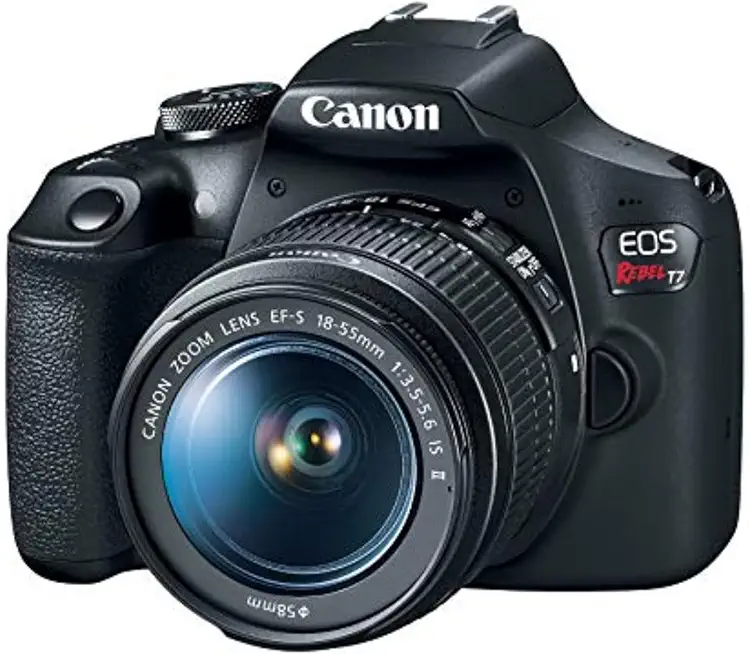
Canon EOS Rebel T7 with 18-55mm lens
User-friendly DSLR for beginners delivering sharp APS-C images, easy controls, built-in Wi-Fi, and a versatile kit lens for everyday shooting.
Check PriceThe Canon EOS Rebel T7 gives beginners a very practical entry into DSLR photography. It packs a 24.1MP APS-C CMOS sensor with a DIGIC 4+ image processor, and an ISO range of 100–6400 expandable to 12800, which is enough to deliver clean files in most daylight and moderate low-light situations. As a working photographer I find the images have pleasing detail and color straight out of camera.
Autofocus is simple but reliable for learning fundamentals — a 9-point AF system with a center cross-type point. Continuous shooting is modest at 3 fps, so it won’t chase fast action, but it’s fine for portraits, street, and family shots. The optical viewfinder provides a traditional shooting feel with 95% coverage and 0.80x magnification, while the 3.0″ LCD (920k dots) is clear though fixed and non-touch.
Video is basic yet usable: 1080p at 30/25/24 fps, which handles casual clips and tutorials but won’t satisfy 4K needs. The EF/EF-S lens mount opens up a wide range of affordable lenses, which is great for growth. Battery life is strong at roughly 500 shots per charge (CIPA), and built‑in Wi‑Fi plus NFC make image sharing and remote control easy for beginners.
If you want a straightforward, affordable DSLR that emphasizes learning exposure and composition with an optical viewfinder, the T7 is a solid choice. Be aware it’s not aimed at advanced video or cutting‑edge autofocus, but for most new photographers it’s mostly a win.
- Affordable — excellent value for beginners
- Easy to use — simple interface
- Solid battery life (~500 shots)
- Traditional DSLR experience with optical viewfinder
- Limited video — only 1080p, no 4K
- Outdated autofocus — 9-point AF
2. Canon EOS M50 Overview

Canon EOS M50 kit with EF-M 15-45mm lens
Compact mirrorless with vivid image quality, fast AF, flip touchscreen and 4K-capable video—ideal for vloggers and travel photographers.
Check PriceThe Canon EOS M50 is one of those mirrorless cameras that feels like a smart first step into interchangeable-lens photography. It pairs a 24.2MP APS-C sensor with a DIGIC 8 processor, so you get clean images and snappy performance for everyday shooting and travel.
If autofocus is important to you, the Dual Pixel AF here is excellent and makes portrait and street work far less stressful. Continuous shooting up to 10 fps (7.4 fps with AF) helps capture fleeting moments without missing the shot.
Video shooters and vloggers will appreciate the 4K video at 24 fps and the 3.0″ vari-angle touchscreen for easy framing and self-recording. The electronic viewfinder gives you a more direct composing experience than a typical compact, and built-in Wi‑Fi, NFC and Bluetooth simplify sharing and remote control.
There are trade-offs to consider. Battery life is modest at approximately 235 shots per charge (CIPA), so plan for spares on long days. Also, the body feels a bit plasticky compared with more rugged models, which might matter if you’re hard on gear.
Overall, the M50 is a great fit for beginners who want a compact, capable mirrorless camera with strong autofocus and video features. It’s especially appealing for vloggers and hobbyists who value portability without sacrificing image quality.
- Compact and lightweight
- Excellent autofocus — Dual Pixel AF
- Vari-angle touchscreen for flexible shooting angles
- 4K video capability
- Limited battery life (≈235 shots/CIPA)
- Plasticky build quality
3. Canon EOS R50 Overview

Canon EOS R50 kit with RF-S 18-45mm lens
Lightweight APS-C mirrorless offering responsive autofocus, crisp stills, smooth 4K video, and easy handling for creators on the move.
Check PriceThe Canon EOS R50 is a compact APS-C mirrorless camera built around a 24.2MP sensor and Canon’s fast DIGIC X processor. In real shooting, that sensor and processor combo delivers clean images and snappy performance for everyday use and learning photographers.
Autofocus is a highlight — Dual Pixel AF II tracks subjects smoothly and confidently. That makes the R50 excellent for beginners who want reliable autofocus for portraits, kids, or pets.
It can shoot up to 15 fps with the electronic shutter, which is great for action and fleeting moments. The camera also offers 4K video at 30 fps plus an HDR PQ mode that helps you get richer colors and easier grading in post.
Physical handling is friendly: there’s an electronic viewfinder and a 3.0″ vari-angle screen for composing at odd angles and vlogging-style framing. Connectivity via Wi‑Fi and Bluetooth simplifies image transfer and remote control, and the RF-S mount gives access to Canon’s growing lens lineup.
Be aware of a couple trade-offs. 4K uses a 1.55x crop, so you’ll lose some wide-angle field of view compared with full-frame. Also, some users report limited touch control on the screen, which can slow menu navigation if you prefer tapping rather than buttons.
- Fast 15 fps continuous shooting
- Dual Pixel AF II — reliable autofocus
- HDR PQ mode for richer video color
- Compact, portable mirrorless body
- 1.55x crop in 4K video
- No touch control on screen
4. Canon EOS RP Overview

Canon EOS RP Body Only Full-Frame
Compact full-frame mirrorless body delivering rich tonal range, lightweight build, and intuitive controls—perfect upgrade for enthusiasts seeking professional image quality.
Check PriceThe Canon EOS RP brings full-frame quality into a truly beginner-friendly package, packing a 26.2MP full-frame CMOS sensor and DIGIC 8 processor into a compact, lightweight body. That sensor combined with an ISO range of 100–40000 (expandable to 102400) means you’ll get cleaner images in low light and more latitude when editing RAW files.
Autofocus is dependable thanks to Canon’s Dual Pixel AF, making it easier to nail focus on moving subjects and get sharp portraits without fighting the camera. Continuous shooting is modest at 5 fps (4 fps with AF), which is fine for ordinary action and everyday street shooting.
The vari-angle 3.0″ touchscreen and electronic viewfinder give you flexible composition options for vlogging, portraits, and awkward-angle shots. For video the RP shoots 4K at 24 fps, but be aware there’s a 1.6x crop in 4K — it’s usable for cinematic clips, but you’ll lose some field of view versus full-frame stills.
Battery life is around 250 shots per charge (CIPA), so plan to carry a spare battery if you’re out all day. Connectivity is modern with Wi‑Fi, NFC and Bluetooth, and the Canon RF lens mount sets you up to grow into Canon’s newer lens lineup as you develop your skills.
Overall, the EOS RP is a great stepping stone into full-frame photography for beginners who value image quality, portability, and easy-to-use autofocus, provided you can live with the cropped 4K video and moderate battery life.
- Full-frame 26.2MP — excellent image quality
- Compact and lightweight body
- Vari-angle 3.0″ touchscreen
- Affordable full-frame option
- 1.6x crop in 4K video
- Battery life ~250 shots — needs a spare
5. Canon EOS R10 Overview

Canon EOS R10 Body Only
High-speed APS-C mirrorless body with advanced autofocus, rapid burst shooting, and compact design—built for action, sports, and hybrid creators.
Check PriceThe Canon EOS R10 is a compact, modern mirrorless body that pairs a 24.2MP APS-C CMOS sensor with the DIGIC X image processor to deliver image quality and speed that beginners will appreciate. ISO 100–32000 (expandable to 51200) gives you usable flexibility for daylight through low-light shooting without overwhelming complexity.
What really stands out is the Dual Pixel AF II system; it’s fast and reliable for keeping subjects sharp, which removes a lot of stress when you’re still learning composition and timing. Combined with up to 15 fps continuous shooting (electronic shutter), the R10 makes it easy to capture decisive moments in action or everyday life.
For videography the R10 offers 4K video at 30 fps and, importantly, supports 4K without a significant crop, so framing remains intuitive and consistent with stills. The 3.0″ vari-angle touchscreen plus an electronic viewfinder give you flexible shooting angles and a clear preview of exposure and focus, useful when experimenting with different styles.
Connectivity is straightforward with built-in Wi‑Fi and Bluetooth, so getting images off the camera and onto your phone or computer is painless for social sharing or quick edits. The Canon RF-S mount also places you in a modern, expandable system designed for mirrorless workflows.
There are a couple of caveats: some users note the sensor feels a step behind the very newest designs, and touchscreen functionality is more limited than on some rivals. Still, for many beginners the R10 balances performance, portability, and price very well.
- Fast autofocus — Dual Pixel AF II
- Compact design for portability
- Good video capabilities — supports 4K without significant crop
- Affordable with modern features
- Older sensor technology
- Limited touchscreen functionality
Why Choose Canon as a Beginner
When you’re just starting out, the last thing you want is a camera that fights you. Canon’s menus and guided modes are designed to teach as you shoot — features like Creative Assist translate complicated terms into simple sliders so you can see how exposure, color, and background blur interact in real time.
Autofocus that works reliably takes a huge load off learning. Canon’s Dual Pixel AF (and its newer iterations) nails eye detection and subject tracking, which means more keepers when you’re shooting moving kids, pets, or street scenes and less time wrestling with focus settings.
Another big plus is the variety. Canon offers everything from traditional DSLRs with optical viewfinders to compact mirrorless bodies, so you can pick a style that feels right without sacrificing growth potential. That same variety gives you a clear upgrade path — lenses and accessories you buy today will often still be useful when you move up.
Speaking of lenses, Canon’s ecosystem is one of the strongest. RF and EF mounts cover modern glass and a massive used market of affordable legacy lenses, so you can experiment with primes, zooms, and specialty optics without breaking the bank.
Practical tools also matter. Built-in Wi‑Fi, Bluetooth, and remote control make reviewing and sharing images quick, while Canon’s large user base means tutorials, forums, and local groups are just a search away when you need help.
My advice: pick a camera that encourages shooting, not fiddling. Choose a body with good autofocus and a versatile kit lens, spend your budget on glass rather than chasing high-end body specs, and lean on Canon’s guided tools and community to build confidence fast.
Budget Tips for Your First Canon Camera
When you’re shopping on a budget, think of your first Canon as a learning tool, not a statement piece. Prioritize a camera with clear guided modes, reliable autofocus, and a form factor you’ll enjoy holding for long shoots. Those features teach you more than raw specs ever will.
Used or slightly older models often give the best value. The EOS Rebel SL3 and similar generation bodies are great examples: modern enough to learn on, but cheap enough that you won’t panic about a few scratches. When buying used, check shutter count, sensor cleanliness, and whether the seller offers a short return window or warranty.
Buy the kit lens that lets you shoot everything from landscapes to portraits. A standard 18–55mm is light and sharp; an RF-S 18–150mm covers far more situations and saves you buying extra glass right away. Good glass expands your possibilities more than upgrading the body.
Think system, not just body. Consider lens mount choices (EF/EF‑S vs RF/RF‑S) and whether you’ll want to adapt older lenses later. Investing in a couple of quality lenses over time beats chasing the newest camera body.
Factor in small but essential extras: a spare battery, a couple of fast SD cards, a comfy strap, and a modest weatherproof bag. These cost little but massively reduce interruptions and frustration during shoots.
Finally, don’t shy from rentals or local camera shops. Rent a lens or two to test focal lengths and handling before you buy. Learning on gear that feels right to your hands will speed up your progress more than any spec-sheet comparison.
What People Ask Most
What is the best Canon camera for beginners?
The best choice depends on your budget, preferred shooting style, and whether you want DSLR or mirrorless. Pick a model with a simple interface, reliable autofocus, and access to a range of lenses to support learning.
Which Canon DSLR is best for beginners?
Look for an entry-level DSLR that offers an easy-to-navigate menu system and an optical viewfinder if you prefer a traditional shooting experience. These models typically balance usability with the ability to learn manual controls comfortably.
Which Canon mirrorless camera is best for beginners?
Choose a compact mirrorless body with responsive autofocus and a user-friendly layout, especially if portability or video use is important. Mirrorless cameras often include modern features that help beginners experiment and grow.
What Canon EOS model is recommended for beginners?
A recommended model matches your shooting goals and plans for future lens or accessory upgrades. Favor cameras noted for straightforward controls, dependable autofocus, and a broad lens ecosystem to expand into.
Is the Canon EOS Rebel series good for beginners?
Yes, the Rebel series is well suited to beginners thanks to its approachable interface and traditional DSLR ergonomics. It’s a solid option for learning exposure, composition, and lens interchangeability without complexity.
What features should a beginner look for in a Canon camera?
Seek easy-to-use controls, dependable autofocus, good battery life, and an accessible range of lenses to support varied shooting. Features like a vari-angle screen and built-in connectivity can also make learning and sharing easier.
Can beginners learn photography with a Canon entry-level camera?
Absolutely — entry-level Canon cameras are designed to teach core photography skills while remaining forgiving for newcomers. With practice and good learning resources, they can help you progress to more advanced techniques.
Conclusion for Best Canon Beginner Cameras
To recap, the guide narrowed five strong beginner options: the EOS Rebel T7 for a budget-friendly DSLR experience, the M50 for compact mirrorless and vlogging needs, the R50 and R10 for fast autofocus and modern video-friendly mirrorless shooting, and the RP as an accessible full-frame stepping stone.
Each model suits different shooting styles, so prioritize which features matter most to you—whether that’s an optical viewfinder, portability, autofocus speed, or full-frame image quality.
Whenever possible, try cameras in hand or rent them for a day to confirm ergonomics and expandability match your plans for lenses and accessories.
Canon’s approachable systems and broad lens ecosystem make it easy to grow, and the right beginner camera should help you focus on learning fundamentals rather than chasing specs.
If you want to build your skills, read more of our site’s articles for practical tips and step-by-step guidance to help you improve quickly.
Have questions or want personalized advice? Leave a comment below and we usually reply within a few hours.


0 Comments