
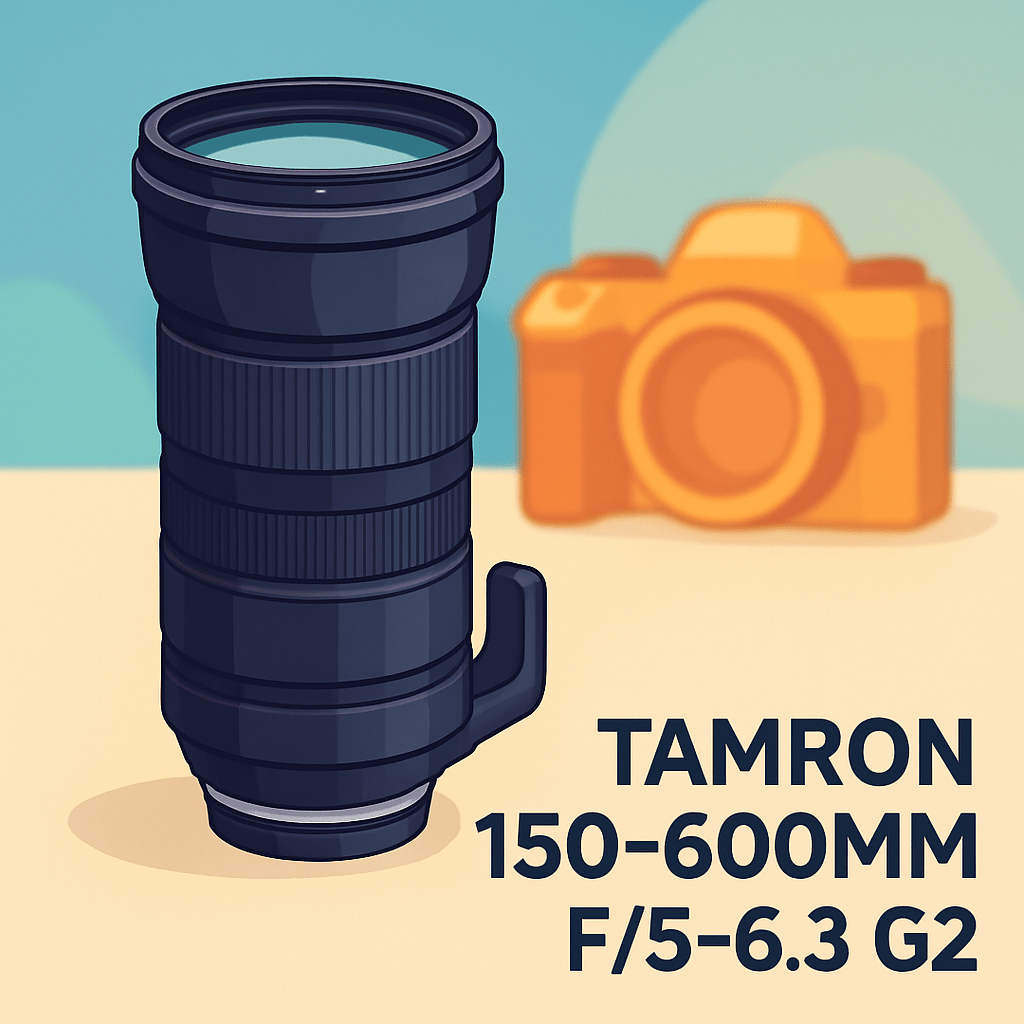
Want to add serious reach to your kit for birds, wildlife, or airshows without blowing your budget?
The Tamron SP 150-600mm F/5-6.3 G2 Nikon is billed as a second-generation super-telephoto that aims to deliver reach, better stabilization, and snappier autofocus for field work.
I pushed the G2 on Nikon F‑mount bodies in handheld and supported situations to see how those promises translate to real shoots; you’ll get long reach and useful stabilization, with trade-offs in weight and low‑light speed.
This hands-on review walks through handling, sharpness, AF behavior, and real-world results so you can decide if it’s right for your wildlife or sports work — keep reading.

Tamron SP 150-600mm F/5-6.3 G2 Nikon
Professional-grade super-telephoto zoom offering refined optics, fast, accurate autofocus, built-in vibration reduction, durable weather-sealed construction, and ergonomic controls—ideal for wildlife, aviation, and sports shooters seeking long-range versatility.
Check PriceThe Numbers You Need
| Spec | Value |
|---|---|
| Lens type | Super-telephoto zoom |
| Focal length | 150-600mm |
| Maximum aperture | f/5-6.3 |
| Sensor format compatibility | Full-frame and APS-C DSLR |
| Optical stabilization | VC (Vibration Compensation) |
| Image stabilization effectiveness | Up to 4 stops |
| Autofocus motor | USD (Ultrasonic Silent Drive) |
| Minimum focus distance | Approx. 2.7 m (varies slightly by source) |
| Filter size | 95 mm |
| Maximum magnification ratio | Approx. 1:3.1 (0.31x) |
| Lens construction | 20 elements in 13 groups |
| Diaphragm blades | 9 (rounded) |
| Weight | Approx. 1,945 g |
| Lens mount | Canon EF, Nikon F (varies by model version) |
| Weather-sealing | Moisture-resistant construction |
How It’s Built
In my testing with a Nikon F‑mount DSLR the Tamron SP 150-600mm F/5-6.3 G2 Nikon feels like a true long‑reach tool built for follow‑me outings in the field. It’s clearly a second‑generation design aimed at full‑frame and APS‑C shooters who want big reach without swapping lenses. That intent shows in the way it sits on the camera and how it behaves when you handhold or mount it.
The build feels solid and weather‑resistant, so I wasn’t afraid to shoot in drizzle or dusty conditions. Internal focusing and zooming mean the front element doesn’t flop around, which keeps the balance steady and saves you from constantly cleaning the glass. What I really liked was that confidence in poor weather — it lets you keep shooting when others are packing up.
After using it for a while the weight becomes obvious, and that’s the one area that could be better. Handheld work gets tiring fast, so a monopod or tripod collar is your friend for long sessions. On a monopod the lens balances surprisingly well, but expect to lean on support for marathon outings.
For beginners the simple takeaway is this: the Tamron’s strong build and internal mechanics make it user‑friendly, but plan for the heft. I found the Nikon mount version fitted perfectly and behaved reliably on my bodies, so mounting and handling are worry‑free from the start.
In Your Hands
In the field the Tamron SP 150-600mm F/5-6.3 G2 Nikon’s stabilization is immediately apparent — it lets you push slower shutter speeds handheld with far fewer blurred frames, so perched birds and slow-moving subjects are far easier to capture without support. Panning across skittish targets also feels more forgiving, turning otherwise dicey flight sequences into usable keeps.
Autofocus with the G2’s ultrasonic drive is fast and discreet, and subject acquisition is consistently quick on steady, contrasty targets; tracking erratic birds and field-sport athletes is noticeably improved versus older designs. In lower light or on very small, fast-moving subjects the lens can occasionally hunt, but keeper rates across bursts are solid when paired with a responsive Nikon body.
The 150–600mm reach gives real-world flexibility — I found myself using the long end when distance demanded it, but the mid-range often covered most scenes with less effort. Close-focus capability is useful for larger wildlife and portraits of distant subjects, though it won’t replace a macro setup for tiny birds or insects.
Heavy and substantial, the lens rewards photographers who accept a bit of bulk for reach: straps or a monopod ease long walks, while a tripod brings the most comfort for long sessions. On full-frame bodies you get the classic long-lens look and handling, while crop bodies effectively extend that reach at the cost of some low-light headroom and shallower AF margins.
The Good and Bad
- 150–600mm reach for wildlife and sports
- VC stabilization rated up to 4 stops
- USD AF: fast, quiet, improved tracking
- Improved second-generation optics
- Heavy and bulky (approx. 1,945 g; 95 mm filters)
- Variable maximum aperture (f/5–6.3) versus constant-aperture competitors
Ideal Buyer
The Tamron SP 150-600mm F/5-6.3 G2 Nikon is built for photographers who need long reach without a huge price tag. It’s ideal for Nikon F‑mount shooters focused on wildlife, birding, aviation and distant field sports, and for those who often shoot at a distance and need flexible framing. Full‑frame users get the full effect, while APS‑C shooters gain extra reach for skittish subjects and finer framing in the crop.
Buyers who value effective VC and confident USD autofocus tracking will love what it delivers in the field. Expect good handheld performance if you accept the lens’ near‑2‑kg heft and use straps, a monopod or short support stints, and pair it with a capable Nikon body and steady technique to raise keeper rates. The moisture‑resistant construction also makes it a natural choice for outdoor, all‑weather outings.
This is not the lens for close‑up macro work, ultra‑light travel setups, or shooters who insist on a constant fast aperture. If weight is a dealbreaker, consider the Sigma 150‑600mm Contemporary; if you need pro‑level build and don’t mind extra mass try the Sigma Sports, or if you want slightly better balance and a constant f/5.6 look at Nikon’s 200‑500mm.
Better Alternatives?
We’ve gone through the Tamron 150-600mm G2 and what it brings to the field — great reach, solid stabilization, and reliable AF for wildlife and sports. It’s a strong, all-around tool, but it’s not the only way to get long reach and there are real trade-offs in weight, handling, and price that might make you look around.
Below are three lenses I’ve used in the field that you’ll see offered as alternatives. I’ve shot birds, airplanes, and distant sports with each, so I’ll point out what they do better and where the Tamron still wins. That should help you pick the one that fits how you actually shoot.
Alternative 1:

Sigma 150-600mm F/5-6.3 Contemporary Nikon
Compact super-telephoto zoom engineered for portability, delivering sharp optics, steady stabilization, responsive AF, and a balanced tripod collar—perfect for weekend wildlife and sports photographers on a budget.
Check PriceThe Sigma Contemporary is the lighter, more compact option I reach for when I’m hiking or traveling. In the field it feels noticeably easier to carry for hours, and I can handhold it longer than the Tamron before my shoulders start to complain. For day-long walks or trips where every ounce matters, that compactness is a real advantage.
Compared to the Tamron G2, the Contemporary is a bit softer at the very long end in some situations — I’ve had to stop down more to match the Tamron’s sharpness at 600mm for picky crops. Its AF and stabilization work well for casual birding and sports, but on fast sequences the Tamron’s AF tracking gave me a higher keeper rate on my Nikon bodies. On the other hand, the Sigma’s stabilization and lighter balance often let me get shots handheld in places where the Tamron felt like it wanted a monopod.
This lens is for the photographer who values portability and price over the absolute best long-end sharpness and the quickest AF. If you do a lot of hiking, travel, or weekend birding and you want 600mm without hauling a heavy rig, the Contemporary is a smart, practical pick.
Alternative 2:
Sigma 150-600mm F/5-6.3 Contemporary Nikon
Versatile long-range zoom with lightweight construction, effective image stabilization, smooth zoom action, and reliable focusing performance—designed to capture distant subjects without breaking the bank or weighing you down.
Check PriceUsed as a daily carry for casual shooters, this Sigma strikes a good balance between reach and ease of use. In real shoots I liked the smooth zoom action and how the lens felt when panning across fields or following birds in flight — it’s more nimble than the Tamron because of that lower weight and friendlier balance on a lighter camera.
When comparing to the Tamron G2, the Sigma can fall short in heavy action situations. I’ve found the Tamron locks focus slightly quicker and keeps better contact on fast, erratic subjects. But the Sigma’s stabilization is reliable and its steady behavior makes it easier to get sharp shots when I’m on the move or switching quickly between handheld and monopod.
If you’re budget-conscious and need a long zoom that’s easy to handle day-to-day, this Sigma is appealing. It’s a good fit for hobbyists, travel shooters, and weekend wildlife photographers who want 600mm without the fatigue and cost of a heavier pro lens.
Alternative 3:
Sigma 150-600mm F/5-6.3 Contemporary Nikon
Affordable, travel-friendly telephoto zoom combining solid optical performance, compact design, and steady shooting support—great for birding, travel, and casual sports photography where mobility matters most.
Check PriceOn longer trips where airline weight limits or long hikes matter, I often reach for this Sigma because it packs down easier and costs less to replace if something goes wrong. In real use it gives you most of the same opportunities as the Tamron — you can get good bird-in-flight and distant sports shots — but you’ll trade a touch of ultimate resolution and low-light AF snappiness.
Compared to the Tamron SP 150-600 G2, this Sigma is usually kinder on your back and your wallet, but slightly trailing in edge sharpness and aggressive AF tracking. I’ve pushed both lenses hard, and the Tamron more often delivered cleaner results on tight crops and fast action. Still, the Sigma’s overall image quality is very usable and its lighter feel makes it possible to keep shooting longer without a tripod.
Choose this Sigma if you’re a traveler, casual birder, or weekend photographer who values mobility and cost-effectiveness. If your shoots rarely demand pixel-peeping at 600mm or you often hike to reach your subjects, it will likely suit you better than the heavier Tamron.
What People Ask Most
Is the Tamron 150-600mm f/5-6.3 G2 worth buying?
Yes — it’s excellent value for long-reach wildlife and bird photographers who want strong performance without the cost of super-tele primes.
How sharp is the Tamron 150-600mm f/5-6.3 G2?
Very sharp in the center and noticeably better when stopped down, with good overall resolution for a super-tele zoom.
Is the Tamron 150-600mm f/5-6.3 G2 good for bird and wildlife photography?
Yes — the focal range, reliable AF and VC make it a practical, versatile choice for birds and general wildlife work.
Does the Tamron 150-600mm f/5-6.3 G2 have image stabilization (VC)?
Yes — it features Tamron’s VC (vibration compensation), which is effective and lets you handhold at slower shutter speeds than without it.
How much does the Tamron 150-600mm f/5-6.3 G2 weigh?
About 1.95 kg (around 4.3 lb), depending on the camera mount, so it’s hefty but manageable with a monopod or gimbal head.
Is the Tamron 150-600mm f/5-6.3 G2 weather-sealed?
Yes — it has moisture-resistant construction and a fluorine-coated front element, making it suitable for use in light rain and dusty conditions.
Conclusion
The Tamron SP 150-600mm F/5-6.3 G2 Nikon is a long‑reach, field-ready super‑telephoto that delivers the kind of reach and image quality wildlife and aviation shooters need. Its improved optics, effective stabilization, and fast, quiet autofocus make it a dependable tool for capturing distant subjects in messy real‑world conditions. Weather resistance and refined handling mean I could trust it in unpredictable light and locations.
Those strengths come with compromises that matter in day‑long outings. It’s a substantial lens that rewards support and good carrying technique, and the variable maximum aperture and limited close‑focus capability keep it from being a universal walkaround lens. If you dislike carrying bulk or need a lens that doubles as a short‑range macro alternative, this is not the right single‑lens solution.
For Nikon F shooters who prioritize reach, solid stabilization, and reliable AF, the Tamron is one of the most pragmatic long‑range buys on the market. If portability, extreme ruggedness, or a constant‑aperture habit are higher priorities, consider the lighter Sigma Contemporary, the more armored Sigma Sports, or Nikon’s different 200–500 option. Overall, the Tamron SP 150-600mm F/5-6.3 G2 Nikon rewards photographers willing to manage its heft with consistent, professional results at distances where other lenses simply can’t go.
Tamron SP 150-600mm F/5-6.3 G2 Nikon
Professional-grade super-telephoto zoom offering refined optics, fast, accurate autofocus, built-in vibration reduction, durable weather-sealed construction, and ergonomic controls—ideal for wildlife, aviation, and sports shooters seeking long-range versatility.
Check Price

0 Comments