
Which camera will actually make you pick it up on the weekends and want to shoot more—without breaking the bank or weighing you down?
With so many models, formats, and marketing buzzwords, choosing the best camera for hobby photography can feel overwhelming. You don’t need a spec sheet to tell you what feels right in your hands.
Good gear should disappear when you’re shooting, not get in the way. That means balancing image quality, autofocus reliability, lens choices, stabilization, ergonomics, and price to match how and where you like to shoot.
No single camera suits every enthusiast; travel shooters prize lightness, while landscape lovers chase dynamic range and resolution. Street photographers favor compact, quiet bodies and fast primes, and hybrid shooters want strong video as well as stills. Your ideal pick is about trade-offs, not checklists.
This guide strips away technical clutter and focuses on real-world performance, handling, and the kinds of images you’ll actually make. Read on to find clear, practical advice that helps you choose the best camera for hobby photography that fits your eye and your lifestyle.
1. Fujifilm X-T5 For Enthusiasts

Fujifilm X-T5 Mirrorless Camera Body
High-resolution sensor with iconic film-inspired color, built-in stabilization, and fast autofocus for stunning stills and cinematic video.
Check PriceThe Fujifilm X-T5 is a flagship APS-C mirrorless with a tactile, retro-inspired design and a 40MP sensor that really changes what you can do with an APS-C body. As a photographer I find that resolution translates to noticeably cleaner crops and larger printable images without jumping to full-frame.
Image quality is the headline here: the 40MP APS-C sensor resolves fine detail and gives you extra freedom when composing on the move. That makes it an excellent tool for landscape and travel work where I often need to crop for stronger composition after the fact.
What I love in day-to-day use are the hands-on controls — physical dials for ISO, shutter speed, and exposure compensation speed up decision-making on the street. Those tactile controls keep you in the moment instead of buried in menus.
Portability is another big plus: the body is lightweight at 557g with battery, so you can comfortably carry it all day. It also benefits from a robust X-mount lens ecosystem, which gives you plenty of native lens choices as your needs evolve.
No camera is perfect: expect noisier results at high ISOs compared to full-frame cameras, so push ISO cautiously in dim light. The EVF is sharp, but it’s smaller and lower resolution than some rivals, which might bother photographers used to larger electronic finders.
Overall, the X-T5 is aimed at enthusiasts who want tactile controls and high image quality without full-frame bulk — particularly strong for travel, street, and landscape shooters who value image detail and a streamlined shooting experience.
- 40MP APS-C sensor — great detail and cropping
- Physical dials for ISO, shutter speed, exposure compensation
- Lightweight body (557g with battery) for all-day use
- Strong X-mount lens ecosystem
- Noisier at high ISOs vs full-frame
- EVF smaller and lower resolution than some rivals
2. Panasonic Lumix S5II/S5IIX For Hybrid Shooters

Panasonic LUMIX S5II Full-Frame Mirrorless Camera Body
Compact full-frame hybrid with class-leading video capabilities, reliable autofocus, and impressive low-light performance for creators and pros.
Check PriceThe Panasonic Lumix S5II / S5IIX is a compact but capable full-frame hybrid that punches above its price. It’s lauded for value, color science, and a genuinely useful IBIS system, making it an underrated option for hobbyists who want both stills and video without breaking the bank.
If you often shoot handheld or in mixed lighting, the best-in-class IBIS really changes the game — you get sharp shots at slower shutter speeds and steadier handheld footage. The camera’s hybrid performance pairs reliable phase-detect AF with options for high-quality 6K video, so it’s a great fit if you want one body to handle family photos, travel, and vlogs.
One of the things I appreciate is the pleasing, natural colors straight out of camera; you’ll spend less time chasing skin tones or landscapes in post. Ergonomically it’s simple and effective — a modern, minimalist layout that helps you focus on shooting rather than fighting menus, which is refreshing for hobbyists who prefer straightforward handling.
There are trade-offs to consider. The L-mount ecosystem is growing but still lags behind Canon, Sony, and Nikon, so lens choices require more planning. It’s also a bit heavier than APS‑C rivals at 740g with battery. Overall, though, if you want full-frame quality, rock-solid stabilization, and excellent color at a reasonable price — and you accept a somewhat limited (but expanding) lens pool — the S5II/S5IIX is one of the best hobbyist hybrid bodies you can buy.
- Best-in-class IBIS
- Phase-detect AF + 6K video
- Pleasing, natural colors
- Modern, minimalist layout
- L-mount ecosystem still limited
- Weight: 740g with battery
3. Nikon Z6 III For Advanced Hobbyists

Nikon Z6 III Full-Frame Mirrorless Camera
Versatile high-speed full-frame performer delivering exceptional low-light sensitivity, responsive autofocus, and durable ergonomics for demanding photo and video work.
Check PriceThe Nikon Z6 III is a feature-packed full-frame mirrorless that feels built for serious hobbyists. Positioned as a more affordable alternative to Nikon’s flagship Z8, it delivers pro-level handling and performance without pushing you fully into pro territory.
Autofocus is a standout—fast and accurate with advanced subject detection that makes tracking moving subjects far less stressful. The rugged construction and comfortable grip mean you can shoot longer sessions without battling fatigue.
I appreciate Nikon’s color science here: natural, vivid colors straight out of the camera that often need minimal editing, which speeds up workflow. It’s also a true hybrid body—capable in both stills and video with robust video specs, so it suits photographers who also dabble in moving images.
There are trade-offs to consider. It only has one SD slot and one CFexpress slot, which may worry shooters who want instant card redundancy. The body is on the heavier side at 750g with battery, so it’s less ideal if you want an ultra-compact setup for travel or long walks.
In short, the Z6 III is an excellent step-up camera for advanced hobbyists upgrading from entry-level or older DSLRs. If you value Nikon ergonomics, excellent AF, strong color straight from the camera, and the ability to shoot both stills and video well, this camera will serve you very nicely.
- Fast, accurate AF with advanced subject detection
- Rugged construction and comfortable grip
- Natural, vivid colors that require minimal editing
- Capable in both stills and video with robust video specs
- Only one SD slot and one CFexpress slot
- Weight: 750g with battery — heavy for all-day carry
4. Sony A7 IV For Hybrid Creators
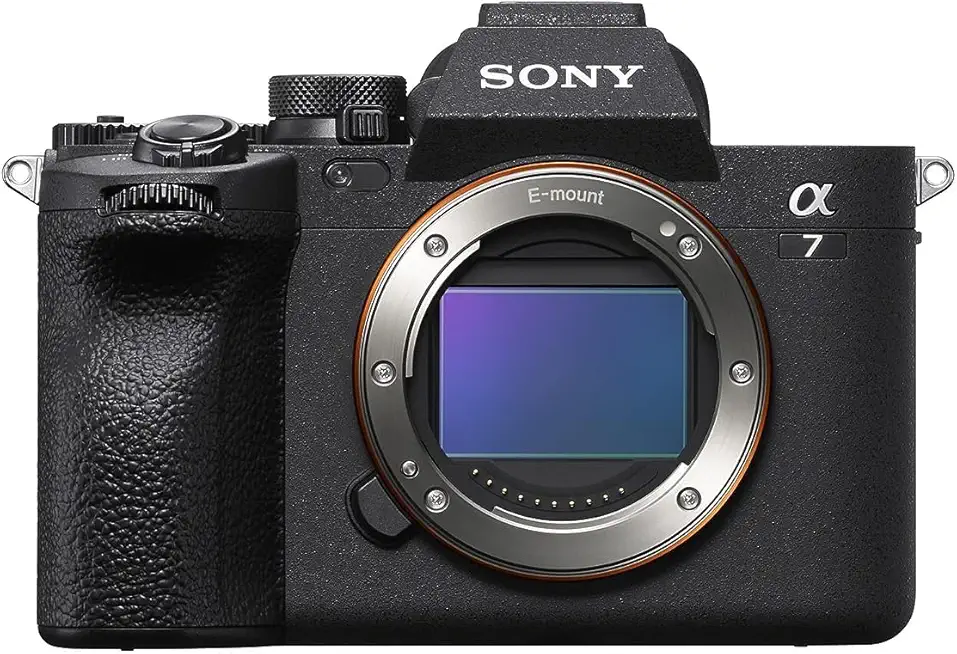
Sony Alpha 7 IV Full-Frame Mirrorless Camera
Powerful hybrid body with superb resolution, industry-leading autofocus, and professional video features for content creators and hybrid shooters.
Check PriceThe Sony A7 IV is a 33MP full-frame mirrorless that excels at being a true all-rounder. As a working photographer I appreciate how reliably its industry-leading autofocus locks and tracks subjects, which makes capturing decisive moments far less stressful.
It’s built for hybrid creators — the 4K video quality is excellent and the in-body stabilization steadies handheld work when you don’t want a gimbal. The images are sharp and detailed with good dynamic range, so you can confidently crop or make large prints without losing critical detail.
One major advantage is the E-mount support: you get access to one of the broadest selections of native and third-party glass. That ecosystem flexibility means you can grow your kit to match any genre you enjoy, from portraits to landscapes and video projects.
There are a couple of practical things to know before buying. The menu system and ergonomics aren’t as intuitive as some competitors, and some photographers find the body less comfortable for extended handheld shooting. Also, straight-out-of-camera JPEGs can look muted; most users prefer to work with RAW files for their final look.
In short, if you want a do-it-all camera with top-tier autofocus, strong video features, and a massive lens ecosystem, the A7 IV is an excellent choice for hobbyists who plan to take photography seriously. If you prioritize in-camera JPEGs or prefer very tactile controls, you might want to test it in hand first.
- 33MP full-frame sensor
- Industry-leading autofocus
- Excellent 4K video + in-body stabilization
- Broad E-mount lens support
- Menu system and ergonomics not intuitive
- Straight-out-of-camera JPEGs often need RAW editing
5. OM System OM-1 Mark II For Outdoors

OM SYSTEM OM-1 Mark II Micro Four Thirds Mirrorless Camera
Compact, rugged system offering class-leading stabilization, lightning-fast burst performance, and excellent portability for outdoor and wildlife photographers.
Check PriceThe OM System OM-1 Mark II is a compact, tough Micro Four Thirds camera built for real-world shooting. It combines advanced computational features with excellent IBIS and weather sealing, which makes it a go-to for travel and outdoor work.
At 599g with battery, the body is genuinely lightweight for long days walking or hiking. The outstanding IBIS lets you get sharp handheld shots at slow shutter speeds, so you spend less time on a tripod and more time shooting on the move.
Computational tools like Live ND and the handheld high-res mode expand creative options without extra gear. These features are practical—Live ND for silky-water long exposures handheld, and handheld high-res for higher-detail files when you can’t set up a tripod.
Durability is a big part of the appeal: the weather-sealed construction gives confidence in variable conditions, which is why wildlife and travel photographers reach for it. The trade-offs are real, though: Micro Four Thirds sensors have less dynamic range and low-light performance than larger formats, and you won’t get the same shallow background blur as APS-C or full-frame bodies.
In short, if you prioritize portability, rock-solid stabilization, creative computational tools, and ruggedness, the OM-1 Mark II is an excellent hobbyist choice. If you need the ultimate image quality or very creamy bokeh, you might look elsewhere.
- Lightweight body — 599g with battery
- Weather-sealed, very durable
- Outstanding IBIS for handheld slow-shutter shots
- Computational features like Live ND and handheld high-res
- Smaller MFT sensor — less dynamic range, low-light
- Less background blur compared to larger formats
Street Photography Essentials And Setup
Street shooting rewards simplicity. I usually choose a compact, unobtrusive mirrorless body — APS-C or Micro Four Thirds — paired with a small prime. A 35mm equivalent gives a natural field of view, and a 28mm is great when you want a bit more context; both force you to move and see the scene differently.
Fast, accurate autofocus helps, but so does learning to read light and people. Set the camera to Aperture Priority, dial in a comfortable aperture, and let the camera handle exposure while you concentrate on timing. For general scenes I sit around f/5.6–f/8 so things are sharp; when I want subject separation I open up to f/1.8 or f/2.8 and isolate a face from the background.
Shutter speed matters more than you think. I keep a mental floor of roughly 1/200 sec to avoid motion blur from walking subjects. For handheld low-light work I’ll allow higher ISOs — modern cameras handle 1600 easily and even 6400 at night — but I prefer to raise shutter or accept a bit of grain rather than losing the moment.
Zone focusing is a secret weapon when autofocus can’t keep up. Pre-focus to a distance and aperture that gives you the range you want, then wait for life to enter that plane. Use silent or electronic shutter modes when you can; staying quiet keeps scenes candid and people’s reactions natural.
Travel light and think in zones. A small prime in a sling bag keeps you nimble and encourages better composition because you walk closer and look for layers. Keep an auto-ISO with a sensible cap, and consider a conservative safety shutter speed in the camera custom settings so you don’t miss critical moments.
Finally, be mindful in processing. Subtle contrast tweaks, selective sharpening, and tasteful black-and-white conversions will often finish a street image better than heavy-handed edits. Respect your subjects, shoot with curiosity, and let the camera be as invisible as possible.
Landscape Photography Tips And Settings
Landscape work rewards patience and control. Start by choosing a camera and lens that give you good resolution and dynamic range—full-frame or high-megap APS-C bodies are ideal—and pair them with a wide-angle that delivers its best performance around f/8–f/11.
Always use a sturdy tripod. With the camera stable you can drop ISO to 100–200, stop down to f/8–f/16 for generous depth of field, and use slow shutter speeds to render water silky or to blur fast-moving clouds for drama.
Manual mode on the tripod gives you the precision you need. Check exposure with the histogram and highlight warnings, bracket exposures when the scene has deep shadows and bright skies, and consider exposure blending or HDR later to retain detail across the range.
Don’t forget filters: a polarizer will deepen skies and reduce reflections, while neutral density filters let you stretch shutter speeds for creative motion. Use a remote release or the self-timer to avoid camera shake, and zoom in on live view to critically check focus—front-to-back sharpness matters more than a technically perfect ISO.
For maximum sharpness in very complex scenes, focus stacking and careful hyperfocal focusing are tools worth learning. Compose with a strong foreground element to lead the eye, and move around—small perspective shifts often turn a mediocre frame into a keeper.
Finally, chase light, not weather. The golden and blue hours simplify contrast and color, so plan your shoots around those windows. With thoughtful setup and a willingness to experiment, you’ll get landscapes that feel intentional and look exceptional.
What People Ask Most
What is the best camera for hobby photographers?
There is no single best camera; choose a model that fits your budget, shooting style, and comfort. Prioritize ease of use, lens options, and a body you enjoy handling.
Which type of camera is best for hobby photography — DSLR, mirrorless, or compact?
Each type has strengths depending on size, handling, and whether you want interchangeable lenses. Mirrorless cameras tend to offer modern features in smaller bodies, while DSLRs and compacts remain practical for different needs.
What features should I look for in a camera for hobby photography?
Focus on reliable autofocus, comfortable ergonomics, and a lens selection that matches your interests. Consider battery life, image quality, and any video or connectivity needs you care about.
Is a mirrorless camera better than a DSLR for hobby photography?
Not necessarily; mirrorless cameras offer advantages like compactness and newer technology, but DSLRs can be comfortable and familiar to use. The best option depends on personal preference and available lenses.
How many megapixels do I need for hobby photography?
Megapixel count matters for large prints and heavy cropping, but overall image quality also depends on sensor size, lenses, and technique. Choose a camera that meets your intended print sizes and editing workflow.
What lenses are best for hobby photography?
Lens choice depends on subject matter; a versatile standard prime or zoom plus a wide or telephoto for specific uses covers most situations. Prioritize focal lengths you use often, optical quality, and portability.
Can I use a smartphone for hobby photography?
Yes, smartphones are capable for many hobbyists and are great for casual shooting and sharing. If you want more creative control or image quality, consider adding a dedicated camera with interchangeable lenses.
Conclusion For Best Camera For Hobby Photography
Choosing the right camera comes down to matching gear to your priorities—whether that’s compact portability, full-frame image quality, stabilization, or autofocus performance—and this comparison is meant to help you weigh those trade-offs clearly.
For everyday street shooting, look for a lightweight, unobtrusive system with reliable autofocus and quiet operation, while landscape shooters will benefit from higher resolution, wide-angle options, and a steady tripod setup.
Hybrid shooters who balance stills and video may prefer bodies with strong IBIS and video features, whereas photographers who prioritize tactile controls and in-camera character might lean toward more traditional layouts.
If you want to keep improving, explore more of our site’s gear guides and technique articles to refine your choices and develop the skills that match your shooting style.
Have questions or want to share your experience with one of these cameras? Leave a comment below — we usually reply within a few hours.



0 Comments