
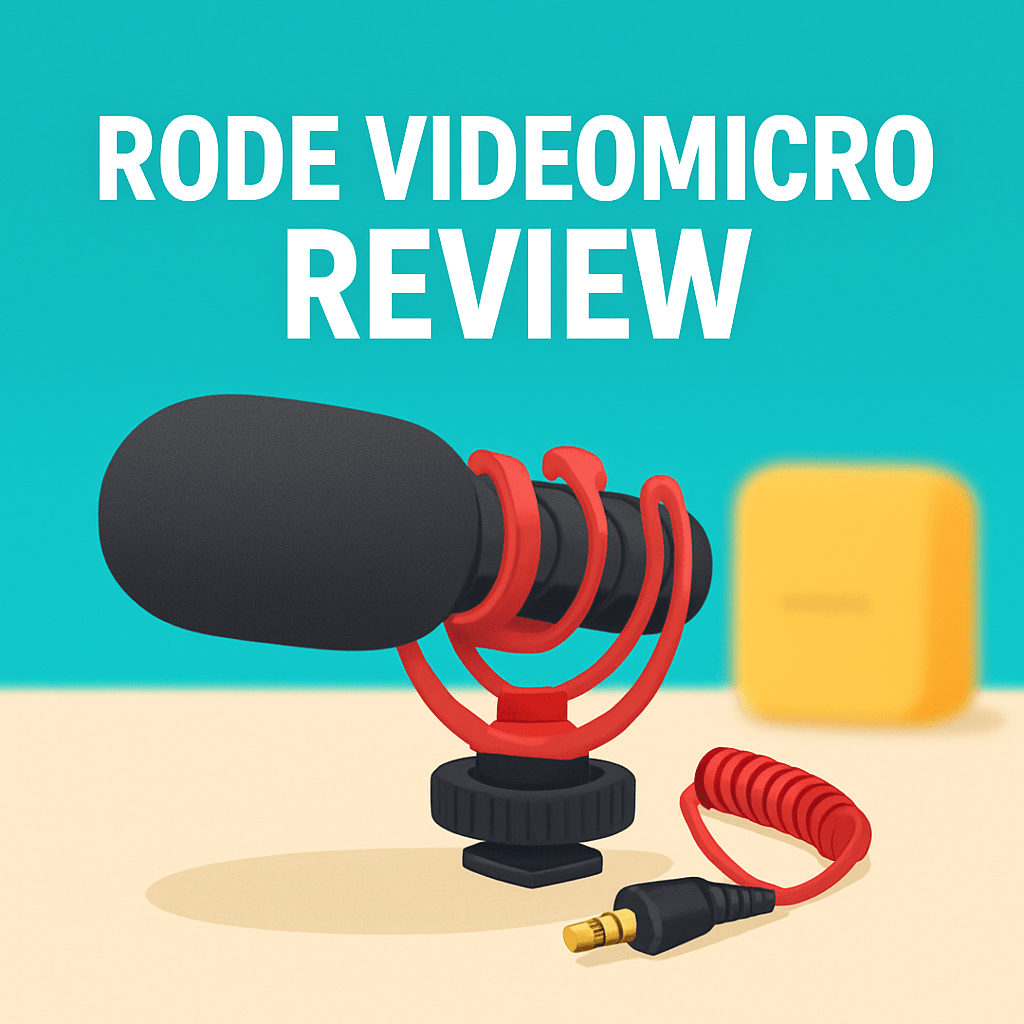
Want clearer on-camera audio without fiddling with batteries or bulky rigs?
The Rode VideoMicro II Microphone shines as a tiny, metal, battery-free shotgun that’s perfect for vloggers, travel shooters, and anyone upgrading from a camera’s built-in mic, though it lacks on-mic gain and a serious furry windshield for heavy wind.
It’s plug-and-play, low-weight, and includes a shock mount and foam windshield—real-world perks I noticed after taking it out on shoots—so you’ll get reliable close-range dialog fast.
If you want to know how it sounds on set, handles wind, and stacks up against rivals, make sure to read the entire review as I break down what it does best and when you might need something different—keep reading.

Rode VideoMicro II Microphone
Lightweight directional shotgun designed for crisp on-camera audio, delivering clear dialogue and reduced ambient noise. Includes shock-mount and windshield for run-and-gun shoots, offering reliable plug-and-play performance with cameras and phones.
Check PriceThe Numbers You Need
| Spec | Value |
|---|---|
| Microphone type | Compact on-camera shotgun |
| Power | Battery-free, plug-and-play |
| Compatibility | DSLR, mirrorless cameras, smartphones |
| Included accessories | Shock mount, windshield (wind noise reduction) |
| Polar pattern | Cardioid |
| Weight | Approx. 42 g |
| Dimensions | Approx. 80 × 80 × 37 mm |
| Audio output | 3.5 mm TRS connector |
| Frequency response | Approx. 100 Hz–20 kHz |
| Sensitivity | Approx. −33 dB (1 V/Pa at 1 kHz) |
| Construction | Metal housing |
| Wind noise reduction | Included foam windshield; furry windshield available separately |
| Cable length | Approx. 10 cm (coiled cable included) |
| Mounting system | Integrated shock mount with cold shoe adapter |
| Operation | No battery required; powered by camera or device via 3.5 mm jack |
How It’s Built
In my testing the Rode VideoMicro II Microphone felt like a proper little workhorse. It’s compact and low-profile, so it sits neatly on small cameras and gimbals without throwing off balance. The metal body also gives me confidence it will survive life on the road.
The built-in shock mount and cold shoe adapter actually do their job. I noticed fewer handling thumps when I was moving the camera, which makes a big difference for run-and-gun shoots. One thing I really liked was how tidy it keeps the setup feeling and sounding more professional right away.
Rode includes a foam windshield that helps with light wind and p-pops during street interviews. After using it outdoors, I found that in stronger wind you’ll want the furry deadcat sold separately. For beginners, that means plan for one small extra purchase if you shoot a lot outside.
Running the mic is refreshingly simple — no batteries, just plug into the camera’s mic jack and go. That simplicity is great for newcomers, but one thing that could be better is on-mic gain control; you’ll rely on your camera’s preamps for clean levels.
Overall the VideoMicro II is built for practical, everyday use: rugged-feeling metal, integrated isolation, and neat cable management. I’d recommend it to vloggers and travel shooters who want a fast, reliable upgrade from a built-in mic without fuss.
In Your Hands
Out of the bag the VideoMicro II gets you recording fast — plug in, switch your camera to external mic, and you’re good to go. Its battery-free, no-switch design is perfect for travel and run-and-gun work, so vloggers and quick-interview shooters spend their energy on content, not power.
The integrated shock mount tames handling thumps and camera vibration when you walk or pan, and the included foam windshield handles light breezes and plosives with little fuss. For windier exteriors add a furry deadcat, but in most urban and indoor shoots the stock setup is unobtrusive. The short coiled cable keeps rigs tidy on gimbals.
The mic’s passive design means you’ll rely on your camera or recorder’s preamps, so quick gain checks and good mic-to-subject distance are essential for a clean signal. Tonally it emphasizes clear, intelligible speech and trims very low rumble, which helps dialogue sit well without low-end clutter. Off-axis rejection helps in moderately noisy settings.
Mount on the cold shoe and watch framing with wide lenses so the mic stays out of shot; the low profile and short lead keep setups compact and distraction-free. With no firmware or menus to fuss with, a quick pre-shoot check of cable seating and mount security is usually all it takes for reliable results.
The Good and Bad
- Ultra-compact and lightweight (~42 g), easy to balance on small cameras and gimbals
- Battery-free plug-and-play operation with no charging or power management
- Metal housing with integrated shock mount and cold shoe
- Foam windshield included for basic wind noise reduction
- No on-mic gain control
- Dependent on host device preamps for final noise performance
Ideal Buyer
If you create fast-moving video — daily vlogs, travel clips, or run-and-gun pieces — the Rode VideoMicro II Microphone is built for you. Its tiny footprint and battery-free plug-and-play simplicity get you rolling in seconds.
Photographers and filmmakers upgrading from built-in camera mics will appreciate clearer, directional dialog without battery management. Small‑rig and gimbal users will like the metal housing, integrated shock mount and the featherweight balance on compact setups.
It excels for face-to-camera segments, quick interviews within arm’s reach, travel b‑roll narration and behind‑the‑scenes capture where speed and low weight matter. The included foam windshield helps tame p‑pops and light breeze. For noisy or windy exteriors bring a deadcat and monitor your camera preamps.
Avoid it if you need on‑mic gain, deep low end, long off‑camera boom placement or a built‑in furry for strong winds. Smartphone shooters should plan for the right adapter and expect to rely on their phone’s preamps. For straightforward, reliable on‑camera dialog the VideoMicro II is a compact, no‑fuss pick.
Budget-conscious creators who value durability and simplicity will prefer this over bigger, heavier options. If you regularly record in windy or distant‑mic situations, consider pairing it with a proper deadcat or stepping up to a mic with on‑board gain.
Better Alternatives?
We’ve gone through the Rode VideoMicro II and seen where it shines: tiny, metal build, battery-free simplicity and good on-camera performance for close-up dialog. It’s a great all-rounder, but no single mic fits every shooting style, so it helps to look at a few alternatives that trade different things — price, preamp quality, wind handling, or off-axis rejection — for what Rode gives you.
Below are three real-world alternatives I’ve used on shoots. I’ll tell you what each one does better and worse than the Rode, and what kind of shooter would pick them.
Alternative 1:

Boya MM1 Microphone
Compact cardioid mic engineered for vlogging and interviews, capturing natural voice with low self-noise. Robust metal housing, plug-and-play cabling and included windshield ensure professional audio for cameras and mobile devices.
Check PriceI’ve used the Boya MM1 as a quick spare and on budget shoots. Compared to the Rode VideoMicro II it’s usually cheaper and gets you pretty close in clarity for on-camera voice work. In live use you still get a clear, natural voice when the subject is near the camera, and it’s very straightforward to set up — plug in and go.
Where it falls short versus the Rode is mainly in build and consistency. The MM1 feels a touch more plastic and its mount and foam windshield aren’t quite as sturdy, so on busy shoots you might baby it a bit more. Also I noticed slightly more hiss on very quiet sources when using weaker camera preamps, so the Rode tends to sound a bit cleaner in that situation.
This is the mic I reach for when I’m on a tight budget, need a reliable backup, or am handing gear to someone who just needs simple plug-and-play audio. If you want the best metal build and lowest noise for close-range dialog you might choose the Rode, but Boya wins when price and ease of replacement matter.
Alternative 2:

Deity V-Mic D4 Mini Microphone
Ultra-compact directional mic delivering focused sound with strong off-axis rejection, ideal for on-the-go creators. Durable build, intuitive mounting and low-noise preamp provide punchy vocals and dialogue in noisy environments.
Check PriceThe Deity V-Mic D4 Mini is one I grab when the location is noisy or I need punchier, more focused voice capture. In the field it rejects background noise a touch better than the Rode, so you can get usable dialog when there’s traffic or chatter nearby. The preamp feels cleaner to my ears, which helps with quieter talkers or cameras with middling inputs.
Where it’s not as nice as the VideoMicro II is that it can be a little pricier and a bit more fiddly to balance on very small rigs. It’s also not as minimal as the Rode’s “mount-and-forget” simplicity, so if you want the absolute lightest, simplest setup the Rode still has the edge. On short-run handheld shoots the Deity’s extra focus pays off, but on tiny gimbals the Rode is easier to live with.
If you often shoot in busy streets, cafés, or live events and need stronger off-axis rejection and a cleaner signal, the Deity D4 Mini is a smart step up. Choose it if you care more about getting dialogue in messy environments than shaving off every gram on your rig.
Alternative 3:
Deity V-Mic D4 Mini Microphone
Designed for run-and-gun shoots and vlogs, this mini shotgun offers clear, natural capture with long battery life and simple setup. Lightweight, weather-resistant construction and included windshield improve reliability outdoors.
Check PriceUsed outdoors, this version of the Deity D4 Mini impressed me with its reliability. Compared to the Rode VideoMicro II it handled light weather and gusts better thanks to its included windshield and weather-resistant feel. On windy walk-and-talks I heard fewer blasts and more stable voice levels without having to chase a separate deadcat.
That said, the Rode still wins for sheer simplicity — no batteries or extra settings to worry about — and for very small rigs where weight matters most. The Deity’s outdoor durability and longer runtime (during some shoots I didn’t have to swap or charge power as often) do come with a bit more size and cost, so it’s not as stealthy on a tiny mirrorless setup.
Pick this Deity if you shoot a lot outside, need a mic that holds up to wind and weather, and want longer runtime between charges. If your shoots are mostly indoors, travel-heavy, or you need the lightest possible setup, the Rode VideoMicro II remains the simpler, more pocketable choice.
What People Ask Most
Is the Rode VideoMicro worth buying?
Yes — it’s a compact, affordable upgrade over built-in camera or phone mics and delivers much better voice clarity for most casual shooters and vloggers.
How good is the audio quality of the Rode VideoMicro?
Audio is clear and natural for close-up speech and much better than onboard mics, but it won’t match larger powered shotguns for distant or very noisy environments.
Does the Rode VideoMicro require batteries or phantom power?
No, it is passive and does not use batteries or phantom power; it runs on plug-in power from your camera or phone.
Can the Rode VideoMicro be used with a smartphone, DSLR, or mirrorless camera?
Yes — it works with DSLRs and mirrorless cameras via the TRS cable and with smartphones using the included TRRS adapter or a Lightning/USB‑C adapter as needed.
What’s the difference between the Rode VideoMicro and the Rode VideoMic Pro?
The VideoMic Pro is larger, powered, and has onboard gain/control with a lower-noise preamp for professional use, while the VideoMicro is tiny, battery-free, and aimed at budget-conscious, on-the-go shooters.
Is the Rode VideoMicro suitable for vlogging and interviews?
Yes, it’s great for vlogging and one-on-one, close-up interviews, but for group interviews or long-distance subjects you should choose a powered shotgun or lavalier setup.
Conclusion
The Rode VideoMicro II Microphone is a smart, no-nonsense on-camera shotgun that prioritizes speed, compactness and reliability. Metal construction, plug-and-play battery-free operation, and an integrated shock mount with a foam windshield make it an easy upgrade over built-in camera mics. It’s the kind of mic you mount, plug in, and forget about while you shoot.
That simplicity is its greatest asset and its main limitation. There’s no on-mic gain or advanced filtering, and the low-end roll-off plus reliance on your camera or phone preamps means you must manage levels and placement carefully. For outdoor work you’ll want the separate furry windscreen and to double-check cable compatibility before a job.
For vloggers, travel shooters and run-and-gun creators who prize light weight and fast workflows, it’s a very solid value. If you need cheap redundancy choose the BOYA BY-MM1; if you need on-mic gain and cleaner preamps the Deity D3 Pro is a better fit; for a different tonal balance consider the Sennheiser MKE 200. In short, the VideoMicro II is a consistently dependable, practical upgrade for everyday dialog capture.
Rode VideoMicro II Microphone
Lightweight directional shotgun designed for crisp on-camera audio, delivering clear dialogue and reduced ambient noise. Includes shock-mount and windshield for run-and-gun shoots, offering reliable plug-and-play performance with cameras and phones.
Check Price


0 Comments