
Ever miss a perfect family moment because you were fumbling for a camera?
Which beginner camera actually helps you capture the chaos, the cuddle, and the smile?
This article compares five top picks to help you find the best beginner camera for family photography.
We focus on practical, easy-to-use options rather than overwhelming specs.
If you’re a new parent, a grandparent, or someone documenting family life, this is for you.
Our picks aim to help you get frame-worthy shots faster and with less fuss.
We judged each camera on ease of use, autofocus performance, and image quality in everyday situations.
Portability and family-friendly features like stabilization, touchscreen controls, and video functions also informed our choices.
That meant testing with kids in motion, group shots at the park, and dim indoor evenings.
We weighed autofocus reliability and handling as much as raw resolution and low-light performance.
Each entry includes a concise real-world summary and a clear recommendation for different family priorities.
Expect practical pros, trade-offs, and who will benefit most from each option.
You don’t need to be a gearhead to take better family photos.
Small, friendly cameras can dramatically increase usable shots and lower the learning curve.
Ready to stop missing moments and start making a stronger family photo archive?
Read on to find the best beginner camera for your family’s needs.
1. Nikon Z30 16–50mm Kit

Nikon Z 30 with 16-50mm zoom lens
Compact mirrorless kit delivering sharp 4K video, fast autofocus, and versatile zoom for vlogging, travel, and everyday creativity.
Check PriceThe Nikon Z30 with the 16–50mm kit is a fantastic all‑around choice for family photography. It’s praised for intuitive use and excellent autofocus, so you can focus on moments instead of settings.
In real life it delivers crisp, beautiful photos across varied lighting conditions. The compact form factor makes it easy to carry on family outings, and the 16–50mm lens covers a versatile focal range for portraits and group shots.
Autofocus is fast and accurate, which matters when kids are constantly on the move. That responsiveness helps you capture fleeting expressions and candid interactions without hunting for focus.
There are a couple of practical limits to keep in mind. The Z30 lacks built‑in image stabilization, so very slow handheld shots in low light can be challenging. It also has a more limited native lens selection compared to more mature mirrorless systems.
Overall, this is an excellent pick for new parents or family photographers who want a no‑fuss, reliable camera that balances image quality and ease of use. If you value portability, dependable autofocus, and straightforward operation, the Z30 will serve you well on everyday shoots and active family moments.
- Very easy to use — perfect for beginners.
- Fast and accurate autofocus for kids in motion.
- High-quality, crisp images in different lighting.
- Compact and lightweight for daily carry.
- Lacks built-in image stabilization.
- Limited native lenses compared to more mature mirrorless systems.
2. Canon PowerShot G7 X Mark III

Canon PowerShot G7 X Mark III
Pocket-friendly advanced point-and-shoot offering bright lens, livestream-ready 4K video, and excellent low-light performance for creators.
Check PriceThe Canon PowerShot G7 X Mark III is a classic point-and-shoot that’s exceptionally user-friendly, which makes it a great pick for parents who want one-step simplicity without sacrificing image quality. As a photographer, I appreciate how straightforward the controls are — you can hand it to a partner or a grandparent and still get reliably good shots.
In real-world family use its super wide lens stands out: it easily includes large groups without everyone having to squeeze together. The camera’s quick autofocus makes it easy to grab and shoot when kids are moving, so you won’t miss the moment.
Portability is a huge plus — it’s compact enough to tuck into a diaper bag or purse, so it’s ready for spontaneous outings and everyday life. For casual family photographers who want prints and albums, the G7 X Mark III delivers photos with good detail that stand up well on paper.
There are trade-offs to be aware of. The smaller sensor compared to DSLRs and mirrorless bodies means low-light performance is limited, so expect more noise in dim interiors or evening events. Also, if you love creative manual control and advanced tweaking, the G7 X Mark III’s limited manual options may feel restrictive.
- Extremely user-friendly interface
- Wide-angle lens includes the entire family
- Compact — fits in diaper bag or purse
- Print-worthy photos with good detail
- Smaller sensor — limited low-light performance
- Limited manual controls for creative flexibility
3. Sony ZV-1F Camera

Sony ZV-1F
Designed for influencers, delivers flattering skin tones, clear audio, and bokeh-rich portraits in a lightweight, selfie-focused body.
Check PriceThe Sony ZV-1F is a compact, vlogger-friendly camera that translates very well to family photography. It’s popular with vloggers and family documentarians because it combines strong autofocus with handy creative presets that make sharing instant, attractive images and clips easy.
In real-world use it shines at capturing kids on the move — the autofocus reliably tracks fast-moving children so you get sharp moments rather than missed expressions. The creative modes and filters are genuinely useful when you want quick edits in-camera for social sharing without hopping into post-processing.
Its lightweight body makes it a true grab-and-go camera for outings, school events, and everyday life. You can comfortably use it for both video and stills storytelling; the camera is built around integrated video and stills use, so switching between both feels natural when documenting a day with the family.
That said, there are trade-offs to consider. The smaller sensor means image quality won’t match larger-sensor mirrorless cameras in terms of dynamic range and low-light detail. Also, if you lean heavily on video or use creative modes non-stop, battery life can be limited, so bring a spare for longer days.
If you’re a parent who wants a fun, easy-to-use tool that gets great autofocus and strong video/stills integration without being bulky, the ZV-1F is a very appealing choice. It’s mostly about convenience and capture-first reliability rather than pixel-peeking perfection.
- Great autofocus performance for fleeting moments
- Creative presets for quick in-camera looks
- Lightweight and easy to carry
- Well-suited for integrated video and stills storytelling
- Smaller sensor limits image quality vs mirrorless
- Battery life can be limited with heavy video/creative-mode use
4. Canon EOS R10
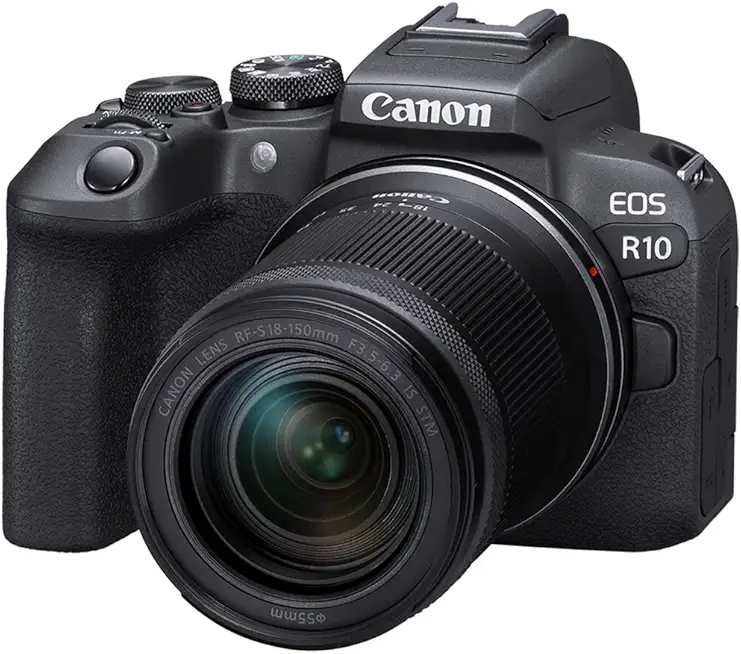
Canon EOS R10 with RF-S 18-150mm f/3.5-6.3 IS STM lens kit
High-speed APS-C mirrorless system with versatile telephoto reach, image stabilization, and responsive autofocus for action and travel shooters.
Check PriceThe Canon EOS R10 earned recognition as the best beginner camera overall from TechRadar, and for good reason. It combines strong autofocus with a 15fps burst and versatile controls that make it easy to grow into.
In practice that means you can trust the autofocus to track active children reliably, and the 15fps burst gives you a real chance of nailing that perfect smile or mid-jump moment. The articulated touchscreen makes framing awkward angles simple, which helps when you’re kneeling, holding a toddler, or shooting from hip level.
Ergonomically the R10 is comfortable and approachable — controls and grip are laid out in a way that feels familiar to DSLR users without overwhelming a beginner. Image quality is very good: detailed RAW files and solid low-light potential give you latitude in editing family photos into keepsakes.
One limitation to be aware of is the lack of in-body image stabilization, so steady handling or stabilized lenses are necessary for the sharpest handheld low-light shots. Also, the RF-S lens ecosystem is still growing, so if you want a huge immediate selection of native glass you may find options more limited than on older mounts.
Overall, the R10 is a strong choice for beginners who prioritize action performance and ease of use in a mirrorless body — excellent for dynamic family environments where kids are constantly on the move.
- Speedy autofocus with excellent tracking for active children.
- 15fps burst shooting for action sequences.
- Intuitive, comfortable grip and control layout for beginners.
- High image quality with detailed RAW files and good low-light potential.
- Limited lens ecosystem for RF-S mount.
- Lacks in-body image stabilization, affecting handheld low-light shots.
5. Olympus OM-D E-M10 Mark IV

OM SYSTEM Olympus E-M10 Mark IV
Stylish micro four thirds camera offering intuitive controls, in-body stabilization, and creative filters for everyday photography enthusiasts.
Check PriceThe Olympus OM-D E-M10 Mark IV is a Micro Four Thirds (MFT) mirrorless camera that feels built for family life: compact, stylish, and genuinely easy to carry on day trips and vacations. Its lightweight design means you’ll actually use it instead of leaving it at home, and the 4.5-stop in-body image stabilization lets you shoot handheld in lower light without constantly raising ISO.
As a working photographer, I appreciate the tactile benefits here — the touchscreen is responsive and the artistic filters make reviewing and sharing quick, fun edits enjoyable for parents who don’t want to fuss with complicated menus. The camera’s interface is clearly aimed at beginners, so you can get good-looking results fast and enjoy the process of documenting candid family moments.
Where it compromises is the smaller MFT sensor: dynamic range and low-light image quality won’t match what APS-C cameras deliver, so expect a bit more noise and less headroom in challenging indoor scenes. Battery life is also average, so plan on bringing a spare for full-day outings if you want uninterrupted coverage of events and milestones.
What seals the deal for many families is the breadth of the Micro Four Thirds lens catalogue — lots of compact lens options that complement the camera’s portability and stabilization. In short, if you prioritize portability, creative in-camera features, and steadier handheld shots in a compact system, the E-M10 Mark IV is a strong, enjoyable choice for beginner family photography.
- Lightweight and portable
- 4.5-stop in-body image stabilization
- Huge Micro Four Thirds lens catalogue
- Engaging touchscreen and user-friendly interface
- Smaller MFT sensor → lower dynamic range and low-light quality vs APS-C
- Average battery life; spares often needed
Candid Family and Kids Photo Tips

Shoot interaction, not perfection. Ask kids to walk, chase bubbles, or play a simple game so expressions unfold naturally, then follow the moment rather than forcing a pose.
Use prompts instead of commands. Say “who can make the silliest face?” or “tell your sibling a secret” to coax genuine reactions you can’t stage.
Camera settings matter but don’t overthink them. Use continuous autofocus and burst mode to catch split-second smiles and set a fast shutter for action — around 1/500–1/1000s for running kids, 1/250s for gentle movement — with a wide aperture (f/2.8–f/4) to blur backgrounds when you want the subject to pop.
Think about light before you frame. Golden hour and open shade give flattering skin tones; indoors, let windows be your main source and bump ISO rather than using harsh flash that kills expression.
Blend in and shoot from the heart. Kneel to their eye level for intimacy or stand a little back with a longer focal length to capture unguarded behavior. Hiding behind furniture or joining the game helps children forget the camera exists.
Vary your compositions to tell a story. Mix candid close-ups of laughter with wider environmental shots that show context. Include a few intentional looks to camera, but prioritize the spontaneous moments — those are the memories.
Finally, be patient and flexible. Sessions rarely go perfectly, and that’s fine. Embrace messy, silly, and fussy moments; they often become the most honest and cherished images.
Basic Editing Tips for Family Photos
When I edit family photos I aim for two things: clarity and emotion. The goal isn’t to create a perfect magazine portrait but to enhance the moment so faces feel real and memories read naturally. Small, intentional tweaks usually do more good than heavy-handed filters.
Start with exposure and highlights — nudge them to recover detail in faces without washing the scene. Pull down blown highlights a touch, lift shadows if needed, and keep an eye on the histogram so you don’t crush midtones that give skin its character.
Skin tones are everything. Use gentle white balance and color adjustments to warm or cool skin subtly, and avoid over-saturating. A light local adjustment on faces can bring back life without creating an artificial, overprocessed look.
Sharpen selectively: eyes and mouths benefit most. I sharpen the eyes and a touch around the face but leave backgrounds softer to preserve depth. Over-sharpening or blanket noise reduction flattens texture and robs photos of authenticity.
Composition fixes are often the fastest wins. Crop to tighten a group, straighten horizons, or move key subjects onto a rule-of-thirds intersection. Remove small distractions — a stray toy or bright spot — to keep attention on the people, not the clutter.
Presets are great as a starting point for consistency across an album, especially after a family event. Apply them lightly and tweak per image; every frame will need tiny adjustments for exposure and color. Finally, export thoughtfully — different sharpening/noise settings for prints versus social sharing preserve the quality of your memories.
What People Ask Most
What is the best camera for family photography for beginners?
There is no single best camera; the right choice depends on your priorities like ease of use, autofocus, portability, and whether you want strong video features or stabilization. Pick a model that feels comfortable to carry and use so you’ll take it to more family moments.
DSLR or mirrorless: which is better for beginner family photographers?
Mirrorless cameras are often preferred for beginners because they tend to be more compact and offer live previews and modern autofocus systems. DSLRs can still be reliable, but mirrorless bodies usually make everyday shooting simpler and lighter to carry.
What features should I look for in a beginner camera for family portraits?
Look for intuitive controls, reliable autofocus, good image quality, and a form factor you’ll want to bring on outings. Extras like a useful zoom range, an articulated screen, and image stabilization can make everyday shooting easier and more versatile.
What lens is best for family photography for beginners?
A versatile zoom that covers wide group shots and modest portrait reach is a practical starting point, while a fast prime can be useful for portrait-style images and low light. Choose a lens that complements your shooting style and makes it easy to capture both candid and posed moments.
Can a smartphone camera be good enough for family photos?
Yes, modern smartphones are excellent for casual family photos and are very convenient to carry and share from. They may have limits in certain lighting and depth-of-field situations, so a dedicated camera can still add flexibility and higher image quality when needed.
What camera settings should beginners use for indoor family portraits and low light?
Use settings that prioritize steady exposure and subject sharpness, and make use of available natural light or gentle supplemental lighting when possible. If motion is a concern, choose settings that help keep subjects sharp and consider stabilizing the camera or using a lens that performs well in low light.
How can a beginner take better family photos with an entry-level camera?
Encourage natural interaction, use prompts instead of stiff posing, and pay attention to light and simple compositions. Practice regularly and keep the camera handy so you capture more genuine moments rather than staged shots.
Conclusion for Best Beginner Family Camera
These five cameras represent strong, beginner-friendly options that balance ease of use, reliable autofocus, solid image quality, portability, and practical features to help you capture family moments with less fuss.
Think about what matters most to you — ultra-portability, integrated video features, built-in stabilization, or fast action performance — and let that priority guide your choice. Matching a camera to your needs will give better, more consistent results than chasing every specification.
To build confidence and improve your results with any camera you choose, read more articles on our site for practical tips, walkthroughs, and quick techniques you can apply on family outings.
If you have questions or want personalized advice, leave a comment below and we’ll usually reply within a few hours.




0 Comments