
What if you could capture the dew‑laden spiral of a spider web or the iridescent wing of a bee with a camera small enough to slip into your pocket?
Macro photography rewards patience and precision, but many photographers assume you need a bulky rig to get truly intimate detail.
This guide zeroes in on compact cameras and small mirrorless bodies that punch above their weight for close‑up work.
Think pocketable fixed‑lens compacts and diminutive interchangeable‑lens systems that balance portability with optical performance.
When hunting for the best compact camera for macro, prioritize image stabilization, autofocus quality, sensor size and native lens options.
These elements shape working distance, background blur, low‑light ability and whether you can rely on handheld shooting.
Also weigh focus aids such as peaking, magnified live view and in‑camera stacking, plus robust stabilization that tames tiny movements.
Ergonomics, battery life and file management become surprisingly important when you’re crouched in the field chasing insects and blossoms.
Whether you crave tight insect portraits, floral abstracts or travel‑friendly close‑ups, understanding these trade‑offs helps you choose the compact macro path that suits your subjects.
With the right balance of stabilization, focus tools, sensor size and lens reach, small cameras can deliver stunning close‑ups without hauling a full kit.
1. Fujifilm X100VI Overview

Fujifilm X100VI
Rangefinder-styled compact delivering exceptional APS-C image quality, fast autofocus, and tactile controls for effortless street and travel photography.
Check PriceThe Fujifilm X100VI is a compact with a fixed 23mm f/2 lens and a 40MP APS-C sensor, and it surprised me with how capable it is for close-up work. The lens isn’t a traditional macro optic, but the high-resolution sensor lets you crop tightly and still retain impressive detail.
In practice the in-body image stabilization makes a real difference for handheld macro shooting, reducing blur when you’re working close and can’t always use a tripod. The hybrid viewfinder is a joy in the field — it helps me compose precisely whether I’m using the optical or electronic overlay.
Tactile control dials and intuitive handling make rapid exposure or focus adjustments effortless, which matters when insects or flowers are moving in the breeze. The camera also shoots 6.2K 10-bit video, so you can capture smooth, high-quality macro motion when stills alone don’t tell the story.
There are a couple of practical trade-offs to keep in mind. The fixed focal length limits how close you can get without physically moving in, so subjects that require more working distance or magnification will benefit from a true macro lens. Also, the single UHS-I SD card slot is a limitation for backup and long shoots.
If you want a pocketable, high-resolution camera that handles everyday shooting and very competent close-ups with cropping, the X100VI is mostly a great fit. If you need dedicated macro magnification or built-in weather sealing out of the box, you’ll encounter some compromises.
- 40MP APS-C delivers excellent sharpness and detail
- In-body image stabilization improves handheld macro shots
- Compact, pocketable body with ergonomic control dials
- 6.2K 10-bit video for high-quality macro motion capture
- Fixed 23mm focal length limits zoom/flexibility
- No weather sealing without adapter
2. Nikon Z7 II Overview
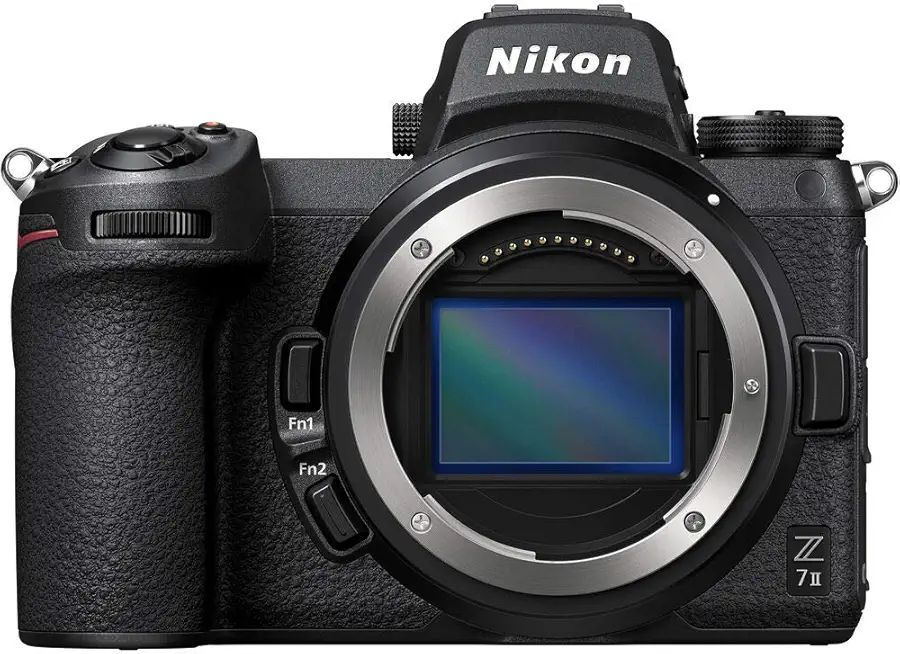
Nikon Z 7II
High-resolution full-frame mirrorless with blazing processing, precise autofocus, and professional build for studio, landscape, and demanding shooting conditions.
Check PriceThe Nikon Z7 II is a full-frame mirrorless body built around a 45.7MP BSI CMOS sensor, and that resolution is a real advantage for macro shooters who like to crop tight or pull extra detail from small subjects. In practice the files are pin-sharp and richly detailed — excellent for prints or heavy cropping — and reviewers often praise its handling and image quality. If you value ultimate detail, this camera delivers.
For close-up work the Z7 II plays nicely with dedicated Nikon Z‑mount macro optics and you can also use DSLR macro lenses via an adapter, giving you a lot of lens flexibility for different working distances and magnifications. The tilting screen makes low-angle flower and insect shots much easier to compose without contorting yourself. That adaptability means you can tailor the setup to your preferred macro style.
The in-body stabilization is rated at 5-stop, which noticeably reduces handheld blur and lets you shoot at slower shutter speeds when lighting is limited. Autofocus is fast and confident on stationary subjects, so shooting still beetles or petals is straightforward, though it’s less reliable on fast-moving insects. Be prepared to use a tripod or faster shutter speeds for aggressive wildlife macro.
The trade-offs are practical: those huge 45.7MP files demand robust post-processing workflows, more storage, and a powerful computer, and the Z7 II sits at a higher price point than compact macro-focused cameras. But if you want full-frame resolution, solid stabilization, and flexible lens options in a professional body, this is a very strong choice.
- 45.7MP full-frame sensor
- Supports Z‑mount macro lenses and DSLR lenses via adapter
- Tilting screen for low-angle work
- 5-stop in-body stabilization
- Expensive compared to compact cameras
- Large files need lots of storage/processing power
3. Nikon Z5 Overview
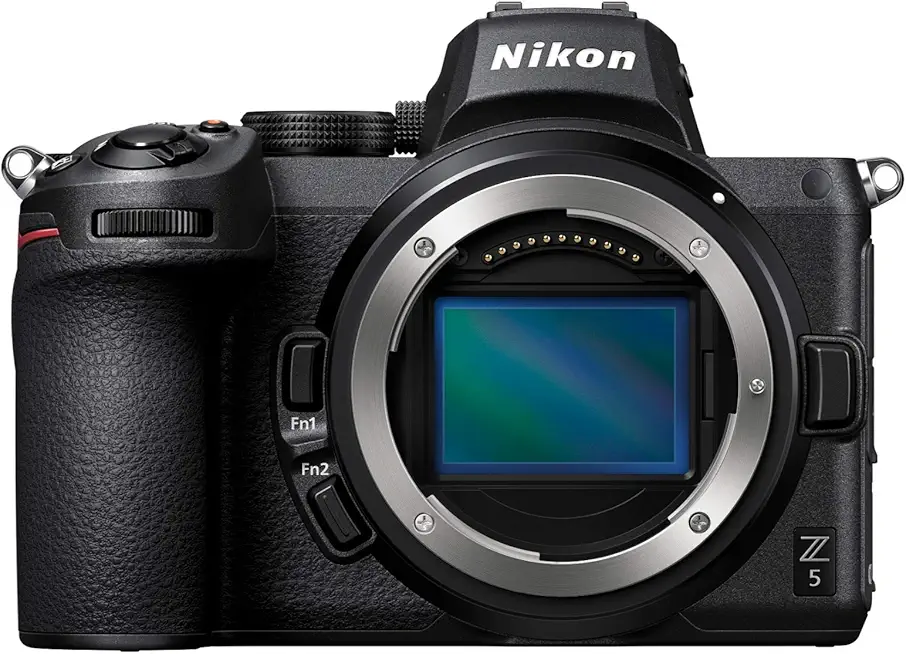
Nikon Z 5
Affordable full-frame entry offering reliable image stabilization, excellent color rendition, and intuitive controls for enthusiast photographers.
Check PriceThe Nikon Z5 is a compelling entry-level full-frame mirrorless body for macro shooters who want great image quality without breaking the bank. Its 24.3MP full-frame CMOS sensor delivers clean detail and strong color rendition, which helps when you need to crop or render fine textures in flowers, fungi, or stationary insects.
Physically it’s lightweight and ergonomic, which matters during long, patient macro sessions in the field. I found that the handling lets you make tiny framing adjustments without fatigue, so handheld close-ups and careful compositions are easier to achieve.
Being compatible with Nikon Z lenses — including dedicated macro optics — gives you real flexibility to pair the Z5 with true macro glass when you need 1:1 magnification. The full-frame sensor also helps isolate subjects with shallower depth of field, producing pleasing background separation for small subjects.
Autofocus is reliable for still subjects and color/detail are excellent, and the camera’s ISO performance and built-in stabilization make low-light macro work practical without always needing flash. Dual SD card slots are a practical bonus for backing up files in the field or extending storage on long shoots.
That said, the Z5 isn’t optimized for fast-action macro — the low burst rate limits your ability to capture quick-moving insects in flight. Also, several shooters report only moderate battery life, so bring spare batteries for extended outings.
- Compact full-frame with strong image quality
- Ergonomic and easy to use for macro shooting
- Effective in low-light macro shots thanks to full-frame sensor and ISO
- Dual SD cards for backup/extended storage
- Low burst rate limits rapid shooting
- Moderate battery life for prolonged sessions
4. Olympus OM-D E-M5 Mark III Overview

OM System OM-D E-M5 Mark III Body
Compact Micro Four Thirds body with advanced stabilization, weather-sealed durability, and versatile performance for travel and wildlife shooters.
Check PriceThe Olympus OM-D E-M5 Mark III is a Micro Four Thirds mirrorless body with a 20MP sensor that I regularly reach for when I want true field portability without sacrificing macro capability. Its compact, lightweight build makes long hikes after insects or delicate flowers far less tiring, and the handling encourages quick framing and steady handheld work.
What sets this camera apart for close-up work is the combination of excellent 5-axis image stabilization and in-camera focus bracketing/stacking. Those two features together mean you can shoot handheld, capture multiple focus slices, and produce a stacked file with extended depth of field without lugging a tripod or spending hours in post.
Color and contrast straight out of the E-M5 III tend to be punchy, which saves time in workflow and gives macro shots a pleasing punch. The Micro Four Thirds system also gives you access to a wide range of high-quality, affordable macro lenses, so you can build a practical kit without breaking the bank.
There are trade-offs: the smaller sensor means you won’t get the same background blur or low-light latitude as full-frame bodies. For subjects that benefit from extreme subject isolation or very high-ISO performance, this camera is competent but not class-leading.
In short, if you want a portable, practical macro setup for fieldwork—especially handheld insect and flower photography—the E-M5 Mark III is an excellent choice. It’s a photographer’s camera that prioritizes real-world usability: stabilization, focus stacking, and light weight.
- In-camera focus bracketing/stacking
- Compact, lightweight, highly portable
- Excellent 5-axis image stabilization
- Wide range of affordable Micro Four Thirds macro lenses
- Smaller Micro Four Thirds sensor limits low-light capability
- Less background blur compared to larger sensors
5. Sony RX100 VII Overview
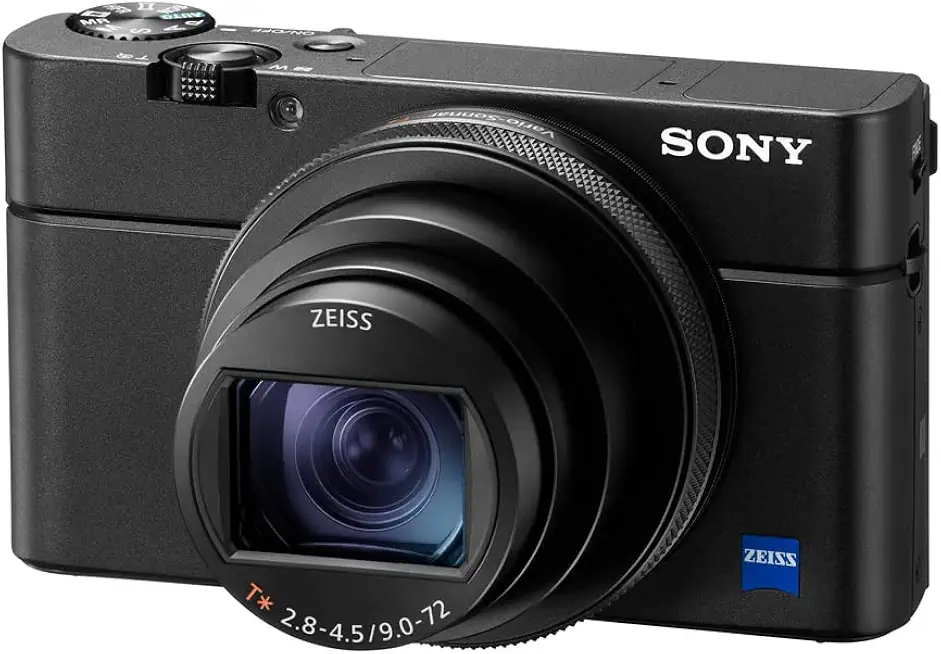
Sony RX100 VII DSC-RX100M7
Pocketable powerhouse with 1-inch sensor, rapid autofocus, long zoom range, and movie-ready features for creators on the move.
Check PriceThe Sony RX100 VII is a premium compact with a 20MP 1″ sensor and a versatile 24–200mm equivalent zoom, and it focuses down to roughly 8 cm at the wide end. That close-focusing distance combined with the long zoom gives you surprising framing options for flowers and small subjects without changing lenses. It’s a true pocketable tool that extends your working distance when you need it.
In the field you’ll notice how the fast, sophisticated autofocus locks onto skittish insects and other moving subjects, which is rare in compacts. The built-in stabilization keeps handheld close-ups sharp, so you can shoot more handheld macro without a tripod. For travel and walk-around macro work, that combination is a big advantage.
Image quality is clearly better than any smartphone and many basic compacts, but it won’t match APS-C or full-frame bodies in ultimate resolution or background separation. The smaller 1″ sensor also limits low-light performance and depth-of-field control compared with larger sensors. Users report the camera performs excellently for outdoor close-ups, though battery life can become a limiting factor on long outings.
If you want a single, pocketable camera that’s flexible enough for flowers, field insects, and travel macro, the RX100 VII is one of the most practical choices. If you demand the absolute highest resolution, extreme low-light capability, or intend to shoot long sessions without backups for power, a larger-sensor system would suit you better. For most travel and casual macro shooters, this camera hits the sweet spot.
- very compact and pocketable with wide zoom range
- fast, accurate autofocus suited to moving macro subjects
- good image stabilization for handheld macro
- superior image quality vs typical compacts/smartphones
- 1″ sensor limits ultimate resolution and low-light performance
- battery life may limit extended macro shoots
Compact Camera Macro Tips
Shooting macro with a compact camera is hugely rewarding once you learn its limits. Start by learning the magnification and minimum focus distance of your lens so you know how close you can get and how large your subject will fill the frame.
For precision, switch to manual focus whenever possible and use focus peaking or magnified live view to nail critical sharpness. Autofocus can be great for quick-moving insects, but for static subjects I prefer small, deliberate focus shifts and checking the LCD at 100%.
Stability is everything at close range. A lightweight tripod, a beanbag, or simply bracing the camera against a rock, combined with a two-second timer or remote release, will eliminate the tiny shakes that ruin macro shots.
Aperture choice is a balancing act: stop down to around f/8–f/16 to gain depth of field, but be mindful of diffraction on smaller sensors—your camera may have a slightly different “sweet spot.” When background separation is critical, consider focus stacking if your camera or workflow supports it to achieve pin-sharp results across the subject.
Think about motion and light together. Use a faster shutter for moving subjects and raise ISO only as much as your noise tolerance allows. If natural light is weak, add a small LED panel for fill or a diffused flash to freeze motion without harsh shadows.
Light shaping matters as much as exposure. Soften direct sun with a diffuser, use a white card to fill shadows, and try backlighting to reveal translucence in petals and wings. Portable modifiers make big improvements when you’re working outdoors.
Compose deliberately: isolate the subject against uncluttered backgrounds, change your angle to reveal texture, and move slowly—patience often yields better insect behavior and cleaner compositions. Practice framing tight and leaving a little breathing space so the subject doesn’t feel squeezed.
Finally, keep a small macro kit in your bag—extra batteries, a memory card, a tiny tripod or clamp, and a foldable diffuser—and treat every outing as a test session. Small refinements in technique and lighting will lift compact-camera macro images from “nice” to memorable.
Macro Photography Lighting Techniques
Lighting is everything in macro work. Up close, tiny changes in light angle and quality completely alter texture, color and depth, so start by learning how light sculpts your subject before worrying about gear.
When possible, use natural light. Early morning and late afternoon give soft, directional light that flatters insects and flowers. Overcast skies act like a giant softbox, delivering even illumination that makes focus stacking and detailed texture capture much easier.
Harsh midday sun can be tamed with simple diffusers. A translucent reflector, a sheet of tracing paper, or even a white plastic lid will soften shadows and preserve highlight detail. Place the diffuser between the sun and your subject and move it until you like the fall-off.
Continuous LEDs are a great companion for compact cameras. They let you preview shadows and adjust position in real time, which speeds up composition and focusing. Use them as fill light when the main source is backlighting, or as the primary light for small setups.
Flash is indispensable when you need to freeze motion or increase depth of field without cranking ISO. A small macro or ring flash with a diffuser gives flattering wrap-around light; lower flash power and get close to avoid harsh hotspots. If you can, feather the flash or combine it with a reflector for softer results.
Backlighting reveals translucency in petals and insect wings, but it can blow highlights. Meter for your subject and use a reflector to lift deep shadows. Watch your histogram and dial back flash or exposure if highlights clip.
Finally, don’t be afraid to experiment—gels and snoots create mood and isolate subjects, while tiny white cards give clean fill. Practice moving light sources an inch at a time; in macro, that inch is everything.
What People Ask Most
What is the best compact camera for macro photography?
There is no single best compact camera; the right choice depends on your subjects and priorities. Look for models with close-focusing ability, effective image stabilization, and reliable autofocus for the best results.
Which compact cameras have the best close-focusing distance for macro shots?
Models with dedicated macro or close-focusing modes and premium fixed-lens compacts often offer the shortest working distances. Check a camera’s minimum focus distance and real-world user reports to see how it performs on tiny subjects.
Can compact cameras take high-quality macro photos?
Yes, compact cameras can produce high-quality macro images when paired with good technique and lighting. Sensor size and lens design influence depth of field and low-light performance, so manage expectations accordingly.
What features make a compact camera good for macro photography?
Important features include a short minimum focusing distance, steady image stabilization, accurate autofocus and manual focus aids like focus peaking or magnified live view. Access to focus stacking and the ability to use diffused lighting also improve macro results.
How do I set up a compact camera for macro photography?
Use a stable support, enable manual focus or focus peaking, and compose carefully to maximize sharpness and depth of field. Control the light with diffusers or reflectors and consider focus stacking if you need more depth of field.
Are bridge or compact cameras better for macro photography?
Bridge cameras offer long zoom ranges while compact cameras emphasize portability and simplicity; either can work well for macro depending on your shooting style. Choose based on whether you need reach and versatility or pocketability and ease of use.
How can I improve macro performance on my compact camera?
Improve macro performance by stabilizing the camera, using soft, directional lighting, and practicing precise focusing techniques such as focus peaking or magnified live view. Experiment with focus stacking and patient composition to capture more detail and cleaner backgrounds.
Conclusion for Best Compact Cameras for Macro
This roundup shows how modern high‑resolution mirrorless bodies and premium compacts can both deliver excellent macro results, each bringing a mix of portability and creative flexibility.
Prioritize image stabilization, autofocus performance, sensor size and lens options.
These factors determine how well a camera handles close focusing, depth of field and handheld shooting, so choose based on your preferred subjects and shooting style.
To sharpen your macro technique and get more from your gear, read more articles on the site and practice the tips that fit your workflow.
Have a question or want to share your own macro setup? Leave a comment below — we usually reply within a few hours.




0 Comments