

Ever wished you could freeze a split-second finish or a midair catch with a camera that actually fits in your pocket?
Which compact can keep up with pro-level action without weighing you down?
This guide looks at five compact, action-ready cameras built for sports and fast-paced events.
We evaluate real-world performance, not press-release specs.
Key criteria include burst shooting, autofocus and tracking, lens reach and zoom flexibility, portability and durability, and low-light performance.
These factors determine whether you nail the decisive frame or miss it.
Expect hands-on comparisons that focus on reliability and usability.
We paid attention to sustained burst rates, continuous AF behavior, and how lenses let you frame distant action.
We also note how easy each camera is to carry and how it withstands rough environments.
Whether you shoot youth leagues, action sports, or travel with a camera in your pocket, choice matters.
Some shooters want pocketable zoom and quick autofocus.
Others need survival-grade durability and long telephoto reach for distant action.
Throughout the review we balance measurable performance with real user feedback and field practicality.
The result is a short list meant to put great sports images within reach, without hauling a pro rig.
Read on to find the compact sports camera that matches your shooting style and budget.
1. Panasonic Lumix G9 II For Sports

Panasonic LUMIX DC-G9M2 (G9 II) mirrorless camera body
Professional-grade stabilization and blazing autofocus for wildlife and sports photographers seeking rugged, high-speed performance and stunning image quality.
Check PriceAs a traveling shooter, the Panasonic Lumix G9 II feels like the sweet spot between speed and portability. It’s lightweight and compact while still offering blistering burst rates — up to 75 fps with the electronic shutter — and in real-world tests it even handled runs of 170 frames at 14 fps without choking.
Autofocus is a genuine strength for action work: phase-detect AF combined with AI-powered subject recognition gives you reliable tracking through unpredictable movement. Paired with the Micro Four Thirds lens ecosystem, you get access to a wide range of lightweight telephoto options that keep the kit small without sacrificing reach — ideal for cycling, motorbike racing, and other outdoor sports where you move fast and travel light.
That said, it’s not perfect for every situation. At the maximum burst speeds you’ll notice viewfinder lag and no true live view during continuous shooting, which can feel disorienting if you’re used to blackout-free VF systems. Also, the smaller sensor compared with APS-C or full-frame bodies can limit very low-light image quality, so indoor or dim-field sports may require higher ISO or faster lenses to compensate.
Overall, if your priority is a travel-friendly sports camera that balances size, speed, and lens flexibility — and you mostly shoot outdoors or in well-lit situations — the G9 II is a smart, practical choice. Expect to tweak settings to your workflow and accept some trade-offs in extreme low-light or blackout-free viewing at max burst.
- Lightweight, compact body
- 75 fps burst (electronic shutter)
- Phase-detect AF with AI subject recognition
- Micro Four Thirds lens ecosystem
- Viewfinder lag at maximum burst speeds; no true live view
- Smaller sensor limits very low-light image quality vs larger formats
2. Sony A1 II For Sports

Sony Alpha 1 II full-frame mirrorless camera
Flagship-level speed and resolution delivering astonishing detail, ultra-fast continuous shooting, and industry-leading video capabilities for demanding creators.
Check PriceAs a working sports photographer I can tell you the Sony A1 II is built to win the frantic moments you can’t recreate. It shoots 30 fps with no blackout and pairs that speed with advanced AF — real-time tracking and new auto subject detection — so your hit rate on decisive frames goes way up.
The 50 MP sensor is a huge advantage when you need tight crops or massive detail for prints and editorial use. Professionals also praise the lack of viewfinder blackout and CFExpress-backed write speeds, which keep the camera responsive through long bursts and big files.
Handling is solid: the body is weather-sealed and the EVF is top-tier (9.44M dots, 240 Hz), so tracking through the viewfinder feels natural and smooth. Be aware this is a full-frame pro tool — it’s larger and heavier than compact options, so there’s a real portability trade-off.
The feature set is deep, which is fantastic if you can invest time learning it. Hobbyists sometimes find the menus and options overwhelming, but for pro shooters who demand top-tier speed, AF reliability, and image quality, that complexity translates into control and customization.
Bottom line: if you’re a professional or a committed enthusiast who prioritizes speed, tracking, and resolution above pocketability, the A1 II is one of the best sport-focused cameras you can buy. If you want something light and simple, this probably isn’t the right fit.
- 30 fps burst with no blackout
- Advanced AF: real-time tracking & auto subject detection
- 50 MP sensor for detailed images and tight crops
- Weather-sealed body; 9.44M-dot, 240 Hz EVF
- Larger and heavier than compact options
- Complex feature set and menus may overwhelm hobbyists
3. Fujifilm X100VI For Sports

Fujifilm X100VI digital camera
Compact, rangefinder-inspired design with superb color science, tactile controls, and beautiful JPEGs straight out of camera for everyday storytellers.
Check PriceThe Fujifilm X100VI is a compact shooter that punches above its size thanks to a 40 MP APS-C sensor paired with a sharp, fast 35mm-equivalent f/2 lens. That combination gives surprisingly strong detail and low-light capability for a compact camera, so you’ll get usable files and good ISO performance when the light drops.
Built-in IBIS helps steady handheld shots at slower shutter speeds, which is a real advantage when you’re working close to action and can’t always raise ISO. The hybrid optical/electronic viewfinder is a joy for tracking moving subjects in chaotic scenes — it feels immediate and precise in the way only a well-designed finder can.
Fujifilm kept the classic, robust build, and weather sealing is possible with an adapter, so it stands up to gritty street or informal sports settings. That makes it ideal for documentary-style sports, candid moments, and dynamic on-the-move shooting where you want quality without lugging a kit.
The trade-offs are clear: the fixed 35mm-equivalent lens limits framing flexibility for traditional sports, so you’ll need to get closer, pre-visualize compositions, or accept cropping in post. Some shooters find that restriction frustrating, while others enjoy the discipline it forces—framing and anticipating become part of the creative process.
It’s not as pocketable as some ultra-compact rivals, so expect a portability trade-off for the improved image quality and controls. Also be aware the X100VI has high demand and limited availability, which can mean pricing and stock headaches when you’re ready to buy.
If you’re a photographer who values image quality, a tactile hybrid viewfinder, and a portable tool for informal or street-style sports, the X100VI is mostly a very good fit — just not for stadium pros needing long reach.
- 40 MP APS-C sensor
- Sharp, fast 35mm-equivalent f/2 lens
- Built-in IBIS
- Hybrid optical/electronic viewfinder
- Fixed 35mm lens limits framing
- High demand / limited availability
4. Sony RX100 VII For Sports
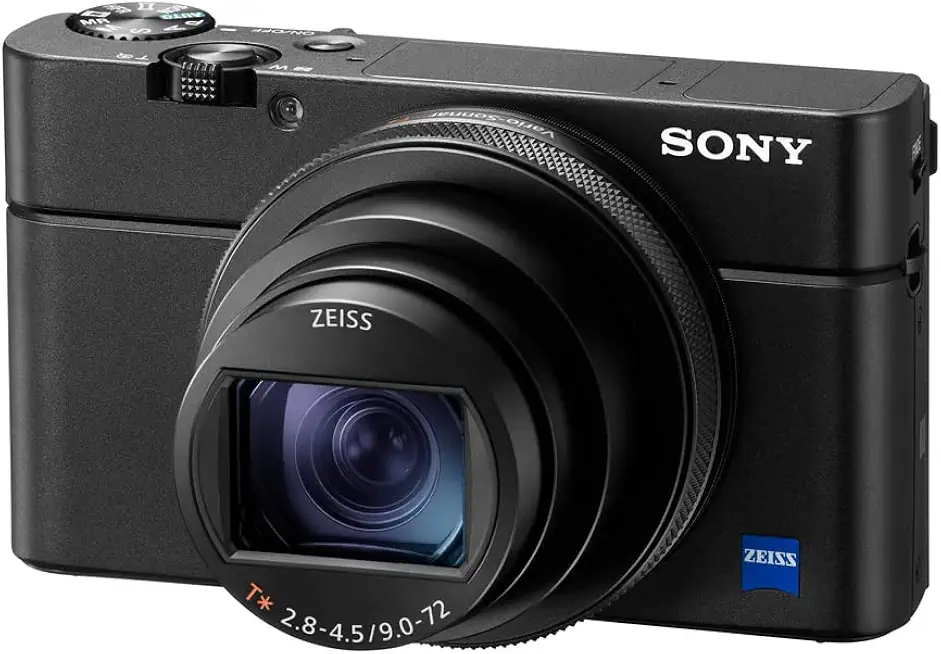
Sony RX100 VII (DSC-RX100M7) compact camera
Pocketable powerhouse capturing astonishing zoom reach, rapid autofocus, 4K video, and effortless portability for travel and vlogging.
Check PriceI shoot a lot of weekend sports and travel events, and the Sony RX100 VII is the little camera I reach for when size and speed matter. Its true pocketable body and 24–200mm equivalent zoom give you framing flexibility from wide scenes to tight action without lugging extra glass.
That stacked 1-inch sensor delivers a genuine 20 fps burst with minimal rolling shutter, so you actually get usable sequences of motion. Combine that with class-leading AF and subject tracking for a compact, and you’ll catch decisive moments more often than with a phone.
Realistically, the RX100 VII shines for casual sports, kids’ games, and travel-day shoots where portability is king. It feels significantly better than a smartphone in reach and handling, and the zoom range lets you reframe quickly from the sidelines.
Know the trade-offs before you buy. The 1-inch sensor limits image quality and low-light performance versus APS-C and full-frame options, so stadium lights or dim indoor venues will expose its weaknesses. Battery life is short too, so plan on spares for extended use, and don’t expect weather sealing for wet conditions.
- True pocketable body with 24–200mm equivalent zoom
- Stacked 1-inch sensor with 20 fps burst
- Extremely portable — fits in a coat pocket
- Class-leading AF and subject tracking for a compact
- 1-inch sensor limits image quality and low-light performance vs. APS-C/full-frame
- Short battery life; spares needed for extended use
5. Olympus Tough TG-7 For Sports

OM SYSTEM Tough TG-7 waterproof rugged camera
Built to withstand dives, drops, and extreme conditions while delivering sharp macro and wide-angle shots for adventurous photographers.
Check PriceThe Olympus Tough TG-7 is a photographer’s survival tool more than a pixel-pushing machine. It’s built to withstand real-world abuse: waterproof to 15 m, shockproof from 2.1 m, and crushproof, so you can take it surfing, skiing, or on a muddy hike without worry. That physical toughness makes it uniquely suited to outdoor and adventure sports where a phone or ordinary compact would fail.
Image quality is modest—its small sensor and basic lens aren’t going to rival mirrorless systems in low light or for large prints—but in bright conditions the TG-7 delivers pleasing results and very usable files for social sharing. The camera’s strong macro mode is a nice bonus if you like close-up details of gear, textures, or action on the sidelines.
Controls are simple and intuitive, which I appreciate when I’m cold, wet, or juggling equipment; you won’t need to dive through menus to change settings between runs. Autofocus and burst performance are adequate for casual sports and adventure use, but don’t expect pro-level tracking or sustained high-speed shooting in dim environments.
Bottom line: pick the TG-7 if your priority is durability and pocketable reliability in harsh conditions, and you can live with average low-light performance and limited burst/AF for serious action work. It’s a great companion for outdoorsy shooters who value “survival-grade” build over interchangeable-lens flexibility.
- Waterproof to 15 m
- Shockproof from 2.1 m
- Strong macro mode
- Simple, intuitive controls
- Small sensor and basic lens constrain image quality, especially in low light
- Burst shooting and AF adequate only for casual use; performance drops in low light
Autofocus Tips For Fast Action
When you’re trying to capture fast action, the single biggest switch you can make is AF-C (continuous autofocus). It keeps the focus motor working as your subject moves, so instead of hoping your camera guessed right at the moment you pressed the shutter, it’s actively predicting and adjusting as the scene unfolds.
Pair AF-C with back-button autofocus to decouple focusing from the shutter release. That lets you lock the tracking on a subject without interrupting bursts, and it’s a tiny habit that pays off immediately when you need to recompose or follow sudden movement.
For chaotic sports — think basketball, hockey, or motocross — don’t baby a single point. Use group or expanded AF-area modes so the camera can hunt within a cluster of points as the subject darts unpredictably; this reduces the number of missed frames when feet, sticks, or handlebars cross the line of sight.
Combine those AF settings with high-speed continuous shooting to increase your hit rate. Continuous AF during a fast burst means you’re not just snapping many frames, you’re giving yourself multiple chances where the camera is actively maintaining focus on the subject throughout the sequence.
Spend time with the AF sensitivity or tracking parameters your camera offers. When subjects are likely to be briefly obscured by other players or poles, dial the tracking to be a touch less “snappy” so it won’t jump to the nearer object; when subjects flip direction quickly, make it more responsive. Small changes here dramatically reduce hunting and increase keepers.
Finally, practice with these combos in real conditions and vary them by sport. Each camera and situation reacts differently, so test what works for you — then stick with a setup you trust so the moment you need it, you don’t have to think about settings and can concentrate on timing and composition instead.
Choosing The Right Telephoto For Sports
Picking the right telephoto can make or break your sports images. Start by thinking about how close you can get to the action and what kind of shots you want to make — full-body action, tight headshots, or environmental portraits with background separation.
For most outdoor field sports a 70–200mm covers a lot of ground; if you’re shooting from the stands or a sideline you’ll often want 300–500mm or more to really fill the frame. The further away you are, the more reach you need, but remember that extreme focal lengths magnify movement and reduce the margin for error.
Fast apertures are not just about background blur; they let you use faster shutter speeds and give the AF system more light to work with. Aim for f/2.8–f/4 when you can, especially for indoor sports or late-day contests where light is limited.
Image stabilization is extremely helpful when you have to handhold long glass between bursts or when panning. It won’t substitute for a fast shutter against stop-action motion, but it steadies frames and increases keepers when you’re tracking subjects or working alone without a monopod.
Choose a zoom if you need versatility — zooms let you reframe quickly as plays develop and handle multi-subject situations. Go for a prime only when you need maximum reach or the fastest aperture possible and you’re willing to move to get your composition.
Finally, check AF speed and accuracy, build quality, and weather sealing before you commit. Consider weight and how much you’ll actually carry; renting a lens or borrowing one for a game is one of the best ways to learn whether its reach and handling suit your shooting style.
What People Ask Most
What is the best compact camera for sports photography?
There is no single best choice; the right compact camera depends on your shooting priorities such as portability, autofocus performance, and lens reach. Pick a model that matches your typical subjects and shooting environment.
What features should I look for in a compact camera for sports?
Look for reliable continuous autofocus, strong burst shooting behavior, useful zoom or lens options, and good handling for quick framing adjustments. Durability and low-light capability are also important depending on your venues.
Do compact cameras have fast enough autofocus for action and fast-moving subjects?
Many modern compact cameras offer capable autofocus systems designed for tracking moving subjects, but performance varies between models. Assess real-world tracking ability and responsiveness through hands-on tests or trusted reviews.
Which compact cameras offer the best continuous shooting (burst) rates for sports?
Some compact models are marketed for high-speed continuous shooting and sustained performance, while others are optimized for single-shot quality. Consult manufacturer specifications and independent tests to evaluate sustained burst behavior and buffer performance.
Are compact mirrorless cameras better than DSLRs for sports photography?
Mirrorless cameras often provide advantages like advanced live-view autofocus and more compact designs, but DSLRs can still be strong performers depending on the model and lenses. Choose based on autofocus needs, lens ecosystem, and how the camera handles for long shoots.
Can compact cameras perform well for indoor sports and low-light conditions?
Performance indoors depends on sensor size, lens speed, and image stabilization more than the body label; some compact cameras perform well while others struggle. Prioritize fast lenses and stabilization, and review sample images from similar lighting conditions.
What zoom range and lens specifications are ideal in a compact camera for sports?
A versatile telephoto reach and relatively fast aperture are useful for filling the frame and freezing motion, while image stabilization helps when handholding longer focal lengths. Consider the types of sports you shoot and choose focal lengths and aperture characteristics that match those scenarios.
Conclusion For Best Compact Camera For Sports
This comparison distills the most important trade-offs for action-ready, compact cameras so you can weigh burst speed, autofocus and tracking, lens reach, portability, and durability against your shooting needs.
Rather than one perfect camera, the models reviewed each shine in different scenarios—travel and adventure, professional stadium work, casual family sports, or survival-grade outdoor use—so match a camera’s strengths to how and where you shoot.
Use the autofocus tips and lens-guidance from earlier to turn those strengths into consistent results, pairing continuous AF and the right zoom reach with your preferred shooting style.
If you want to improve your sports photography skills and gear choices, take a look at more articles on our site for practical techniques, setup advice, and real-world workflows to boost your confidence behind the camera.
Have questions or want to share your experiences with any of these cameras? Leave a comment below and we usually reply within a few hours.


0 Comments