
Which camera will actually elevate your Instagram photos, Reels, and vlogs without turning you into a tech reviewer? Choosing gear feels overwhelming with options that promise cinema results but often complicate the creative process. You want gear that frees your creativity, not frustrates it.
This guide cuts through the noise to pick the best cameras for social media creators. We’ll focus on tools suited to stills, Reels and TikTok clips, solo vlogging, and 360-degree content. Think practical picks for shooting on the phone-and-camera hybrid workflows most creators use today.
Expect recommendations based on hybrid photo/video performance, portability, robust audio options, reliable stabilization, and quick sharing workflows. Those factors determine whether a camera becomes a creative shortcut or a daily burden. We’ll also weigh battery life, ergonomics, connectivity, and how easily footage moves to your phone for posting.
I’ll weigh real-world usability against headline specs so you can pick a camera that suits your workflow and budget. No jargon-heavy charts — just clear trade-offs, shootability notes, and who each pick is for. By the end you’ll know which camera suits your style and which compromises make sense for your content.
Whether you’re a daily Reels creator, a travel vlogger, or experimenting with immersive 360, there’s a camera that fits. Let’s find the one that helps you create quickly and share even faster.
1. Fujifilm X-M5 Overview

Fujifilm X-M5 mirrorless camera body
Retro-styled interchangeable-lens shooter with high-resolution sensor, advanced processing, and in-body stabilization for stunning stills and video.
Check PriceThe Fujifilm X-M5 is a compact hybrid that’s clearly built with social creators in mind. It delivers exceptional image quality thanks to its APS-C sensor and offers 6.2K open-gate video plus a dedicated vertical video mode that makes Reels and TikToks effortless to frame and export.
One of my favourite practical features is Fujifilm’s Film Simulation modes; they produce Instagram-ready images and videos with far less post-processing. If you want a distinctive look straight out of camera, those profiles save time and keep your feed consistent.
For video creators the X-M5 includes a flat F-Log2 profile and a mic socket, which makes it easy to plug in better audio for livestreams or sit‑down videos. There’s also electronic stabilization that helps handheld footage, but it’s important to know it’s not a substitute for in-body stabilization when you’re moving a lot.
Physically the camera is compact and lightweight, which I love for travel and street work where portability matters. That said, the small form factor can feel fiddly if you have larger hands, so try one in hand before buying if ergonomics are a priority.
Overall, the X-M5 is an excellent choice if your priorities are high-quality stills/video, stylish out-of-camera looks, and compact travel-friendly design. If you shoot lots of run-and-gun handheld footage or prefer shooting with an electronic viewfinder, consider those limitations first.
- 6.2K open-gate video + APS-C sensor quality
- Film Simulation modes for instant stylized output
- Compact and lightweight for travel/social use
- Flat F-Log2 profile and mic socket for serious video
- No electronic viewfinder (EVF)
- Lacks in-body image stabilization (affects handheld smoothness)
2. Canon EOS R10 Overview
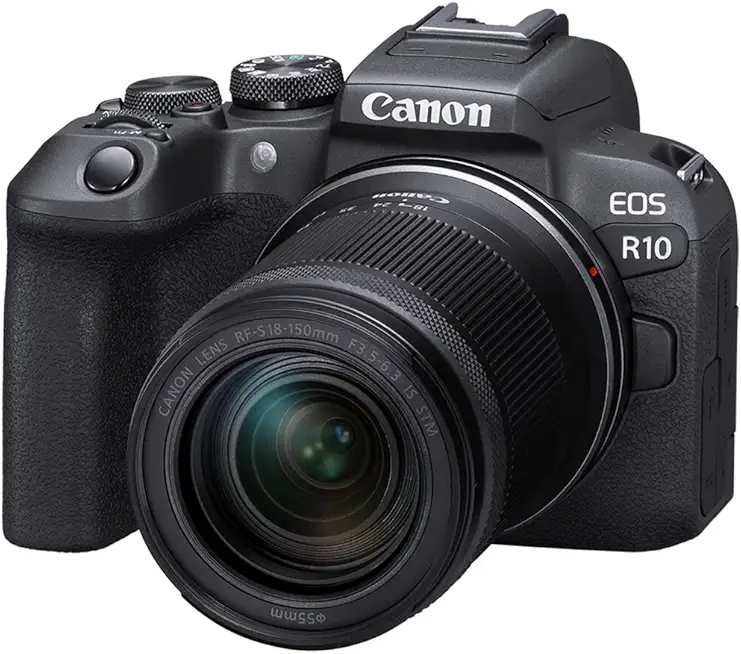
Canon EOS R10 with RF-S18-150mm F3.5-6.3 IS STM lens
Lightweight APS-C kit delivering versatile zoom, fast autofocus, and image stabilization—ideal for travel, vlogging, and everyday photography.
Check PriceThe Canon EOS R10 is a compact, beginner-friendly APS-C mirrorless that’s great for bloggers and social creators who want solid photos and easy video. It balances strong stills with hybrid features, giving you good dynamic range and detail without a steep learning curve.
For video the R10 is capable, offering 4K up to 60fps — though note that 4K 60fps is cropped. It also includes useful slow-motion modes, so you can get smooth, sharable clips for Reels or TikTok with minimal fuss.
Ergonomics and usability are where this camera shines for everyday content work. Canon’s interface is straightforward and the body feels comfortable for handheld shooting, which speeds up workflows for solo creators and novices alike.
If you vlog, the R10 plays well with accessory bundles like stereo mics and tripod grips; that makes it easy to build a practical kit without hunting for niche parts. That expandability is handy when you want better audio or more stable handheld setups.
There are a couple of caveats to keep in mind. The cropped 4K 60fps reduces your field of view, which can frustrate advanced shooters who want wide framing at high frame rates. Also, as an APS-C body it won’t match the noise performance or shallow-depth look of many full-frame systems.
- User-friendly Canon interface and excellent ergonomics
- Strong photo image quality (dynamic range/detail)
- Versatile 4K recording and slow-motion capability
- Optional content-creator kits enhance vlogging workflow
- 4K 60fps is cropped, reducing field of view
- APS-C sensor may not satisfy full-frame seekers
3. Sony ZV-E10 II Overview

Sony ZV-E10 II with lens
Creator-focused compact system offering exceptional autofocus, clean video output, and easy content capture for vloggers and social media creators.
Check PriceThe Sony ZV-E10 II is an APS-C mirrorless camera built with vloggers and social media creators in mind. It’s clearly tuned for video-first workflows while still handling photos competently.
What impresses most is the autofocus — users rate it 10/10, and in real-world shooting that translates to rock‑solid subject tracking during live, dynamic takes. That reliability makes it easy to focus on framing and performance rather than hunting focus mid‑shot.
On the video side you get advanced options like internal 10‑bit and Log recording, which give you real headroom for color grading and a more cinematic look. Those features push this little camera beyond simple phone upgrades and into a tool you can use for polished Reels, YouTube Shorts, or longer social videos.
The camera sacrifices an electronic viewfinder to stay compact and lightweight, so it’s noticeably more portable but less versatile for traditional stills shooters who rely on an EVF. Also be aware it only offers digital image stabilization, which may be inadequate for fast handheld action without additional support like a gimbal or careful shooting technique.
Bottom line: the ZV‑E10 II is mostly a win for creators who prioritize reliable autofocus, portable form factor, and flexible color/video options. If you want an easy-to-carry video-centric camera that grades well and nails subject tracking, it’s a strong contender. If you need a viewfinder or strong in-body stabilization, you might feel its trade-offs.
- Rock-solid autofocus for video and photo.
- Internal 10-bit and Log options for color grading/cinematic work.
- Compact, lightweight, highly portable.
- Multiple frame-rate options for social formats.
- Lacks an electronic viewfinder.
- Only offers digital stabilization.
4. Insta360 X5 360 Camera Overview

Insta360 X5 8K 360° action camera
Capture immersive 360-degree footage in ultra-high resolution with robust stabilization and waterproof durability for adventure and cinematic results.
Check PriceThe Insta360 X5 is a strong pick if your social feed leans toward immersive, adventurous content. It captures smooth, high-quality 8K 360 video that instantly stands out in feeds and stories, giving viewers full spherical perspective rather than a flat frame.
As a photographer who also shoots action and travel pieces, I appreciate the rugged, waterproof design — rated to 15m — and the user-replaceable lenses that keep you shooting after knocks or drops. Those features make it a real field camera for outdoor creators who don’t want to baby their gear.
Image quality is genuinely impressive for a 360 rig, with sharper results and improved low-light performance vs prior models, so dusk and indoor clips look cleaner than older 360 cameras. The real workflow win is the robust app and AI-powered editing tools, which simplify reframing, stabilization, and quick social-ready exports without a heavy desktop edit.
That said, it’s a specialized tool. If you mainly post single-lens, cinematic flat videos, a traditional camera might serve you better. Also plan for heavy storage and editing demands: large 360 files will need powerful phone or computer hardware to process smoothly.
- 8K 360 video quality
- Waterproof to 15m
- Replaceable lenses for durability
- Robust app + AI editing tools
- Specialized 360 format not ideal for flat videos
- Editing large 360 files needs powerful hardware
5. Canon PowerShot V1 Compact Vlogging Camera Overview

Canon PowerShot V1
Compact handheld designed for easy shooting, offering quick autofocus, user-friendly controls, and vibrant photos for everyday moments.
Check PriceThe Canon PowerShot V1 is a compact vlogging camera that feels designed for creators who want better image quality than a phone without the bulk of a mirrorless system. It pairs a 22MP 1.4‑inch sensor with a built‑in 16–50mm lens, so you get noticeably cleaner photos and video in everyday shooting.
In real-world use it delivers near‑professional visual quality while staying pocketable. The body sits in a comfortable middle ground — more substantial than tiny compacts but much easier to carry than most mirrorless rigs.
That built‑in 16–50mm wide‑angle focal range makes framing selfies and vlogs simple, and the ergonomic grip helps for longer handheld shoots. For social creators who swap between quick street snaps and talking‑to‑camera segments, it’s a very practical all‑in‑one.
It’s also a great stepping stone if you’re moving up from phone video. Beginners will appreciate the ease of getting solid results without wrestling with interchangeable lenses or complex menus.
The tradeoffs are straightforward. The fixed lens limits creative flexibility compared with interchangeable‑lens systems. And if you need pro‑level controls or advanced mirrorless features, the V1 won’t replace a higher‑end camera — but for most vloggers and social shooters it’s a highly usable, portable option that improves image quality without adding fuss.
- 22MP 1.4‑inch sensor
- Built‑in 16–50mm wide‑angle lens
- Very compact with good grip and ergonomics
- Easy step‑up from phone for beginners
- Fixed lens limits versatility
- Lacks professional‑level controls/features
Choosing a Camera on a Budget
When money’s tight, the smartest camera choice isn’t the one with the biggest number on the box. Think about what you actually shoot and what will make the most noticeable difference in your posts. Prioritize features that directly improve your content rather than chasing specs that sound impressive but don’t help day-to-day.
Sensor size matters more than megapixels. A larger sensor (APS-C or 1‑inch) will give you better low‑light performance and cleaner backgrounds than a tiny sensor with more pixels. For most social formats, 12MP+ stills and Full HD video are perfectly usable, and many affordable models now include 4K when you need it.
Autofocus and stabilization are your friends when you’re shooting solo. Fast face/eye detection saves time and reduces lost takes. If a camera lacks in‑body stabilization, factor in stabilized lenses, a gimbal, or careful movement—otherwise your handheld clips will look shaky.
Don’t ignore audio and connectivity. A camera with an external mic input is worth paying a little extra for; good sound lifts perceived quality more than a tiny bump in video resolution. Built‑in Wi‑Fi or Bluetooth and USB charging keep your workflow smooth and let you post quickly from a phone.
Comfort and a usable screen make shooting less of a chore. Flip or articulating screens are game changers for vlogging and selfies. If a new body stretches your budget, look at bundled kits, slightly older models, or reputable used gear to get more value for the same money.
Finally, plan for growth. Choose a system with affordable accessories and lens options so you can upgrade over time. If you’re unsure, rent a model for a weekend or buy from sellers with returns—practical experience beats specs every time.
Choosing a Camera for Vlogging
When I pick a vlogging camera for a shoot I think first about whether I can see myself while filming. A flip or fully articulating screen is non-negotiable for solo creators; it saves countless wasted takes and makes framing instinctive. If the camera hides your face while recording, you’ll spend more time guessing than creating.
Autofocus and stabilization come next. Fast, reliable AF with face and eye detection keeps you sharp during movement and talking-to-camera moments. If the body lacks in-body stabilization, plan for stabilized lenses or a lightweight gimbal; digital stabilization helps, but it’s often a compromise.
Video quality matters, but not just resolution. I prefer cameras with oversampled 4K or clean 4K60 if you want smooth slow motion and reframing abilities. Watch for cropped 4K60 modes though—crops affect your field of view and your wide-angle selfie framing, so test framing with your favorite lens before committing.
Sound is the silent dealbreaker. A camera with a mic input and headphone jack gives you practical options for interview mics, shotgun mics, or lavaliers. Good onboard mics work in a pinch, but wind and noisy environments demand external audio solutions and simple wind protection.
Think ergonomics and runtime. Lightweight cameras make long handheld days easier, but they must still feel secure in your hand. Long continuous recording, good heat management, USB charging, and spare batteries keep your shoots rolling without chasing power.
Finally, value the vlogger-friendly features: vertical video modes, subject tracking, live-streaming support, and built-in connectivity for fast phone transfer. These streamline publishing and save hours in post. Try to handle a few models in person; how a camera feels in your hands often tells you more than any spec sheet.
What People Ask Most
What is the best camera for social media content?
There is no single best camera; the right choice depends on your priorities such as photo and video quality, portability, and ease of sharing. Choose a model that balances strong hybrid performance with good audio and stabilization for your workflow.
Which camera is best for vlogging and social media?
Pick a camera with a flip or articulating screen, reliable autofocus, and effective stabilization to make solo shooting easier. Good audio options and a compact, ergonomic body also help for handheld and long sessions.
What camera do Instagram influencers use?
Influencers use a range of tools from advanced compacts and mirrorless cameras to smartphones, depending on their style and workflow. Many prioritize image quality, ease of editing, and portability when choosing gear.
Is a smartphone camera good enough for social media?
Yes, smartphones are often more than adequate for social posts thanks to convenience and built-in sharing tools. Dedicated cameras can offer advantages in low light, lens options, audio, and manual control if you need them.
What camera features matter most for social media photos and videos?
Important features include fast autofocus, good low-light performance, effective stabilization, a flip screen for self-framing, and solid audio options. Built-in connectivity and portability also streamline getting content from camera to audience.
What is the best camera for TikTok videos?
Look for a camera that supports easy vertical framing, smooth stabilization, and reliable autofocus to handle short-form, dynamic clips. Portability and quick sharing options make creating and posting faster.
How do I choose a camera for social media content creation?
Start by defining your budget, the types of content you make, and the features that matter most to your workflow. Test handling and check audio, connectivity, and battery life to ensure the camera fits how you work.
Conclusion for Social Media Cameras
In short, this lineup gives creators clear options: a hybrid champion for image-first social posts, versatile mirrorless choices for vloggers, a specialist 360 rig for immersive content, and a compact option for grab-and-go vlogging.
The Fujifilm X-M5 shines when you want rich, stylized photos and strong video tools in a pocketable body ideal for Instagram and vertical formats.
Canon’s EOS R10 is a friendly, well-rounded pick for bloggers and hybrid shooters who value ergonomics and easy workflow, while the Sony ZV-E10 II focuses on rock-solid autofocus and video-focused features for dynamic vlogging.
If immersive 360 footage is your goal, the Insta360 X5 makes that format accessible and durable, and the Canon PowerShot V1 is a smart compact choice for creators who need better-than-phone quality in a simple, selfie-friendly package.
Ultimately, pick by your real needs—budget, portability, video capabilities, audio inputs and stabilization will matter more day-to-day than headline specs.
If you want to keep sharpening your gear knowledge and shooting skills, read more articles on the site for deeper guidance and comparisons.
Have questions or a camera to recommend? Leave a comment below — we usually reply within a few hours.


0 Comments