
Which body camera will turn your YouTube POV footage into something viewers can’t look away from? Wearable cams can put your audience right in the action. But picking the right model is harder than the ads make it seem.
This quick guide compares five body cameras best suited for YouTube POV and vlogging. It draws on real‑world reviews and direct user feedback, not just spec sheets. The aim is practical, hands‑on insight you can use immediately.
Inside are short, clear product breakdowns that explain who each camera suits and why. We focus on everyday performance and user experience rather than marketing hype. Expect plain‑spoken pros and cons to speed your decision.
You’ll also find practical live‑streaming tips to help you go on air with confidence. There is straightforward mounting guidance for stable POV shots and comfortable wear. A concise FAQ covers the common creator questions so you can stop guessing.
Whether you stream live or craft polished edit‑first vlogs, this guide helps you match camera to workflow. Short reads, clear comparisons and real‑user notes mean less fiddling and more filming. Read on to find the best body camera for your YouTube channel.
We flag real limitations and user pain points so you know what to expect on long shoots. This guide avoids jargon and focuses on what creators will actually notice day to day. Now let’s dive into the five cameras and what makes each one useful for YouTube.
1. Boblov M7 Overview

BOBLOV M7 128GB Body Worn Camera
Reliable high-capacity wearable recorder offering clear evidence-grade video, long battery life, and secure storage for law enforcement and security professionals.
Check PriceAs a working photographer who shoots POV and on‑the‑move content, the Boblov M7 feels purpose‑built for mobile vlogging. It’s compact and wearable, so it won’t weigh you down during long runs or walk‑and‑talk segments.
The rotatable lens is the standout feature. It lets you mount the camera in unconventional positions and still get level, straight footage — ideal for chest, shoulder, or backpack mounts. USB‑C charging makes top‑ups fast between takes, and the sharp color screen is genuinely useful for previewing framing and playback on the fly.
Built‑in GPS adds valuable contextual metadata to your clips, which is great for travel vlogs or documenting routes. The controls and interface are intuitive, aimed at beginners and intermediate users, so you can focus on composition rather than wrestling with menus. That said, some users report Mac compatibility restrictions, so file transfer and software workflow may need an extra step if you edit on macOS.
In practice the M7 is a solid, practical choice when you want reliable POV with easy setup. It’s best for creators who prioritize flexible mounting, quick previews, and metadata over ultra‑long battery endurance. If you need all‑day continuous recording you’ll want a backup power plan, but for most YouTube vlogging sessions the M7 delivers a pleasing balance of portability and functionality.
- Flexible rotatable lens for versatile positioning
- Intuitive controls
- Built‑in GPS for contextual data
- Compact, wearable form factor for mobile vlogging
- Not compatible with Mac systems
- Battery life decent but not for all‑day recording without breaks
2. Transcend DrivePro Body 30 Overview

Transcend DrivePro Body 30 TS64GDPB30A 64GB Body Camera
Durable tactical recorder with night vision, wide-angle capture, loop recording, and straightforward data management for field operations.
Check PriceAs a photographer who shoots in rough conditions, I appreciate the Transcend DrivePro Body 30 for its rugged, solid build designed for security and law‑enforcement use. It feels like something you can strap on and forget about while you focus on framing and timing.
The unit emphasizes durability and reliable, straightforward operation. Its simpler feature set reduces complexity, which is a real advantage when you need consistent results under pressure. In practice it captures important details clearly, so evidence‑grade footage and POV content both come through with practical clarity.
There are trade‑offs to accept if you choose this camera. Video resolution is lower than some newer consumer models, so it won’t produce the same sharpness or high frame‑rate slow‑motion options that action cams offer. Battery life is adequate for typical work shifts but not for marathon recording sessions, and the camera lacks advanced features such as Wi‑Fi and high‑end stabilization.
If your priority is a dependable, no‑nonsense camera that survives drops and long days, this is a solid choice. It’s ideal for creators who value build quality and reliability over the latest consumer features. If you need ultra‑high resolution, advanced streaming or cutting‑edge stabilization, you may want to look elsewhere; but for long shifts and demanding environments, the DrivePro Body 30 mostly delivers.
- Durable, professional‑grade construction
- Simple, reliable operation
- Suitable for long shifts
- Captures important details clearly
- Lower video resolution/frame rate vs newer cameras
- Limited advanced features (no Wi‑Fi, limited stabilization)
3. Insta360 Go 3S Overview

Insta360 GO 3S 128GB 4K Camera
Ultra-compact 4K action device delivers smooth stabilization, versatile mounting, and quick sharing for everyday adventures and content creators.
Check PriceThe Insta360 Go 3S is an ultra‑compact action cam built specifically for wearable use — a tiny detachable camera paired with a charging pod, much like AirPods. Its form factor makes it incredibly discreet and easy to clip or hang for true hands‑free POV footage.
Image quality punches above its size: it records 4K video up to 60fps and uses a 6‑axis gyroscope for stabilization. That combination gives you crisp, high‑frame‑rate clips with much less post‑production stabilization needed.
Mounting is effortless thanks to the magnetic pendant system, and the smart app syncing plus intuitive controls speed up setup and in‑field adjustments. For run‑and‑gun vloggers this means faster starts and fewer fiddly menus between takes.
In practice, vloggers favor the Go 3S for its compactness and discretion — ideal for POV walking shots or action snippets where a bulky rig would be distracting. Reviewers consistently praise the stabilization for smooth walking and moving footage, which makes it a reliable choice for body‑mounted content.
There are tradeoffs: battery life requires frequent charging, so it’s best suited to short clips or action capture rather than all‑day streaming. Also, it lacks high‑end audio input options, so plan to pair it with an external mic or separate recorder if clean, broadcast‑quality sound is important.
Overall, the Insta360 Go 3S is mostly a great fit for YouTube creators who prioritize mobility, discretion, and stabilized POV footage, provided they accept shorter runtime and supplement audio when needed.
- Extremely compact and lightweight for wearable use
- Excellent image stabilization (6‑axis gyroscope)
- Flexible magnetic mounting system
- Intuitive app and controls
- Limited battery life; frequent recharging needed
- No high‑end audio input; may need external mic
4. DJI Action 2 Overview

DJI Action 2 Power Combo 32GB without magnetic protective case
Modular, high-performance action recorder with long battery life, rock-steady stabilization, and dynamic shooting modes for extreme sports.
Check PriceThe DJI Action 2 is a modular action camera that really shines for YouTube POV and vlogging where versatility matters. Its compact, rugged, waterproof body and multiple accessory mounts let you switch from chest-mounted POV to handheld or creative angle setups without buying a new camera.
Image quality is a standout — native 4K recording combined with strong low‑light performance and AI noise reduction keeps footage clean and usable straight out of camera. As a photographer, I appreciate the combination of image fidelity and stabilization: the system’s strong stabilization noticeably reduces shakes during walks and active movement, so you spend less time fixing clips in post.
Modularity is both the Action 2’s strength and its learning curve. The foldout display and accessory ecosystem allow custom rigs for different shooting styles, but expect a short setup phase to master which module you need for each scenario. Battery considerations are practical: the camera performs well for most runs, but battery life drops significantly when you use the screen or add powering accessories, so plan for spare power on long shoots.
Overall, if you want a compact body camera that doubles as a flexible action cam with top-tier video and stabilization, the DJI Action 2 is a strong choice. It’s especially good for creators who value image quality and adaptable mounting options and who don’t mind carrying extra batteries or spending a little time on modular setup.
- Outstanding video quality in varied lighting
- Modular design adapts to many shooting styles
- Robust stabilization reduces shakes
- Waterproof without extra housing
- Modular system can confuse new users
- Battery life drops with screen/accessories
5. Boblov M5 And M5 Pro Overview

BOBLOV M5 64GB No GPS 2K Body Camera
Compact professional-grade evidence recorder capturing crisp 2K footage, tamper-resistant storage, and user-friendly controls for security teams.
Check PriceAs a photographer who shoots POV and run-and-gun vlogs, the Boblov M5 / M5 Pro feels like the workhorse you reach for when reliability matters more than flash. It’s a classic body‑cam form factor built to survive drops and rough handling, so you can clip it to a jacket or mount it on glass without constant worry.
Battery life is one of its strongest suits — the camera offers full‑shift battery life, meaning you can comfortably record long sessions or an entire day of shooting without swapping power packs. That alone makes it attractive for creators who need consistent uptime rather than micro‑managed charging cycles.
The M5 includes GPS for automatic contextual metadata, useful when you want location-aware footage or to sort large volumes of clips later. It also has a built‑in color display for quick framing and playback, and multiple mounting options (jacket clip, suction mount) so you can adapt your POV quickly on location.
There are tradeoffs to consider. The user interface feels dated compared to newer models, so menu navigation and touch/controls aren’t as slick as modern consumer cams. It’s also slightly heavier than the latest ultra‑compact body cams, which you’ll notice if you prefer barely-there setups for long walking shots.
In short, if you prioritize durability, long battery life, and practical mounting plus GPS tagging for organized footage, the Boblov M5 / M5 Pro is a solid choice. If you want the lightest, most modern UI and the smallest footprint, you may want to weigh that against its rugged benefits.
- Durable — survives drops and rough handling
- Full‑shift battery life
- Multiple mounting options (jacket clip, suction)
- Integrated GPS for location metadata
- Outdated, less intuitive interface
- Slightly heavier than newer compact cams
Body Camera YouTube Live Tips
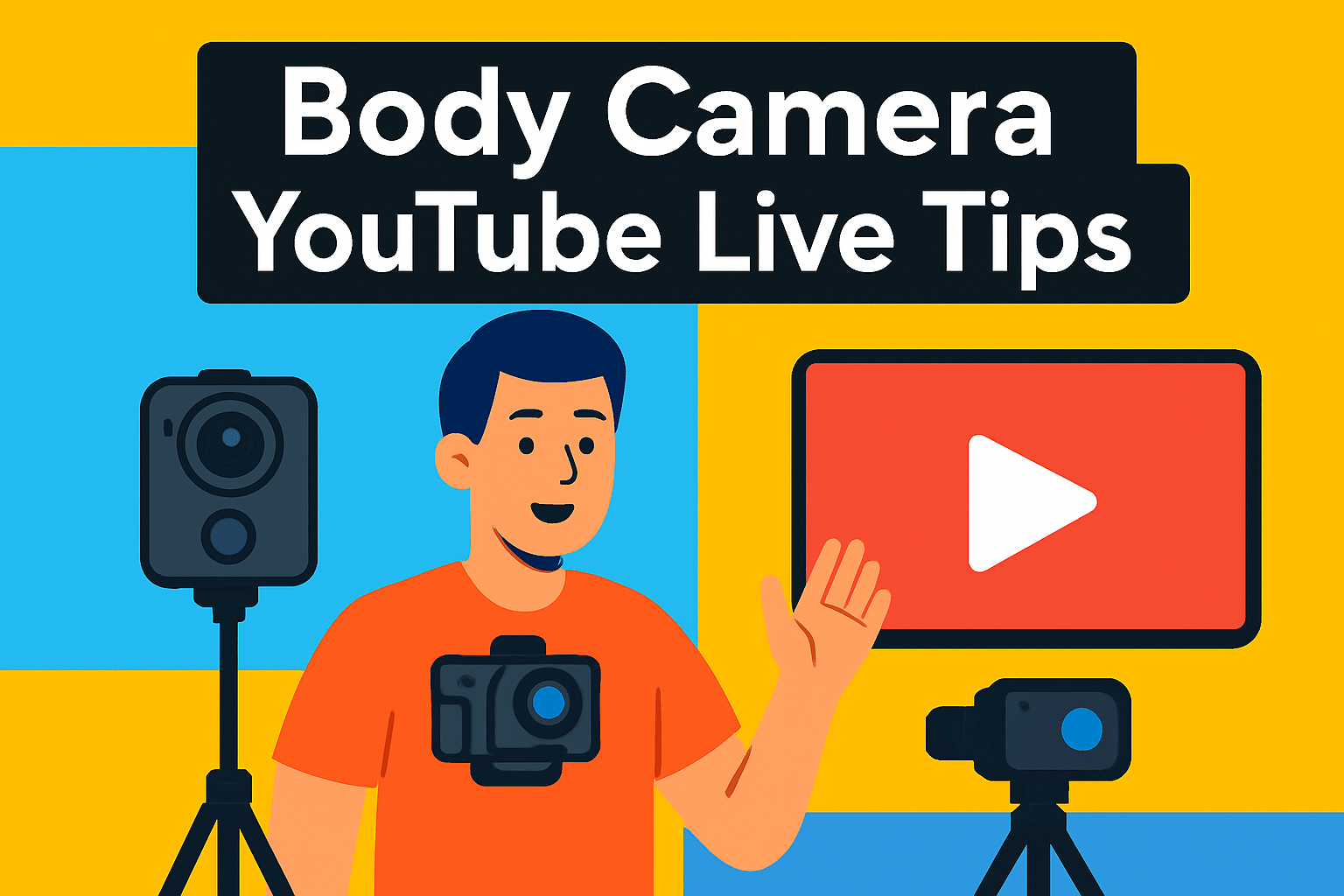
Live streaming from a body camera is liberating, but it also demands planning. First, treat your network like a second camera: run a speed test on location and choose a bitrate that’s comfortably below your upload ceiling to avoid dropped frames. If possible, prefer Wi‑Fi or a strong bonded cellular link and carry a backup hotspot or phone for tethering.
Adaptive bitrate streaming is your friend. When available, enable ABR so viewers on shaky connections still see video, and set your primary stream to 720–1080p rather than 4K unless you’re certain of rock‑solid upload. Lowering resolution and frame rate slightly often produces a much smoother live feed.
Audio makes or breaks a live video. Use an external lavalier or compact shotgun mic when you can, and monitor sound with wired headphones on a secondary device to catch wind noise or clipping. If the camera records locally as well, always keep that backup recording for later edits.
Stability and framing matter more live than in post. Chest or shoulder mounts reduce head wobble and create a natural POV. Secure your mount, clear the lens of smudges before going live, and keep lighting in mind—small sensors struggle in low light, so position yourself toward available light sources.
Set moderation and visibility ahead of time. Choose Unlisted for rehearsals, enable slow mode or appoint moderators for busy chats, and add clear stream titles and descriptions so viewers know what to expect. Hands‑free controls like voice or gesture triggers are very helpful for managing the stream without fumbling gear.
Always test the entire setup in real conditions. Run a full dress rehearsal: stream, check audio sync, confirm bitrate behavior, and watch the feed from another device. Treat every live session like a quick production shoot and log what worked so the next one gets easier.
Finally, manage power and heat. Carry a charged power bank, disable unnecessary wireless services, and be mindful that continuous streaming can drain batteries and warm the unit. Small preparations create a predictable, professional live experience for your viewers.
Stable YouTube POV Body Camera Mounting
Where you clip the camera will define the look and stability of your footage. For the steadiest, most natural POV choose a chest mount — it tames head wobble and keeps movement centered. If you need a higher, more cinematic angle try a shoulder or helmet position, but expect more shake unless you pair it with strong stabilization.
Don’t rely on one solution for stabilization; combine good mounting with a camera that helps. Cameras with advanced electronic stabilization or a 6‑axis gyroscope, like the ultra‑compact action cams, smooth walking footage and make shoulder or chest shots look professional. If you use a modular cam, add the stabilizing accessories available in its ecosystem for best results.
Fastening matters as much as mount choice. Use adjustable straps, quick‑release clips or a breathable harness that keeps the unit close to your torso to avoid wobble and chafing. If your model offers multiple mounting options, take advantage of them — a jacket clip or dedicated chest plate will outperform a loose magnetic pendant for long takes.
Small details make a big difference: always check lens orientation and clean the glass before filming. Models with a rotatable lens are forgiving when you must place them in unconventional spots, since you can level the shot without repositioning the mount. Also make sure fabric or gear isn’t brushing the lens during movement.
To minimize jitters, stabilize the rest of your body while filming. Move from your hips and keep your arms tucked when walking; a camera mounted near your center of mass will inherit less bounce than one on your head. For dynamic sports, prioritize lightweight mounts and rigid fastening so the camera tracks with your movement rather than lagging behind.
Always run short test takes in the exact conditions you’ll shoot in. Adjust angle, tightening points, and stabilization settings until the footage looks natural; then check audio sync and comfort for longer sessions. These small rehearsals save time in editing and deliver the smooth POV viewers expect on YouTube.
What People Ask Most
What is the best body camera for YouTube vlogging?
The best choice depends on your priorities such as video quality, battery life, stabilization, mounting options and audio. Pick a camera that balances those features for your shooting style and budget.
How do I mount a body camera for stable vlogging on YouTube?
Mount at the chest or shoulder with a secure clip or harness and use stabilized mounts or gimbals when possible. Check orientation and fasten tightly to minimize wobble.
What video quality and frame rate should a body camera have for YouTube?
Aim for a camera that offers sharp resolution and smooth motion to match your content style. Higher resolution and smoother frame rates help with clarity and motion but choose what your editing workflow can handle.
Which body camera features are most important for YouTube creators?
Stabilization, reliable battery life, good audio input options and versatile mounting are important features. Ease of use and durability also matter for long shoots and mobile setups.
Can I use a body camera instead of an action camera for POV shots on YouTube?
Yes, many body cameras are well suited for POV shots and can be more discreet or rugged depending on the model. Consider mounting options and stabilization to achieve the look you want.
How do I optimize audio and stabilization on a body camera for YouTube videos?
Use an external microphone if the camera supports one or position the camera to capture clearer sound while reducing wind noise. Combine proper mounting placement with the camera’s built-in stabilization and, if needed, external stabilizers or editing corrections.
Conclusion For YouTube Body Cameras
Choosing the right body camera for YouTube comes down to balancing durability, compactness, video quality, stabilization, battery life and audio to match your shooting style and workflow.
Before you publish or go live, test mounts, audio and streaming settings in real‑world conditions to avoid surprises and refine your setup.
Prioritize the features that matter most for your content—whether long battery life for full sessions, advanced stabilization for moving POVs, or better audio capture for clear narration.
If you want to build your skills and confidence, explore more guides and tips on our site to learn practical techniques and setup strategies for better POV vlogging.
Please leave a comment below with your questions or experiences, and we usually reply within a few hours.


0 Comments