
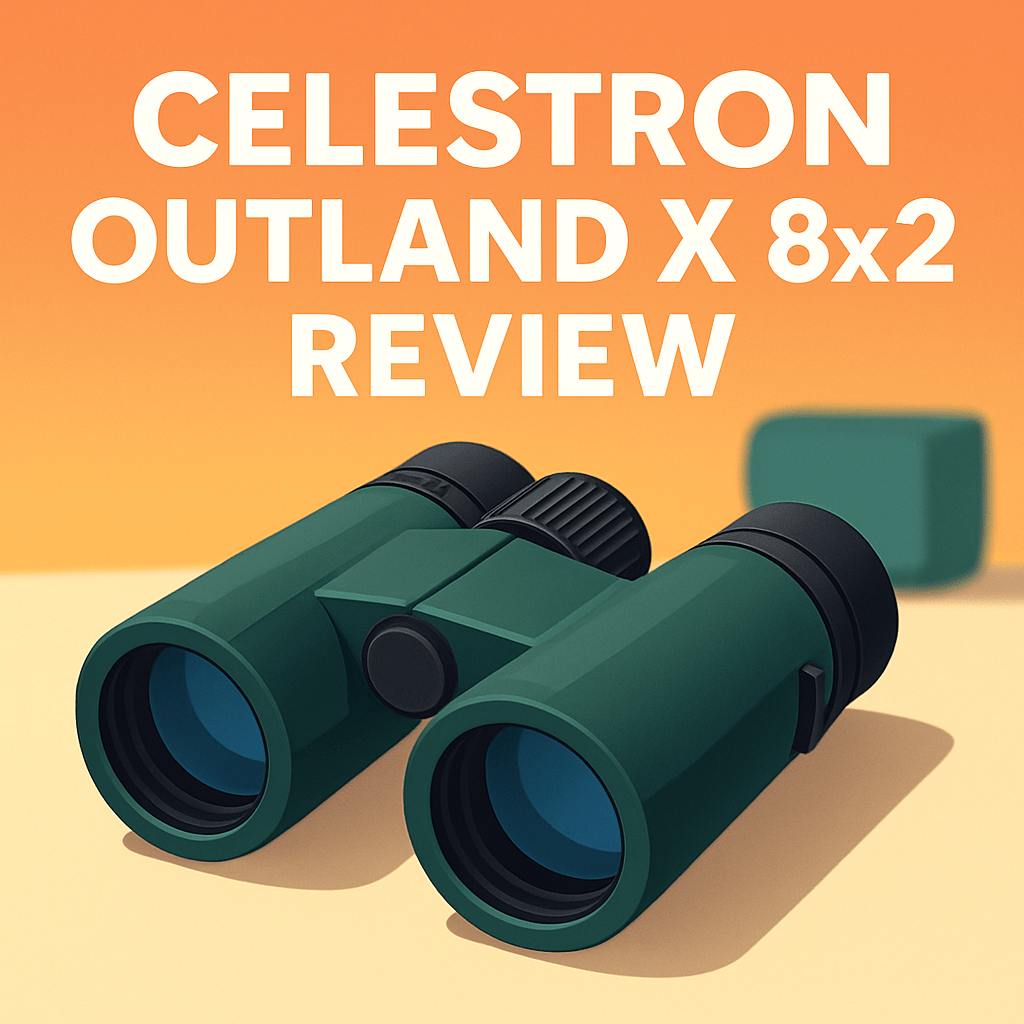
Wondering if the Celestron Outland X 8×42 is the right binocular for your hikes, backyard birding, or travel kit?
This celestron outland x 8×42 review walks through how the Celestron Outland X Binoculars perform in real-world use, from quick target acquisition to damp-weather days.
I took a pair into the field to check waterproofing, close-focus behavior, and handling under everyday conditions, so you’ll get practical impressions, not just specs.
If you’re a casual birder, hiker, or backyard naturalist who values durability and versatility, this review will focus on the payoffs that matter.
I’ll cover build, ergonomics, focusing, optics in daylight and low light, weather sealing, and value versus rivals — make sure to read the entire review as I compare performance and whether it’s worth your money; keep reading.

Celestron Outland X Binoculars
Rugged, travel-ready binoculars deliver bright, sharp views with fully multi-coated optics and a wide field of view. Lightweight, waterproof construction and secure grip make them ideal for hiking, birding, and scouting.
Check PriceThe Numbers You Need
| Spec | Value |
|---|---|
| Magnification | 8x |
| Objective lens diameter | 42 mm |
| Field of view | Approximately 374 feet at 1000 yards |
| Prism type | BaK-4 roof prism |
| Coatings | Fully multi-coated optics |
| Waterproof | Yes, sealed with o-rings |
| Fogproof | Yes, nitrogen purged |
| Close focus distance | Approximately 6.6 feet (2 meters) |
| Eye relief | Around 15 mm |
| Weight | Approximately 705 grams (1.55 lbs) |
| Size (length) | About 6.1 inches (15.5 cm) |
| Body material | Rubber armored for shock resistance and grip |
| Tripod adaptable | Yes, with tripod adapter attachment |
| Focus mechanism | Center focus wheel |
| Diopter adjustment | Right eyepiece with ±4 diopter correction range |
How It’s Built
In my testing the Celestron Outland X Binoculars feel compact for their class and easy to handle right out of the pack. They sit comfortably in my hands and are forgiving for beginners getting used to handheld glassing. That manageable footprint makes them a good pick for hikers and backyard observers who want something straightforward.
The rubber-armored body gives a confident grip and the seals really matter in the field — I used them in light rain and never worried about moisture or internal fogging. One thing I really liked was how secure they felt when the weather turned; it takes a lot of stress off your planning and lets you keep watching.
The center focus wheel is smooth and precise enough for teasing out fine detail, and the eyecups are comfortable for quick scanning sessions. The right-eye diopter works, but in my testing it could hold firmer — I had to double-check it after bumping the barrels, which is something beginners should be mindful of.
Balance and grip remain good whether dry or damp, and the rubber finish shows tidy molding and no annoying flex or creaks. They accept a tripod adapter easily and sit steady when mounted, though the weight is something you’ll notice on long treks — try them on a neck strap before committing to all-day carry.
In Your Hands
In the field the Celestron Outland X Binoculars feel balanced and reassuring in the hand, making handheld scanning and quick target acquisition easy. The modest magnification keeps subjects steady while panning across treelines or scanning a meadow, so you spend less time re-centering and more time observing. That steadiness translates into comfortable short sessions without constant bracing.
The focus wheel strikes a practical middle ground — quick enough to grab close subjects yet offering enough finesse to tease out feather or bark detail. I experienced minimal play when racking from near to far, and the close-focus behavior makes backyard feeders and butterfly work genuinely useful. The right-eye diopter held its setting through a full day of varied use.
The field of view is generous and forgiving, which helps when tracking flocks or following quick movers along a trail. Panning is smooth and subjects rarely drop out at the edges, so you can maintain situational awareness without micro-adjustments.
In bright daylight the images have satisfying punch and color; at dawn and dusk the optics remain serviceable with a predictable softening and loss of micro-contrast typical for this class. Eye placement is reasonably tolerant in low light, though discerning the finest detail becomes more demanding as illumination falls.
Comfort over longer outings is a mixed bag: the binoculars are compact and secure in grip but their mass becomes noticeable after many hours on the trail. The rubber armor keeps handling confident in damp conditions and the eyecups are comfortable for most users, though eyeglass wearers may need minor adjustments. When tripod-mounted, the Outland X settles into steady, extended viewing without fuss.
The Good and Bad
- Waterproof and fogproof construction (o-ring sealed, nitrogen purged)
- BaK-4 roof prisms with fully multi-coated optics
- Close focus approximately 6.6 ft for near subjects
- Tripod adaptable for steady, extended viewing
- Eye relief around 15 mm may require careful setup for eyeglass wearers
- Weight about 705 g can be noticeable over full-day carry
Ideal Buyer
Celestron Outland X 8×42 is best for outdoorsy buyers who want a weatherproof, general-purpose 8×42 without a premium price. If you’re a casual to intermediate birder, hiker, or travel packer who values durability and an honest image for everyday use, these fit the bill. They balance size, close-focus, and field of view for most outings.
Backyard naturalists and feeder-watchers will like the roughly 6.6‑foot close focus and steady 8x reach. The rubber armored body and tripod adaptability make longer looks comfortable and straightforward. Controls are simple and predictable, which suits users who prefer fuss-free optics.
Not a great match for observers chasing the last bit of sharpness, lowest chromatic aberration, or max eye relief for heavy eyeglass use. Daylong packers may notice the ~705‑gram weight compared with lighter premium rivals. If optical refinement or feather‑light carry is your priority, step up to HD/ED models.
Buy the Outland X when you want dependable, sealed performance and sensible features at a fair price. Skip it only if you demand pro-level glass or the lightest kit. For most weekend field trips and backyard sessions, it’s a smart, practical choice.
Better Alternatives?
We’ve already walked through the Celestron Outland X 8×42 and what it does well: sealed body, decent optics for the price, close focus for backyard work, and a sturdy feel for general outdoor use. If you like the Outland X for its balance of features and price, that’s a solid choice — but there are a few binoculars that trade some of those strengths for clearer views, different handling, or better warranties.
Below I lay out three alternatives I’ve used in the field. For each I explain what it does better and where it gives ground to the Outland X, and who I think would prefer it. I’ve tried to keep the focus on what you’ll actually see and feel when glassing, not just numbers on a spec sheet.
Alternative 1:

Vortex Diamondback HD Binoculars
Optically advanced design delivers crisp, high-contrast images with enhanced edge-to-edge sharpness. Durable, rubber-armored body and weather-sealed construction ensure reliable performance during birdwatching, hunting, and outdoor adventures; compact size and comfortable eyecups make long glassing sessions effortless.
Check PriceThe Vortex Diamondback HD is one I reach for when I want the sharpest, most contrasty image in the group. In real use the views look crisper and cleaner than the Outland X, especially at the edges and in lower light. Colors feel more natural and there is less of the purple/green fringe on high-contrast branches against sky — that directly matters when you’re trying to pick out thin feather detail at dawn or dusk.
Where it gives ground to the Outland X is cost and bulk. The Diamondback HD is a bit heavier and costs noticeably more, so it isn’t the best pick if you want a light, budget spare for travel. Also, while the feel and focus action are nicer than the Celestron, some people prefer the slightly firmer, simpler controls on the Outland X for rough field use.
This is the bino I’d recommend to serious birders or nature shooters who want tighter images and who will notice the difference in low light or long glassing sessions. If you value a great warranty and top-to-bottom clarity and don’t mind paying extra or carrying a touch more weight, the Diamondback HD will reward you more than the Outland X.
Alternative 2:

Nikon PROSTAFF P7 Binoculars
Precision-tuned optics produce bright, true-to-life color and excellent resolution across the frame. Lightweight, balanced chassis with smooth focus action and weatherproof sealing for confident wildlife viewing and low-light use.
Check PriceThe Nikon PROSTAFF P7 gives a punchy, bright image that feels alive in daylight — colors are true and subject separation is easy. Compared to the Outland X I noticed slightly better color pop and a very smooth focus wheel that makes quick target changes feel natural. It’s lighter in hand, so it’s easier to carry for a full day on the trail.
On the downside, the P7 can have a slightly narrower view than the Outland X depending on the model and you don’t get the same long warranty safety net as Vortex offers. In my use the P7’s edges are good but not dramatically better than the Celestron, so if you’re mainly after a wide, forgiving field of view the Outland X still holds its own.
Choose the PROSTAFF P7 if you want a lighter, comfortable bino that gives lively colors and smooth focusing for hikes and travel. It’s a good step-up for people who want better carry comfort and slightly cleaner daytime views without jumping to the higher price tier of HD/ED optics.
Alternative 3:
Nikon PROSTAFF P7 Binoculars
Designed for comfortable all-day use, offering generous eye relief, fast focusing, and a compact footprint. Delivers reliable contrast and detail whether dawn or dusk, on the trail or along the shoreline.
Check PriceLooking at the P7 from the comfort angle, it really shines on long sits and when you wear glasses. The eye relief is generous and the eyecups are comfortable, so staying on a subject for long periods is less fatiguing than with the Outland X. Fast focus and a compact footprint mean you can swing it up quickly and stay on a bird as it moves.
Where it’s weaker than the Outland X is in close-focus and raw ruggedness — some versions of the Celestron get a touch closer for feeders or butterfly work, and the Outland X feels a little more “no-nonsense” when you’re tossing it in a pack for rough weather. Optical performance at extreme low light is comparable, but if you push for edge-to-edge ultimate sharpness the Outland X still competes well for the money.
Buy the P7 if you put a premium on comfort, fast target acquisition, and a light package you’ll actually carry every day. If your main priorities are the closest possible close-focus and a very simple, tough body for rough trips, you might stick with the Outland X instead.
What People Ask Most
Are the Celestron Outland X 8×42 good for birding?
Yes — the 8x magnification and 42mm objective give bright, steady views and a wide field that are well suited for birding, though they don’t match premium optics for fine detail.
How is the image quality?
Image quality is surprisingly good for the price with decent contrast and color, but edge sharpness and fine resolving power fall short of higher-end ED glass binoculars.
Are they waterproof and fogproof?
Yes — they are O-ring sealed and nitrogen-purged, so they’re waterproof and fogproof for normal outdoor use.
What about close focus and eye relief?
They have a useful close-focus for nearby subjects and comfortable eye relief for most users, including many eyeglass wearers.
Are they comfortable for extended handheld use?
Yes — they’re relatively lightweight with rubber armor and feel comfortable handheld for long periods, though ultralight models are slightly easier to carry all day.
Are they worth buying compared to more expensive models?
For hobbyists and photographers on a budget they’re excellent value, but serious users who need the best sharpness and color should invest in higher-end ED optics.
Conclusion
The Celestron Outland X Binoculars feel like a pragmatic, get-out-the-door optic built for real outdoor use. Weather-sealed construction, dependable coatings and BaK-4 prisms combine with a forgiving field of view, close-focus capability and tripod adaptability to make them a versatile everyday choice.
They are not flawless, however; eye relief is something eyeglass wearers should verify before buying and the mass of the chassis becomes noticeable on long hikes. Optically they punch above basic compacts, yet they don’t quite match the micro-contrast, edge discipline or chromatic control of higher-end ED/HD rivals.
That makes the Outland X ideal for value-focused naturalists, casual birders and hikers who want rugged, weatherproof performance without a premium price tag. If your priority is absolute optical refinement, ultra-light carry or top-tier ergonomics and warranty, one of the step-up alternatives will serve you better.
Practical buying guidance is simple: match your primary use to the binocular’s strengths and you’ll get solid, dependable results in most outdoor situations. For buyers who want a sealed, straightforward field glass that won’t fuss, the Outland X is an easy, sensible pick. It’s straightforward to live with and quick to hand to the next good spot.
Celestron Outland X Binoculars
Rugged, travel-ready binoculars deliver bright, sharp views with fully multi-coated optics and a wide field of view. Lightweight, waterproof construction and secure grip make them ideal for hiking, birding, and scouting.
Check Price


0 Comments