
Ever wondered which tiny drone will give you pro‑level photos on your next trip, without dragging a full camera kit or sacrificing convenience?
Modern small drones now deliver impressive image quality, creative framing, and travel‑friendly portability that can transform how photographers work in the field and share images instantly.
This quick guide narrows five top small drones for photography to the ones that actually perform in real‑world shoots, across travel, landscape, and action scenarios, not just on spec sheets.
We focus on practical pros and cons and on defining who each option will suit best and why.
You’ll find clear, easy‑to‑use breakdowns of image quality, flight systems, and safety features that matter for field shooting and for post shoot reliability.
We also explain how sensor size, stabilization, control modes, and portability influence final images and post‑production workflow and editing choices.
Plus, find hands‑on tips for smarter shooting, battery and flight planning, and handling common in‑air challenges to reduce risk.
We include practical composition advice so your aerial shots look intentional rather than accidental and stand out online or in print.
Whether you want pocketable convenience, pro‑level image quality, or automated tracking and obstacle safety, this guide helps you weigh the tradeoffs and pick what matters most.
Read on to build a confident shortlist and select the best small drone for photography that fits your shooting goals, travel plans, and creative ambitions.
1. DJI Mini 5 Pro Overview

DJI Mini 5 Pro Fly More Combo (DJI RC 2, 1-inch CMOS, 3 Batteries)
Ultra-light high-performance drone bundle with large sensor, extended flight time via three batteries, and intuitive long-range controller for stunning aerial cinematography.
Check PriceThe DJI Mini 5 Pro is a photographer’s dream in a tiny package: a 1‑inch 50MP sensor delivers real low‑light capability and strong dynamic range that I rely on for landscapes and golden‑hour work. Image files are detailed and forgiving in post, so you can push shadows without breaking the highlights.
Its true 90° vertical shooting and a rotating gimbal (up to 225°) let me frame portrait and social‑format shots without cropping or awkward post‑crop reframing. That built‑in flexibility means fewer creative compromises when shooting cliffs, canyons, or tall architecture.
Flight time is another standout — up to 52 minutes with the extended battery — so I spend less time swapping packs and more time composing. Safety is excellent too: advanced obstacle avoidance includes front‑facing LiDAR, which gives me confidence flying complex lines close to subjects.
Practical touches matter: the Mini 5 Pro includes 42GB of internal storage for peace of mind when a card slips or I need a quick handoff. It’s marketed as sub‑250g, which is ideal for travel and easier regulation in many regions, but be aware local rules still apply.
- Exceptional image quality for a sub‑250g drone
- True 90° vertical video without cropping
- Extended flight time up to 52 minutes (with extended battery)
- Improved safety via front‑facing LiDAR obstacle sensing
- Limited availability and warranty support in some markets (notably U.S.)
- Single camera system — no multi‑camera versatility
2. DJI Mini 4 Pro Overview
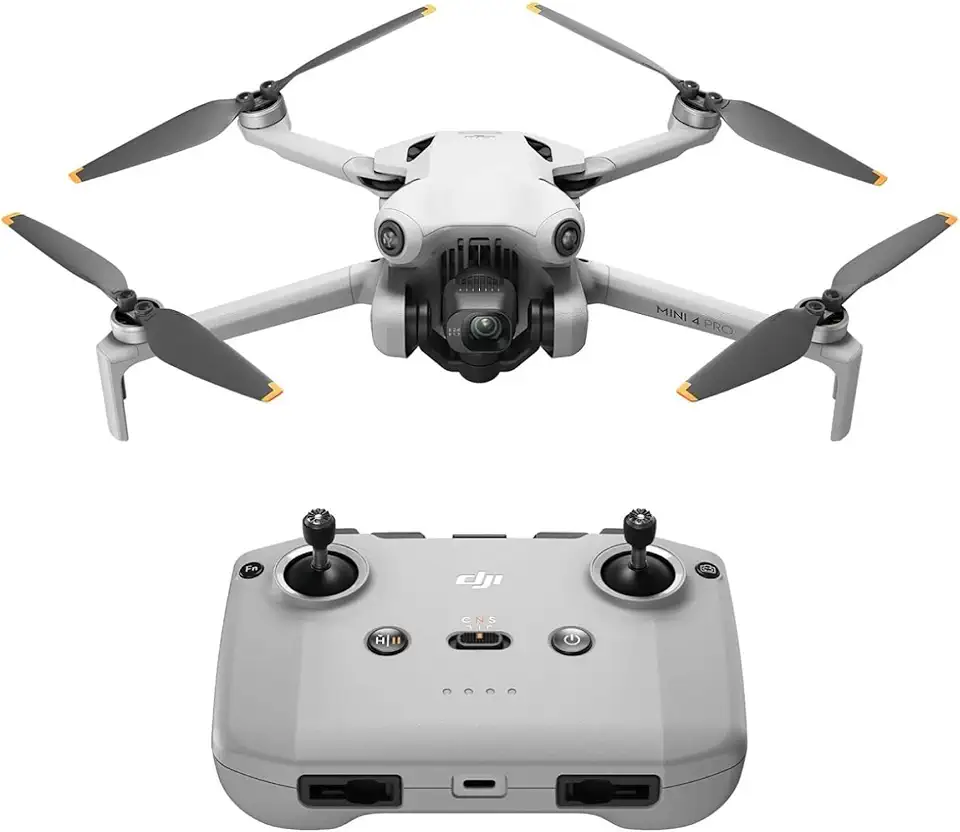
DJI Mini 4 Pro with DJI RC-N2
Compact pro-grade quadcopter offering exceptional image quality, responsive controls, and simplified portability for creators who demand cinematic results on the go.
Check PriceThe DJI Mini 4 Pro is the little workhorse I reach for when travel weight and portability matter most. It captures 12MP photos and 4K video with D‑Log M, giving me a flexible starting point for color grading while staying pocketable at sub‑249g.
Its gimbal rotation for true vertical shooting means I can frame social‑format compositions without cropping. The camera supports RAW and bracketed images, which is a must for serious post‑processing and HDR blends in tricky light.
Flight performance is surprisingly confident for such a tiny craft. It offers reliable 360° obstacle avoidance and remains stable in moderate wind, so I’m less worried about losing a good composition to gusts or unexpected obstacles.
Practical touches matter on location shoots. Built‑in 42GB internal storage acts as a reliable backup when I forget a card, and the overall toolkit makes it ideal for photographers who want high‑end features with minimal regulatory fuss in regions favoring sub‑250g rules.
- Excellent portability and sub‑249g convenience
- Strong all‑around obstacle sensing, including low‑light LiDAR
- Built‑in 42GB storage
- Handles wind well for its class
- Smaller sensor limits low‑light performance and dynamic range vs Mini 5 Pro
- Flight time shorter than Mini 5 Pro’s extended battery option
3. DJI Air 3S Overview

DJI Air 3S with RC-N3, Dual-Camera (1-inch CMOS)
Versatile long-range aerial system with dual cameras for wide and telephoto shots, professional-grade imaging, and precise controls for advanced content creators.
Check PriceThe DJI Air 3S is a photographer’s tool built around image quality and versatility. It pairs a 1‑inch wide sensor with a secondary telephoto camera, giving you wide-angle detail and true reach without swapping lenses.
Image specs are pro-grade: 50MP photos, 10‑bit 4K video and D‑Log M support. With up to 14 stops of dynamic range you get far more headroom for recovering highlights and shadow detail in difficult light.
In the field that matters. The 50MP files let you crop aggressively for alternative compositions or large prints. The telephoto is excellent for isolating subjects and varying perspective on a shoot where you can’t physically move closer.
Flight performance backs the camera. Expect over 40 minutes of flight time, which translates to longer shooting windows and fewer battery swaps. It also holds steady in moderate to strong winds, so you can keep composition tight in breezy conditions.
Safety and reliability are strong points too. The Air 3S has excellent obstacle avoidance and night sensing, which helps when you’re shooting dusk or navigating cluttered environments. That lets you concentrate more on framing and less on emergency course corrections.
Consider trade‑offs before buying. The Air 3S is larger and heavier than some compact models, so it’s less pocketable for travel. Its weight also means registration is required in many countries, which may complicate quick trips or casual use.
- Dual‑camera flexibility (wide + telephoto)
- 50MP + up to 14 stops dynamic range
- Over 40 minutes flight time
- Precise obstacle avoidance with night sensing
- Larger size reduces portability
- Heavier weight requires registration
4. Skydio 2+ Overview

Potensic ATOM 2 Fly More Combo (4K Camera, 3-Axis Gimbal)
Compact beginner-friendly drone kit delivering smooth 4K footage with stabilized gimbal, extended battery set, and easy-to-use controls for confident aerial shooting.
Check PriceAs a photographer who often shoots action and movement, the Skydio 2+ stands out for one clear reason: autonomous flight that just works. Its industry‑leading obstacle avoidance and subject tracking let you focus on composition instead of piloting, which is invaluable when you’re following people or vehicles through complex terrain.
The camera records 12.3MP photos and 4K video at 60fps, which is perfectly usable for social, web and many client needs. Keep in mind the sensor is smaller than premium competitors, so low‑light performance and dynamic range won’t match the top DJI models — but in good light the footage is clean and the tracking smooth.
Control options are flexible. You can fly via the app, a traditional controller, or the Beacon accessory for hands‑free, follow modes and precise subject isolation. That mix makes the 2+ exceptionally easy for non‑pilots and creators who want dependable automated capture without a steep learning curve.
Build and stability are also strengths; the drone holds steady in complex environments and recovers from obstacle‑rich paths better than most small drones. The trade‑offs are clear: you sacrifice some image quality for unmatched autonomy, and the flight range (6 km) is decent but not class‑leading if you plan long‑distance shoots.
- Exceptional autonomous obstacle avoidance and tracking
- Very easy to use — ideal for non‑pilots
- Multiple control modes: app, controller, Beacon
- Robust build and stability in complex environments
- Smaller sensor — image quality lags top competitors
- Flight range (6 km) is decent but not class‑leading
5. DJI Flip Overview
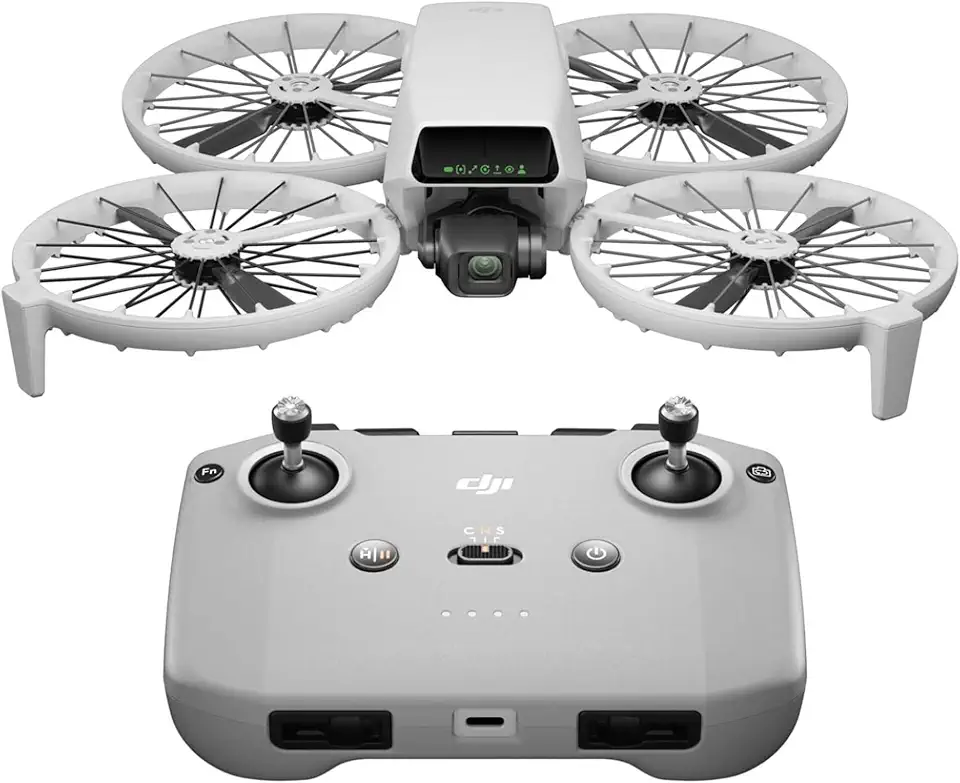
DJI Flip with RC-N3, 4K Camera
Pocketable 4K foldable drone with responsive RC, quick deployment, and crisp video capture for travel and everyday adventures.
Check PriceAs a photographer who travels light, I appreciate the DJI Flip for what it is: a sub‑250g, foldable drone that puts practical imaging where it counts without breaking the bank. Its camera is described as similar to the Mini 4 Pro, so you get competent 4K capture and a usable night mode at a noticeably lower price point — ideal for hobbyists and prosumers who don’t need top‑tier specs.
The build prioritizes survivability: prop guards and a robust chassis mean minor crashes are less likely to end a shoot. Forward obstacle avoidance adds an important safety layer for beginners or when you’re composing tight shots, so you can focus more on framing than constant evasive flying.
I like that it’s compatible with a remote control rather than being phone‑only — that makes precise framing and smoother gimbal control much easier in the field. The foldable design keeps it pocketable and travel friendly, so you can grab landscape arcs or quick city takes without lugging heavier gear.
Be realistic about limitations: the Flip’s unconventional shape and less aerodynamic profile mean it can feel a bit sloppy in windy conditions. It also lacks full 360° obstacle sensing found on higher‑end DJI models, so I avoid tight, cluttered environments or complex low‑light navigation with this unit.
Bottom line: if you’re a beginner, hobbyist, or a cost‑conscious prosumer who values crash survivability, remote control support, and good 4K/night shooting for casual work, the DJI Flip is a solid choice. If you need rock‑steady flight in wind or comprehensive sensing for risky environments, consider other options.
- Survives minor crashes (prop guards)
- Forward obstacle avoidance
- Remote‑control compatible (not phone‑only)
- Good camera quality — 4K and night mode
- Awkward shape; less aerodynamic — wind issues
- No full 360° obstacle avoidance
Choosing the Right Small Drone
Choosing the right small drone starts with honestly asking what you shoot most. If you’re chasing landscapes at golden hour, sensor size and dynamic range matter; if you’re traveling light and posting to socials, portability and vertical shooting might win out.
A larger sensor—think 1‑inch—gives you cleaner low‑light photos and more headroom in post. Always prefer a drone that shoots RAW and offers manual exposure controls; that’s where you turn good captures into great images during editing.
Flight time and weight aren’t glamourous topics, but they shape how you work. Longer batteries mean fewer interruptions and more creative runs, while sub‑250g models are easier to carry and often simpler to register when traveling.
Obstacle sensing and reliability change how relaxed you feel while composing. Omnidirectional sensing lets you focus on framing instead of fretting about trees or cliffs, and LiDAR or night‑sensing systems pay dividends in lower light and complex environments.
Don’t underestimate transmission and camera flexibility. A stable live feed keeps your framing accurate at range, and features like a rotating gimbal or true vertical shooting save time and avoid awkward crops when you’re producing content for modern formats.
Match the drone to your style. If you track athletes or vehicles a lot, autonomous systems with top‑tier tracking are worth it even if the sensor is smaller. If you need focal‑length flexibility, a dual‑camera setup gives you more in‑the‑air options; beginners often benefit more from rugged, crash‑friendly builds.
Finally, check local rules before you fall in love with a model and try to rent or test a drone first. Prioritize three must‑have features for your work, practice in safe open spaces, and you’ll find the sweet spot between image quality, safety, and portability much faster.
Tips to Maximize Your Small Drone
Treat your small drone like a handheld camera with wings. Learn the manual controls first — start at ISO 100, dial shutter speed to control motion, and use exposure compensation to hold highlights. Shooting RAW is non‑negotiable if you want latitude for color and shadow recovery in post.
Composition matters up high as much as it does on the ground. Seek a clear subject and use leading lines, symmetry, or negative space to anchor the frame. Don’t be afraid to move the drone; top‑down, low‑to‑ground tilt‑ups, and slow orbits reveal scenes that look ordinary from eye level.
Light dictates mood, so plan for it. Scout locations with tools like PhotoPills or Google Earth, and aim for golden hour for soft, cinematic light. If you must shoot midday, look for contrasty subjects and use partial shade to avoid blown highlights.
Practice flying until smoothness becomes muscle memory. Open fields are great for learning ascents, descents, and gentle gimbal pans. Work on consistent, slow movements — a steady input makes for cinematic footage and sharp stills.
Safety and prep save shots. Check compass and IMU calibrations, clean the lens and gimbal, and swap batteries with a margin — I never let mine drop below 30% during a shoot. Keep the drone in sight, watch wind and changing weather, and respect local rules and airspaces.
Post‑processing is where small‑sensor files often punch above their weight. Tame highlights, lift shadows, and apply subtle sharpening and noise reduction. Above all, edit with restraint so the image keeps the natural depth and atmosphere you saw from the air.
Finally, experiment. Try vertical frames for social formats, bracket for HDR, or slow motion for dramatic reveals. With a few practiced moves and thoughtful light, a small drone will deliver images that feel big and intentional.
What People Ask Most
What is the best small drone for photography?
There is no single best choice; the right drone depends on your priorities like image quality, portability, and safety features. Compare camera capability, flight characteristics, and local regulations before deciding.
What features should I look for in a small drone for photography?
Look for good sensor performance, RAW capture and manual controls, stable gimbal stabilization, reliable obstacle sensing, and dependable transmission. These features help deliver usable images and safer flights.
Can small drones capture professional‑quality photos?
Yes, many small drones can produce professional results when paired with the right sensor, shooting technique, and post‑processing. Good lighting and careful framing are also essential for high‑quality output.
Which small drones have the best cameras for photography?
Models with larger sensors, strong dynamic range, and RAW support typically perform best for photography. Evaluate sample images and technical features rather than marketing claims to judge real-world image quality.
Do small photography drones come with a gimbal?
Many small photography drones include a stabilized gimbal to keep footage and photos steady, but implementations vary by model. Confirm gimbal type and range of motion to match your shooting needs.
How do I choose the right small drone for aerial photography?
Match the drone to your shooting style by weighing image quality, portability, flight time, and safety systems. Try to view sample images and, if possible, test the drone in person before purchasing.
How long do batteries typically last on small drones used for photography?
Battery life varies significantly between models and is affected by conditions like wind, payload, and camera use. Check manufacturer guidance and factor in real‑world conditions when planning shoots.
Conclusion for Best Small Drone Photography
Choosing the right small drone comes down to matching the camera and flight trade‑offs to your shooting goals and the rules where you fly.
For travel and pro image quality you’ll favor compact 1‑inch‑sensor options, while lighter, pocketable models or autonomous flyers suit creators who prize portability or hands‑free tracking.
Factor sensor size, manual/RAW support, flight time, obstacle sensing, transmission reliability and local regulations when narrowing your shortlist.
Practice manual settings, shoot RAW, plan locations and shot lists, and build flying skills in simple environments before pushing into complex shoots.
If you want to keep improving your aerial photography and technique, read more of our site’s practical guides and gear roundups to deepen your knowledge and confidence.
Have a question or want to share your experience with one of these drones? Leave a comment below — we usually reply within a few hours.


0 Comments