
Can a single ring of light make every portrait look more polished?
Ring flashes are famous for smooth, shadow-minimizing illumination and striking circular catchlights. But choosing the right one requires balancing style with practical needs.
They produce coaxial light that flattens shadows and brings out texture. That quality is ideal for beauty, headshots, and close portraits. Yet the same effect can feel flat without thoughtful posing and positioning.
Picking the best ring flash for portraits means weighing power, size, and how it mounts to your lens. Also think about ease of use, battery and accessory options, and whether you need on-camera convenience or off-camera flexibility. These factors shape both the look you get and how fast you can work.
This guide breaks down five top ring-flash options suited to portrait work. You’ll find concise product summaries that focus on real-world performance and trade-offs, not spec sheets. We also cover hands-on usage tips, mounting and positioning advice, and a practical FAQ to answer common questions.
1. Godox R200 Ring Flash Overview

GODOX R200 Ring Flash Head for AD200/AD200 Pro
Compact, powerful light source delivering even, shadow-free illumination for close-up and portrait photography using portable battery systems.
Check PriceThe Godox R200 is a ring flash I’ve reached for when I want clean, flattering light that still has character. Its large circular light source gives soft, even illumination and those distinctive circular catchlights that make portraits pop.
It’s versatile enough for macro work as well as headshots. The straightforward interface and reliable TTL make it easy to use on location or in the studio without fighting complicated menus.
One thing I appreciate is its power—strong enough to freeze motion when you need to lock a moment. That makes it useful for active subjects or when you’re working handheld and need a fast burst of light.
For shaping light, the R200 is flexible: it can act as a beauty dish with the included silver reflector and accepts grids and diffusers for more directional or softened looks. That accessory compatibility lets you dial in anything from crisp edge light to gentle wraparound illumination.
Be aware of the trade-offs. The long cable to the control unit gives you flexible positioning, but it can feel cumbersome on location. And if you plan to use multiple accessories the setup can take extra time compared with a simpler flash head.
Overall, if you want a ring flash that delivers soft, flattering portraits, reliable TTL, and real versatility for both macro and portrait work, the Godox R200 is a solid choice—just allow a little extra time for rigging and cable management.
- Versatile for macro and portrait work
- Powerful, reliable TTL performance
- Large circular light for soft illumination and catchlights
- Wide accessory compatibility for light shaping
- Long cable to control unit can be cumbersome
- Setup can take extra time with multiple accessories
2. Neewer RF1 Macro Ring Flash Overview

NEEWER RF1-N Macro Ring Flash for Nikon with Lens Adapter Rings
Versatile close-up illumination with adjustable brightness and included adapter set for multiple lenses.
Check PriceThe Neewer RF1 Macro Ring Flash is one of those budget-friendly tools that punches above its price for portrait work. It’s popular because it fits Canon, Nikon and Sony bodies and gives you real creative control with dual-sided flash tubes and independent left/right power control.
In practice that means you can sculpt light across a face or dial in a split-light look without extra modifiers. It also includes AF-assist/modelling LEDs and dedicated TTL metering, which makes it surprisingly easy to use on fast-paced shoots or when you need reliable automatic exposure.
Power comes from four AA batteries or an external power pack, so you can keep shooting on-location without hunting for wall power. Do note that some users find the RF1 a bit strong for very close-up portraits, and full-power recycle times are not the fastest, so it’s better suited to controlled portrait sessions than frantic event work.
Overall, if you want an affordable ring flash that delivers flexible, coaxial light and creative left/right control, the RF1 is a solid pick. If you shoot a lot of very tight close-ups or need the fastest recycle, you might want to weigh those trade-offs first.
- Affordable; good value
- Dual-sided tubes for creative lighting
- AF-assist/modelling LEDs and TTL metering
- AA battery or external power options
- Power can be excessive for some close-up shots
- Relatively slow full-power recycle
3. Nissin MF18 Macro Ring Flash Overview

Nissin MF18 Macro Ring Flash for Nikon
Dedicated close-up lighting offering balanced, shadow-minimizing output and straightforward controls for tabletop and insect photography.
Check PriceThe Nissin MF18 Macro Ring Flash is a photographer’s tool when you want precise, controllable illumination that flatters skin and preserves fine detail. It’s highly regarded for its ability to dial in exact lighting ratios, which makes it excellent for close-up portrait work and controlled studio setups.
Physically the flash head expands 14mm to fit lenses up to 82mm without vignetting, so you can mount it on a wide range of portrait and short-telephoto lenses and still keep even illumination across the frame. That expandability matters if you switch between lenses or use filters and adapters.
For creative shaping of light the Fine Macro mode is a standout: the left and right tubes are independently adjustable from 1/128 to 1/1024 in 1/6 EV steps. That level of granularity gives you delicate side-fills, split lighting, or near-seamless ring light with real precision—great for sculpting cheekbones and controlling catchlights.
The control unit uses a color LCD and offers wireless TTL master/slave options, so you can work quickly or integrate it into a multi-flash setup. In practical shooting it delivers soft, flattering light with fast recycle times, which keeps pace with portrait sessions and candid moments.
Two things to note: the control unit is somewhat bulky, which affects portability, and the color temperature runs slightly warmer than some flashes, so you may want to tweak white balance or gel where accuracy is critical. Overall, if you want micro-adjustable output and consistent, flattering results, the MF18 is a strong choice.
- Precise power and lighting-ratio control
- Expands to fit a wide range of lens diameters (up to 82mm)
- Fast recycle; soft, flattering light
- Color LCD and intuitive interface
- Bulky control unit
- Slightly warmer color temperature
4. Godox MF-R76 Ring Flash Overview

GODOX MF-R76 Macro LED Ring Flash
High-CRI continuous light designed for precise color, low heat, and adjustable intensity during detailed subject shooting.
Check PriceI’ve used the Godox MF-R76 on both close-up work and tighter portrait sessions, and it’s a surprisingly modern little unit that’s mainly a pleasure to work with. The TTL functionality makes exposure adjustments fast when you’re moving between subjects or swapping lenses on location.
What sets it apart for portrait work is the practical design: it ships with eight adapters so you can mount it on a wide range of lens diameters without hunting for step-up rings. The dual flash tubes give you real creative control — dial in left/right ratios to shape shadows or create more sculpted catchlights.
The built-in modeling lights are an underrated convenience; they make focusing and previewing light falloff much easier, especially in low light. The removable rechargeable lithium-ion battery means you’re not tethered to mains power and can swap batteries quickly during a shoot.
In use it’s straightforward and consistently reliable, producing the soft, even illumination you want for flattering portraits. Two practical caveats: the control unit is a bit bulky, so it’s not the absolute smallest rig to pack, and the output tends toward a slightly warmer color temperature, so you may want to tweak white balance or add a cooler gel for critical skin tones.
Overall, if you want a flexible ring flash that handles portrait and macro duties, offers TTL, and is built for location work thanks to the battery and adapters, the MF-R76 is a solid choice.
- TTL functionality and wide lens compatibility
- Dual tubes for adjustable lighting ratios
- Built-in modeling lights for autofocus assistance
- Removable rechargeable lithium-ion battery
- Bulky control unit
- Slightly warmer color temperature
5. Canon Macro Twin Lite MT-26EX-RT Overview

Canon MT-26EX-RT Macro Twin Lite Flash
Dual-head close-up illumination with flexible positioning and wireless control for evenly lit, shadow-free tiny-subject photography.
Check PriceThe Canon Macro Twin Lite MT-26EX-RT is a compact, high-performance ring-style flash designed with macro and portrait work in mind. Its standout feature is a pair of independent flash heads that can be positioned at different angles to create varied, creative lighting effects.
In practice that flexibility lets you move beyond flat, purely coaxial lighting: by angling the two heads you can introduce subtle modeling and shape to a subject while staying close enough for true macro detail. It’s compact and easy to carry, which makes it a solid choice for on-location portrait work where mobility matters.
For Canon shooters the unit’s reliable TTL performance and compatibility with Canon’s wireless flash system mean it integrates cleanly into existing setups. You can trust automatic exposure when you need speed, and still get creative with the independently adjustable heads when you want more control.
Be aware of a couple of real-world tradeoffs. Some users find the flash heads fiddly to adjust, so if you need extremely fast reconfiguration between shots it can feel a bit cumbersome. Also, the power output isn’t as strong as some other ring flashes, so for full-body portraits in bright conditions or when you need heavy modifiers you may want a more powerful head or additional light support.
All told, the MT-26EX-RT is a mostly good, highly portable tool for photographers who shoot close-up portraits and macro work and value TTL convenience and Canon-wireless integration. It’s best when mobility and creative head placement matter more than maximum raw output.
- Compact and portable design
- Two independent heads for varied lighting effects
- Reliable TTL performance and Canon wireless compatibility
- Easy to use and carry
- Flash heads can be fiddly to adjust
- Power output less than some other ring flashes
Ring Flash Usage Tips
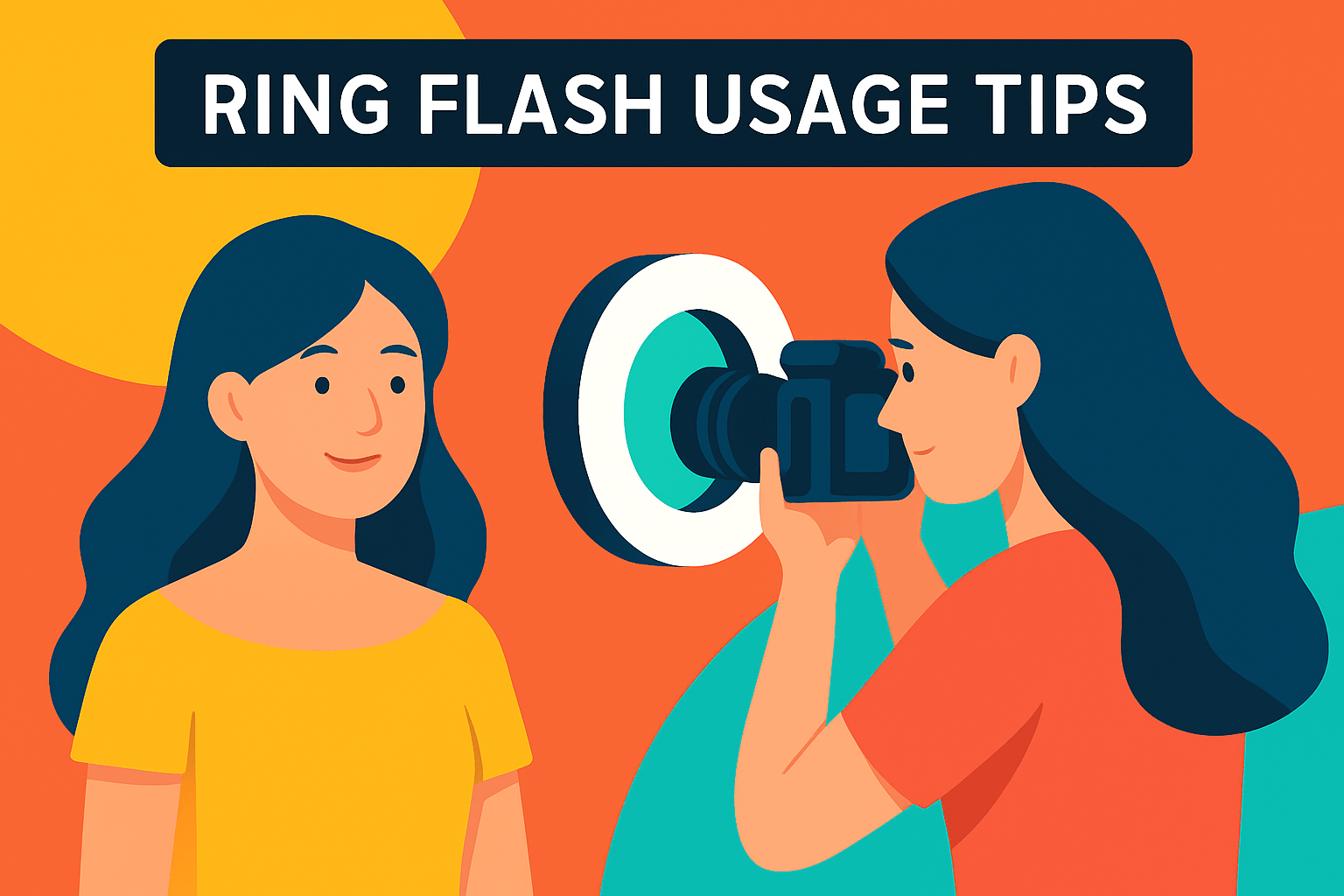
Ring flash gives you a very specific look: even, shadow-minimizing light and that iconic circular catchlight. Left unchecked it can also look flat, so think about pose, slight head turns, or adding a hair light to create shape and separation.
To get the catchlight right, position the ring so it’s centered at eye level. A millimeter shift changes the shape and intensity of the reflection, so take a moment to fine-tune for each subject.
Don’t expect studio strobe power. If your images look underexposed, open the aperture, raise ISO a stop or two, or move the ring closer. Conversely, reduce flash output or step back if the light feels harsh or too dominant.
Flash duration matters. At lower output the flash is much shorter, which helps freeze motion. If you need to stop motion, drop power and compensate with camera settings rather than cranking the unit to full power.
I usually work in manual flash mode for consistency. TTL is useful on location, but manual lets you recreate the same result quickly. Always take a test frame and tweak—small changes make big visual differences with ring light.
Avoid using thick filters, lens hoods or anything that shadows the tube. They’ll create unwanted falloff or hot spots. If you need to soften further, use a diffuser designed for the ring rather than jury-rigging cloth over the lens.
Be creative with ambient light. Drag the shutter to retain background mood or use the ring as subtle fill alongside a rim or background light. Off-camera ring setups can also solve the “flat” look while keeping the pleasing catchlight.
Remember people sensitivity. The direct, circular light can feel intense, so give models brief rests and explain what you’re doing. Comfortable subjects look better and relax into flattering expressions.
Finally, experiment. Move the unit a few centimeters, change power in one-third stops, and try slightly different angles. You’ll find the small adjustments that turn a decent portrait into something memorable.
Ring Flash Mounting and Positioning
Start by mounting the power pack on your camera’s hot shoe and slipping the circular flash unit over the lens with the correct adapter ring. Tighten the locking collar so the unit sits securely but without over-stressing the lens threads. If the ring feels loose, swap to a properly sized adapter or a step-up ring rather than forcing a fit.
Center the lens inside the ring and aim the whole assembly directly at your subject for true coaxial light that softens shadows. For classic ring-flash portraits, align the flash roughly at eye level to get that distinctive circular catchlight. Small deviations left or right will produce uneven catchlights, so make tiny adjustments and check the results.
If your flash supports tilt, loosen the fixing screw and angle the unit a few degrees to give the light subtle directionality without losing the even wrap. For lenses with small front elements beware of vignetting or blocked illumination; some combinations can also interfere with the camera’s flash sensor, so inspect from the camera position before shooting.
Don’t be afraid to break away from on-lens mounting. Use the control pack cable or an off-camera bracket for creative, non-flat setups — moving the ring slightly off-axis adds dimension while retaining the ring’s soft quality. Just route cables carefully and secure the power source so nothing tugs or shorts during a shoot.
Small, iterative tests are the secret. Take a few frames, check catchlights, shadow falloff and exposure, then tweak position, tilt or adapter size. With a stable mount, careful centering and a habit of testing, ring flashes become predictable tools rather than temperamental props.
What People Ask Most
What is the best ring flash for portrait photography?
There is no single best option for everyone; the right ring flash depends on factors like compatibility, controls, build quality, and budget. Choose a unit that fits your lenses and offers the control you need for the portrait styles you shoot.
How do you use a ring flash for portraits?
Place the ring flash centered around the lens and position it at or near eye level to create even illumination and strong catchlights. Use manual settings or consistent TTL and take test shots while adjusting power and subject distance to avoid a flat look.
What are the advantages of using a ring flash for portrait photography?
Ring flashes produce even, shadow-minimizing light and distinctive circular catchlights that can flatter facial features. They are useful for close-up work and can simplify lighting when you want a consistent, coaxial light source.
How do you mount a ring flash on a DSLR or mirrorless camera?
Attach the appropriate mounting ring around the lens and secure the flash head so the lens is centered through the ring. Ensure any control unit or power pack is safely mounted or tucked away, then take test shots to confirm alignment.
What settings should I use on a ring flash for portrait shots?
Use manual flash settings for predictable results or consistent TTL if you prefer automation, and adjust aperture, ISO, or flash output to balance exposure. Take a few test frames and tweak power and distance until the light flatters the subject.
Ring flash vs standard speedlight — which is better for portraits?
It depends on the desired look: a ring flash gives coaxial, even light and signature catchlights, while a speedlight offers more directional shaping and versatility. Many photographers use both tools depending on the creative needs of the shot.
Can ring flashes create flattering catchlights and reduce shadows in portraits?
Yes, when positioned correctly a ring flash produces circular catchlights and minimizes harsh shadows for a flattering effect. Varying pose and angle helps avoid a flat appearance while keeping the benefits of even illumination.
Conclusion for Best Portrait Ring Flashes
Choosing a ring flash ultimately means weighing versatility, control, size and budget—some units favor precise lighting control while others prioritize portability or value, each with predictable trade-offs like setup time or warmth of output.
The practical tips in this article—positioning for coaxial light and catchlights, favoring manual for consistent results, and adjusting distance and power—are intended to help you avoid flat lighting and create more flattering portraits.
Simple mounting and positioning checks—center the lens in the ring, secure adapters, avoid blocking sensors, and take quick test shots—will keep shoots running smoothly and reduce surprises on set.
If you’d like to grow your lighting skills and refine gear choices, read more articles on the site to pick up techniques and confidence at your own pace.
Have a question or want to share your experiences with ring-flash portraits? Leave a comment below and we usually reply within a few hours.



0 Comments