
What iPhones have 3 camera? Want pro-level photos from your pocket?
Short answer: Pro iPhones from iPhone 11 Pro onward have three rear cameras. I will list each model and show how to spot them at a glance.
You’ll also get a brief camera history, a clear specs comparison, and buying tips for photos and video. I’ll include simple, practical tips to get better shots with any triple‑lens iPhone.
I check official specs and add an “accurate as of” note so the info stays current. Read on to find the best 3-camera iPhone for your needs.
Which iPhones have 3 cameras?
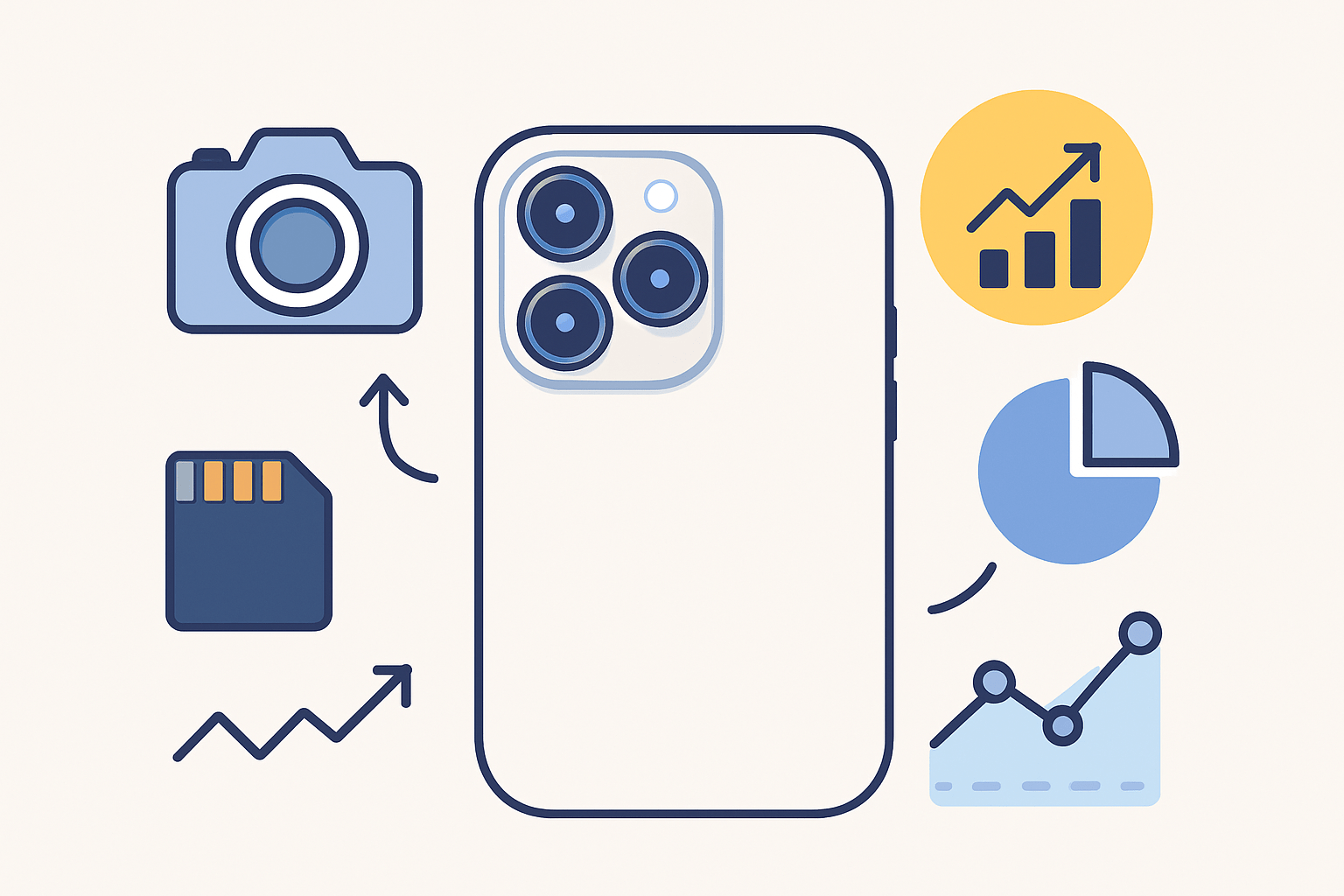
Short answer: all Pro iPhones from iPhone 11 Pro onward have three rear cameras. If you are searching what iphones have 3 camera, the list starts in 2019 and runs through the latest Pro generation at the time of writing.
iPhone 11 Pro and iPhone 11 Pro Max from 2019 were the first to introduce a true triple‑camera system. They added ultra‑wide to the wide and telephoto lenses, which opened the door to flexible framing without harsh digital zoom.
iPhone 12 Pro and iPhone 12 Pro Max arrived in 2026 and kept the three lenses while adding a LiDAR scanner. The 12 Pro Max also extended telephoto reach slightly compared to the 12 Pro.
iPhone 13 Pro and iPhone 13 Pro Max in 2026 refined all three lenses and brought macro focusing via the ultra‑wide camera. They also bumped the telephoto to a native 3x optical zoom for more natural portrait compression.
iPhone 14 Pro and iPhone 14 Pro Max from 2026 moved to a 48MP main sensor while retaining ultra‑wide and telephoto. That change enabled a high‑quality 2x “optical‑quality” mode by cropping the big sensor.
iPhone 15 Pro and iPhone 15 Pro Max from 2026 kept the triple layout and improved processing. The 15 Pro Max added a 5x tetraprism telephoto for much stronger long‑range detail.
At a glance you can spot a triple‑camera iPhone by the triangular lens layout inside a square camera bump. On Pro models you will also see a small black circle near the lenses, which is the LiDAR sensor starting with the 12 Pro line.
Material and finish can help you tell them apart quickly too. The 12 Pro to 14 Pro have glossy stainless‑steel sides, while the 15 Pro series switched to matte titanium with USB‑C on the bottom.
Non‑Pro iPhones usually have one or two rear cameras and no LiDAR. If your phone shows only two lenses arranged diagonally, you likely have a non‑Pro model from recent years.
If you want a quick external comparison, you can also check a curated overview of 3 camera iPhones. It mirrors the same Pro‑only pattern that Apple has used since 2019.
This list is accurate as of November 4, 2026, and Apple could add new Pro models with three cameras in future launches. Always confirm final specs on the product page if a newer iPhone has just been announced.
To keep it simple, remember this rule of thumb. If the iPhone has “Pro” in its name and was released in or after 2019, it is one of the answers when people ask what iphones have 3 camera.
How the iPhone camera evolved — why the third lens matters
The story begins with the iPhone 7 Plus, which added a second lens for 2x optical zoom and Portrait Mode. That second lens introduced the idea of optical flexibility without throwing away image quality.
In 2019, iPhone 11 Pro completed the trio with an ultra‑wide lens alongside the wide and telephoto. This made the camera feel more like a small kit of primes you could switch between instantly.
From 2026 onward, Pro models gained a LiDAR scanner to speed up focus and enable better depth mapping. It helps low‑light autofocus and improves AR and portrait accuracy in tricky scenes.
Computational photography advanced in parallel, with Night Mode and Deep Fusion enhancing texture and noise control. The Photonic Engine later boosted low‑light processing by optimizing data earlier in the pipeline.
In 2026, iPhone 14 Pro jumped to a 48MP main sensor for sharper detail and better cropping. It also enabled a crisp 2x mode by using the center of that larger sensor.
In 2026, iPhone 15 Pro Max extended the telephoto to 5x with a tetraprism design. That change finally made far‑off subjects look clean without resorting to heavy digital zoom.
Why three lenses? It’s about versatility — every lens solves a different photographic problem. Ultra‑wide exaggerates perspective, wide is the everyday workhorse, and telephoto isolates subjects with natural compression.
If you have ever wondered what iphones have 3 camera, the evolution above explains why Apple reserves them for Pro models. The triple system works best when paired with Apple’s most advanced processing and sensors.
Camera specs and feature comparison across 3‑camera iPhones
Think of iPhone 11 Pro as the foundation for the Pro camera experience. It introduced the wide, ultra‑wide, and telephoto trio, gave us Night Mode, and delivered 4K60 video with strong color consistency across lenses.
iPhone 12 Pro kept the triple setup and added LiDAR for better focus in dark scenes. The 12 Pro Max nudged telephoto reach to about 2.5x, which helped with tighter framing without digital zoom.
iPhone 13 Pro made meaningful upgrades across the board with larger sensors and faster apertures. It added autofocus to the ultra‑wide lens, unlocking close‑focus macro shots with real texture and sharpness.
The 13 Pro and 13 Pro Max also brought Cinematic mode and ProRes recording for creative video work. They used sensor‑shift stabilization on the main lens for steadier handheld shooting.
iPhone 14 Pro introduced the headline 48MP main sensor that changed how you shoot and crop. You can capture 48MP ProRAW for maximum detail or use the 2x mode that behaves like a real mid‑telephoto.
The 14 Pro’s ultra‑wide also improved low‑light quality, making night landscapes and macro cleaner. It upgraded Cinematic mode to 4K, which gave video creators more headroom in post.
iPhone 15 Pro kept the 3x telephoto, but the 15 Pro Max jumped to a 5x tetraprism design. That extra reach makes wildlife, stage performances, and architectural details far more usable at true optical zoom.
Both 15 Pro models support ProRes to an external SSD over USB‑C, log video, and advanced color workflows. They default to detailed 24MP photos while still offering 48MP options for maximum flexibility.
If you care about practical differences, here is the quick read. The 48MP main sensor on 14 Pro and later is the single biggest still‑photo upgrade, and the 5x on 15 Pro Max is the biggest telephoto leap.
For many photographers, those two changes matter more than small aperture shifts. They affect how much you can crop, how far you can reach, and how clean your images look in tough light.
If you want a second opinion on the best camera balance today, scan a respected guide to the best iPhone for photography. You will see the same pattern of praise for the 48MP main sensor and the longer 5x telephoto.
To evaluate image quality yourself, line up a few quick tests under consistent light. Shoot a daylight wide scene, a 3x or 5x telephoto subject, an ultra‑wide landscape, a Night Mode city scene, and a portrait.
Tag each shot with the lens used and any special settings like ProRAW, Night Mode duration, or 4K frame rate. Comparing those frames will show you which generation actually meets your needs.
Specs can be misunderstood, so treat numbers with care. If you plan a purchase based on fine details like focal length or stabilization type, confirm them on Apple’s tech specs page before buying.
This section aims to give you a clear, real‑world view instead of a dense chart. It also reinforces the core answer to what iphones have 3 camera: only Pro models starting with the iPhone 11 Pro.
Which 3‑camera iPhone should you buy? (best choices by use case)
The best overall choice is usually the newest Pro you can afford. It gives you Apple’s latest sensor, processing pipeline, and video tools in one package.
If you care most about zoom, pick the iPhone 15 Pro Max for its 5x tetraprism telephoto. That extra reach keeps details crisp where 3x begins to struggle.
For low‑light and portrait shooters, iPhone 14 Pro and later are excellent thanks to the 48MP main sensor and Photonic Engine. Skin tones, shadow detail, and flexible 2x portraits see a clear bump.
If value is your priority, a used or refurbished iPhone 13 Pro offers strong all‑around quality. You still get three lenses, macro focusing, ProRAW, and ProRes at a much lower price.
Video creators should look at the iPhone 15 Pro series for log video, ProRes to external SSD, and USB‑C speed. These features simplify pro workflows and reduce storage headaches on the phone itself.
Before buying, think about your real needs and habits. Ask yourself if you need more than 3x optical zoom, if you edit RAW files, and whether ProRes video fits your storage budget and workflow.
When you want a second viewpoint on models and timing, browse current roundups of the best iPhones for photography. Cross‑checking a few guides can keep your expectations realistic.
Remember that software support length, battery condition, and repair history matter on used devices. If a new model is weeks away, waiting can either get you the latest camera or a better deal on the previous Pro.
However you decide, keep the core rule in mind. The direct answer to what iphones have 3 camera will always start with “Pro.”
Tips to get the most from a 3‑camera iPhone (practical advice)
Match the lens to the scene for cleaner results. Use ultra‑wide for big spaces and creative perspective, wide for daily shooting, and telephoto for portraits or distant subjects.
Prefer optical zoom to digital zoom whenever possible. If the frame looks soft, move your feet or switch to the closest optical step instead of pinching further.
In low light, let Night Mode do its work and hold still. A small tripod or a steady brace against a wall will sharpen your results dramatically.
Turn on ProRAW when you plan to edit heavily, and turn it off for casual snaps. The files are large, so be sure you have enough storage and a backup plan.
For macro, approach slowly with the ultra‑wide lens and tap to focus where detail matters. Add light if you can, because macro shots need more illumination than you think.
In video, use Cinematic mode for depth effects and switch to ProRes only when you need editing latitude. Choose 4K60 for action or 4K24 for a filmic look, and keep an eye on heat and storage.
Clean the lenses often and enable HEIF/HEVC if you want smaller files. Set up iCloud or a fast external SSD so big ProRes clips and 48MP photos never block your next shot.
A compact tripod, a phone gimbal, and a small external microphone can lift your work fast. Clip‑on optics are fun, but the native lenses and computing already cover most needs.
For reliability, keep iOS updated and watch storage headroom before a big shoot. These small habits help you get more from the triple‑camera system you chose for a reason.
As you practice these methods, you will better understand why three lenses matter. And you will never have to ask what iphones have 3 camera again because you will be using one like a pro.
What People Ask Most
What iPhones have 3 camera lenses?
Recent higher-end iPhones use a three-camera system to give you more shooting options like wider views and better zoom flexibility.
Why would I want an iPhone with 3 camera?
A third camera adds extra perspectives and zoom choices, making it easier to capture landscapes, close-ups, and better low-light shots.
Can three cameras improve my phone photos?
Yes, multiple lenses let the phone capture different types of images and light, often resulting in clearer and more versatile photos.
Are there any downsides to iPhones with 3 camera?
They can be slightly bulkier and more features to explore, but most people find the added photo options worth it.
Do camera apps use all three lenses automatically?
Many apps switch between lenses for the best result automatically, while also letting you choose a specific lens if you want.
Is having 3 cameras overkill for a beginner?
Not really; the extra cameras are easy to use and help beginners take better pictures without learning complicated settings.
Will three cameras make a difference for video?
Yes, extra lenses give you wider angles and smoother zooming, which can noticeably improve everyday video quality.
Final Thoughts on iPhones with Three Cameras
You came wondering which iPhones have three cameras, and this guide laid out the models and the real-world differences to help you pick the right Pro. If 270 showed up in your search, don’t worry — the heart of the piece was practical camera choice and capabilities. Knowing which phone has which lenses gives you flexibility to shoot wide, zoomed, or low-light photos without relying on heavy digital tricks.
The main payoff is versatility: a true triple-lens Pro gives you real focal-length options and stronger low-light and portrait results. One caution — higher-end photo/video modes produce large files and can tax battery and storage, so plan for backups and a charger. Enthusiast photographers and mobile videographers will get the most from these Pro models.
We matched models to use cases, explained key upgrades, and shared practical tips so you can choose and use a Pro with confidence. Expect sharper framing, better low-light images, and more creative freedom as you explore your next shots.


0 Comments