

Ready to squeeze every ounce of capability from your Canon R6 Mark II?
Which lenses will turn its speed, low-light smarts, and video chops into consistently great images?
The R6 Mark II is a full-frame RF-mount mirrorless body with in-body image stabilization.
That IBIS expands handheld possibilities and changes how lenses pair with the camera.
Native RF glass brings design and handling advantages that mirrorless shooters value.
But many photographers still lean on adapted EF glass, so compatibility via a mount adapter matters.
This quick guide focuses on five RF lens types that make the most of the R6 Mark II’s strengths.
It also explains why adapting EF lenses can be a practical route for photographers upgrading from DSLR kits.
You’ll get concise, field-focused notes on how lens choices affect stabilization, autofocus behavior, and real-world usability.
No deep spec sheets—just practical advice to match glass to your shooting style and workflow.
Whether you shoot portraits, landscapes, wildlife, or hybrid video, the right lens transforms results.
Consider performance, size, and how each lens meshes with the camera’s stabilization, then pick what fits your work.
1. Canon RF 24-70mm f/2.8L IS USM

Canon RF 24-70mm F2.8L IS USM
Professional-grade standard zoom delivering sharp optics, fast aperture, and stabilisation for stunning portraits, events, and everyday shooting.
Check PriceThe Canon RF 24-70mm f/2.8L IS USM is the sort of pro zoom I reach for when a shoot needs flexibility and dependability. It gives a constant f/2.8 aperture and optical image stabilization, so you can work in lower light and still get shallow depth of field without immediately swapping lenses.
In real shooting the lens excels at events, weddings, and even sports where you need to react quickly. Videographers appreciate the suppressed focus breathing and smooth autofocus, which keeps handheld footage looking professional.
Users often praise the center sharpness and quick focusing, and on the R6 Mark II the lens’s IS pairs beautifully with the camera’s IBIS for steadier handheld images. That combination makes it a true workhorse for hybrid shooters who want one lens that tackles stills and video.
There are some critiques about edge sharpness, but on the R6 Mark II sensor those weaknesses are less obvious than you might expect. The trade-off is size: this is a relatively bulky and heavier lens compared with smaller zooms or primes, so consider comfort for all-day carry or travel.
If you need a go-to, do-everything lens for professional work—especially where low light, subject isolation, and reliable AF matter—the RF 24-70mm f/2.8L IS USM will serve you well. It’s a practical, high-performance choice for shooters who prioritize versatility and solid imaging over ultimate compactness.
- Fast constant f/2.8 for low light and shallow DOF
- Optical IS complements IBIS
- Suppressed focus breathing (good for video)
- Versatile focal range for everyday/pro use
- Some users report less-than-perfect edge sharpness
- Relatively bulky and heavier than smaller zooms/primes
2. Canon RF 50mm f/1.2L USM
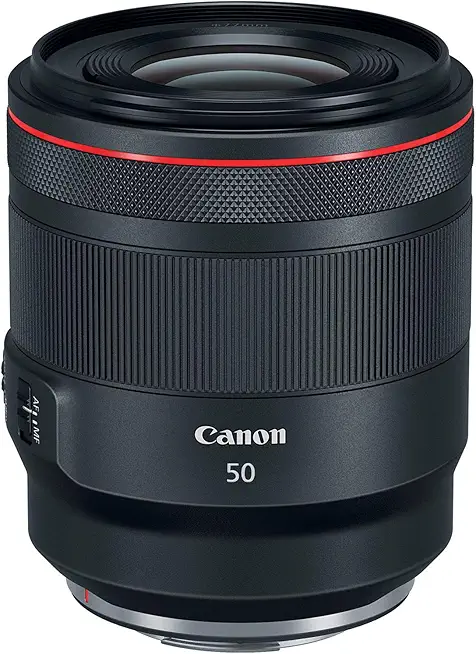
Canon RF 50mm F1.2L USM
Ultra-fast prime offering exceptional low-light performance, silky bokeh, and unmatched subject separation for portraits and creative shooting.
Check PriceThe Canon RF 50mm f/1.2L USM is a high-end 50mm prime that delivers exceptional center sharpness and a creamy bokeh, making it a joy to use for portraits and subject isolation. Its large f/1.2 aperture gives you serious low-light capability and renders backgrounds with beautiful separation.
In real-world shooting it excels at portraits and deliberate, composed work where subject isolation matters most. The lens is weather-sealed and built like a professional tool, so you can rely on it outdoors and in tougher conditions.
Users consistently praise its optical clarity and the smooth manual-focus action, which invites thoughtful framing and precise focus pulls for both stills and video. That said, it’s less suited for fast-moving subjects — the focal length and intended use favor posed or gently moving people over run-and-gun action.
As a 50mm prime there’s no zoom, so you’ll reposition yourself rather than change focal length, which many portrait photographers actually appreciate because it enforces a clear shooting distance and point of view. The RF mount’s programmable control rings add practical control directly on the lens, which speeds up exposure and creative adjustments during a session.
If you want stellar image quality, creamy bokeh, and low-light performance for portrait and editorial work, this lens is one of the best options for the job. Just be prepared for its physical size and weight, and the fact that framing requires your feet rather than a zoom ring.
- Exceptionally sharp center
- Pleasing, creamy bokeh
- Strong low-light performance
- Solid build + weather sealing
- No zoom — must reposition to frame
- Large and heavy for a 50mm
3. Canon RF 70-200mm f/2.8L IS USM
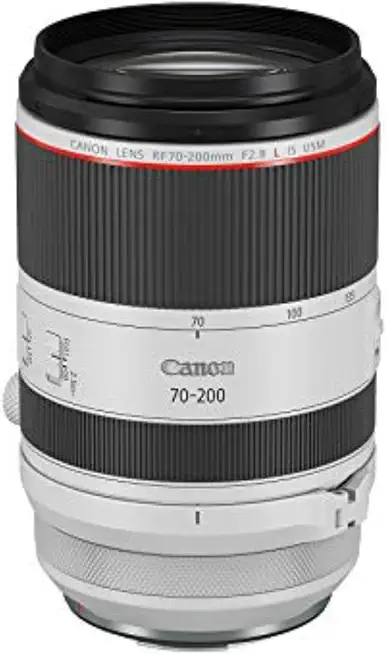
Canon RF 70-200mm F2.8L IS USM
Telephoto zoom with consistent fast aperture and advanced stabilization, ideal for sports, wildlife, and crisp distant subjects.
Check PriceThe Canon RF 70-200mm f/2.8L IS USM is a fast, professional telephoto zoom built for action and long-reach portraits. Its constant f/2.8 aperture gives reliable subject separation and strong low-light performance, which I rely on when shooting sports and wildlife in mixed lighting.
In the field it stands out for sharpness and stabilization. The lens’ effective IS works with the R6 Mark II’s IBIS, letting you handhold at longer focal lengths more often than you’d expect.
Autofocus is another real-world win. The AF is precise and quiet, which helps lock on moving subjects without distracting noise—critical for events and wildlife where stealth matters.
Construction feels like a pro tool. It’s weather-sealed and durable, so you can trust it outdoors in damp or dusty environments without worrying about premature wear.
That said, this lens is substantial. The weight and size are noticeable during long shoots, so I usually plan support—monopod, tripod, or strategic breaks—if I’m covering an all-day event.
Performance is high, but the package isn’t for everyone. Its cost and heft may be overkill for casual shooters who rarely need fast telephoto reach.
- Fast f/2.8 for subject separation and low light
- Effective IS that pairs with IBIS
- Weather-sealed, durable construction
- Precise and quiet AF
- Heavy and large for all-day carry
- Cost and weight may deter casual users
4. Canon RF 100-500mm f/4.5-7.1L IS USM
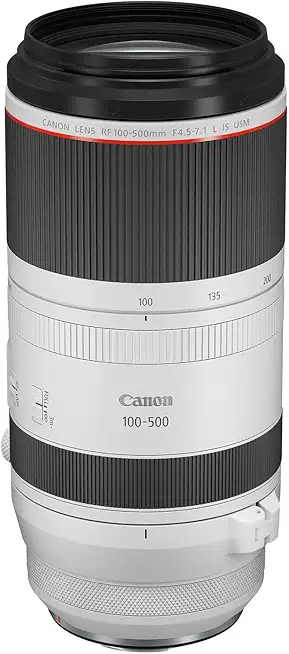
Canon RF 100-500mm F4.5-7.1L IS USM
Super-telephoto reach with reliable stabilization and sharp optics, perfect for wildlife, birding, and distant action photography.
Check PriceThe Canon RF 100-500mm f/4.5-7.1L IS USM is a versatile super-telephoto zoom that balances long reach with a relatively compact design for its range. It gives you the reach to pull subjects close without hauling a hulking prime lens.
In the field this lens is praised for its reach and sharpness at long distances. The built-in ~5-stop IS pairs well with the R6 Mark II IBIS, which makes handheld telephoto shooting far more practical than you might expect.
Optically, sharpness and contrast remain strong even at the maximum zoom end, so you get usable detail on distant subjects. Autofocus is generally accurate, though it can be occasionally slower to lock at extreme telephoto lengths.
Because it’s lighter than many traditional super-telephotos, you’ll find it easier to carry on long hikes or when you need to follow birds or outdoor sports for extended periods. Its weather-sealed construction also means you can keep shooting in mixed conditions without worrying as much about the elements.
If your primary work is birding or outdoor sports and you value portability and a long reach, this lens is mostly a very good fit. Just be aware the variable aperture reduces low-light capability at the longest focal lengths, and the AF can be slightly slower when tracking very fast action.
- Long 500mm reach for distant subjects
- Compact/relatively lightweight for its class
- Effective IS working with camera IBIS
- Weather-sealed for outdoor use
- Variable aperture reduces low-light capability at long focal lengths
- AF can be slightly slower tracking very fast action
5. Canon RF 15-35mm f/2.8L IS USM

Canon RF 15-35mm F2.8L IS USM
Ultra-wide zoom delivering dramatic perspectives, bright aperture, and stabilisation for landscapes, architecture, and dynamic interiors.
Check PriceThe Canon RF 15-35mm f/2.8L IS USM is a bright wide-angle zoom built for sweeping landscapes, architecture, real estate, environmental portraits, and astrophotography. Its constant f/2.8 aperture makes it unusually capable for a wide zoom, so you can shoot night scenes and interiors without always relying on a tripod.
In real-world use it shines for sharpness and low distortion, which keeps lines straight in architectural work and preserves detail to the edges for big landscape frames. The built-in image stabilization lets you handhold longer exposures, which is a real advantage when you want mobility in low light or to capture quick-changing conditions.
Users commonly praise its control of chromatic aberration and flare, so contrast and color stay clean in high-contrast sunrise and city-night shots. It’s also weather-sealed and robustly built, so it performs well outdoors in challenging conditions.
The main trade-offs are practical: this lens is heavier than older wide-angle options, so it adds noticeable weight to a walkaround kit. For hobbyists the higher price point can be a deterrent, but for shooters who need modern optics, low distortion, and low-light capability in one package, it’s a strong professional choice.
- Bright f/2.8 for low light and creative DOF
- Excellent edge-to-edge sharpness and low distortion
- Image stabilization helps handheld low-light shooting
- Weather-sealed, robust construction
- Relatively heavy and large
- Higher price point for hobbyists
EF Lens Compatibility On R6 Mark II
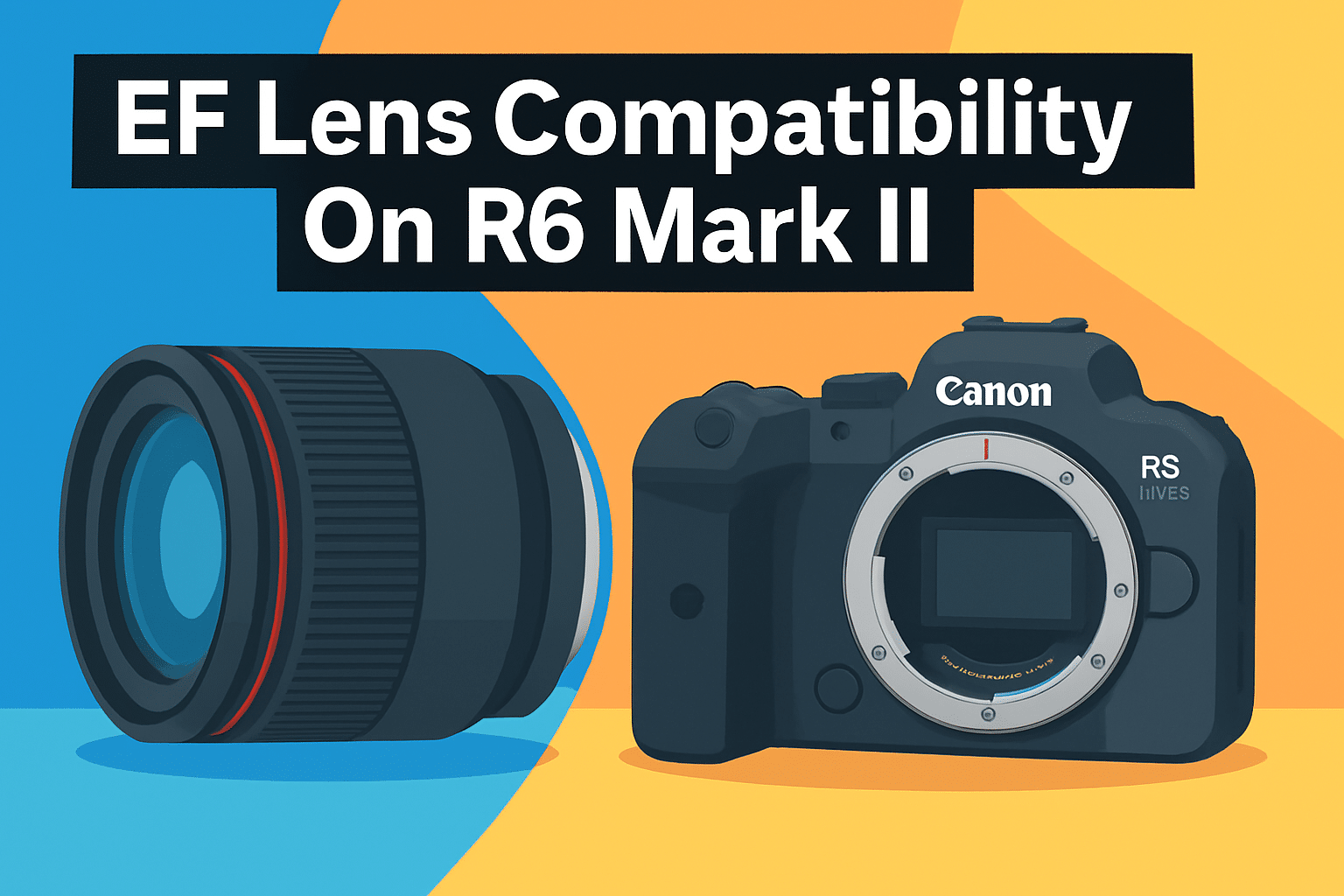
If you’re coming from Canon DSLRs, take heart: the R6 Mark II uses the RF mount but will accept EF glass via Canon’s Mount Adapter EF‑EOS R. Full‑frame EF lenses give full sensor coverage and retain image quality. EF‑M lenses, though, are not compatible with the EOS R system.
EF‑S DSLR lenses will physically mount, but the camera switches to a 1.6× crop so your roughly 24MP files end up nearer to ~9.3MP — fine for web work, but not for full‑resolution editing or large prints. For most shooters, full‑frame EF glass is the better choice on the R6 Mark II.
Using Canon’s official adapter preserves autofocus speed and electronic communication, so IS and AF tracking behave very similarly to native lenses. In my experience there’s rarely a meaningful hit to burst performance with the official adapter, which is why many pros simply keep their trusted EF telephotos on the R bodies.
Do expect added length and a bit of front‑end weight; adapters change the balance and make long lenses feel even longer. Use the tripod collar or other support for extended shoots to avoid fatigue. Also confirm that both lens and adapter are weather‑sealed if you plan to work in wet or dusty conditions — seal continuity matters.
Canon offers a basic Mount Adapter, a Control Ring version that adds a programmable ring for quick adjustments, and drop‑in filter adapters for lenses without front threads. The control ring is a small but handy convenience, and the drop‑in filter is especially useful on telephotos when you need ND or polarizers.
My practical rule: adapt the EF glass you already trust — it’s an efficient, reliable bridge while you evaluate RF choices. If you want the lightest, most compact kit and the full mirrorless ergonomics, plan to migrate to RF glass over time. For now, the R6 Mark II will let you keep shooting with very few compromises when you use Canon’s adapters.
Genre-Based Lens Picks For R6 Mark II
Pick lenses by what you shoot, not by specs alone. The R6 Mark II gives you IBIS and snappy AF, so choose glass that plays to those strengths and fits how you move around a scene.
For everyday work and events, a pro zoom is the most practical tool. The RF 24–70mm f/2.8L IS is a true workhorse: fast, versatile and stabilised for handheld low‑light shots. If you favor lighter travel setups, the RF 24–105mm f/4 gives extra reach at the cost of a slower aperture.
Portrait shooters will love primes for rendering and separation. The RF 50mm f/1.2L delivers creamy bokeh and low‑light headshots, while an 85mm‑range lens or the RF 70–200mm f/2.8L IS gives flattering compression for tighter headshots or outdoor sessions. Aim for 85–135mm as your go‑to portrait range.
For sports and wildlife you want reach and tracking reliability. The RF 100–500mm is compact for its class and teams well with IBIS and the camera’s burst modes. Don’t hesitate to adapt long EF telephotos if you already own them; the adapter preserves AF performance and gives extra reach.
Macro and close‑up work needs dedicated optics. A true macro (for example a 100mm macro) will deliver the sharpness and working distance for texture, focus stacking and small subjects. These lenses force a slower, more deliberate style that rewards patience.
Landscapes and architecture demand edge‑to‑edge control. The RF 15–35mm f/2.8L IS minimizes distortion and gathers light for nightscapes. For architecture consider adapting a tilt‑shift for perspective control when precision matters.
If you shoot video or hybrid projects, prioritise lenses with IS and low focus breathing. The RF 24–70 and RF 70–200 are excellent choices for smooth pans, while native RF glass keeps the system compact and reliable for run‑and‑gun work.
Match focal length to your working distance, prefer fast glass when subject isolation or low light matters, and balance weight against purpose. If you can afford only one lens as a starting point, the RF 24–70mm f/2.8L IS covers the widest range of real‑world needs on the R6 Mark II.
What People Ask Most
What are the best Canon RF lenses for the Canon R6 Mark II?
The best choices depend on your shooting style, with versatile pro zooms, bright wide-angle zooms, fast telephoto zooms, and sharp primes all being strong options. Native RF lenses provide compactness and modern features, while adapted EF glass can extend your options if you have existing DSLR lenses.
Which lenses are best for portrait photography on the Canon R6 Mark II?
Fast short-telephoto primes and a classic fifty-millimeter prime are excellent for portraits, offering pleasing background separation and flattering compression. A medium telephoto zoom also helps when you want flexibility without swapping lenses frequently.
What lens is best for low-light performance on the Canon R6 Mark II?
Lenses with very wide apertures are ideal for low light because they allow more light and help isolate the subject. Fast primes are compact and excel in dim conditions, while stabilized zooms paired with the camera’s IBIS help for handheld shooting.
Which lenses are best for wildlife and birding with the Canon R6 Mark II?
Long-reach telephoto zooms and dedicated super-telephoto lenses suit wildlife and birding by providing the necessary reach and subject separation. Relatively lightweight long zooms are a practical compromise when you need portability in the field.
What are the best lenses for video and vlogging on the Canon R6 Mark II?
Lenses that combine effective image stabilization with minimal focus breathing are well suited to video work. Versatile zooms and compact wide-angle primes make framing and handheld shooting easier for run-and-gun creators.
What are the best prime lenses to use with the Canon R6 Mark II?
High-quality primes with wide apertures are great for portraits, low light, and subject isolation, offering excellent optical performance. Choose focal lengths that match your working distance and shooting preferences for the most natural results.
Can I use EF lenses on the Canon R6 Mark II and which EF lenses work best?
Yes, EF lenses can be used on the R6 Mark II with an official mount adapter and full-frame EF glass retains full coverage. Adapting is a strong option for upgrading DSLR users, though native RF lenses offer the compactness and mirrorless advantages.
Canon R6 Mark II Lenses Conclusion
Choosing the right glass comes down to matching focal length and aperture to your shooting genre, working distance, and how much gear you’re willing to carry, while keeping image stabilization and handling in mind for real-world use.
If you already own DSLR lenses, adapting them is a practical upgrade path, but investing in native mirrorless optics can pay off if you prioritize compactness and the latest mount-specific features.
Keep experimenting with different combinations on the R6 Mark II to learn what suits your workflow best, and feel free to read more articles on the site to sharpen your technique and gear decisions.
Drop a comment below with your questions or experiences — we usually reply within a few hours and are happy to help you refine your lens choices.





0 Comments