
Which single lens can radically redefine the way you shoot with a Canon — turning lackluster light into atmosphere, busy backgrounds into creamy separation, or distant subjects into decisive portraits?
Choosing that glass is part gut and part calculation: you want images that sing, but you also need gear that performs when the light fades and the assignment heats up. This concise, photographer-first guide examines five standout lenses from Canon’s professional L-series, focusing on real-world performance rather than spec worship.
We approach each lens as a tool on assignment — how it handles under pressure, how forgiving it is when the light drops, and what it lets you create in the frame. From speed and autofocus reliability to optical character and build quality, we frame the conversation around use, not numbers. The aim is candid, usable guidance that helps photographers choose gear that suits their workflow and creative goals.
Expect discussion about real trade-offs: ultimate sharpness versus portability, fast apertures versus weight, stabilization versus compactness, and price versus long-term value. I draw on field experience and user feedback to highlight when a particular lens will genuinely elevate your work. No hype — just the kind of practical insight you can test on your next shoot.
Ready to narrow the field and invest with confidence? Flip the page and let’s match five pieces of L-series glass to the way you shoot.
1. Razor-Sharp Low-Light Street Prime

Canon EF 35mm f/1.4L II USM
Fast wide-angle prime delivering dreamy bokeh, exceptional low-light performance, and razor-sharp detail for portraits, street, and environmental photography.
Check PriceThis razor-sharp 35mm f/1.4L II prime is built for street, documentary and event work where low-light performance and image quality matter most. As a working photographer I reach for it when I need a versatile field of view and the ability to pull subjects out of chaotic backgrounds.
Optically it’s exceptional — razor-sharp in the center and impressively sharp to the edges. Blue Spectrum Refractive (BR) optics help reduce chromatic aberration, and the 9‑blade aperture produces very smooth, attractive bokeh that flatters subjects in tight environmental portraits.
The lens has a solid L‑series build so it feels pro-grade in hand, but that robustness comes at a cost: it’s heavy for a 35mm prime at 760g and a bit bulky to carry all day. Autofocus is fast and reliable for stills, though the weight and size can affect handheld ease during long street walks or extended handheld shooting sessions.
Pros tend to outweigh the drawbacks if you’re prioritizing image quality and low‑light capability. Professionals praise it for versatility and “razor‑sharp” optics in demanding shoots, so it’s an excellent choice for wedding, event, street and documentary photographers who can tolerate the extra heft and price for top-tier results.
- Outstanding center and edge sharpness
- Wide f/1.4 aperture for low‑light work
- Blue Spectrum Refractive (BR) optics reduces chromatic aberration
- 9‑blade aperture gives very smooth bokeh
- Heavy and bulkier than competing 35mm primes (760g)
- High cost
2. Pro-Grade Versatile f/2.8 Zoom
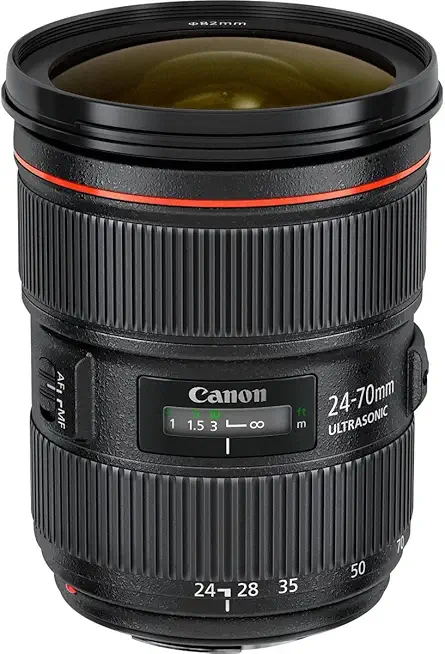
Canon EF 24-70mm f/2.8L II USM
Professional standard zoom with constant bright aperture for versatile, reliable performance — ideal for weddings, events, portraits, and documentary work.
Check PricePro-Grade Versatile f/2.8 Zoom is the kind of workhorse I reach for when a shoot demands flexibility and consistent performance. It covers sports, events, portraits and low-light situations with a reliability that lets you focus on composition rather than gear swaps.
Optically it delivers top-tier image quality with excellent sharpness throughout the zoom range, so you get usable images edge-to-edge whether you’re tight on a subject or pulling back for context. The constant f/2.8 aperture is a major advantage for depth-of-field control and maintaining autofocus speed in dim venues.
The build is rugged, L-series grade, and weather sealed, so you can take it into less-than-perfect conditions without worry. Autofocus is very fast and accurate, making it suitable for action — essential for wedding coverage, events and even some sports work.
If you’re a professional who needs one reliable zoom to cover a wide range of assignments, this lens will likely become a staple in your bag. Be aware it’s heavier and bulkier than standard zooms, and it doesn’t include image stabilization, so for handheld slow-shutter work you’ll need to rely on technique or a support system. Overall, for pros who prioritize image quality, build and consistent f/2.8 performance, it’s an excellent choice.
- Fantastic all-around image quality
- Excellent build and weather sealing
- Fast, precise autofocus
- Constant f/2.8 aperture for low light and creative control
- Heavier and bulkier than standard zooms
- No image stabilization
3. Stabilized All-Purpose Walk-Around Zoom

Canon EF 24-105mm f/4L IS II USM
All-purpose travel zoom with dependable stabilization and consistent performance, covering wide to short-telephoto needs for everyday shooting and trips.
Check PriceThe 24–105mm f/4L IS II USM is the stabilized all-purpose walk-around zoom that many pros and enthusiasts reach for when they need flexibility without swapping lenses. It covers a very useful range from wide-angle to moderate telephoto, so you can shoot landscapes, portraits, events and travel with one lens. The constant f/4 aperture is not as fast as pro f/2.8 zooms, but it gives consistent exposure and depth-of-field control throughout the zoom.
Where this lens really shines is in practical handheld use. Its 4 stops of image stabilization noticeably reduces blur at slower shutter speeds, which is a game-changer for travel, portraits and low-light scenes where you can’t or don’t want to push ISO. The L-series build and weather sealing mean you can work in less-than-ideal conditions without worry.
Image quality is very good for a zoom; sharpness across the range has been improved over the predecessor and wide-end distortion is reduced. Autofocus is reliable and fast enough for most everyday shooting, so you won’t miss critical moments during events or shoots. Users repeatedly call it a “perfect walk-around lens” because of that balance between range, stabilization and durability.
If your priority is absolute corner-to-corner resolving power or the shallowest possible depth of field in low light, a faster prime or f/2.8 zoom will outperform it. But if you want a single, tough, versatile lens that gets outstanding results in real-world shooting — especially handheld — this 24–105mm is a very strong choice.
- Great zoom range (24–105mm)
- Effective 4-stop image stabilization
- Solid, weather-sealed L-series construction
- Reliable autofocus speed and accuracy
- f/4 limits low-light performance versus f/2.8
- Slightly less sharp than primes or top f/2.8 zooms
4. Compact RF Telephoto With Strong IS
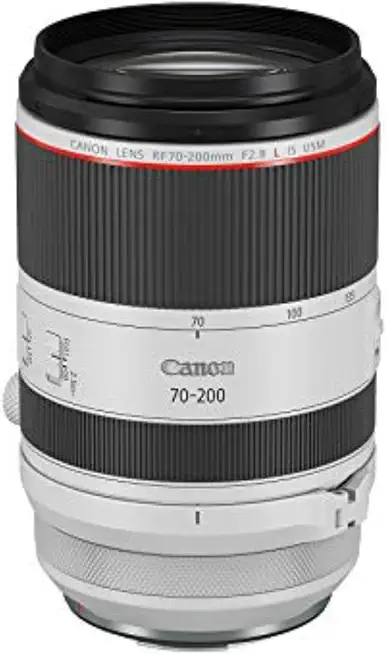
Canon RF 70-200mm f/2.8L IS USM
Fast telephoto zoom offering superb subject isolation, image stabilization, and reliable reach for sports, wildlife, and portraiture.
Check PriceThis compact RF telephoto is a 70–200mm f/2.8L built for serious shooters who need reach without an oversized package. It’s a go-to for sports, weddings, portraits and even wildlife when you want top-tier image quality from a still-manageable lens.
Optically it delivers outstanding sharpness and contrast across the frame, which is immediately noticeable in portraits and action work. The lens also pairs a bright f/2.8 with excellent rendering for beautiful subject separation.
Stabilization here is a game-changer: the lens provides 5.5-stop IS, and when you coordinate it with in-body stabilization you can get up to 7.5 stops of correction. That level of IS makes handheld telephoto work far more practical, especially in low light or when tracking moving subjects.
Autofocus uses Nano USM, which is fast, accurate and quiet — ideal for both stills and video capture. The L-series build is rugged and weather-sealed, and the design is relatively compact for a 70–200mm f/2.8 zoom, making it easier to carry on long shoots.
If you shoot weddings, portraits or events and need a telephoto that’s both pro-grade and more portable than traditional 70–200s, this lens is an excellent choice. It does carry professional-level pricing and is heavier than smaller prime lenses, but most users find the trade-offs worth it for the optics, AF and superb stabilization.
- Outstanding optics and edge-to-edge sharpness
- 5.5-stop IS (up to 7.5 stops with IBIS coordination)
- Fast, quiet and accurate Nano USM autofocus
- Weather-sealed L-series build; relatively compact for the class
- Heavier than smaller prime lenses
- High cost for casual users
5. Sharp Macro With Hybrid IS

Canon EF 100mm f/2.8L IS USM Macro
True macro optic with outstanding sharpness, close-focus capability, and stabilization for detailed product, nature, and portrait close-ups.
Check PriceThe Canon EF 100mm f/2.8L Macro IS USM is a dedicated close-up tool built for photographers who demand clinical detail and reliable handheld performance. Its design prioritizes reproduction accuracy and working distance at 100mm, which makes focusing on tiny subjects comfortable and predictable.
Optically it’s extremely sharp with excellent color rendition, a hallmark of Canon’s L-series optics. In the field you’ll notice micro-contrast and edge-to-edge clarity that make fine textures and tiny details sing in your frame.
What really sets it apart for handheld macro work is the Hybrid Image Stabilization. The Hybrid IS compensates for angular and shift vibrations, which are the killers in extreme close-up shooting. Canon rates it as an effective 4-stop system, and that translates to fewer discarded frames and more keepers when you can’t use a tripod.
The build is robust and weather-sealed, so you can confidently use it outdoors on shoots where dust or moisture are factors. That solid construction gives the lens a reassuring feel and durability that matches its optical ambitions.
Users consistently recommend this lens for macro photographers who want handheld convenience without sacrificing image quality. It also doubles as a superb portrait option thanks to the focal length and the lens’ resolving power, giving you flexibility beyond strict macro work.
Be mindful of trade-offs: the lens is larger and heavier than some compact macro options, and it sits at a premium price compared with a few third‑party alternatives. If you value top-tier sharpness, color and practical handheld stabilization, this lens is a very strong choice.
- Superb sharpness and detail
- Effective 4-stop Hybrid IS
- Robust, weather-sealed L-series build
- Great focal length for portraits and macro
- Larger and heavier
- More expensive than some alternatives
Lens Focal Length Explained
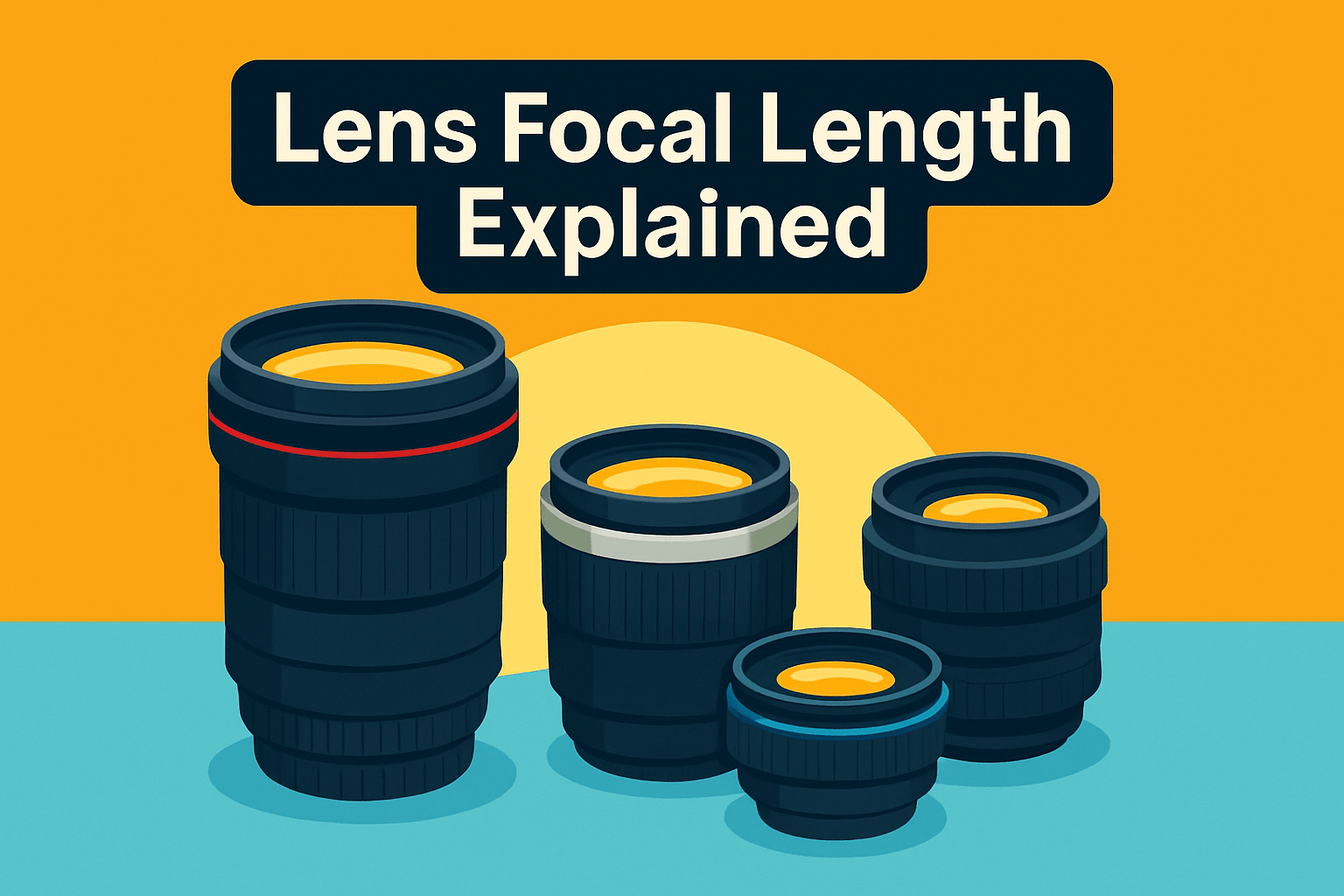
Focal length, measured in millimeters, is the distance from a lens’s nodal point to the camera sensor at infinity focus. It’s not the physical barrel length — it determines your angle of view, so 16–24mm feels wide and immersive while 85–200mm narrows and magnifies distant subjects.
Longer focal lengths bring subjects closer in the frame; shorter ones give a wider scene and make subjects smaller. You can change frame size by moving closer, but switching focal length changes how space and scale look together.
Wide lenses exaggerate perspective — foreground objects become prominent and backgrounds recede — which can be dramatic for landscapes or interiors. Telephoto lenses compress distances and isolate subjects, useful when you want a flattering portrait or a tight wildlife shot. Choosing focal length is really choosing the emotional distance between you and your subject.
Primes lock you into one focal length but typically give better optics and wider apertures, while zooms trade peak image quality for framing flexibility. Focal length affects depth of field: at the same aperture a long lens generally yields stronger background separation than a wide lens. That interplay is why lens choice matters for portraits, low light or storytelling.
Think about the story and your working distance: 24–35mm gives context for streets and landscapes, 50–85mm flatters faces, and 70–200mm or longer handles sports and wildlife. If you need one lens, a mid-range zoom is pragmatic; if you want character and low-light power, pick a fast prime. Often stepping forward or back is the simplest creative tool.
Cropping in post can mimic a longer lens but sacrifices resolution, so try to nail framing in-camera when you can. Learn two or three go-to focal lengths and how they render people and space; after a few shoots you’ll instinctively reach for the lens that gives the look you want.
Aperture Effects on Blur and Low Light
Aperture controls light and depth of field — the two things that most affect how your images look. Open wide for shallow focus and creamy separation; stop down when you need more of the scene in focus.
Wider apertures like f/1.4 or f/2.8 create thinner planes of focus, and longer focal lengths amplify that effect so a 70–200 at f/2.8 will often render background blur more pleasing than a wide‑angle prime at the same f‑number. Background distance matters too: moving your subject away from the background increases blur without changing exposure.
In low light a fast aperture is the single biggest advantage you can buy: every full stop doubles light and lets you halve ISO or double shutter speed. That difference is real — an f/1.4 prime can give about three stops over an f/4 zoom, which is huge for freezing motion and keeping noise low. Stabilization helps for camera shake (the 24–105mm’s 4‑stop IS or the RF 70–200’s 5.5‑plus stops are strong), but IS won’t stop subject motion.
Pick your aperture based on intent: portraits often live around f/1.4–f/2.8 for subject isolation, while events and sports benefit from constant f/2.8 zooms to keep shutter speeds high. For travel I accept f/4 when paired with 4 stops of IS — a lighter kit but still usable in dim conditions.
Stop down when depth matters: landscapes and groups usually look best at f/8–f/11, but avoid tiny apertures like f/22 where diffraction softens detail. Macro work is its own beast — expect to use f/8–f/11 and consider focus stacking, and appreciate Hybrid IS for handheld close‑ups.
Practice by shooting the same scene at several apertures and comparing shutter speed, ISO and how the background falls away — those simple tests teach faster than theory. Once you know the interaction between aperture, focal length and distance, picking the right lens and setting becomes instinctive.
What People Ask Most
What are the best Canon lenses for portrait photography?
Choose lenses that offer flattering focal lengths and smooth background separation, such as short telephoto primes and professional telephoto or standard zooms. Lenses with good optics and reliable autofocus give consistently pleasing results for portraits.
What are the best Canon lenses for landscape photography?
Wide-angle to moderate telephoto lenses with excellent edge-to-edge sharpness and weather sealing are ideal for landscapes. Versatile zooms that cover a useful wide-to-tele range make framing and travel easier in the field.
What is the best Canon lens for low-light photography?
Look for lenses with large maximum apertures and/or effective image stabilization to help maintain faster shutter speeds and lower ISO. Fast primes and pro zooms with good low-light performance are commonly recommended choices.
What are the best Canon lenses for wildlife and sports?
Prioritize telephoto zooms that provide reach, fast and accurate autofocus, and strong stabilization for handheld shooting. Robust build and reliable AF performance are key for action and distant subjects.
What are the best Canon lenses for beginners?
Start with a versatile, walk-around zoom that balances focal range, image stabilization, and manageable weight to learn framing and composition. As skills develop, you can add specialized primes or telephoto options based on shooting needs.
Which Canon lenses are best for video and vlogging?
Choose lenses with smooth, quiet autofocus and effective stabilization for handheld video work, along with useful focal length flexibility for run-and-gun shooting. Standard zooms and telephoto lenses with calm AF behavior are popular among videographers.
What is the best Canon lens for street photography?
Compact primes around a classic wide to normal focal length or a lightweight versatile zoom are great for street work, offering discretion and quick framing. A lens that pairs a useful field of view with good low-light capability helps capture decisive moments.
Conclusion for Best Canon Lenses
The five L-series lenses covered here each bring clear strengths and predictable trade-offs, giving photographers reliable options for different shooting styles and assignments.
Choosing the right lens comes down to matching focal length, aperture, stabilization, build and weight to your subject, shooting conditions and budget rather than chasing a single “best” glass.
Think about the compromises that matter to you—reach versus portability, maximum aperture versus image stabilization, or specialist macro capability versus everyday versatility—and prioritize accordingly.
If you want to refine your lens choices and shooting technique, explore more of our site to deepen your skills and confidence behind the camera.
Have questions or experiences to share? Leave a comment below and we’ll usually reply within a few hours to help you decide or troubleshoot.


0 Comments