
Want to photograph a hawk at dawn or the winning goal from the far sideline? Telephoto glass does the heavy lifting for reach, subject isolation, low‑light speed, and overall image character. But not all long lenses behave the same on Sony bodies, and the right choice can make or break a shoot, no matter your experience.
This guide narrows the field to five top telephoto lenses compatible with Sony’s E‑mount, selected for practical use across genres. We concentrate on gear you’ll actually use in the field, not just lab numbers. Each pick is evaluated with real‑world use, user feedback, clear pros and cons, and recommended use‑cases, so you can match features to needs.
You’ll see options that span versatile short‑to‑mid zooms, longer reach zooms for distant subjects, compact third‑party alternatives, and pro‑grade super‑telephoto tools designed for different shooting styles and travel needs. Every selection was judged for autofocus performance, stabilization, sharpness, handling, and real shooter satisfaction under real conditions and varied light. The goal is practical advice, not spec sheets, so you spend less time guessing and more time shooting.
Whether you pursue wildlife, sports, portraits, or travel, matching focal length, aperture, stabilization, and weight to your shooting style matters, because these choices shape your frame, comfort, and final results. Expect straightforward comparisons and field‑tested impressions that make lens selection easier, with tips you can use on real shoots. Flip the page and find the telephoto that best extends your Sony kit and helps you capture decisive moments.
1. Sony FE 70-200mm f/2.8 GM OSS II
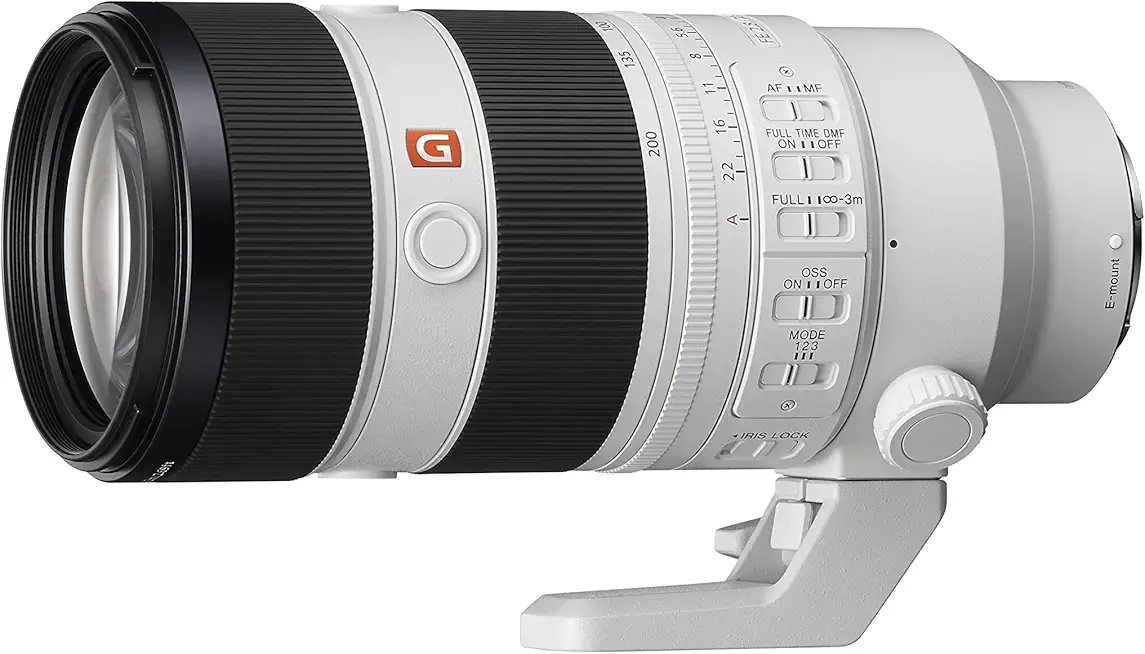
Sony FE 70-200mm F2.8 GM OSS II SEL70200GM2
Professional fast-aperture telephoto zoom delivering creamy bokeh, razor-sharp optics, and image stabilization for sports, weddings, and portraiture.
Check PriceThe Sony FE 70-200mm f/2.8 GM OSS II is widely regarded as a top telephoto zoom for Sony full-frame shooters, and for good reason: the Mark II is lighter and features faster autofocus than its predecessor, making it more usable for long days in the field. As a working pro I appreciate that it keeps the classic 70–200mm versatility while shedding some weight and improving AF performance where it matters most.
That constant f/2.8 aperture excels in low light and gives you strong subject isolation and beautifully smooth bokeh, which is invaluable for portraits and subject separation in sports or wildlife. The range also lends itself well to landscapes where a tighter composition is needed without changing lenses.
In real-world use the autofocus is fast and accurate on moving subjects like birds and athletes, and the lens delivers superb image quality with excellent sharpness even wide open. Users report good control of chromatic aberration and distortion, so files are clean and require minimal corrective work in post.
Construction is robust and weather-sealed, yet the lens is surprisingly lightweight for its class — a real advantage if you shoot handheld or hike to remote locations. Optical stabilization works well, especially when paired with in-body stabilization, though some users note the OSS is slightly less effective than a few competitors’ systems.
If you need a pro-grade 70–200 that balances speed, sharpness, and handling, this GM II is hard to beat; it’s particularly well suited to wildlife, sports, portrait, and telephoto landscape work. Expect excellent performance overall, with only minor caveats around stabilization and a touch more distortion than some premium telephoto options.
- Superb sharpness even at f/2.8
- Fast, reliable autofocus for action photography
- Professional build with weather sealing
- Effective stabilization and focus-hold controls
- OSS slightly less effective than some competitors
- Slightly more distortion than some premium telephotos
2. Sony FE 100-400mm f/4.5-5.6 GM OSS

Sony FE 100-400mm F4.5-5.6 GM OSS
Versatile long-range zoom with exceptional sharpness, quick autofocus, and steady stabilization for wildlife and action photographers.
Check PriceThe Sony FE 100-400mm f/4.5-5.6 GM OSS is a go-to for wildlife and sports shooters who need serious reach without lugging a prime super-telephoto. Its 100–400mm range covers distant subjects like animals and airplanes, and the lens holds excellent sharpness through the zoom range, with especially smooth bokeh at the long end for subject separation.
Autofocus in the 100-400mm is very accurate and reasonably fast for tracking wildlife and sports, so you’ll catch decisive moments without battling focus hunting on most subjects. The lens is also lighter and more portable than larger super-telephoto options, making handheld or hike-and-shoot days much more realistic for a single shooter.
Practicality is another strong suit: teleconverter compatibility extends reach effectively when you need more focal length, and weather-sealed construction lets you keep shooting in damp or dusty conditions. In real-world use this balance of image quality, reach, and handling makes it a versatile choice for field photographers who want a workhorse zoom rather than a single-purpose prime.
That said, the variable aperture of f/4.5–5.6 means you lose light at the long end compared to constant-aperture or faster primes, so you’ll need to manage ISO and shutter speed in lower light. And while AF is very good overall, it’s not quite as snappy as some prime telephotos when the action gets extremely fast or erratic.
- Outstanding image quality across focal lengths
- Good weight/performance balance for a 400mm zoom
- Weather-sealed, durable build
- Supports teleconverters for added versatility
- Variable aperture (f/4.5–5.6) reduces light at the long end
- AF not as snappy as some prime telephotos
3. Sony FE 200-600mm f/5.6-6.3 G OSS

Sony FE 200-600mm F5.6-6.3 G OSS SEL200600G
Extreme reach zoom offering reliable sharpness, stabilized shooting, and responsive tracking for distant wildlife and aviation imagery.
Check PriceThe Sony FE 200-600mm f/5.6-6.3 G OSS is a go-to for wildlife and distant sports when reach matters most. That 200–600mm range gives you critical reach for birds, aviation, and subjects you simply can’t get closer to.
Image quality is impressive across the zoom, even at the longest focal lengths. I’ve found it produces sharp images with good contrast, so cropping and printing still work well.
Optical stabilization (OSS) is a real advantage handheld in the field. The strong stabilization on this lens makes it manageable for short handheld bursts, especially when paired with steady technique or in-body stabilization.
It’s heavier and bulkier than shorter telephotos, but handling has been widely praised. For me that means I often use a monopod or gimbal head on full days, though it remains usable hand-held for shorter sessions.
Weather sealing adds reliability when you’re out in rain, wind, or dusty environments. That rugged construction is reassuring for nature and aviation shooters who can’t afford downtime when conditions turn.
The trade-offs are clear: the variable f/5.6–6.3 aperture limits low-light capability, so expect to push ISO in dim conditions. But if you need reach first and low-light speed second, this lens is mostly a strong, practical choice.
- 200–600mm reach for distant subjects
- Strong optical stabilization (OSS)
- Sharp images with good contrast across the range
- Well built and weather-sealed
- Bulky and heavy for long handheld use
- Narrow f/5.6–6.3 aperture limits low-light performance
4. Tamron 70-300mm f/4.5-6.3 Di III VC VXD

Tamron 70-300mm F4.5-6.3 Di III RXD for Sony E-mount
Compact, lightweight telephoto zoom with smooth stepping motor and excellent value for travel and everyday wildlife shooting.
Check PriceThe Tamron 70-300mm f/4.5-6.3 Di III VC VXD is a lighter, more compact telephoto zoom that I reach for when weight and carryability matter. As a travel-friendly option it balances reach with a manageable size, making it ideal for long days on the trail or in urban settings where lugging heavy glass isn’t an option.
Autofocus performance is a real highlight — users report very fast AF for a third‑party lens, and in my experience it locks on quickly to moving subjects. The lens’ image stabilization (VC) also does tangible work in keeping handheld shots sharp at longer focal lengths, so you can push slower shutter speeds than you might expect.
Optical quality is very good across the frame, producing pleasing sharpness and contrast for most assignments. That said, it doesn’t quite match the edge-to-edge resolving power of top-tier Sony GM glass, so pixel-peepers who need the absolute last bit of corner detail might notice the difference.
Overall, this Tamron is best for enthusiasts who prioritize portability and versatile reach over extreme low-light capability or micro-contrast at the edges. The variable f/4.5-6.3 aperture limits low-light performance, so plan to raise ISO or rely on stabilization when light is tight.
If you want a travel-ready telephoto that autofocuses quickly, stabilizes well, and delivers very good optics for wildlife and casual action, this lens is a strong choice. Avoid it only if you require pro-level low-light speed or the absolute best edge sharpness for high-resolution crops.
- Lightweight and portable
- Fast autofocus for wildlife/action
- Effective optical stabilization
- Great for travel and casual telephoto needs
- Narrow maximum aperture limits low-light
- Edge sharpness not as strong as Sony GM
5. Sony FE 400mm f/2.8 GM OSS

Sony 400mm F2.8 GM SEL400F28GM
Ultra-fast super-telephoto prime delivering breathtaking background separation, lightning AF, and pro-level build for sports and wildlife.
Check PriceThe Sony FE 400mm f/2.8 GM OSS is a specialized super-telephoto prime built for serious wildlife and sports shooters who need ultra-fast aperture and extreme reach. It’s designed to deliver top-tier image quality with a 400mm f/2.8 aperture that excels at subject isolation and low-light action.
In real-world use the lens is extremely sharp with controlled aberrations and excellent color rendition, so your critical shots look clean and contrasty right out of the camera. Autofocus is lightning fast for fast-moving subjects, making it reliable for birds in flight and high-speed sports. The stabilization is outstanding, helping handheld or monopod shooting feel much more manageable than the size would suggest.
Build quality matches its intent: professional construction with weather sealing that stands up to demanding outdoor conditions. That robustness makes it a trustworthy tool for assignments where reliability matters as much as IQ.
Be honest about the trade-offs. The lens is heavy and large, so it’s best for professionals or dedicated enthusiasts who can commit to carrying it and using support like gimbals or monopods. There’s also a 400–800mm option that offers extended reach with a narrower aperture, but that trades off low-light capability and will often require higher ISO settings.
If your priority is best-in-class autofocus, exceptional stabilization, and a super-fast 400mm f/2.8 for critical wildlife or sports work, this lens is an outstanding choice. If you need something compact for travel or casual use, its weight and size make it less suitable.
- Extraordinary reach and super-fast aperture (400mm f/2.8)
- Best-in-class autofocus for fast action
- Exceptional image stabilization systems
- Professional build and weather sealing
- Large, heavy, and less portable—requires commitment to carry/use
- 400–800mm (f/6.3–8) aperture limits low-light performance (needs higher ISO)
How to Choose a Sony Telephoto Lens
Choose a telephoto lens based on what you shoot and how you work. Birds and distant wildlife need reach, sports need speed and subject separation, and portraits benefit from the shorter telephoto range for flattering compression.
Consider your camera body early in the decision. FE lenses are built for full-frame and deliver the full field of view and better low-light performance. On APS-C bodies FE glass still works and the 1.5x crop effectively increases your reach.
Using an APS-C lens on a full-frame body usually forces crop mode and reduces usable resolution. I often prefer full-frame glass on APS-C bodies because the cropped area keeps the best optical performance.
Match focal length to distance and subject. A 70-200mm is the most flexible choice for portraits, events and some sports. If you need to isolate distant subjects, a 100-400mm or a 200-600mm gives the extra reach you’ll actually use.
Aperture size controls how easily you freeze action and separate backgrounds. Fixed f/2.8 lenses open creative and low-light possibilities that variable f/4.5-5.6 zooms can’t match. Keep in mind smaller maximum apertures demand higher shutter speeds or ISO at long focal lengths.
Decide between primes and zooms by the trade-offs you accept. Zooms buy framing flexibility and fewer lens changes on the job. Primes typically offer wider apertures and a slight edge in sharpness and AF performance for slow-light or critical work.
Image stabilization and autofocus matter more as focal length increases. Lens OSS combined with in-body stabilization lets you handhold longer, and modern AF motors make tracking moving subjects far more reliable. Test AF tracking on fast, erratic subjects if that’s your primary use.
Think practically about size and weight. If you hike or travel a compact 70-300 or 100-400 will put more keepers in the bag. For dedicated wildlife or pro sports work you may accept larger glass for superior reach and performance.
Finally, check teleconverter compatibility if you want extra reach; remember converters reduce effective aperture and can affect AF. Try or rent a lens with your body and typical targets before you commit—what matters most is how the lens performs with your shooting style.
Full-Frame vs APS-C Telephoto Considerations
Choosing between full-frame and APS-C for telephoto work comes down to reach, image quality, and how much gear you want to carry. Full-frame cameras give cleaner files and better low-light performance. APS-C bodies buy you a built-in reach advantage thanks to the 1.5× crop factor.
That crop factor is the photographer’s shortcut: a 100mm lens on APS-C behaves like a 150mm lens on full-frame. You effectively gain focal length without hauling larger glass. For birds and distant wildlife that extra reach is often more useful than a stop of aperture.
Keep compatibility in mind. FE (full-frame) lenses work on both full-frame and APS-C Sony bodies and retain their optical character when used in the cropped frame. An APS-C lens on a full-frame body forces crop mode and reduces usable resolution.
Image quality is the trade-off. Full-frame sensors generally deliver better dynamic range and cleaner high-ISO performance, which matters in low light and when pushing files. That advantage is why pros still reach for full-frame telephotos despite the weight.
Size and aperture matter in the field. APS-C lenses and bodies are typically lighter and easier to carry all day. Full-frame telephotos are usually bulkier but they often offer wider maximum apertures and stronger subject separation.
In practice I often pair a full-frame telephoto with an APS-C body when I want great glass plus extra reach without the full bulk. You lose some megapixels, but you gain usable focal length and better handling on long hikes.
If your priority is the shallowest depth of field or the cleanest high-ISO results, lean full-frame and accept the extra weight. If you spend long days chasing distant subjects, APS-C’s effective reach and lighter kit can be liberating.
Ultimately, match sensor and lens to your subject and shooting style. Think reach first for distant wildlife, and prioritize full-frame when low light and maximum image quality are critical.
What People Ask Most
What is the best telephoto lens for Sony full-frame cameras?
There is no single best option; it depends on your subjects and shooting priorities. Choose a lens that balances aperture, stabilization, autofocus performance, and build quality for the types of images you want to make.
What is the best telephoto lens for Sony APS-C cameras?
APS-C users should prioritize reach and portability, often opting for compact telezooms or full-frame lenses used on crop bodies for extra effective reach. Consider size, autofocus speed, and stabilization based on whether you shoot handheld or with support.
Which Sony telephoto lens is best for wildlife and bird photography?
Lenses that offer long reach, fast and reliable autofocus, and strong stabilization are typically preferred for wildlife and birds. Weather sealing and manageable handling for extended outdoor use are also important factors.
Which telephoto lens is best for sports photography on Sony cameras?
For sports, prioritize lenses with quick, accurate autofocus and solid stabilization or a wide aperture to freeze action. Ergonomics and reliable tracking performance are crucial for following fast-moving subjects.
What is the best Sony telephoto prime lens for portraits and action?
Primes with wide apertures are commonly chosen for portraits because they provide subject isolation and pleasing background blur, while some fast primes also perform well for action due to sharp optics and responsive AF. Match focal length and handling to your shooting distance and style.
Are Sony telephoto lenses compatible with teleconverters and how well do they perform?
Many telephoto lenses are compatible with teleconverters, which extend focal length but can affect light transmission and autofocus behaviour. Results depend on the specific lens and converter pair, so testing combinations is recommended before important shoots.
What is the best lightweight telephoto lens for travel with Sony cameras?
Choose a compact, lightweight zoom that offers a practical range and effective stabilization for handheld shooting while traveling. Balance optical performance against size and weight to suit your portability needs.
Conclusion for Best Sony Telephoto Lenses
In short, choosing the right telephoto for your Sony system comes down to matching focal length, aperture, stabilization, and weight with the subjects and shooting style you prioritize.
Consider whether you need reach for distant wildlife, a fast aperture for low light and subject isolation, reliable stabilization for handheld work, or a lighter kit for travel and long days afield.
The product sections above are meant as a practical reference to help you link real-world use and user feedback to the lens characteristics that matter most for your needs.
If you want to sharpen your technique and gear choices further, keep exploring the site to read more articles that will help you improve your skills and confidence behind the camera.
Have questions or experiences to share about telephoto shooting on Sony? Leave a comment below and we usually reply within a few hours.



0 Comments