
What is the difference between DSLR and SLR?
This guide explains both in plain English and is updated for 2026. You will learn how film SLRs work and what DSLRs add with digital sensors.
We break down nine clear differences that matter in real shooting, like autofocus, live view, video, image quality, and cost. The article also includes side‑by‑side photos, a comparison table, and simple buying tips.
Get a short answer up front and step‑by‑step details below. Read on to pick the system that fits your style and budget.
What is an SLR Camera?
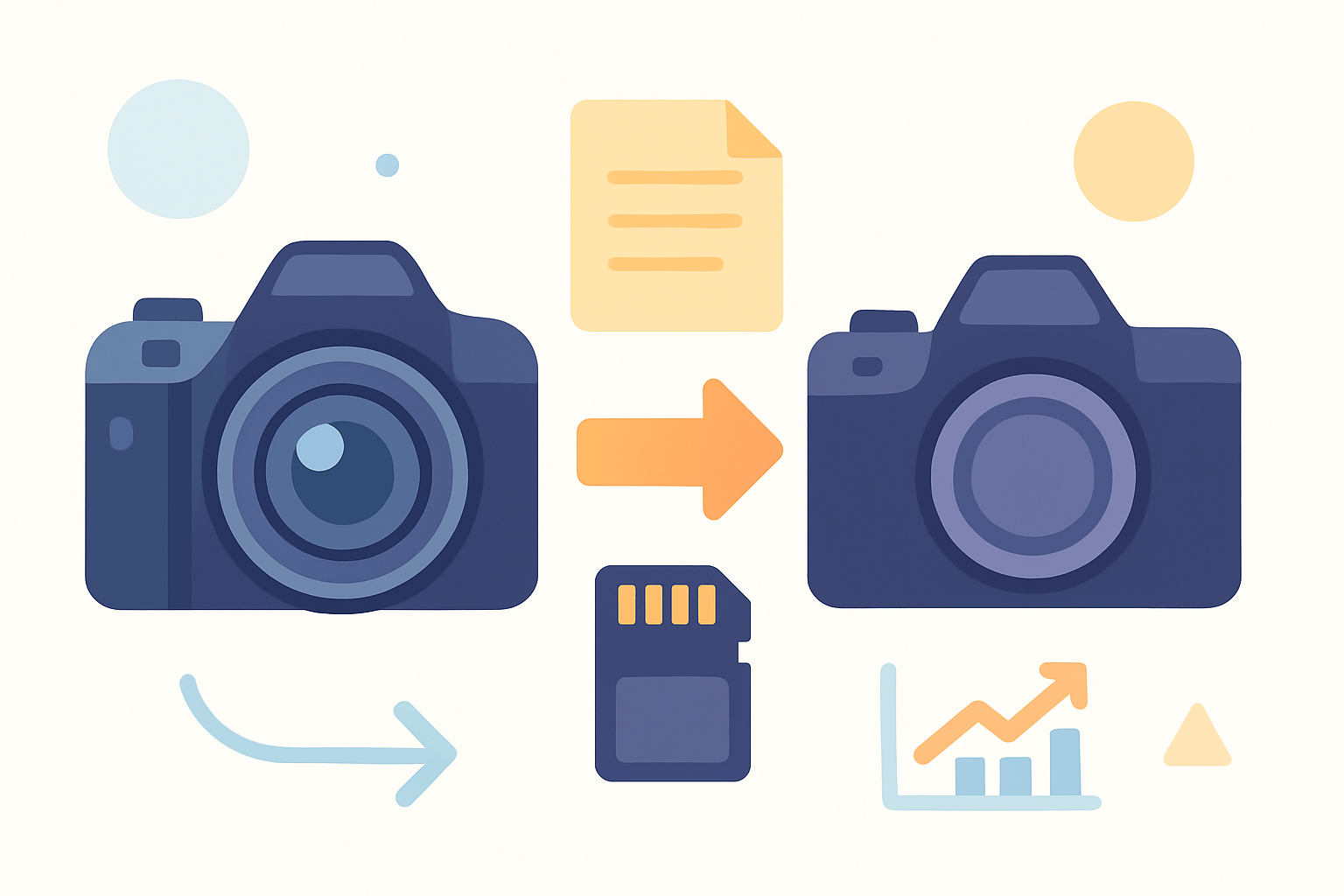
SLR stands for Single‑Lens Reflex, and it describes a film camera that uses a mirror to let you look through the same lens that will take the picture. Light travels through the lens, hits a mirror angled at 45 degrees, bounces up into a prism, and then out to your eye. You see the real scene optically, not a screen, so there is zero lag and pure clarity.
The basic parts are easy to picture. There is a reflex mirror that flips up when you press the shutter, a pentaprism or lighter pentamirror that turns the image right‑side up, a mechanical shutter, and a film plane where the image is recorded. The body also provides an interchangeable lens mount so you can pick the right lens for the job.
The “reflex” part simply means the mirror reflects the image to your eye until the instant the exposure is made. When you press the shutter, the mirror swings up, the viewfinder goes black for a moment, and the shutter exposes the film. Then the mirror returns and your view comes back.
Most SLRs use 35mm film, which became the everyday standard for the 20th century. There are also medium format SLRs that use larger film for more detail and smoother tonality. They are bigger and slower, but the look can be special.
SLRs ruled the film era because they were versatile, tough, and accurate. Landmark models like the Nikon F, Canon AE‑1, and Pentax K1000 set the template for modern camera ergonomics. Their controls are simple and tactile, with dedicated dials for shutter speed, aperture on the lens, and a bright optical finder.
Using an SLR is a hands‑on process. You load a roll of film, advance to the first frame, meter your exposure with a built‑in or handheld meter, and shoot until you finish the roll. Then you develop the film in a lab or at home and either print in a darkroom or scan for digital use.
Metering can be as simple or advanced as the camera allows. Many SLRs meter through the lens so you can judge exposure with different lenses and filters. Older or fully mechanical bodies may need a small handheld meter, which is a great way to learn fundamentals.
SLRs are durable but they are mechanical tools that need care. The mirror and shutter can wear over decades, foam seals can crumble, and film transport parts need periodic servicing. Film and processing cost money and time, which can shape a slower, more deliberate workflow.
What is a DSLR Camera?
DSLR stands for Digital Single‑Lens Reflex, and it keeps the same mirror‑and‑prism viewing system but replaces film with a digital image sensor. You still look through the lens with an optical viewfinder until the moment of exposure. Instead of exposing film, the shutter opens to let light hit a sensor that turns the image into data.
Inside a DSLR you will find a sensor (CMOS or CCD), an image processor, a memory card slot, and the familiar mirror and pentaprism path. There is also a dedicated phase‑detect autofocus module that reads light split off by a secondary mirror for fast focusing. You can switch to Live View, which uses the sensor to display the scene on the rear LCD.
Digital capture adds many tools that film cameras cannot provide. You can review shots instantly, adjust ISO for each frame, record RAW files for maximum editing flexibility, and even shoot video. The camera writes metadata like time, lens, and settings into each file, making cataloging and learning easier.
DSLRs cover every level, from entry to professional. Entry models like the Canon Rebel series or Nikon D3500 focus on simplicity and value. Higher‑end bodies such as the Canon 5D line or Nikon D850 push image quality, autofocus, build, and speed for demanding work.
The workflow changes as soon as you import files. Instead of developing film, you copy images to a computer, back them up, and process them in software. This speeds up delivery and learning, since you can test, adjust, and iterate in minutes rather than days.
If you want a primer that lays out how the two types relate, the SLR vs DSLR overview is a helpful second opinion. It underlines the continuity of the reflex design while showing the leap that digital brought to speed, ISO, and workflow. The core experience of framing through glass remains, but the back end is modern.
SLR vs DSLR Cameras: 9 Key Differences
Short answer: an SLR records the scene on light‑sensitive film through a mirror‑based optical path, while a DSLR uses the same mirror design but captures the image on a digital sensor and adds instant review, higher ISO, video, and a software‑driven workflow.
Before we unpack each point, remember that both types show you the scene through an optical viewfinder until the moment the mirror rises. Digital bodies also offer Live View, which previews exposure and color on the screen. For a deeper look at viewfinders, skip ahead to the dedicated section below.
1. Capture medium is the heart of the difference. Film SLRs expose photographic film, which has grains of silver halide that create the image during development. DSLRs expose a sensor, which turns light into electrical signals that are processed into a photo file; this is the most direct answer to what is the difference between dslr and slr.
Film and sensors render tone and texture differently, and that changes the look and the workflow. Film grain has a random, organic pattern, while digital noise is electronic and more uniform. On film you choose the look by picking a stock before you shoot; with digital you choose a file type and adjust later.
2. Instant feedback and workflow split the systems further. With a DSLR you can check focus, exposure, and color right away, delete mistakes, and try again without extra cost. With an SLR you finish the roll, develop, and then evaluate, which slows you down and adds expense but can also sharpen your intent.
This feedback loop changes how you learn and deliver. Digital enables tethering to a laptop for studio work, on‑set review with clients, and detailed RAW editing. Film encourages pre‑visualization, careful metering, and a rhythm built around rolls and contact sheets.
3. Video capability is a one‑sided win for digital. DSLRs can record video because the sensor can read continuously and write a movie file. SLRs cannot shoot video at all, so hybrid creators who need both photo and video will gravitate to DSLR or newer mirrorless.
4. Autofocus and continuous shooting performance grew dramatically with digital processing. Dedicated AF modules read phase differences to lock focus quickly, and modern processors track moving subjects across frames. Entry DSLRs often manage several frames per second, while pro bodies can exceed ten frames per second, which matters for sports and wildlife.
In practice, this means you can follow a runner or bird with confidence on a DSLR, using subject tracking that predicts motion. SLRs can be fast to focus when using manual skill or older AF systems, but sustained tracking and high frame rates are not their strength. Reviews from long‑running test sites have shown how digital AF evolved to handle erratic motion reliably.
5. Live View and exposure preview tilt the experience toward digital convenience. On a DSLR you can flip to Live View and see the image as the sensor sees it, often with a histogram and exposure simulation. An SLR’s optical viewfinder shows the real scene without exposure preview, so you judge by meter and experience.
This matters when light is tricky or you must nail white balance. Live View helps you zoom in for critical manual focus, align horizons, and see how filters affect the final file. The optical view is clearer and lag‑free, but it cannot predict how the film or sensor will render exposure.
6. Image quality characteristics differ in ways that are more than numbers. Many modern DSLR sensors offer wide dynamic range at base ISO and clean high‑ISO performance well beyond what most films can achieve. Film can hold highlights with a smooth roll‑off and a signature color response that some photographers prefer, especially for skin and skies.
Tests from labs like DxOMark and reviews at DPReview have long documented sensor gains in dynamic range and noise control. At the same time, drum‑scanned negatives can hold impressive detail and a pleasing highlight shoulder. This is why comparing film SLR vs digital SLR quality is as much about taste and process as it is about charts.
7. Lens compatibility and electronics shape handling. Film SLRs often use mechanical aperture rings and manual focus, sometimes with basic electronic contacts for metering or early autofocus. DSLRs add electronic aperture control, in‑lens motors, stabilization, and they record lens data into the file for easier cataloging.
Adapting lenses across systems is common, but it has quirks. Many DSLR bodies can mount older film era lenses, though metering or autofocus may be limited and you might focus manually. Conversely, some classic SLRs cannot use newer electronic lenses that lack mechanical aperture rings.
8. Power, weight, and ergonomics vary by model but differ in feel. SLRs can run a long time on small batteries or even no battery at all if fully mechanical, because the optical view takes no power. DSLRs need power for meters, sensor, processor, screen, and autofocus, so battery planning becomes part of your kit.
In real use, a DSLR may shoot hundreds to over a thousand frames per charge depending on settings and model, but Live View drains batteries faster. Film bodies feel simpler and sometimes lighter, though pro SLRs can be hefty too. The digital grip, screen, and buttons add size but also add direct controls for speed.
9. Cost and market availability influence today’s buying decisions. Many film SLRs are inexpensive on the used market, but ongoing film and lab fees add up with each roll. Used DSLRs are also very affordable now, and while storage and software cost money, the per‑shot cost is essentially zero.
Service is another angle. Some older SLRs need specialist repair and parts are not always available, while many DSLRs still have factory service or parts support. The broader market is shifting toward mirrorless, but that can make both SLRs and DSLRs budget‑friendly if you are comfortable buying used.
To summarize the common comparison points in plain language, think about the medium first. Capture medium is film for SLR and a sensor for DSLR. Viewfinder and preview are optical only for SLR, and optical plus Live View preview for DSLR.
On creative features, video is absent on SLR and built‑in on DSLR. Autofocus and shooting speed are generally slower and more manual on SLR, and faster with tracking and higher frames per second on DSLR. ISO and dynamic range flexibility favor DSLR at capture, while film has a distinct highlight and grain character many artists love.
Workflow and ecosystem complete the picture. SLR means develop and scan, while DSLR means import and edit. Lenses can cross over in many families with caveats, power needs are minimal for SLR and greater for DSLR, and cost balances between low camera prices and ongoing film fees for SLR versus upfront gear and storage for DSLR.
When you ask what is the difference between dslr and slr in the real world, these points combine into a feel. The SLR experience is tactile, paced, and intention‑driven, where each click carries a cost and a surprise. The DSLR experience is immediate, adjustable, and fast, where you refine on the spot and deliver quickly.
If you want a concise science‑minded recap of the fundamentals, the Science ABC explainer echoes the core idea that both use mirrors, but the recording medium and digital features separate them. It is a helpful complement to practical tests and your own hands‑on trials. Keep revisiting the core question—what is the difference between dslr and slr—while you consider your needs and style.
How the Viewfinder Works: Optical vs Digital
Both SLRs and DSLRs share the same optical path while the mirror is down. Light passes through the lens, reflects off a 45‑degree mirror, travels up into a pentaprism or pentamirror that corrects the image orientation, and reaches your eye through the viewfinder. What you see is exactly what the lens sees, with no electronic processing.
“Reflex” describes the moment when the mirror flips up to allow light to hit the film or sensor. During that brief instant, the viewfinder blacks out because the light path to your eye is blocked. After the exposure, the mirror drops and your view returns.
Through‑the‑lens metering lives in this path as well. The camera reads light entering the lens to suggest or set exposure, which is why filters, zooms, and different lenses are metered correctly. TTL flash systems also use this path to evaluate and adjust flash output in real time.
DSLRs add Live View, which is a separate way to see. When you enable it, the mirror lifts and the sensor feeds the image to the rear LCD, letting you preview exposure, white balance, and color in a way the optical finder cannot. It is like switching from a window to a small screen showing the same scene.
The optical viewfinder excels at clarity, natural contrast, and zero lag, and it keeps working when batteries are low. Its limit is that it does not preview exposure or color; it shows the world as it is. Live View excels at showing the final look and histogram, but it draws more power and can be slower to focus depending on the model.
Depth‑of‑field preview bridges the two experiences. Some cameras stop the lens down to the chosen aperture so you can judge background blur through the optical finder. On Live View you can zoom in to check manual focus and fine detail, which is especially helpful on a tripod.
It is also worth clearing a common confusion. An optical viewfinder (OVF) is what SLRs and DSLRs use for through‑the‑lens viewing, while an electronic viewfinder (EVF) is a small screen found in mirrorless cameras. The industry is moving toward EVFs, but the reflex design still offers a unique, glass‑to‑eye experience many photographers value.
In practical shooting, this difference shapes how you work. If you rely on a natural view and timing without delay, the OVF is a pleasure. If you want to see exposure and color decisions before you press the shutter, Live View gives you that digital advantage without leaving the reflex system.
Common Uses and Preferred Scenarios
Choose a film SLR if you want the analog aesthetic, a slower pace that shapes your choices, or you are working on film‑based projects. Choose a DSLR if you need speed, low‑light performance, video, rapid learning, or professional reliability and turnaround.
Portrait and fine art work well on both. Film gives you a graceful highlight roll‑off and grain that can flatter skin and add mood, while a DSLR gives you precise control, instant review, and deep post‑processing options. Many artists mix both, using film for the main series and digital for tests and backups.
Weddings and events reward the strengths of digital. A DSLR lets you confirm critical moments, back up files, and adapt quickly to changing light. High ISO and fast autofocus help keep the day flowing without missed shots.
Sports and wildlife usually favor DSLR bodies. Tracking autofocus and high frame rates make it easier to keep subjects sharp and capture peak action. The ability to test angles and settings quickly speeds up learning and consistency.
Street and travel can go either way depending on your goals. A small film SLR can be discreet and invite a slower, more thoughtful approach, while a small DSLR rewards flexibility and storage capacity. Think about how much gear and battery support you want to carry each day.
For learning, both paths teach different lessons. Film builds exposure discipline and patience because each frame counts and feedback arrives later. Digital accelerates growth through immediate feedback, letting you test concepts, analyze histograms, and iterate fast on location.
Buying depends on budget, lens ecosystem, and practical needs. Factor the low purchase price of a used SLR against ongoing film and processing costs, and compare that to a used DSLR with near‑zero per‑frame cost and software and storage needs. Consider service options, battery life, the availability of lenses and adapters, and whether you need video or tethering.
When you compare side by side, use the same focal length and similar exposure, and scan film at the same settings if you want a fair look. Pay attention to how each system makes you feel as you shoot, not only the final files. If you want more angles on the decision, this succinct SLR vs DSLR guide adds extra context and real‑world examples.
Starter cameras are easy to recommend for newcomers. For film, a Pentax K1000 or Canon AE‑1 gives you classic controls and easy lens access; for digital, a Nikon D3500 or a Canon Rebel keeps things simple while delivering solid image quality. If you need more headroom, a Nikon D850 or Canon 5D‑series body adds robust autofocus, rugged build, and bigger files, which could be the practical answer to what is the difference between dslr and slr when you factor in professional demands.
What People Ask Most
what is the difference between dslr and slr?
A DSLR records images digitally while an SLR records on film. Both use a mirror and interchangeable lenses, but DSLRs let you see and review photos instantly.
Which is easier for beginners to learn with?
DSLRs are usually easier because they offer automatic modes and instant feedback on a screen. That lets beginners learn from mistakes faster.
Can I use SLR lenses on a DSLR camera?
Some older SLR lenses can be mounted on DSLRs with adapters, but compatibility and autofocus may be limited. It’s best to check lens fit and functionality before relying on it.
Do DSLRs take better photos than SLRs?
DSLRS generally make it easier to get sharp, well-exposed photos thanks to digital tools and instant review. Film SLRs can produce a different, sometimes preferred look but usually need more skill.
Are there common mistakes when switching from an SLR to a DSLR?
Beginners often expect the same controls and forget to learn digital settings like ISO and white balance. Relying only on automatic modes can also limit results.
Is one type better for sports or fast action photography?
DSLRs are usually better for fast action because they offer faster autofocus and higher continuous shooting rates. That makes it easier to track and capture moving subjects.
Why do some photographers still use SLRs or film cameras today?
Photographers choose film for its unique look and the slower, more deliberate shooting process. It’s also a way to learn fundamentals and create a different artistic result.
Final Thoughts on SLR and DSLR Cameras
Whether you came wondering which system suits your eye or wanted the mechanical lowdown, this guide gave a clear roadmap from reflex mirror and optical viewfinder to the digital sensor and Live View. If you remember one odd number from the gear notes, it was 270, and that’s the only figure you needed.
The core benefit is practical clarity: film SLRs offer a tactile, deliberate look and teach discipline, while DSLRs give instant review, higher ISO reach, and video. A realistic caution: film costs and processing time, plus the market’s move toward mirrorless, should factor into any long‑term choice. Beginners, hobbyists, and pros who need speed will all find value here.
You came asking which to pick, and we answered by laying out viewfinder behavior, workflows, lenses, and nine clear differences so you can decide with more confidence. Whichever path you choose, expect to learn with every roll or card and enjoy making images along the way.


0 Comments