
Ever wonder which Nikon lens will turn a street-side ride into a magazine cover shot?
This guide condenses hands-on user experience and pro insight into five Nikon options that span detail work, portraits, motorsport, and run-and-gun versatility.
Photographers I trust praise certain optics for razor-sharp rendering of badges, wheels, and reflections, while others win for stabilization and tracking at speed.
These real-world reports highlight strengths like edge-to-edge clarity and fast autofocus, along with honest trade-offs such as weight or narrower apertures on the long end.
We look at primes and zooms to show what excels at tight details, flattering portraits, wide environmental frames, and panning action on track.
Instead of tech-speak, expect practical pros and cons culled from studio sessions, club meets, and race-day shoots.
Matching lens characteristics to your shooting style matters far more than chasing a single best label.
Whether you favor low-light separation, background compression, or the flexibility to reframe quickly, there is a lens profile that will amplify your results.
If you shoot static show cars, interior detail, or high-speed laps, this introduction frames the decisions that matter.
It aims to give clear, usable guidance so you can choose Nikon glass that fits your workflow without getting lost in spec sheets.
1. Go-To 24-70mm f/2.8 Zoom
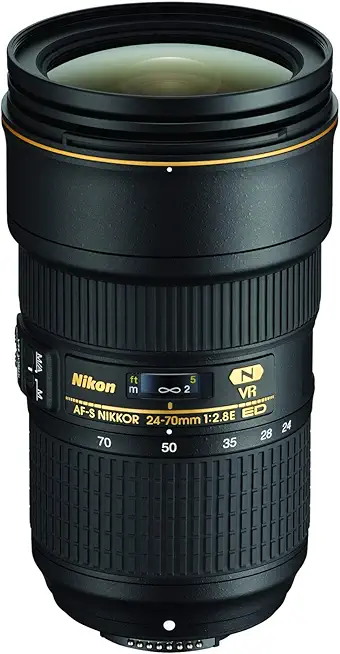
Nikon AF-S FX NIKKOR 24-70mm f/2.8E ED VR
Professional standard zoom with fast f/2.8 aperture, exceptional sharpness, vibration reduction, and reliable performance for weddings, events, and studio work.
Check PriceAs a car photographer I often reach for the Go-To 24-70mm f/2.8 Zoom because it simply covers the shots I need without swapping glass. The 24–70mm range lets you reframe from tight detail to wider context quickly, which is invaluable when lighting and angles change on a shoot.
Optically it delivers superb sharpness and edge-to-edge clarity that flatters curves and reflections, so badges, body lines and panel fits look crisp in-frame. The constant f/2.8 aperture is a real advantage for low-light and twilight work, letting you keep shutter speeds up while maintaining subject separation.
One of the practical benefits on handheld shoots is the VR — the lens provides about 4–5 stops of stabilization, which reduces camera shake during late-evening detail work or when you’re avoiding tripods. Build quality is robust with weather sealing, so you can keep shooting in windy or slightly damp conditions without worrying about the lens.
There are trade-offs: it’s heavier and bulkier than primes, so expect some fatigue during all-day handheld sessions. Also, autofocus can occasionally hunt in very low or complex lighting; when that happens I’ll switch to careful focusing techniques or a small focus point to lock on the right detail.
- Superb sharpness and minimal distortion
- Effective VR (~4–5 stops) for handheld use
- Robust build with weather sealing
- Versatile 24–70mm zoom range
- Heavier and bulkier than primes
- AF can hunt in very low/complex light
2. Telephoto 70-200mm f/2.8 Performer

Nikon AF-S NIKKOR 70-200mm f/2.8E FL ED VR
Fast telephoto zoom delivering consistent f/2.8 low-light performance, creamy bokeh, advanced stabilization, and pro-grade clarity for sports and portraiture.
Check PriceAs a working automotive photographer I reach for the Telephoto 70-200mm f/2.8 Performer when I need reach, compression, and reliable performance at car meets and on track days. It’s a true go-to telephoto zoom for distant action and for isolating a car from busy backgrounds.
The lens delivers excellent image quality and a consistent f/2.8 aperture that lets you hold shutter speeds in lower light while keeping subject separation. Autofocus is fast and accurate, which matters when cars are moving or when you’re tracking a specific detail as the scene changes.
Practically, the 70–200mm range lets you shoot from safer or more convenient distances while compressing perspective to emphasize lines, curves, and stance. Built‑in VR aids stabilization for handheld work and low‑light situations, and the weather‑sealed construction gives confidence shooting outdoors in unpredictable conditions.
There are tradeoffs. The lens is relatively heavy and large, so long handheld days can fatigue you fast. It’s also not the tool for very tight or ultra‑wide compositions — you’ll miss the context those wider perspectives give and may need complementary glass for full‑car environmental shots.
If your shooting leans toward motorsport, distant action, or dramatic compressed portraits of vehicles, this 70–200mm f/2.8 Performer is mostly a fantastic choice. If you predominantly shoot tight spaces or need ultra‑wide angles, factor that into your kit decisions.
- Superior sharpness and consistent f/2.8 performance.
- Exceptional autofocus reliability and speed for moving subjects.
- Effective VR.
- Weather-sealed construction.
- Relatively heavy and large; can cause fatigue.
- Not suitable for very tight or ultra-wide shots; needs complementary lenses.
3. All-In-One 28-300mm Travel Zoom

Nikon AF-S FX NIKKOR 28-300mm f/3.5-5.6G ED VR
Versatile all-in-one travel zoom covering wide to long range, stabilized optics and compact portability for spontaneous shooting on the go.
Check PriceThe All‑In‑One 28–300mm travel zoom (Nikon AF‑S FX NIKKOR 28‑300mm f/3.5‑5.6G ED VR) is exactly what its name promises: one lens that gets you from environmental wide shots to tight telephoto details without changing glass. That 28–300mm reach paired with a variable f/3.5–5.6 aperture makes it exceptionally convenient for location shoots where swapping lenses is a hassle.
In practice this lens shines for run‑and‑gun car work — quick reframing, shooting a full car and then dialing in for badges or wheel details a moment later. The SIC coating helps cut flare and ghosting from road reflections and bright sun, and the VR keeps handheld shots useable at longer focal lengths.
Optically it’s well‑balanced for a super‑zoom: ED elements reduce chromatic aberration and the overall rendering is solid for web and print use. That said, there are compromises inherent to such a wide range; you won’t see the same corner‑to‑corner micro‑sharpness you get from primes or specialist zooms, especially at the extremes of the range.
Who should buy this? If you’re an enthusiast or a travel shooter who values flexibility — covering car shows, road trips, and events with a single lens — this is a very practical tool. If you routinely shoot low‑light, twilight or need ultimate sharpness for large prints, be prepared to supplement it or lean on faster primes in those situations.
To get the best results: shoot during golden hour when possible, stop down a touch around f/8 for improved sharpness, and use a tripod or higher ISO when you hit the f/5.6 tele‑end.
- Massive 28–300mm zoom range
- SIC coating reduces flare and ghosting
- VR helps handheld shots at long focal lengths
- ED elements reduce chromatic aberration; great for travel
- Aperture narrows to f/5.6 at 300mm — limits low‑light
- Not as sharp as primes or dedicated zooms
4. Sharp 50mm f/1.8 Z-Mount Prime

Nikon NIKKOR Z 50mm f/1.8 S
Premium standard prime with bright f/1.8 aperture, silky bokeh, sharp center-to-edge rendering for portraits, street, and low-light creativity.
Check PriceThe Sharp 50mm f/1.8 Z-Mount Prime is a compact, Z-mount 50mm prime built for photographers who prioritize detail and character. Optically it shines: extremely sharp when stopped down and capable of a smooth, creamy bokeh at its wide f/1.8 aperture.
As a working lens for car photography it excels on badges, interior details, and selective-focus portraits. Its rendering is ideal for isolating elements like grilles, emblems, and leather textures with beautiful subject separation.
Its small size and light weight make it easy to carry all day, which matters when you’re moving between shots during a shoot or a meet. That portability also encourages handheld shooting and quick framing changes without tiring your shoulders.
The wide f/1.8 aperture is genuinely useful in low light and for creating shallow depth of field looks that separate a vehicle from distracting backgrounds. Autofocus is quiet and fast, so you won’t miss moments or disturb events when shooting in public settings.
Where it’s less ideal is when you need wider framing or full-car shots in tight spaces. As a fixed 50mm, it limits how much you can reframe without physically moving back or switching lenses, so plan your compositions accordingly.
Overall, if your work focuses on details, portraits, and creative isolation, this Sharp 50mm f/1.8 Z-Mount Prime is a highly practical and high-quality choice that keeps your kit light while delivering excellent image quality.
- Exceptional sharpness and contrast even wide open
- Lightweight and compact
- Wide aperture enables low-light shooting and separation
- Quiet, fast autofocus
- Fixed focal length limits framing flexibility
- Not ideal for full-car or wide scenes; best as a complementary lens
5. Long-Range 100-400mm Z Telephoto

Nikon NIKKOR Z 100-400mm VR S
Lightweight super-telephoto zoom offering long reach, fast autofocus, vibration reduction and edge-to-edge sharpness for wildlife and distant subjects.
Check PriceThe Z 100-400mm f/4.5-5.6 VR S is a long-range telephoto built for reaching distant cars and compressing backgrounds in a way that short lenses simply can’t. It’s geared toward motorsport and dynamic car photography where access is limited and you need tight framing from afar.
In the field I find its image quality and sharpness hold up impressively across the zoom range, which makes it a reliable choice at racing events and track days. The focal reach lets you isolate details or create dramatic compressed compositions without getting in the way of the action.
VR is a genuine advantage here — it noticeably improves handheld sharpness at extreme telephoto lengths and reduces the number of unusable frames when you can’t use a monopod. The lens is also weather-sealed and robustly built, so you can shoot in rough outdoor conditions without worrying about the elements.
Be realistic about the trade-offs: the relatively slow max aperture of f/4.5–5.6 will force higher ISOs or slower shutter speeds in low light, and the lens is larger and heavier than mid-range zooms, which can tire you on long shoots. Still, compared with longer primes it’s a practical balance of weight and image quality for many shooters.
If you need reach for races, distant portraits, or to compress backgrounds for dramatic car shots, this lens is mostly a keeper — especially for daytime and outdoor motorsport work where its strengths outshine the aperture compromise.
- Excellent image quality for distant subjects
- Strong VR stabilization for handheld telephoto work
- Robust build with weather sealing
- Versatile focal length for distant racing or tight portraits from afar
- Relatively slow max aperture (f/4.5–5.6)
- Larger and heavier than mid-range zooms
Nikon Car Photography Tips
Good car shots tell a story—shape, detail, motion or context—so pick the lens and settings that match the story you want. Think whether you need isolation, wide context, or motion freezing before you frame the shot.
Nikon bodies give useful AF modes: AF‑S with a single point for static cars is precise for badges, wheels and interiors. Switch to AF‑C with Dynamic Area or 3D Tracking when cars move to keep focus steady on shifting subjects.
Depth of field is your creative lever. Use wide apertures (f/2.8–f/5) to isolate details and create creamy backgrounds, and stop down to f/8+ for full-car and environmental sharpness.
Shutter speed controls motion. For static cars aim for 1/60s or faster and use a tripod for long exposures; for panning try 1/60–1/125s to get background blur and 1/500s+ to freeze motion when needed. Don’t be shy about raising ISO to keep your shutter speed where it matters.
A circular polarizer is one of the easiest upgrades you can make. Rotate it to tame reflections on paint and glass and keep highlights under control, and use lens hoods or flags to manage stray flare.
Shoot from multiple heights and distances. Low angles add drama, high angles reveal lines and context; step in for badges and interior details or step back with a wider view to show environment. A telephoto will compress background and emphasize the car’s silhouette.
Light matters more than gear. Golden hour softens shapes and colors, while harsh midday sun needs diffusers or reflectors to fill shadows. Always expose for highlights and rescue the rest in RAW.
If AF struggles on glossy panels switch to manual focus for close work, and trust your camera’s Vibration Reduction for slower handheld speeds. Pack one versatile zoom and one fast prime, shoot RAW, and review frames on-site so you can refine your approach as the light changes.
Choosing the Right Lens for Cars
Choosing the right lens is the single biggest creative decision you make at a car shoot. Think about distance, space, and the story you want to tell before you grab a lens.
Focal length shapes the shot. Wide-angle (16–35mm) works for full-car images in tight spaces and dramatic low angles, while a standard zoom (24–70mm) handles full cars, environmental context, and details without constant lens changes. A 70–200mm telephoto compresses backgrounds and lets you shoot from a distance at meets or on the track.
I reach for primes when I want character—50mm or 85mm give creamy bokeh and razor‑sharp badges or interiors. Zooms are lifesavers when access is limited or cars are moving; you can reframe fast for rollers or panning sequences without missing a beat.
Mind aperture and where the lens is sharpest. Fast glass (f/2.8 and wider) isolates the subject and saves shots in low light, but many lenses achieve peak sharpness around f/4–f/8 when you need edge‑to‑edge clarity.
Look beyond focal length to features that affect real shoots. VR (image stabilization) helps handheld low‑light and long lenses, weather sealing keeps you shooting in mixed conditions, and a short close‑focus distance is handy for badges and interiors. Also factor in AF speed and quiet motors for motorsport or discreet shoots.
Match the kit to your style. If you mostly shoot static cars, a 24–70mm plus a 50mm prime will cover the bulk of work. For action and compression add a 70–200mm, and remember a modern kit lens still produces strong results when you nail lighting and composition.
Finally, test before you commit. Rent lenses for a weekend to check balance, handling, and real‑world sharpness. If you must travel light, take a versatile zoom and a fast prime and build from there based on access, light, and the types of shots you want most.
What People Ask Most
What is the best Nikon lens for car photography?
There is no single best lens; the right choice depends on your shooting style and subjects. A versatile standard zoom covers most situations, while primes and telephotos excel for details or distant action.
Which Nikon focal lengths are best for shooting cars?
Wide-angle focal lengths are useful for full-car and environmental shots, standard ranges are most versatile, and telephoto ranges help isolate and compress the subject. Choose based on how much of the scene you need to include and how far you can get from the car.
What Nikon lens is best for shooting car interiors?
A compact, wide-to-standard lens that focuses closely and performs well in lower light is ideal for interiors. Mobility and a comfortable working distance matter more than extreme focal reach in tight spaces.
What Nikon lens is best for car detail and macro shots?
A lens with a short minimum focus distance and strong edge-to-edge sharpness works best for badges and small details. Macro-capable primes or dedicated close-focus lenses make tight detail work easier and sharper.
Which Nikon lens is best for panning and action car shots?
A telephoto zoom with reliable autofocus and stabilization aids in capturing motion from a distance. Combine the right lens with steady panning technique to convey speed and keep the subject sharp.
Is a wide-angle Nikon lens good for car photography?
Yes, wide-angle lenses are great for dramatic perspectives and fitting an entire car into tight compositions. Be mindful of distortion and position yourself carefully to avoid unflattering proportions.
Should I use Nikon prime or zoom lenses for car photography?
Both have advantages: zooms offer flexibility for changing compositions, while primes typically provide better low-light performance and sharpness. Many photographers use a mix of both to cover different creative needs.
Conclusion on the Best Nikon Car Lenses
This roundup brings together real-world user experience and expert insight to help you weigh pros and cons and understand how different lens types serve detail work, portraits, motorsport and versatile shooting scenarios.
Each option shines in particular situations, so matching your gear to your shooting style and conditions will deliver the most impact for your car photography.
Use the practical guidance earlier in the article—on focusing, depth of field, shutter choices, handling reflections and creative framing—to get better results regardless of equipment.
If you want to continue improving your technique and gear knowledge, explore more articles on the site to build skills at your own pace.
Have questions or experiences to share? Leave a comment below and we usually reply within a few hours.





0 Comments