

Ever tried to freeze a blistering fastball or capture a game‑winning dive only to end up with a blur?
When action is fast and light shifts inning to inning, the right lens makes the difference.
This guide helps you pick the best lenses for baseball photography in 2026.
Whether you’re shooting Little League or the big leagues, the rules for great images are the same.
We examine five top lens options across different budgets and shooting styles.
From the dugout to the stands, you’ll learn what focal lengths suit common shooting positions.
You’ll also get clear advice on reach versus portability and when to trade weight for image quality.
We explain common trade‑offs so your gear actually works for how you shoot.
Beyond the gear picks, we offer practical motion‑freezing tips that work in the heat of play.
Expect straightforward pointers on autofocus habits, support, and exposure approaches for fast action.
A compact FAQ answers the questions photographers ask most.
By the end you’ll know which lens types match your venue, budget, and shooting style.
This isn’t theory — it’s a field‑tested playbook for better baseball photos.
Pack your bag; the season is waiting.
1. Sony FE 100-400mm f/4.5-5.6 GM OSS

Sony FE 100-400mm F4.5-5.6 GM OSS
Versatile telephoto zoom delivering sharp, stabilized long-range images with fast autofocus for wildlife and sports.
Check PriceThe Sony FE 100-400mm f/4.5-5.6 GM OSS is a true workhorse for outdoor baseball. Its versatile 100–400mm range gives you the reach to cover infield plays and much of the outfield without swapping glass.
Optical SteadyShot (OSS) makes handheld shooting far more practical during long games. The lens is also noted for a lightweight, balanced design that reduces fatigue on long sidelines sessions.
G Master optics deliver strong image quality across the zoom range, with the kind of sharpness and contrast that keeps details in fast action. Autofocus is fast and accurate, and real-world users say it reliably tracks moving subjects — covering about 90% of event needs without changing lenses.
There are trade-offs to accept: the f/4.5–5.6 maximum aperture is slower in low light, so night games or dim stadiums will push your ISO higher. Some users also report slightly noisy focusing in video mode, which matters if you plan substantial video work.
- Excellent AF speed and accuracy.
- Effective image stabilization for handheld use.
- Lighter than super-telephotos.
- Strong image quality across the zoom range.
- f/4.5–5.6 aperture is slower in low light.
- Some users report slightly noisy focusing in video mode.
2. Canon EF 70-200mm f/2.8L IS III USM

Canon EF 70-200mm f/2.8L IS III USM
Professional fast-aperture telephoto ideal for portraits, events, and action, with superb image stabilization and creamy bokeh.
Check PriceThe Canon EF 70-200mm f/2.8L IS III USM is a workhorse built around a constant f/2.8 aperture that excels in low light and really isolates subjects from busy backgrounds. It adds an advanced 3.5-stop image stabilization system, which lets you hold slower shutter speeds when the light drops without immediately resorting to higher ISO.
Autofocus is extremely fast and impressively quiet, so you can lock onto pitchers, batters, and baserunners and capture decisive moments with confidence. Many pro sports shooters prefer this lens for its reliable AF performance and the way it keeps up with quick, unpredictable motion.
The build is rugged and weather-sealed, so you won’t worry about a bit of drizzle or dust during outdoor games. Users routinely praise the lens for its durability and long-term reliability under heavy, professional use.
Keep in mind the 200mm maximum reach. That focal length is versatile for many sideline and dugout shots, but it may force you to crop or add a teleconverter when you’re shooting deep outfield action from far away.
If you value speed, low-light capability, and a rock-solid, weather-resistant body, this lens is largely a smart buy for baseball shooters. It’s heavier than some zooms, so plan for long days with support or rotating hands to avoid fatigue, but the performance trade-offs make it a favorite among working sports photographers.
- Constant f/2.8 — excellent low light
- 3.5-stop image stabilization
- Superb, fast and silent AF
- Durable, weather-sealed construction
- 200mm max — may need cropping/teleconverter
- Heavier — tiring on full-day shoots
3. Sigma 150-600mm f/5-6.3 DG DN OS Sports

150-600mm F5-6.3 DG DN for Sony E
Extreme reach zoom offering reliable sharpness and versatile framing for distant subjects; rugged build for outdoor use.
Check PriceI reach for the Sigma 150-600mm f/5-6.3 DG DN OS Sports when I need true outfield reach without breaking the bank. The 150–600mm range lets you isolate pitchers, batters, and deep outfield plays from the stands or foul lines with minimal cropping.
Optical stabilization is strong, and in practice it preserves sharpness at long distances so you can shoot handheld for short bursts. Image quality is very good — users and I notice clean results and minimized chromatic aberration across contrasty scenes.
Autofocus is generally excellent, but expect to tweak camera settings for peak tracking performance on fast, erratic action. The lens is built like a tank: weather‑sealed and robust, so it stands up to dusty, rainy game-day conditions.
The trade-offs are clear: the slow maximum aperture (f/5–6.3) makes night games and dim stadiums harder unless you boost ISO, and the lens is noticeably heavy. For long shoots I use a monopod or tripod to avoid fatigue and to get the most consistent sharpness from the long focal lengths.
- 150–600mm reach
- Very sharp optics with effective IS
- Weather-sealed, rugged build
- Relatively affordable super-telephoto
- Slow max aperture (f/5–6.3)
- Heavy and bulky; needs support
4. Nikon NIKKOR Z 70-200mm f/2.8 VR S

Nikon NIKKOR Z 70-200mm f/2.8 S
Fast, professional telephoto with exceptional sharpness, smooth bokeh, and robust autofocus for sports, weddings, and portraits.
Check PriceThe Nikon NIKKOR Z 70-200mm f/2.8 VR S is a fabulous sports zoom built for fast action. Its constant f/2.8 aperture gives you subject isolation and reliable low‑light performance so you can keep shutter speeds high during evening games.
VR stabilizes handheld shots, letting you shoot sharper frames from the dugout or foul line without always resorting to a monopod. The lens also offers a close‑focus ability, which is handy for candid player moments and tighter sideline coverage.
Optically it’s excellent — reviewers praise its edge‑to‑edge resolution and how well it holds detail under tricky outdoor lighting. That kind of sharpness matters when you need to crop or push files in post from dynamic plays.
The AF system is quiet and fast, with a motor tuned for continuous focusing on moving subjects. In practice the smooth AF helps you track pitchers, batters, and diving plays without the lens hunting or making distracting noise.
Build quality is another strong point: it’s durable and weather‑sealed, so you can trust it in damp, dusty, or otherwise harsh conditions. If you shoot a lot of outdoor baseball, that reliability is worth noting.
- Fast f/2.8 for subject isolation and low-light performance
- Advanced stabilization improves handholding
- Ultra-quiet AF motor for uninterrupted shooting
- High build quality with weather resistance
- 200mm max requires cropping or teleconverters for long-distance shots
- Z-mount requires compatible bodies, limiting cross-brand use
5. Sony FE 400mm f/2.8 G Master OSS

Sony FE 400mm F2.8 GM OSS
Ultra-fast prime delivering outstanding resolution and subject isolation with top-tier stabilization for action and wildlife photographers.
Check PriceIf you shoot baseball professionally from the sidelines or the stands, the Sony FE 400mm f/2.8 G Master OSS is a tool that makes peak plays look effortless. The 400mm prime delivers the reach you need for outfield shots and tight close-ups of pitching and batting without having to crop aggressively.
The fast f/2.8 aperture gives you reliable low-light performance and beautiful subject isolation, which helps separate players from busy backgrounds. G Master optics bring exceptional sharpness, contrast, and color — the kind of image quality that holds up at large prints and pixel-peeping.
Autofocus on this lens is extremely fast, and when paired with bodies capable of high frame rates you’ll nail sequences of swings, dives, and throws. Built-in OSS (Optical SteadyShot) also helps keep images tack-sharp whether you’re handholding for quick positional changes or using a monopod for long innings.
Be realistic about handling: the lens is large and heavy, and many photographers use a monopod or gimbal head for long sessions. For shooters who demand top reach, speed, and ultimate image quality, that weight is an acceptable trade-off; for casual users it can quickly become tiring.
This is a specialized workhorse for pros who prioritize reach, speed, and image quality above portability and zoom flexibility. If you need a fast, long prime that performs in tough light and at high shutter speeds, this Sony 400mm f/2.8 is hard to beat.
- Ultra-fast AF with high accuracy.
- Exceptional image sharpness and quality.
- Wide f/2.8 ideal for low light and subject isolation.
- Effective built-in stabilization at long focal length.
- Large, heavy; often requires monopod or significant effort to use all day.
- Specialized fixed focal length reduces versatility.
Choosing the Right Focal Length for Baseball
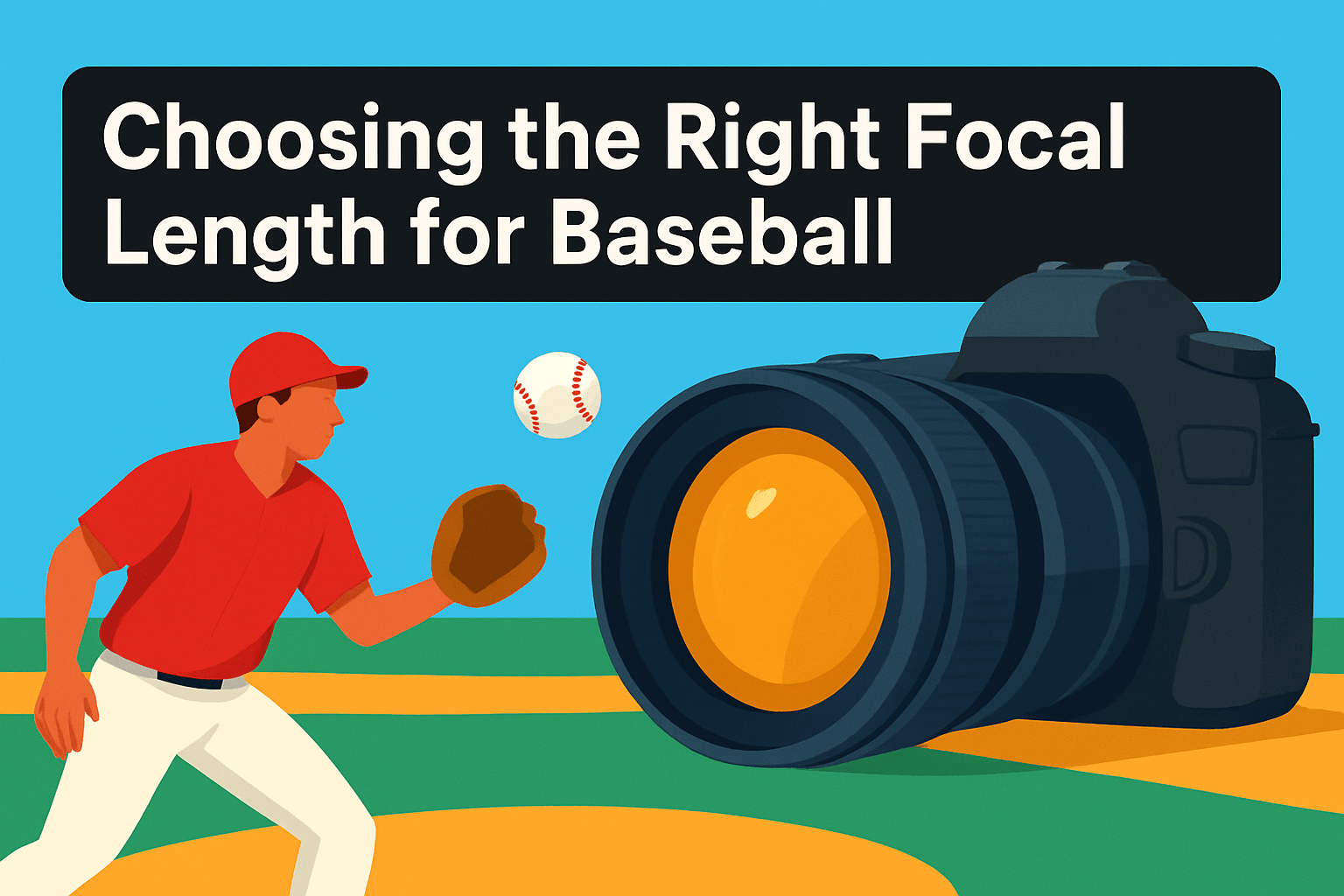
Baseball benefits from telephoto reach; if you’re shooting from the sidelines plan on 200mm or longer to get usable frames. Shorter lenses push you to crop or get very close, which isn’t always possible.
Around 300mm hits the sweet spot — long enough for infield and near-outfield plays, yet compact enough to carry all day. It’s the focal area I often choose when I run a single-lens kit.
A 400mm f/2.8 prime is ideal for serious shooters who want crisp outfield frames and creamy subject separation. It’s heavier and usually needs a monopod, but the image quality and low-light headroom justify the extra weight. The f/2.8 aperture also helps separate the subject from busy backgrounds under stadium lights.
Zooms like 70–200mm and 100–400mm are the workhorses. 70–200 excels in tighter venues and at f/2.8 isolates subjects beautifully and doubles as a great portrait and dugout lens. 100–400 gives you reach to cover dugouts through deep outfield without swapping glass.
If you’re shooting from the stands or upper decks, 150–600mm lenses give the reach you need. They’re bulkier and slower (f/5–6.3), so plan to use higher ISOs or support gear to keep shots sharp. For many hobbyists they’re the only realistic option to frame distant action.
On youth or small fields, 70–300mm or 50–400mm are great for portability and still filling the frame. Extenders or teleconverters add reach but cost light and can slow autofocus, so only use them when necessary. These lenses are also friendlier on the wallet and easier to tote between games.
Match your lens to how you’ll shoot: sidelines and infield need faster, shorter telephotos; stands and outfield require longer glass and support. Consider weight and aperture — choose wider apertures for night games and reach when you’re in distant seats.
How to Freeze Motion in Baseball
Freezing baseball action starts with shutter speed, but it’s the balance of shutter, aperture and ISO that produces sharp, usable frames. Choose your shutter speed first, then open the aperture and raise ISO only as much as needed to keep noise reasonable.
I set a minimum of 1/1000s for pitches, swings and dives. For bat contact and the fastest swings I push to 1/1250–1/2000s. Routine fielding or less frantic plays can often get away with 1/800s in good light.
Use the widest aperture your lens comfortably allows to let in light and isolate the player from a busy background. f/2.8 to about f/4.5 is a practical sweet spot for most sports setups. Remember that shallow depth of field demands precise focus on the face or the bat.
Don’t be afraid to push ISO; motion blur is harder to fix than noise. I shoot in Shutter Priority or Manual with Auto-ISO and an upper limit set to control grain. That locks the shutter while the camera manages exposure so you can concentrate on timing.
Set continuous AF (AF-C/Servo) and use high-speed burst mode to capture sequences. Back-button focus is a game changer for tracking and keeps focus separate from the shutter. Use group or zone AF so the camera follows the player rather than a single tiny point.
Image stabilization steadies camera shake but it won’t stop subject motion, so prioritize shutter speed. Mount heavy telephotos on a monopod or gimbal head to reduce fatigue and keep framing steady through long innings. Anticipate the play and start the burst before the peak action.
Check frames between innings and tweak settings as light changes. When you expect a throw or a tag, pre-focus on the area where the play will happen to shave milliseconds off focus time. Fast primes and f/2.8 zooms give more latitude, but correct settings, support and anticipation are what actually freeze the play.
What People Ask Most
What focal length is best for baseball photography?
Telephoto focal lengths are generally best to reach players from the sidelines and stands. Many photographers favor lengths in the 200mm and up range, with 300mm as a common balance and 400mm prime ideal for more serious reach.
Is a 70-200mm lens good for baseball games?
Yes, a 70–200mm is very versatile and covers many sideline situations while offering fast apertures for low light. It can be limiting for deep outfield shots, so cropping or added reach may be needed for distant action.
Which lens is best for shooting baseball at night?
Fast lenses with wide apertures are best for night games because they let in more light and help isolate subjects. Lenses with constant wide apertures are commonly chosen for reliable low-light performance.
Should I use a prime or zoom lens for baseball photography?
Primes offer speed and excellent image quality for critical action moments, while zooms provide the flexibility to cover varied field positions without changing lenses. Choose based on whether reach and aperture or versatility matters most for your shooting style.
What aperture is best for baseball action shots?
Wide apertures are preferred to allow faster shutter speeds and to separate players from the background. Using the widest practical aperture helps freeze motion and create pleasing subject isolation.
What lens do sports photographers use for baseball on crop-sensor cameras?
On crop sensors, photographers often rely on telephoto zooms or super-telephoto lenses because the sensor gives additional effective reach. Prioritize lenses with good autofocus and stabilization, and consider support for heavier optics.
What lens is best for shooting baseball from the stands?
For shooting from the stands, longer reach lenses like super-telephoto zooms or a 400mm-class prime are commonly used to cover outfield distances. Support such lenses with a monopod or tripod to maintain sharpness and endurance during long events.
Conclusion for Best Lenses for Baseball Photography
Choosing the right lens for baseball is about matching reach, aperture, stabilization and weight to the venue and your shooting style.
Fast f/2.8 glass gives the best low‑light performance and subject separation, versatile telephoto zooms cover most field positions, and heavier super‑telephoto options deliver maximum reach when you can use a monopod or support.
Pair your gear choices with practical technique: favor fast shutter speeds, wide apertures, appropriate ISO, continuous autofocus and burst shooting, and lean on stabilization or support with long lenses.
If you want to improve quickly, read more of our on‑site guides to deepen your skills and refine how you shoot different game situations.
Have a question or want gear advice for a specific field or camera setup? Leave a comment below — we usually reply within a few hours.


0 Comments