
Looking to lift your images out of flat, uninspired light but unsure which flash will actually deliver?
From bounced studio portraits to outdoor fill at golden hour, picking the wrong unit can leave you underexposed, frustrated, and out of time.
This Ultimate Guide compares five Canon-compatible flashes and breaks down what matters when you’re shopping. We tested them across common shooting scenarios so the evaluations reflect real-world use, not just lab numbers. Along the way we explain the selection criteria so you can identify the best camera flash for Canon that suits your gear and workflow.
We focus on practical criteria: power (guide number) to gauge reach and punch, and head flexibility for bounce, modifiers, and creative positioning. Wireless and multi‑flash support, plus whether the unit offers e‑TTL automation and full manual control, are next on our checklist. High‑speed sync (HSS), durable build and weather resistance, and overall value for different budgets complete the picture.
Expect photographer-focused insights—recycle performance, ergonomics, and features you’ll actually use in fast-paced shoots are highlighted. There are no gimmicks here; just clear guidance to help you balance power, portability, and price.
Whether you shoot weddings, portraits, travel, or studio work, this guide will help you narrow choices and avoid costly mismatches. Read on to find a flash that plays well with your Canon body and elevates your lighting without wasting money.
1. Canon Speedlite EL-1 Overview

Canon Speedlite EL-1 Version 2
Flagship studio-grade strobe with ultra-fast recycling, long-lasting battery, precise wireless control and pro-level reliability for demanding photographers
Check PriceThe Canon Speedlite EL-1 is a professional-grade flash I reach for at weddings, events, and in the studio because it’s built to perform reliably under pressure. Its weather-resistant build means I don’t panic when the forecast turns sour — I can keep shooting in rain or humid conditions without worrying about failures.
What really sets the EL-1 apart on long days is the combination of fast recycle times and long battery life. Paired with a fan-driven cooling system, it lets me fire long bursts and complex sequences without the unit throttling back from heat — very handy during receptions or fast-paced multi-flash setups.
For creative lighting the EL-1 offers programmable strobe functions and advanced wireless modes that make off-camera work straightforward and repeatable. As someone who builds multi-flash patterns, the radio wireless control and programmability let me dial in consistent results quickly, saving time between takes.
There are trade-offs: it’s heavier and bulkier than lighter Speedlites, and the price point is aimed at professionals rather than casual shooters. If you need rugged, high-output performance and frequent continuous shooting, the EL-1 is an excellent choice; if you prioritize minimal weight or a tight budget, you might pause before buying.
- Extremely durable and weather-sealed.
- Fast recycle time and long battery life.
- Fan-driven cooling prevents overheating.
- Advanced wireless modes and programmable strobe.
- Heavier and bulkier than other Speedlites.
- Higher cost may deter hobbyists.
2. Canon Speedlite EL-5 Overview
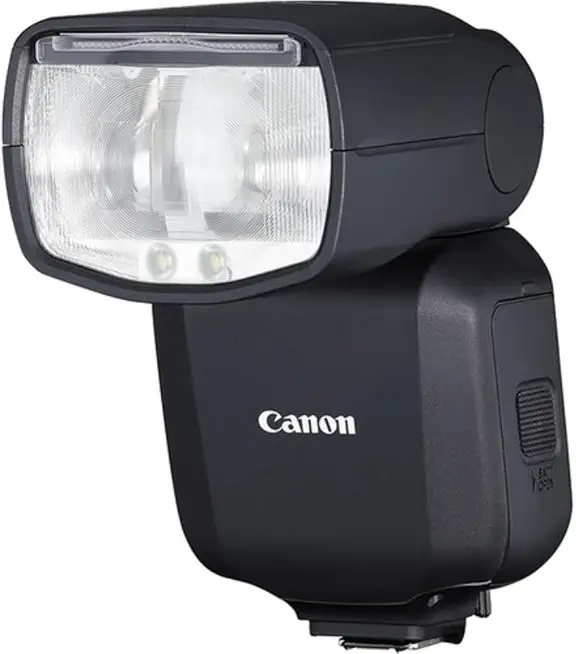
Canon Speedlite EL-5 for EOS R series
Compact yet powerful hotshoe strobe offering fast recycling, reliable radio triggering, magnetic modifier compatibility and seamless mirrorless integration
Check PriceIf you need a powerful flash that sits just below Canon’s top pro tier, the Speedlite EL-5 is a solid choice. It’s popular with photographers who want modern features without the full pro build and weight. The EL-5 gives you reliable output and thoughtful ergonomics for long days on assignment.
One of my favorite practical touches is the modeling lamp, which lets you preview lighting and shape before you fire a frame. That’s a real time-saver when positioning for portraits or product shots, especially when working with assistants or clients. It removes much of the guesswork from shaping shadows and catchlights.
Battery performance here is very good thanks to the high-capacity Li-ion battery pack; expect long life and quick recycle times during extended shoots. The head’s controls are designed for fast operation — the joystick and select dial make changing groups, power and modes immediate and tactile. The multi-function connector and advanced camera communication mean the EL-5 plays particularly well with newer Canon bodies, including those using the multi-function shoe for faster data exchange.
Build-wise, the EL-5 sits in Canon’s pro class, so you get a robust package that performs reliably in demanding situations. Do note the trade-offs: it’s slightly bulkier than some smaller Speedlites and requires cameras with the multi-function accessory shoe to unlock its full set of communication features. Overall, for shooters who value control, battery endurance, and smoother workflow, the EL-5 is mostly a win.
- Modeling lamp for previewing lighting.
- Long battery life and quick recycle times.
- Intuitive controls (joystick and dial).
- Advanced communication with compatible cameras.
- Requires cameras with the multi-function accessory shoe.
- Slightly bulkier than some Speedlites.
3. Canon Speedlite 430EX III-RT Overview
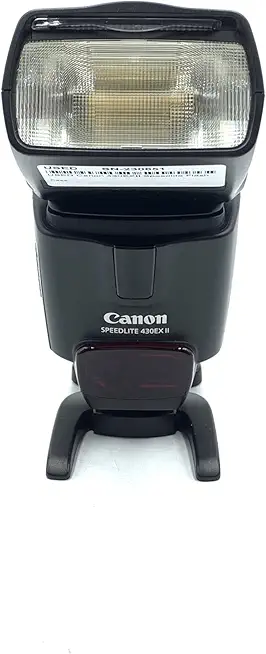
Canon Speedlite 430EX II for Canon DSLR
Affordable, versatile external flash delivering reliable bounce lighting, motorized zoom head, quick setup and consistent performance for enthusiast photographers
Check PriceAs a working photographer I often recommend the Canon Speedlite 430EX III-RT to beginners and intermediate users. It strikes a very usable balance of power, practical features, and affordability that makes it easy to learn with and grow into.
The unit is compact and lightweight, so it’s comfortable to carry on long shoots or when traveling light. That portability makes it a reliable everyday flash without wearing you down during a wedding or event day.
On-camera performance is solid, and it shines off-camera thanks to good wireless capabilities. Importantly, it uses radio transmission for more reliable remote triggering, which makes multi-flash setups much less fussy in mixed lighting or crowded environments.
It’s also useful as a remote flash in multi-flash arrays, so you can build up more complex lighting without investing in pro-level heads. Do be aware it’s less powerful than higher-end models and has a slower recycle time compared to professional flashes, so it’s not the best choice when maximum reach or ultra-fast bursts are required.
For most portrait, event, and hobbyist needs this Speedlite delivers excellent value. If you want an affordable, portable flash that works well on- and off-camera and plays nicely in multi-flash rigs, this is a very good option.
- Compact and lightweight
- Reliable wireless for off-camera use
- Good balance of power and features
- Affordable for beginners and hobbyists
- Less powerful than higher-end models
- Slower recycle time vs. professional flashes
4. Canon Speedlite EL-100 Overview

Canon Speedlite EL-10 for EOS R series
Ultra-compact portable strobe with built-in modeling lamp, fast synchronization, magnetic modifier compatibility and easy pocketable convenience for travel shooters
Check PriceThe Canon Speedlite EL-100 is a great little flash when you need something light and unobtrusive. Its compact size makes it popular for travel and everyday use, so it won’t weigh down a mirrorless setup or a small camera bag.
Despite its small footprint, the head offers tilt and swivel capabilities that let you bounce light off ceilings and walls. That bounce ability is exactly why many photographers reach for the EL-100 for fill flash and softening harsh shadows in portraits and run-and-gun situations.
It pairs well with mirrorless cameras, giving you a balanced on-camera setup that’s comfortable for long shoots. As a result it’s commonly used as a primary flash for casual portraits, street work, and as a reliable backup when you don’t need pro-level power.
Be realistic about its limits: this is an entry-level flash with limited power compared to larger Speedlites. It’s less powerful and exhibits slower recycle times at higher output, so it’s not the best choice for heavy event work, big venues, or overpowering bright sunlight.
All told, if you want an affordable, portable flash for travel, fill, and bounce lighting—especially with a mirrorless body—the EL-100 is mostly a very good match. If you require high output, fast recycle for long bursts, or advanced pro features, consider stepping up to a mid- or pro-level unit and check the specs for HSS and advanced wireless if those matter to you.
- Compact and lightweight for travel
- Tilt and swivel for creative lighting
- Easy pairing with mirrorless cameras
- Good for fill and bounce lighting
- Slower recycle time at higher power
- Less powerful than larger Speedlites
5. Neewer Z2-C Round-Head TTL Flash for Canon

NEEWER Z2-C TTL round-head flash for Canon
Budget-friendly flash with circular head for smooth light quality, through-the-lens metering, wireless triggering and flexible manual controls
Check PriceAs a working photographer I appreciate gear that delivers pleasing light without breaking the bank, and the Neewer Z2-C fits that bill. It’s a budget-friendly TTL flash with solid performance, so it’s a great option if you need reliable automatic exposure without investing in top-tier Speedlites.
The round Fresnel head is the standout feature for me — it produces even, soft lighting that flatters skin tones and smooths textures, which makes this flash especially useful for portraits and product shots. The rounded beam avoids harsh hotspots, so I often reach for it when I want gentle wraparound light straight from the on‑camera position.
Operationally the improved UI and quick TTL/manual switching speed up my workflow. Flipping between TTL for run‑and‑gun work and manual for controlled setups is fast and intuitive, which matters during short windows of shooting or when I’m juggling a client and assistants.
For off‑camera setups the built‑in 2.4G wireless Q system is surprisingly reliable. I’ve used it to trigger a couple of remote units and it held sync and stability well in real‑world environments, making it a practical choice for small multi‑flash arrays without buying extra triggers.
That said, the Neewer isn’t a pro‑grade Speedlite. Build quality isn’t as robust as Canon Speedlites, so if you toss gear around or shoot in rough conditions you may notice its limits. Also, customer support and service options are more limited compared to major brands, which is worth factoring into a purchase decision.
- Improved UI for fast mode switching
- Round Fresnel head for even, soft light
- Built-in 2.4G wireless Q system
- Budget-friendly option
- Build quality not as robust as Canon Speedlites
- Limited customer support compared to major brands
How to Choose the Right Canon Flash
Start by matching a Canon flash to how and where you shoot. Do you need reach to overpower sun, a head that bounces for flattering portraits, reliable wireless for multi‑light setups or weather sealing for events? Also consider balance on your camera if you carry it all day.
Guide Number (GN) shows relative flash power. GN 20–30 (ISO 100) suits fill and close work; GN 40–60 handles most portraits and events; GN 60+ helps beat bright daylight. Remember GN changes with ISO and zoom, so check specs for your typical distances.
Head tilt and swivel change the light more than GN alone. Good tilt and wide swivel let you bounce off ceilings and walls for softer results. If you shoot direct on‑camera most of the time, a simpler head is acceptable.
Wireless choice shapes your off‑camera options. Radio triggers are reliable in sun and around obstacles, so pick flashes with built‑in radio or add a trigger for multi‑flash. Optical control is cheaper and fine indoors but requires line‑of‑sight.
e‑TTL is invaluable for changing light; manual power gives predictable control for creative setups. Make sure the flash supports High‑Speed Sync (HSS) if you shoot wide‑open outdoors or need shutters beyond your camera’s sync limit. TTL also saves time when you change ISO often.
Durability and battery design matter on long days—pro models usually offer weather sealing and Li‑ion packs for faster recycle times and longer sessions. Small niceties like modeling lamps, AF‑assist and intuitive controls shave minutes from each setup. Third‑party flashes can be solid bargains if you verify e‑TTL compatibility and support.
Finally, confirm the flash fully supports your Canon body, including e‑TTL and any multi‑function shoe on newer mirrorless cameras. Buy the features you’ll actually use rather than chasing the biggest GN on the shelf. A flexible mid‑range unit or a checked used pro will often give the best value as your needs grow.
Budget Considerations for Canon Flashes
Money spent on a flash should buy you fewer headaches and more keepers. As a working photographer I often see people pay top dollar for features they never use. Flash is a long-term tool—choose one that fits your workflow and camera system.
Think in tiers: entry-level for travel and fill, mid-range for most portraits and events, pro for continuous heavy use and harsh conditions. Entry-level units are compact and budget-friendly but offer less power. Pro heads add weather sealing, fast recycle and raw output when you need to overpower sunlight.
Prioritize features you actually use. A mid-range flash with TTL, tilt/swivel and reliable wireless often gives the best starter value.
Buying used or older Speedlites can stretch your budget without sacrificing image quality. Classics still handle on-camera and basic off-camera work, but they may lack modern radio wireless or mirrorless compatibility. If you buy used, test hotshoe contacts and TTL on your camera before committing.
Think long term: choose flashes that can grow with your kit. HSS, radio wireless and rechargeable battery options are upgrade paths that save money later. Avoid entry-level models if you expect to shoot lots of events or off-camera work.
Accessories often add more capability than a new flash. External battery packs, a good trigger and soft modifiers will upgrade what you already own for a fraction of the price.
Don’t buy on brand prestige alone. Most photographers get the best return from a sensible mid-range flash unless they truly need pro durability and output.
If possible, rent a higher-end unit for a weekend to see how it fits your workflow. Testing with your body, TTL and HSS will tell you whether to save or invest.
What People Ask Most
What is the best camera flash for Canon cameras?
There is no single best flash for everyone; the right choice depends on your shooting needs, budget, and camera model. Prioritize compatibility and the features you will actually use.
Which speedlight is best for Canon DSLR and mirrorless cameras?
Choose a speedlight that supports your camera’s flash metering and physical shoe interface. Consider a model that offers the features you need, such as swivel head, wireless control, and reliable TTL support.
Can I use third-party flashes with Canon and still get full TTL?
Many third-party flashes offer TTL compatibility with Canon bodies, but support can vary between models. Check compatibility lists and test the flash with your camera before relying on it for important shoots.
How do I choose the right flash for my Canon camera?
Decide what type of photography you do most and which features matter most, like power, head flexibility, wireless support, and durability. Match those needs to your budget and confirm camera compatibility before buying.
What is the difference between Canon E-TTL and manual flash modes?
E-TTL is an automatic metering mode that adjusts flash output for correct exposure in changing conditions. Manual mode requires you to set the flash power, giving predictable results and greater creative control.
Do Canon flashes support wireless off-camera flash and how do I set it up?
Many Canon flashes support off-camera use via optical or radio wireless systems. Setup typically involves configuring a master and one or more remote units or using a compatible radio trigger, following the manuals for detailed steps.
Which features matter most when picking a flash for Canon portrait photography?
For portraits, look for a flash that enables soft, controllable light, head swivel and tilt for bounce, and reliable TTL or manual control. Good modifier compatibility and consistent recycle performance also help achieve pleasing results.
Conclusion for Best Camera Flash for Canon
Choosing the right flash comes down to matching your shooting style, camera compatibility, and budget while weighing trade-offs in power, control, and durability.
Before you buy, compare key factors like output, head flexibility, wireless and multi-flash support, TTL versus manual control, HSS capability, and overall build quality to pick the unit you’ll actually use.
If you want to sharpen your lighting technique and buying confidence, read more articles on the site to learn practical tips and real-world advice that complement this guide.
Please leave a comment with your questions or experiences below — we usually reply within a few hours and are happy to help you choose the best flash for your needs.


0 Comments