

Can one camera really do justice to both a wedding day and a cinematic short, or will you always end up compromising one for the other?
If you’ve ever wrestled with soft highlights in a video or missed energy in a photo, you know why hybrid shooters are so picky.
This guide exists to cut through the noise and help you choose a camera that balances strong still-image quality with practical, usable video tools.
We evaluate real-world performance, handling, and usability so you can see how a camera performs during an actual shoot — not just on paper.
Whether you’re chasing weddings, running a channel, or need one versatile kit for travel and assignments, this guide is for you.
Inside you’ll find concise model summaries that clarify strengths and limitations, plus a plain‑English breakdown of the key things to prioritize for hybrid work.
We also explain common trade-offs you’ll encounter and why one body might favor speed and handling while another emphasizes color and image character.
A short FAQ wraps things up with practical buying tips and workflow considerations to get you shooting faster.
Flip the page and skip hours of research — by the end you’ll know which camera fits your creative priorities and which compromises you can live with.
This is the practical, no‑fluff guide to finding a single camera that actually works for both photos and video.
1. Panasonic Lumix S5 IIX Highlights
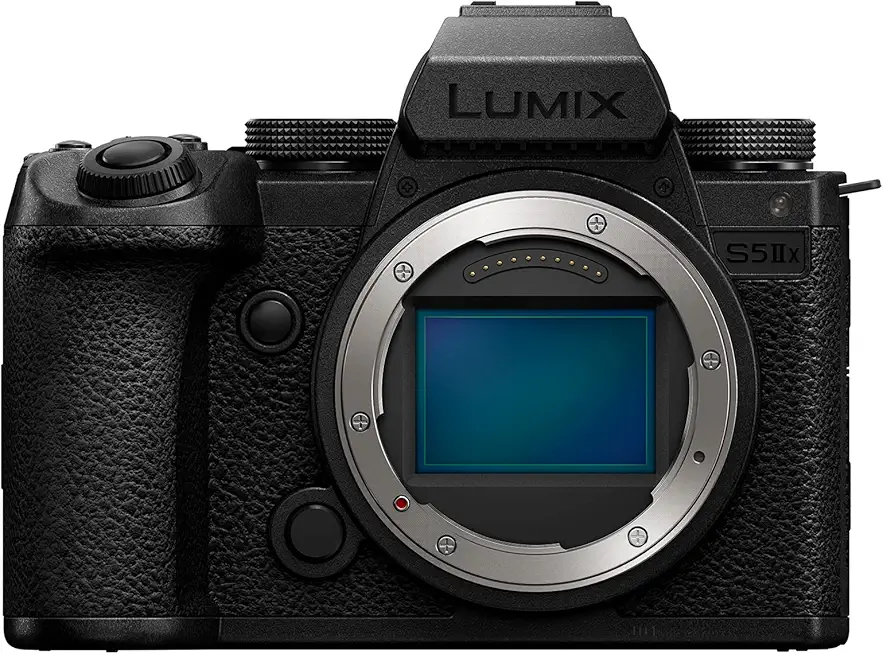
Panasonic LUMIX S5IIX DC-S5M2XBODY Mirrorless Camera
Compact powerhouse with advanced autofocus, high-resolution video, and exceptional low-light performance for professional hybrid shooters.
Check PriceThe Panasonic Lumix S5 IIX is a hybrid tool built around a 24.2MP full-frame sensor that delivers solid stills and a pro-grade video feature set. As a working photographer and filmmaker, I appreciate how balanced the image quality is for both disciplines.
Where it really stands out is video: unlimited 4K/60p recording and even 6K options give you freedom on long shoots without constant file-splitting or worrying about record limits. It also supports internal ProRes recording straight to SSDs, which simplifies post workflow and preserves color and detail for grading.
Autofocus has advanced subject detection and tracking, making it usable for run-and-gun situations where you need the camera to find and follow subjects reliably. IBIS adds confidence for handheld work, letting you grab usable footage and sharp stills without a gimbal in many cases.
Practical features include dual SD card slots for straightforward backup and extended shooting, and an overall user-friendly layout that helps creators stepping up from mid-tier gear feel at home quickly. That makes the S5 IIX a strong pick for serious creators who need professional video features while keeping stills capability intact.
Be mindful that although compact for a full-frame camera, some users will find it relatively bulky compared with smaller mirrorless bodies. Also, if you rely on high frame-rate slow motion you’ll notice it lacks options like 120fps, so it isn’t ideal for dedicated slow‑motion specialists.
- Unlimited 4K/60p and 6K recording
- Native ProRes recording to SSDs
- 24.2MP full-frame sensor for good stills
- User-friendly for creators upgrading from mid-tier gear
- Compact for full-frame but still relatively bulky
- Lacks higher frame-rate options (e.g., 120fps)
2. Canon EOS R6 Mark II Highlights
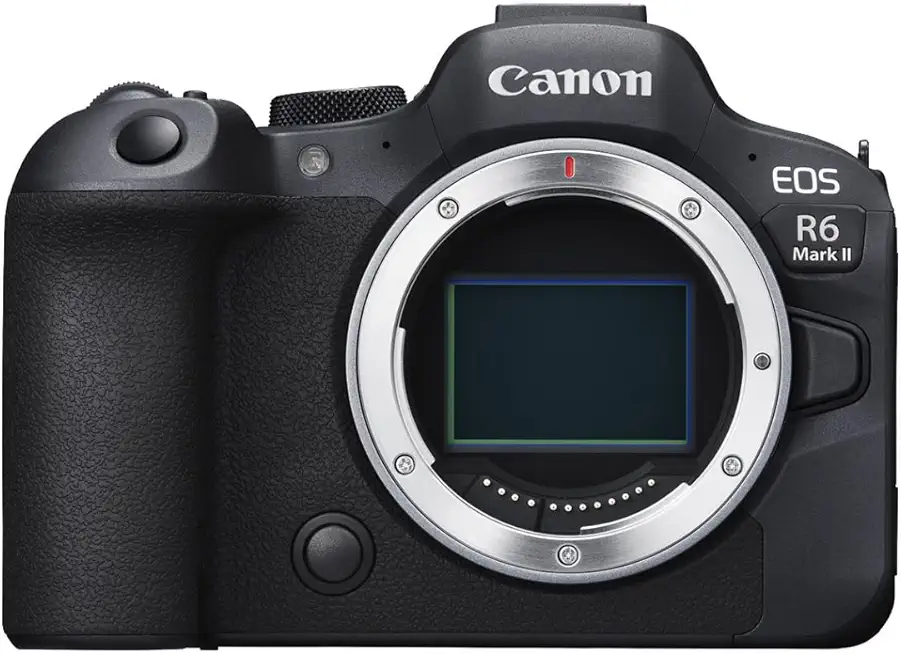
Canon EOS R6 Mark II Mirrorless Camera Body Only
Fast, reliable pro-grade autofocus and superb image stabilization for effortless action and low-light photography.
Check PriceThe Canon EOS R6 Mark II is an excellent hybrid camera that balances stills speed with strong video chops. Its 24.2MP full-frame sensor gives you the low‑light headroom and shallow depth of field photographers crave, while remaining manageable for fast-paced work.
For video shooters, the R6 Mark II offers uncropped 4K at 24/30/60fps (downscaled from 6K), which means you get detailed, high-quality footage without the field-of-view penalties that frustrate many hybrid users. That downscaling also helps with detail and noise control compared with a straight 4K readout.
Autofocus is a standout — Canon’s AI subject detection works for people, animals, and even cars, making tracking reliable for both run-and-gun video and action stills. As a photographer, the system gives you confidence when shooting unpredictable subjects and helps keep critical moments sharp.
Stabilization and speed round out the package: effective IBIS makes handheld shooting much more usable for handheld video and low-light stills, while the electronic shutter can shoot up to 40fps for decisive-action sequences. That combination makes the camera a real all‑rounder for wedding, event, and wildlife shooters who also need strong video features.
There are trade-offs — some users report overheating during extended recording sessions, and if you want very high frame-rate slow motion the body tops out short of 120fps. Still, for most shooters looking for a responsive, low‑light capable hybrid, the R6 Mark II is a very compelling choice.
- Fast, reliable autofocus for stills and video
- Strong low-light performance
- High-quality uncropped 4K options
- Very fast burst mode for action (up to 40fps)
- Reports of overheating during extended video recording
- No 120fps or higher slow-motion options
3. Sony A7 IV Highlights
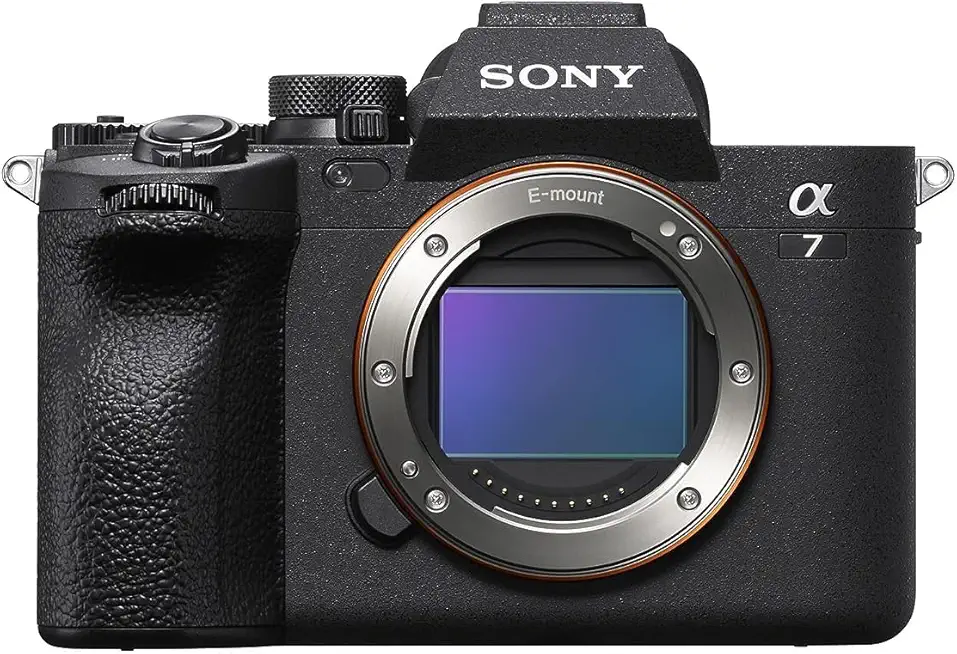
Sony Alpha 7 IV Full-Frame Mirrorless Camera
Versatile full-frame imaging with outstanding dynamic range, fast AF, and cinematic 4K video capabilities.
Check PriceAs a working photographer, the Sony A7 IV strikes a rare balance between high-resolution stills and robust video features. Its 33MP full-frame sensor delivers the kind of detail I rely on for client work, while the camera’s 4K at 60fps capability keeps video footage smooth and future-proof.
The camera’s fast, reliable subject-detection autofocus is a standout in real shooting scenarios, locking onto eyes and subjects quickly so you can concentrate on composition and timing. Combined with effective in-body stabilization, handheld run-and-gun shooting becomes far more manageable and yields much steadier footage.
ISO 100–51200 gives you a wide sensitivity range for low-light situations, which is critical when switching between dim reception halls and bright outdoor portraits without changing gear. Dual card slots — SD and CFexpress — add practical reliability for busy shoots, enabling overflow, backup, or high-speed recording to CFexpress when needed.
The body is compact and lightweight, so you can carry it all day without fatigue; that portability is something I appreciate on long assignments. That said, some users find Sony’s handling and ergonomics less intuitive, and the color rendering won’t be everyone’s favorite straight out of camera, so expect to spend a little time dialing in color profiles to taste.
Overall, the A7 IV is ideal if you’re a videographer who also needs high-quality stills and values excellent autofocus and a portable kit. It’s a versatile hybrid that performs strongly in both camps, especially for creators who want a single camera that won’t compromise on image detail or video capability.
- 33MP full-frame sharpness
- 4K at 60fps with in-body stabilization
- Fast, reliable subject-detection autofocus
- Dual card slots: SD and CFexpress
- Handling/ergonomics less intuitive
- Sony color rendering not universally preferred
4. Nikon Z6 III Highlights

Nikon Z6 III Full-Frame Mirrorless Camera
Robust imaging platform delivering high-speed performance, excellent color science, and reliable autofocus for demanding shooters.
Check PriceThe Nikon Z6 III is a true hybrid workhorse built around a 24.5MP full-frame sensor that gives you strong image quality without getting in the way of video workflows. It records 4K at 60fps and pairs that with effective IBIS, so handheld 4K footage looks steady and usable right out of the camera.
Autofocus is fast and reliable, with solid subject-tracking that performs well for both stills and video. For action photographers the body can fire up to 14fps on the mechanical shutter, which makes it useful for sports and wildlife bursts while still offering excellent low-light performance.
Ergonomics are a highlight — Nikon tuned controls and grip feel intuitive, which matters when you’re switching between photo and video duties during a long shoot. The overall feature set is balanced toward pros and serious enthusiasts who want a camera that’s comfortable to use, performs confidently in dim conditions, and handles both run-and-gun video and thoughtful stills work.
There are a couple of trade-offs to keep in mind. The Z6 III has only one CFexpress card slot, which may be a concern for heavy shooters who want redundant recording or need high sustained write speeds for long video files. Also, if you need high-frame-rate slow motion like 120fps, this body doesn’t offer that option.
- 24.5MP full-frame sensor
- 4K at 60fps
- Fast, reliable subject-tracking autofocus
- Comfortable ergonomics and intuitive controls
- Only one CFexpress card slot
- No higher-frame-rate video options like 120fps
5. Panasonic Lumix GH5 II Highlights

Panasonic LUMIX GH5M2 DC-GH5M2 Micro Four Thirds Mirrorless Camera
Durable, video-focused system offering stabilized 4K recording, flexible frame rates, and pro video features for creators.
Check PriceThe Panasonic Lumix GH5 II is a compact workhorse built around a 20.3MP Micro Four Thirds sensor that balances stills capability with serious video tools. As a photographer who shoots run-and-gun video and occasional photos, I appreciate how that smaller sensor keeps bodies and rigs lightweight without giving up usable resolution.
Where the GH5 II shines is video: 4K at 60fps, V-Log, and waveform monitoring give you pro-level exposure control and flexibility in post. Its fast, reliable autofocus for video and effective IBIS make handheld 4K/60 shooting far more practical for solo operators and livestreamers.
Dual SD card slots add redundancy for long shoots and the camera’s user-friendly interface lowers the learning curve for creators moving up from entry-level gear. In real-world use this camera is ideal for vloggers, livestreamers, and creators who need dependable video features without the bulk or budget hit of full-frame systems.
Keep in mind the trade-offs: the Micro Four Thirds sensor won’t match full-frame for shallow depth of field or low-light latitude. If you regularly work in dim venues and need the cleanest high-ISO files, a full-frame body will still outperform the GH5 II.
Overall, if your priority is compact, affordable high-quality video with solid stabilization and practical ergonomics, the GH5 II is a very strong, sensible choice.
- Pro-grade video tools (V-Log, waveform)
- Compact, lightweight—good for travel and vlogging
- User-friendly interface for beginners
- More affordable option for high-quality video
- Micro Four Thirds sensor may not match full-frame image quality
- Weaker low-light performance versus full-frame cameras
Key Features for Hybrid Cameras
When you need one body to do both great photos and compelling video, start with the fundamentals: sensor size and resolution. Full‑frame sensors give you better low‑light performance and shallower depth of field for cinematic looks, while APS‑C or Micro Four Thirds bodies can be lighter, cheaper, and still deliver excellent results—especially when paired with the right lenses.
Autofocus is the feature that will make or break mixed shoots. Look for phase‑detect systems with robust subject detection and tracking that work for people, animals and vehicles; smooth continuous AF in video saves retakes and keeps stills bursts usable. In short, reliable tracking lets you concentrate on creativity instead of constantly refocusing.
Video specs matter beyond the headline numbers. Uncropped 4K at 60fps, 10‑bit internal color, and RAW or high‑bitrate codecs give you grading latitude and a true cinematic image. Also check for practical bits—unlimited recording, internal ProRes or SSD recording options, and clean HDMI output—because file format and thermal limits affect what you can actually shoot on location.
Stabilization is under‑appreciated until you need it. Effective IBIS combined with lens stabilization can turn handheld, run‑and‑gun work into professional‑looking footage and dramatically reduce gimbal time for photo/video hybrid shoots. Even a modest amount of stabilization improves low‑light stills and slow‑motion clips.
Ergonomics and workflow trumps spec sheets when you’re shooting long days. Comfortable grip, logical button layout, dual card slots and good battery life keep you shooting; attention to heat management and file sizes keeps you shooting longer. Test how a camera feels in your hands with the lenses you use most.
Finally, choose a lens ecosystem that matches your style: fast primes for portraits and low light, versatile zooms for events and travel. Accept trade‑offs—higher resolution can mean heavier files, smaller sensors can mean better portability—and prioritize the features that let you do what you shoot most without compromise.
Common Hybrid Camera Trade-Offs
Hybrid cameras are clever machines, but they rarely give you everything at once. Expect compromises: a body tuned for fast autofocus and long video runs may not deliver the same dynamic range or color nuance as a purely stills-focused model. Knowing which compromises matter to your work will save you money and frustration.
One common trade-off is image quality versus speed. High-resolution sensors capture detail for prints but can slow readout, increasing rolling-shutter artifacts in fast pans. Cameras built for video often use readout and processing optimizations that favor clean motion and low noise over peak stills fidelity. Decide whether you prioritize motion handling or maximum resolution.
Thermal limits are real. Pushing high‑bitrate 4K or 6K for long takes can trigger heat protection. If you shoot long interviews, events, or continuous streaming, budget for cameras with proven thermal management or plan workarounds: external recorders, shorter takes, or shooting at slightly lower bitrates to stay cooler.
Files get big, fast. 10‑bit footage, ProRes and RAW eat storage and tax your editing system. Build a workflow: fast cards, a simple backup routine, and proxy workflows for editing. Often shooting a well-compressed 10‑bit codec and keeping RAW for key projects is the best compromise between quality and manageability.
Finally, complexity and ergonomics matter more than specs on paper. Hybrid bodies pack menus, picture profiles and stabilization options. Spend time customizing buttons, save dial positions, and create camera presets. That small setup time flattens the learning curve and lets you reach consistent results in mixed photo/video shoots.
There’s no perfect hybrid, only the right trade-offs for your needs. Prioritize the features that match your typical shoot—autofocus and low light for run-and-gun work, thermal and codec options for long-form video, or sensor resolution for high-end portraits—and configure the camera to minimize the compromises that matter least to you.
What People Ask Most
What features should I look for in a camera for both photography and videography?
Look for a camera with a versatile sensor size, reliable autofocus, good stabilization, flexible video recording options, and a strong lens ecosystem. Comfortable ergonomics and accessible controls help you work faster and more intuitively.
Is mirrorless better than DSLR for hybrid photo and video use?
Mirrorless cameras often offer more advanced video features and on-sensor autofocus, while DSLRs provide an optical viewfinder and a familiar handling experience. Choose based on which advantages match your shooting style and priorities.
Which cameras have the best autofocus for both stills and video?
The best autofocus systems combine fast, accurate focus acquisition with reliable subject detection and tracking. Prioritize cameras known for consistent performance and ongoing firmware support for subject recognition.
What sensor size is best for shooting both photos and videos?
Sensor size involves trade-offs: larger sensors generally perform better in low light and provide shallower depth of field, while smaller sensors can make gear more compact and affordable. Select the size that aligns with your needs for image look, low-light ability, and portability.
Can one camera be suitable for professional-level photos and video?
Yes, many hybrid cameras are capable of professional-level stills and video when paired with appropriate lenses and a solid workflow. Consider durability, connectivity, and file management to ensure the camera fits professional demands.
What lenses work best for hybrid photo and video shooting?
Versatile zooms and a few fast prime lenses cover most hybrid scenarios, offering flexibility for run-and-gun work and controlled portraiture. Favor lenses with reliable autofocus and optical stabilization when available.
How do I choose the best camera for vlogging and photography?
Prioritize a compact, lightweight body with a clear flip screen, good stabilization, and easy audio connectivity to simplify vlogging while still supporting stills. Try handling a few options to find a camera that feels comfortable for longer shoots and varied setups.
Conclusion for Best Photo and Video Cameras
The S5 IIX stands out as a video-forward full-frame option with robust recording tools and solid stills performance, suited to creators stepping up to professional workflows.
The Canon EOS R6 Mark II is an all‑rounder prized for fast, reliable autofocus and strong low‑light abilities, a great fit for users who need responsiveness across stills and video.
The Sony A7 IV pairs a high‑resolution sensor with exceptional subject tracking in a compact body, appealing to videographers who also prioritise detailed stills.
The Nikon Z6 III emphasizes comfortable ergonomics and excellent low‑light shooting, making it ideal for professionals and serious enthusiasts who value handling and versatility.
The GH5 II offers pro video tools in a smaller, more affordable Micro Four Thirds package, which suits vloggers, livestreamers, and creators on a budget.
Ultimately, match autofocus performance, video capabilities, stabilization, and lens availability to the types of shoots you do most so the camera supports both your photo and video priorities.
If you want to sharpen your hybrid skills, keep exploring our site for more practical tips and gear guidance to help you grow as a creator.
Have questions or want personalised advice? Leave a comment below — we usually reply within a few hours.


0 Comments