

Which lenses will actually make your footage look cinematic in 2026? This guide narrows the field to five cine lens lines worth serious consideration this year. It’s focused on choices that matter on set — not just spec sheets, lab numbers, or glossy PR blurbs.
Ergonomics, color science, focus feel, and real-world image character are our primary yardsticks. These lenses were evaluated across handheld, gimbal, and studio setups to see how they behave when it counts, under real schedules and tight lighting situations. That on-set lens perspective tells you which glass swaps quickly, which pulls cleanly, and which renders skin tones without fuss.
Beyond optical performance we weigh build, serviceability, how easily a lens integrates into a rig, and how it handles flare, contrast, and breathing under motion. We’ll match lens personalities to buyer types — from indie filmmakers and wedding shooters to commercial crews and high-end cinematographers, and even rental houses. Camera system, sensor size, and budget shape the recommendations as much as focal length and intended shooting style.
If your goal is the best lenses for cinematography that actually fit your workflow, this primer cuts through marketing noise and helps you avoid costly mismatches. Expect practical, on-set advice with clear notes on compatibility, ergonomics, and usable image character to help you decide what to buy in 2026. Read on and you’ll leave with clear reasons to choose a particular lens family for your next shoot.

Sirui VP-1 35mm T1.4 Vision Prime Full-Frame Cine Lens (E pre-installed, RF/Z/L mounts)
1. Zeiss CP.3 Cine Lens Line

ZEISS CP.3 135mm T2.1 Compact Cine Lens Canon EF Mount
Telephoto cine lens delivering cinematic compression, sharpness and fast low-light performance for compelling portrait and detail shots.
Check PriceI’ve used the Zeiss CP.3 cine line on narrative and commercial sets, and it’s easy to see why it’s a flagship. The set (15mm T2.9, 25mm T2.1, 35mm T2.1, 50mm T2.1, 85mm T2.1) delivers exceptional optical clarity and color fidelity that holds up under critical grading.
On set the painted lens rims and internal light traps noticeably reduce flares and veiling glare, giving richer blacks and higher contrast straight out of camera. The standardized 95mm front diameter and uniform focus ring positioning make fast swaps painless and keep your matte box and follow focus setups consistent.
Compared with its predecessor, the CP.3 improves ergonomics for handheld work, which matters when you’re doing long takes or running-and-gunning. It also gives very consistent color science across the focal range, so matching shots between lenses in a scene is straightforward.
This line is aimed at professional filmmakers and high‑budget productions who need top‑tier image quality and precise color matching. Be realistic about budget and availability: these are perceived as expensive by some, and certain focal lengths can be harder to source without rentals.
- Minimal aberrations and distortions
- Robust, professional build quality
- Uniform color science across set
- Minimal focus breathing for smooth pulls
- Perceived as expensive for some budgets
- Some focal lengths less available—may require rental
2. ARRI Signature Prime Series
Versatile wide-angle prime offering creamy bokeh, fast aperture and robust build for expressive storytelling on full-frame cameras.
Check PriceThe ARRI Signature Prime Series is a modern full‑frame cine prime set built for image quality and predictable on‑set behavior. You get a creamy rolloff with high contrast and microcontrast that keeps skin tones natural while still resolving fine detail.
On the move these lenses shine — they’re compact and relatively lightweight compared with traditional cinema primes, which makes handheld and gimbal work noticeably easier. Their consistent performance across an 18mm–85mm range means you can match looks quickly without juggling radically different characters between focal lengths.
Technically they’re excellent for focus work: very low focus breathing lets you execute smooth rack focuses that read clean on a large screen. They also show strong control of fringing and chromatic aberration, so colors stay true‑to‑life and don’t need heavy correction in post.
For shooting commercial spots, narrative coverage, or TV work where image fidelity and smooth pulls matter, these lenses are a great fit. The main tradeoffs are budget and sensor pairing — they’re pricier and less accessible for smaller productions, and APS‑C use at wider angles requires caution because some distortion can appear.
If your priority is modern full‑frame optics that handle motion and skin tones effortlessly, the Signature Primes are worth the investment. If you’re on a tight budget or exclusively shooting on smaller sensors, you may want to weigh the cost and wide‑angle behavior first.
- High microcontrast and sharpness
- Consistent look across focal range
- Compact, lightweight handling
- Minimal focus breathing and chromatic aberration
- Pricier, less accessible for small productions
- APS‑C wide‑angle use may show distortion
3. Sirui Vision Prime Series
Sirui VP-1 35mm T1.4 Vision Prime Full-Frame Cine Lens (E pre-installed, RF/Z/L mounts)
Bright cinematic 35mm with classic character, smooth focus, and reliable contrast for documentary and narrative filmmaking.
Check PriceThe Sirui Vision Prime series is a budget‑friendly set of cine primes built around a fast T1.4 aperture designed for narrative, wedding, documentary and corporate work. I like these lenses when I need a cinematic shallow depth of field on a tight budget—T1.4 is genuinely useful in low light and helps separate subjects without pushing ISO too high.
Optically they give good center sharpness wide open, with pleasing contrast and color rendition that sits well in a mixed workflow. Be aware that wide‑open shooting can introduce softness in the corners and a touch of vignetting; those corners generally improve when you stop down to T2.8.
Mechanically the Sirui primes are solid for the price: they feel dependable on a rig and have decent ergonomics, though they don’t match the ruggedness of premium cine glass. For indie productions, wedding shoots, or student films where weight, cost and aperture matter most, they’re a practical choice that won’t break the bank.
If your work demands flawless edge‑to‑edge sharpness at T1.4, or you need a very broad focal range from one brand, these might not be the answer. But for filmmakers prioritizing fast apertures, good central imagery, and attractive color for narrative or event work, the Vision Primes are a surprisingly strong value.
- Excellent value for budget filmmakers
- Very useful low‑light T1.4 aperture
- Good central sharpness wide open
- Rugged build and decent ergonomics for price
- Corner softness wide open
- Limited focal length selection currently
4. Sony CineAlta FF T1.5 Lens

Rokinon 35mm T1.5 Cine DSX Lens Sony E Mount
Fast standard lens combining edge-to-edge sharpness, beautiful bokeh, and durable mechanics for professional on-set performance.
Check PriceThe Sony CineAlta FF T1.5 is a full‑frame prime cine lens built with image fidelity front and center. It’s described as offering crisp optics, consistent color, and high sharpness—qualities that show up immediately on skin tones and fine detail.
On a practical shoot it delivers minimal focus breathing and low distortion, which makes rack focuses feel clean and predictable. That restraint in breathing is a real advantage when you need smooth pulls without distracting geometry shifts.
Because it’s optimized for Sony cameras, you’ll get seamless pairing: smooth autofocus when using native bodies and solid manual control options for cinematic work. That native compatibility also helps the lens maintain its color consistency and natural skin‑tone rendition across setups.
It’s also lightweight and comfortable for handheld use, so you can run-and-gun or operate on gimbals without fighting a heavy front end. The T1.5 rating gives you an open aperture that contributes to subject separation and precise control over exposure and depth of field.
In short, this lens is an excellent pick if you shoot primarily on Sony systems and want a sharp, color‑faithful prime that behaves well for handheld and narrative work. Be mindful that third‑party rigs might not deliver the same autofocus smoothness, and cross‑brand shooters should factor in limited native compatibility.
- High‑resolution optics with excellent detail
- Strong color consistency and natural skin tones
- Lightweight and comfortable for handheld
- Minimal focus breathing and low distortion
- Autofocus may be less smooth on third‑party rigs
- Optimized for Sony systems—limited cross‑brand use
5. Irix Cine Lens Series

Irix Cine 45mm T1.5 Cinema Lens Sony E Mount
Check PriceThe Irix Cine series is a pragmatic choice if you want full‑frame cine performance without the ultra‑premium price tag. The lenses deliver solid construction with weather sealing — dust and rain protection that makes them dependable on location.
Optically they punch above their cost. A 9‑blade aperture gives pleasing, round bokeh that helps separate subjects in interviews and narrative coverage. The optical elements are designed to reduce distortion and chromatic aberration, so images stay clean and predictable across focal lengths.
Mount availability is a genuine on-set advantage. With EF, E, MFT, and PL mounts you can move the set lens across DSLRs, mirrorless bodies and cinema cameras without hunting for adapters. That compatibility makes them a great option for mixed rigs or rental houses that need versatility.
That said, these are not ultra‑premium mechanics. Ergonomics and mechanical refinement aren’t as polished as top-tier cine primes, so heavy-handed focus pulls or precision marks might feel less luxurious. Also, focal length options are more limited, so you may need to supplement your kit for very wide or very long coverage.
In short, Irix Cine lenses are for filmmakers who prioritize rugged, reliable optics and broad mount compatibility over an exhaustive focal range and boutique mechanical feel. They deliver attractive bokeh, low distortion and weather resistance at a realistic price — a sensible core set for narrative, documentary and run‑and‑gun shoots.
- Durable, weather‑resistant build
- High image quality with low distortion/aberrations
- Attractive round bokeh (9‑blade aperture)
- Versatile mount availability (EF, E, MFT, PL)
- Limited focal length offerings
- Ergonomics/mechanics not as refined as premium lenses
Choosing the Best Focal Length
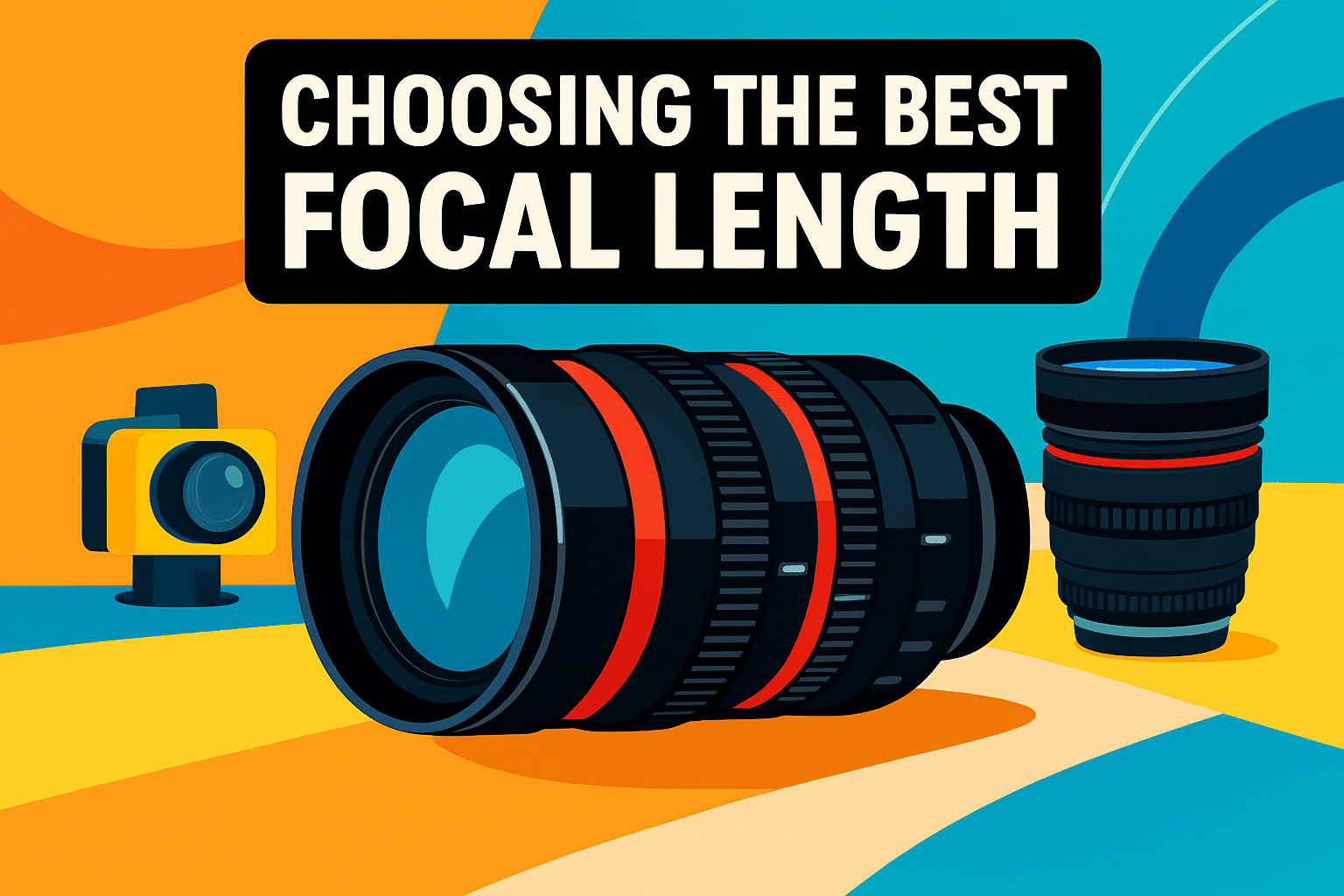
Focal length, measured in millimeters, determines how much of a scene your lens captures and how it renders depth. Short focal lengths (14–35mm) are wide, standards (35–55mm) are neutral, and telephotos (70–200mm+) narrow the view and compress space.
Wide lenses create scale and immersion; they exaggerate foregrounds and make environments feel larger. Standard lenses read like the human eye and keep performances honest, while telephotos isolate subjects and pull backgrounds forward for intimacy.
Match the focal length to the emotion: use wide for scope or chaos, standard for conversational realism, and tele for emotional isolation or tension. Don’t pick a focal length because it looks “filmic”—pick it because it serves the story.
Remember the practical side: a wide lens forces you closer to maintain framing, which affects blocking and sound. Tele lenses let you stand back, smoothing perceived movement and making rack-focus pulls feel more cinematic.
When you push a dolly or pan, wide lenses exaggerate parallax and motion, which can heighten energy. If you want more controlled, gentle movement, reach for something longer.
Think in concrete focal spots: 28mm is often a sweet spot—immersive without heavy distortion and great for medium-wide masters. 50mm is the all-around “normal” I use for dialogue and general coverage. 85mm and up are portrait territory for subject isolation and shallow depth of field.
Always test the same scene at a few focal lengths during prep; the differences are often more dramatic than you expect. Let the lens support blocking and actor chemistry—when the performances feel right you’ve chosen the right focal length.
If unsure, carry a 28mm, 50mm, and an 85mm—this trio covers most cinematic needs. They let you cover scale, natural conversation, and portraits without panicking on set.
Don’t be afraid to break the “one-lens” rule—mix focal lengths within a scene for contrast, rhythm, and texture. The most cinematic choice is the one that backs the story and the actor in the frame.
Filmmaker’s Guide to Sensors and Formats
Sensor size is one of the first creative choices on a shoot. It alters field of view, depth of field, and how lenses render a scene.
Full‑frame (24×36mm) is the industry standard for cinematic depth. It gives wider framing for a given focal length and a shallower depth of field for pleasing subject separation. That shallow look is great for subject separation but demands accurate focus.
APS‑C sensors are smaller, with crop factors around 1.5× or 1.6×. A 50mm behaves like roughly a 75–80mm on APS‑C, which is useful if you want extra reach without changing glass.
Medium format goes the other direction: more sensor area, more resolution, and even thinner depth of field. To match full‑frame framing you’ll usually move to longer focal lengths, which can make focus pulls harder. That look is beautiful, but it forces different staging choices.
Lenses and sensors must be matched. Full‑frame lenses cover smaller sensors fine, but APS‑C glass can vignette on full‑frame—so always confirm coverage, mount fit, and crop modes before the day.
Sensor size doesn’t alter a lens’s inherent distortion or bokeh—that’s the optics. What changes is field of view and background compression, so test lenses on the camera you’ll actually shoot with.
Bigger sensors plus longer lenses deliver shallower DOF, which looks cinematic but tightens focus margins on moving subjects. If you expect motion, rehearse pulls or stop down a hair to keep shots usable. Shallow DOF also makes stabilization and tracking more obvious.
My workflow is practical: choose the sensor for the emotional tone, use a crop calculator to translate focal lengths, then run quick camera tests in the actual light. Those tests reveal vignette, breathing, and how forgiving the focus will be—saving time on set. Do this early in prep rather than on the first day.
What People Ask Most
What are the best lenses for cinematography?
There is no single best lens for every job; the right choice depends on your project goals, budget, and camera system. Consider image character, ergonomics, and how lenses will match across the set when making a selection.
What focal lengths are most commonly used in cinematography?
Filmmakers typically use wide, standard, and telephoto focal ranges to create different perspectives and emotional effects. Choose focal length based on the scene’s emotional tone and the desired camera‑to‑subject distance.
Should I use prime or zoom lenses for cinematic filmmaking?
Primes often deliver a consistent optical character and wider apertures while zooms provide framing flexibility and faster coverage. Many productions use a mix to balance look and efficiency depending on shooting needs.
What lenses do professional cinematographers use?
Professionals select lenses that offer reliable optics, consistent color matching, and rugged mechanics suited to the production’s scale and workflow. High‑quality cine primes and well‑controlled zooms are common choices based on the project.
What is the difference between cine lenses and still photography lenses?
Cine lenses are designed for motion work with geared focus rings, repeatable markings, and consistent aperture and color behavior across the set. Still lenses prioritize compactness and autofocus features for single‑frame photography.
What lenses give a cinematic look and shallow depth of field?
Lenses with longer perspectives and wider apertures help isolate subjects and create a shallow depth of field, while bokeh and contrast also influence the cinematic feel. Pair lens selection with sensor size and framing to achieve the intended aesthetic.
Are anamorphic lenses worth using for cinematography?
Anamorphic lenses provide a distinctive widescreen aesthetic and signature optical artifacts that many filmmakers use for stylistic impact. They add complexity to shooting and post, so consider creative benefits alongside workflow and budget implications.
Conclusion on the Best Cinematography Lenses
In short, the five cine lines covered here offer distinct image characters, handling and price points that suit different production needs—some favour a neutral, clinical clarity while others lean toward creamier rolloff or faster low‑light performance, and ergonomics range from lightweight handheld benefits to robust, weather‑sealed builds.
Think of your choice as a balance between the look you want on screen, the physical workflow on set, and the budget or camera system you’re using; each line can excel in different narrative or commercial contexts depending on those priorities.
Don’t forget that focal‑length decisions and sensor/lens compatibility are as important as optical character—how a lens frames, compresses space and renders depth of field with your chosen sensor will shape the story, so test combinations and match lenses to scenes and movement styles.
If you enjoyed this comparison and want to sharpen your craft, explore more articles on the site to deepen your understanding of lenses, framing and on‑set workflow for better results.
Have questions or want advice about a specific setup? Leave a comment below — we usually reply within a few hours and are happy to help you choose the right tools for your next shoot.



0 Comments