

Which lens will unlock the full creative potential of your Sony camera and finally make your photos look the way you imagine? Every serious image-maker knows the glass you choose reshapes light, depth, and storytelling. This guide focuses on the five best Sony FE lenses and walks you through choosing the right optic for your shooting needs.
We cut through specs and marketing copy to report on how these lenses actually behave in real shoots, from travel to studio. Expect magazine-style, hands-on notes that explain how each lens performs in real shooting conditions rather than long lists of numbers. That practical focus makes this a quick read for photographers who want to choose wisely and shoot better immediately.
Whether your work leans toward landscapes, portraits, wildlife, or run-and-gun video, the right glass makes composition and storytelling simpler. We’ll highlight the practical trade-offs photographers face so you can match a lens to your priorities. No needless hype — just straightforward advice that helps you find lenses that genuinely boost your craft.
If you’re upgrading a kit or hunting for one versatile optic to carry everywhere, this is the practical briefing you need. We distill the options and explain which choices make the most sense for different budgets and shooting styles, without getting lost in specs. Ready to find the best lenses for Sony that will elevate your images?
1. Best Ultra-Wide Zoom for Sony

Sony FE 16-35mm F2.8 GM II
Ultra-sharp wide-angle zoom delivering exceptional low-light performance, edge-to-edge clarity, and buttery bokeh for landscapes, architecture, and creative perspectives.
Check PriceThe Sony FE 16-35mm f/2.8 GM II is a workhorse ultra-wide zoom that I reach for on landscape, architecture, travel, and even astrophotography shoots. It’s designed to capture expansive scenes and tight interiors with confidence, giving you the flexibility to frame dramatic foregrounds or whole rooms without stepping back.
Optically, this lens delivers exceptional sharpness across the entire frame, even at wide apertures, so your edge-to-edge detail holds up when you pixel-peep or print large. That consistent sharpness makes it a real asset for architecture and landscape work where fine detail matters.
In the field the lens feels noticeably lighter than previous versions, which matters when you’re hiking or carrying gear all day. Autofocus is fast and reliable, even in low light, so you spend less time hunting and more time composing.
The f/2.8 aperture is genuinely useful — it gives you better low-light performance and creative depth of field for night scenes or interior shots than most standard wide zooms. Be aware that some users report minor vignetting and distortion at the widest focal lengths, but those are often manageable in-camera or corrected in post.
If your work leans toward landscapes, architecture, interiors, or night sky shots and you value sharpness plus a lighter carry, this lens should be near the top of your bag. It’s an investment, but optically and ergonomically it performs like a pro-grade ultra-wide.
- Exceptional sharpness across the entire frame, even at wide apertures
- Fast and accurate autofocus
- Lighter build compared to earlier models
- Excellent for landscapes, architecture, and interiors
- Minor vignetting and distortion at the widest focal lengths
- Can be expensive
2. Top Telephoto Zoom for Sony
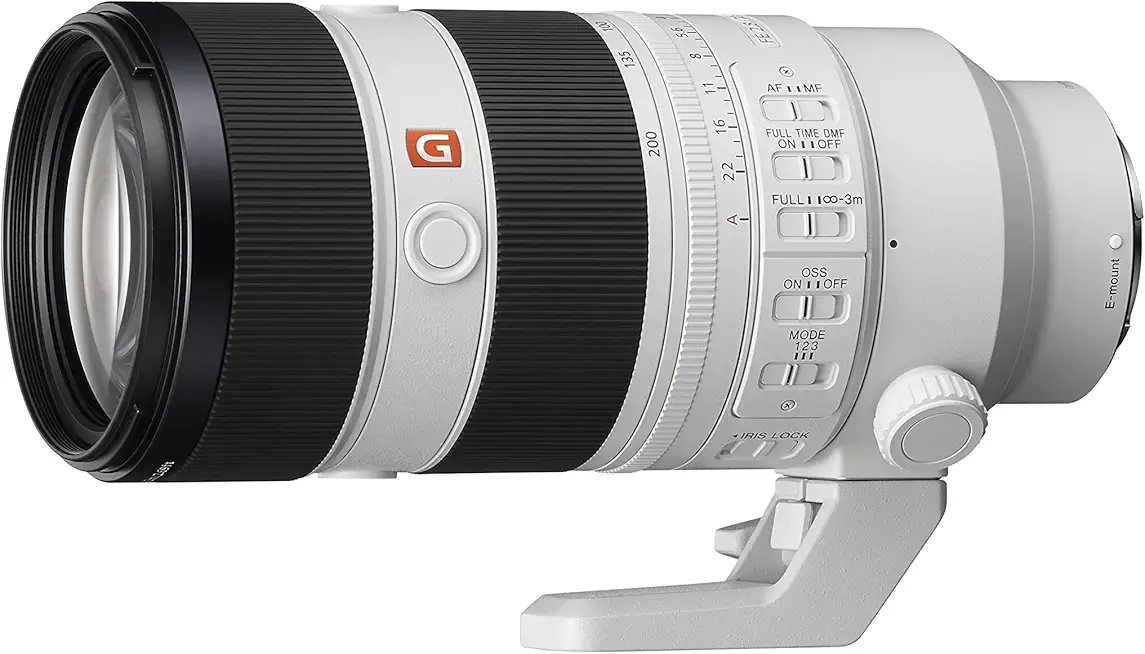
Sony FE 70-200mm F2.8 GM II (SEL70200GM2)
Professional telephoto zoom providing fast autofocus, stunning subject isolation, and weather-sealed durability for sports, wildlife, and portraiture.
Check PriceThe Sony FE 70-200mm f/2.8 GM OSS II is a telephoto workhorse that I reach for when I need reach, subject separation, and reliable performance in the field. Its 70–200mm range combined with a constant f/2.8 aperture makes it ideal for portraits, events, and wildlife where isolating the subject is key.
Image quality is outstanding — you get excellent sharpness and pleasing color rendition across the frame, and the f/2.8 aperture gives you creamy bokeh that really separates subjects from busy backgrounds. That wide aperture also helps in lower light, so you can keep shutter speeds up without cranking ISO.
Autofocus is fast and quiet, which matters for both stills and video; it locks onto subjects quickly and behaves predictably during pans and tracking. Built-in OSS (Optical SteadyShot) complements in-body stabilization, which is a lifesaver for handheld shooting at longer focal lengths or in dim conditions.
The lens feels built for professional use — robust construction and weather sealing mean you can take it outdoors and trust it in less-than-perfect conditions. The trade-off is weight: it’s relatively heavy for extended handheld work, so I often use a monopod or short rest during long shoots.
If you shoot portraits, events, or need reliable reach for wildlife, this lens is mostly a keeper — it combines optical excellence, fast quiet AF, and rugged build. Just be ready for the size and cost if you plan to carry it all day.
- 70–200mm f/2.8 reach
- Beautiful background blur
- Fast, quiet autofocus
- Robust build & weather sealing
- Relatively heavy for extended handheld use
- Can be expensive
3. Fast Prime for Portraits and Street

Sony FE 50mm F1.4 GM
Classic standard prime with luminous aperture, silky bokeh, and razor-sharp detail ideal for portraits, low-light work, and creative everyday shooting.
Check PriceThis fast 50mm prime — with an f/1.4 aperture — is a go-to for portraits, street work, and low-light shooting. Its wide aperture gives you real control over depth of field and subject isolation.
Image quality is impressively sharp, and the background blur is pleasing and natural. That rendering makes it easy to create creamy bokeh without fighting harsh out-of-focus highlights.
Autofocus is fast and accurate, working well for both stills and video. As a working photographer I appreciate reliable AF when subjects move or when I need grab shots on the street.
Its compact, lightweight design keeps you shooting longer without fatigue. For extended walks or all-day events this lens won’t weigh you down like larger fast primes can.
If you shoot a lot in dim conditions the f/1.4 aperture is a genuine advantage — faster shutter speeds and cleaner files at higher ISOs. That makes it excellent for concerts, indoor portraits, and nighttime street scenes.
Be aware of a couple of trade-offs: some users report minor chromatic aberration at the widest apertures, so you may need to correct a bit in post on high-contrast edges. Also, it’s a premium optic and can be expensive, but for many shooters the image quality and low-light capability justify the cost.
- Fast and accurate autofocus, even in low light
- Compact and lightweight design
- Excellent image quality with sharpness and pleasing bokeh
- Versatile focal length for portraits, street, and low-light
- Minor chromatic aberration at wide apertures
- Can be expensive
4. Go-To Standard Zoom for Sony

Sony FE 24-70mm F2.8 GM II
Versatile professional zoom offering constant bright aperture, crisp optics, and quick AF for run-and-gun weddings, events, and travel photography.
Check PriceWhen I need one lens that does almost everything, the Go-To Standard Zoom for Sony—Sony FE 24-70mm f/2.8 GM II—is the first thing I grab. Its versatile focal range covers wide environmental shots to tight portraits, which is why it’s a go-to zoom for many users and so popular for events, portraits, and travel.
Image quality is a highlight; you get exceptional image quality and sharpness across the zoom range, which translates to clean files straight out of the camera. That consistent sharpness makes it a dependable all-around performer whether you’re shooting candid moments at a wedding or editorial portraits.
Autofocus is fast and reliable for both stills and video, so you won’t lose shots to missed focus when the action picks up. The lens also feels built to work in the field—robust build quality and weather sealing give you confidence shooting outdoors in mixed conditions.
The constant f/2.8 aperture is a practical middle ground: it offers good low-light performance and allows for creative depth of field without forcing you onto extreme primes. That makes it a strong choice if you need versatility and performance without swapping lenses constantly.
It’s not perfect for everyone; the lens is a bit on the heavier side for long handheld days, and some users report minor vignetting and distortion at the widest focal lengths. Still, if you want one reliable zoom that handles most pro situations, this lens earns its place in my bag.
- Exceptional image quality and sharpness across the zoom range
- Fast and reliable autofocus in challenging lighting
- Robust build with weather sealing
- Versatile for events, portraits, and travel
- Relatively heavy for extended handheld use
- Some users report minor vignetting and distortion at widest focal lengths
5. Sharp Macro Lens for Detail

Sony FE 90mm F2.8 Macro G OSS (SEL90M28G)
Precision macro lens with outstanding sharpness, stabilized shooting, and creamy background separation for close-up, product, and nature photography.
Check PriceThe Sharp Macro Lens for Detail is built for shooters who need extreme close focus and micro-level detail. As a working photographer I reach for it when texture and tiny subjects demand clinical sharpness.
It captures detailed macro shots and also doubles as a strong portrait lens, delivering sharp images with a pleasing background blur. Product photographers will appreciate the rendition when shooting small items for catalogs or e‑commerce.
Autofocus here is fast and accurate, making it reliable for both stills and video workflows where focus precision matters. The f/2.8 aperture provides good low-light performance and lets you dial in creative shallow depth of field when you want subject separation.
Its compact and lightweight design makes it easy to carry through long shoots or tight studio setups without fatiguing your hands. That portability is a real advantage if you switch frequently between handheld and tripod work.
If you’re deciding whether it’s right for you, consider how often you shoot macro, portraits, or product detail. For specialists in those fields this lens is mostly a keeper because of its image quality, autofocus speed, and usable f/2.8 aperture.
Be aware of a couple of trade-offs: some users report minor chromatic aberration at wide apertures, and pricing can be a barrier for hobbyists. Overall, it’s a versatile, high-quality macro option that handles close-up detail and portrait work with equal confidence.
- Fast and accurate autofocus, even in low light
- Compact and lightweight design
- Excellent image quality with sharpness and beautiful bokeh
- Versatile focal length for macro, portrait, and product photography
- Some users report minor chromatic aberration at wide apertures
- Can be expensive
How to Choose a Sony Lens
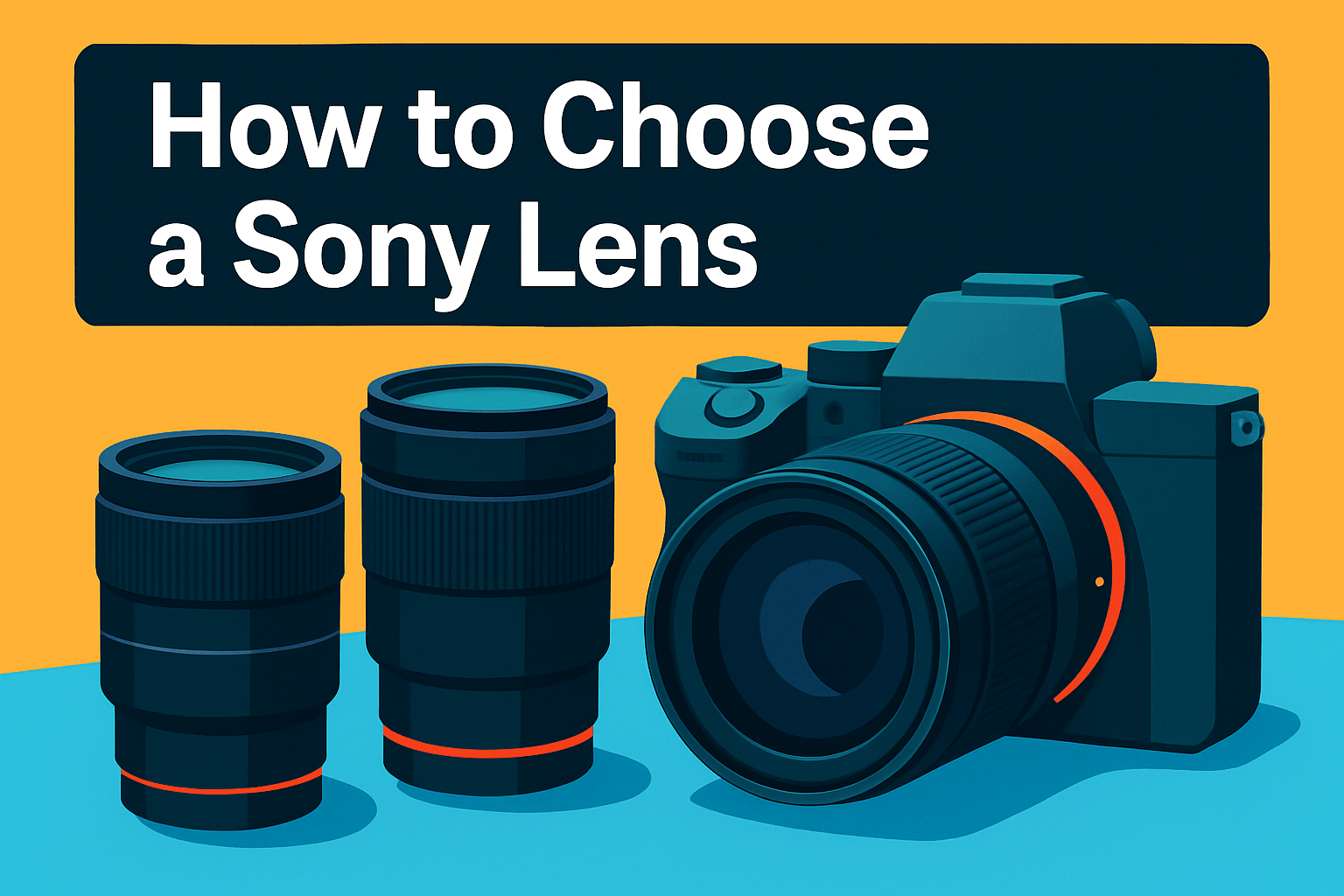
Choosing the right Sony lens starts with what you shoot most. Match focal length to subject: wide for landscapes and interiors, standard for street and portraits, and tele for wildlife and sports. The lens defines your perspective.
Primes deliver the best sharpness, wider apertures and creamier bokeh. Zooms trade a bit of ultimate performance for compositional flexibility, and modern zooms often rival primes. Decide which trade-off you prefer.
Wider apertures such as f/1.4 or f/1.8 help in low light and create shallow depth of field. For landscapes you’ll stop down to f/8–f/16 for depth and sharpness. Aperture also affects size, weight and price.
Check sensor compatibility. Full-frame Sony FE lenses work on both full-frame and APS-C bodies, but APS-C lenses won’t cover full-frame. Remember crop factor — a 50mm on APS-C behaves like about 75mm.
If you shoot outdoors, build quality and weather sealing matter. Pro lenses stand up to rain and dust but are heavier and pricier. If you mainly shoot weddings or landscapes, weather sealing is worth the investment.
Fast autofocus is essential for action, wildlife and street. Optical SteadyShot in the lens pairs well with in-body stabilization for sharper handheld shots. Test AF performance and accuracy in low light on your camera when possible.
Consider what you’ll carry all day. Compact primes are travel-friendly while pro zooms give reach at the cost of heft. Sometimes two lightweight primes beat one heavy zoom on long shoots.
Buy specialty glass only if you need it. Macro lenses solve close-up work; tilt-shifts correct architectural perspective.
Start by listing your main uses and budget, then balance speed, reach and portability. If you’re unsure, rent or borrow a lens for a weekend. Hands-on testing will point you to a lens you’ll actually use.
Wide-Angle Lenses for Landscapes Architecture Interiors
Wide-angle lenses are the go-to tools when I want to show scale, pull the viewer into a scene, or squeeze an entire room into a single frame. They force you to think in layers — foreground, midground, background — and that’s where strong landscape and interior images are born.
Know your focal ranges. Ultra-wides (roughly 10–20mm) give dramatic skies and exaggerated foregrounds, which is great for landscapes and tight interiors. The 20–35mm range reads more natural and is often better for architectural exteriors and environmental portraits.
Sharpness across the frame matters more than you might think. Edges that fall off will ruin a stitched panorama or a printed landscape. Also expect some barrel distortion and vignetting at the widest angles; modern lenses and raw converters correct a lot, but shoot carefully if you know you’ll need straight lines.
Aperture choices depend on the job. For night sky or dim interiors, an f/1.8–f/2.8 prime gives you usable shutter speeds. For sweeping landscapes, stop down to f/8–f/16 and consider focus stacking or hyperfocal techniques to keep everything sharp.
If you love sunstars, stop down to f/11–f/16 and use elements like trees or buildings to break the sun slightly. The quality and number of rays come from the diaphragm design, so experiment with different lenses to find the look you prefer.
Practical workflow matters: bring a tripod for long exposures, bracket for high dynamic range interiors, and shoot panoramas when you want more resolution without wide-angle distortion. Be mindful of flare when shooting into the sun — use a hood, change your angle slightly, or embrace the flare creatively.
For architecture, keep the camera level or use a tilt-shift to correct perspective. Small shifts in tilt or rotation during capture save hours in post and keep façades from looking like they’re tipping back.
Finally, choose tools that match how you work. A 16–35mm zoom gives flexibility on the move. A 20mm or 24mm prime will reward you with low-light performance and razor-sharp results when you need them.
What People Ask Most
What are the best lenses for Sony full-frame cameras?
The best choices depend on your shooting style and whether you prefer primes or zooms. Look for lenses that match your subject needs, offer reliable autofocus, and have build quality suited to your shooting conditions.
What are the best Sony lenses for portraits?
Medium telephoto primes and fast standard primes or zooms are commonly recommended for portraits because they provide pleasing subject separation and bokeh. Choose lenses with good sharpness and smooth autofocus for flattering results.
What are the best Sony lenses for landscape photography?
Wide-angle lenses with strong edge-to-edge sharpness and low distortion are ideal for landscapes. Weather sealing and the ability to stop down for greater depth of field are also useful for outdoor work.
What are the best wide-angle lenses for Sony?
Ultra-wide and wide zooms or primes that control distortion and deliver sharp corners are well suited to architecture, interiors, and expansive scenes. Consider options that balance portability and optical quality for your typical shooting locations.
What are the best telephoto lenses for Sony cameras?
Telephoto zooms and long primes that offer fast, accurate autofocus and solid image quality work best for wildlife, sports, and distant subjects. Stabilization and robust construction are helpful for reliable handheld and outdoor use.
What is the best Sony lens for low-light photography?
Lenses with wider apertures and strong autofocus performance perform best in low light, and fast primes are often preferred for their light-gathering ability. Stabilization can complement these lenses for sharper handheld shots in dim conditions.
What are the best Sony lenses for video and vlogging?
Compact lenses with smooth, quiet autofocus and optical stabilization are ideal for video and vlogging. Versatile focal lengths and lightweight designs make them easier to use on gimbals or handheld for extended shooting.
Conclusion for Best Sony Lenses
This guide distilled the strengths and real-world uses of five top Sony FE lenses to help you choose the one that best fits your shooting style and priorities.
Focus on the factors that matter most to your work—focal length, aperture, prime versus zoom, autofocus and stabilization, build and weather sealing, and the trade-off between image quality and portability.
Try to test lenses in the field or rent before you commit, and let your primary subjects and shooting conditions guide the final decision rather than brand hype.
If you want to sharpen your technique and gear know-how, explore more articles on the site to deepen your skills and make more confident choices.
Have questions or want personalized recommendations? Leave a comment below and we usually reply within a few hours.


0 Comments